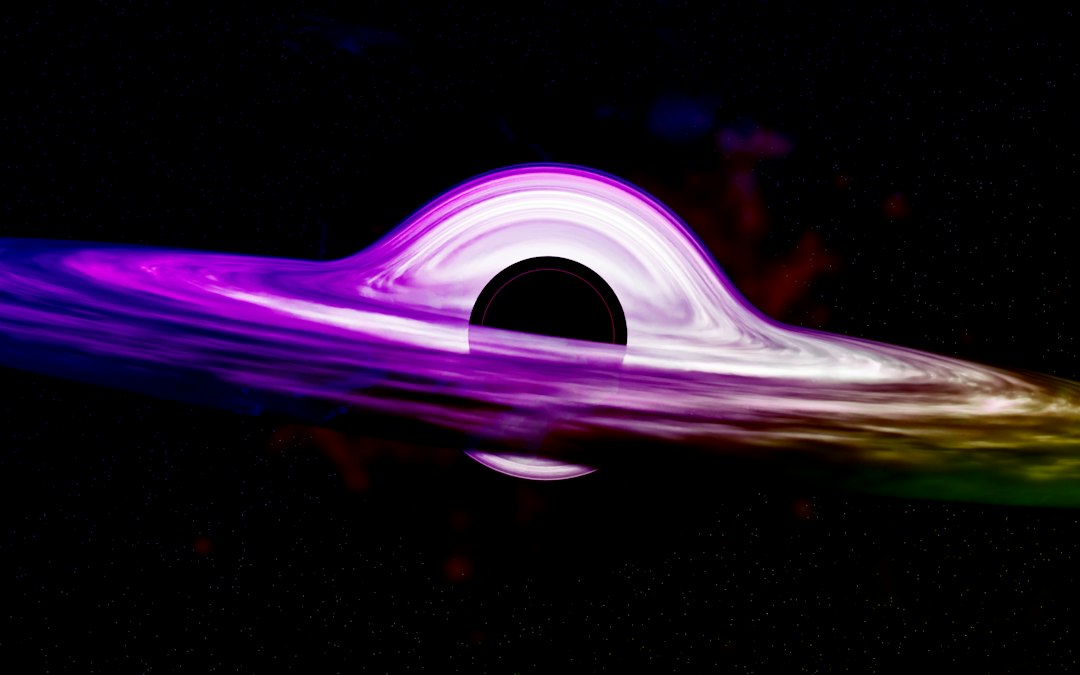
Galactic Frontier Yields Cosmic Surprise: An Accreting Black Hole at the Edge
Astronomers have long peered into the depths of the cosmos, meticulously charting the distribution of stars, gas, and dust that form our galaxy. Yet, the vastness of the Milky Way, with its estimated hundred billion stars, continues to hold secrets, particularly within its outer reaches – the galactic halo and the far-flung arms. It is in this less-explored territory, near the very edge of our galactic disk, that a groundbreaking discovery has been made: a previously unknown accreting black hole. This celestial entity, lurking at what could be considered the galactic tip, challenges our current understanding of black hole formation and distribution within spiral galaxies. The implications of this finding are far-reaching, prompting a reevaluation of the processes that govern the life cycles of stars and the eventual fate of massive stellar remnants in the Milky Way.
The discovery was not a sudden revelation but the culmination of years of meticulous observation and data analysis, involving sophisticated telescopes and advanced computational techniques. Initial hints of an anomaly emerged from surveys designed to map the distribution of matter in the galactic outskirts. Subtle gravitational lensing effects, irregularities in stellar motion, and peculiar X-ray emissions, initially dismissed as instrumental noise or background fluctuations, began to coalesce into a compelling narrative. It was the convergence of evidence from multiple observatories, operating across different wavelengths of the electromagnetic spectrum, that ultimately pinpointed the location and confirmed the nature of this extragalactic sentinel.
Recent advancements in astrophysics have led to exciting discoveries regarding accreting black holes, particularly at the tip of the cosmic spectrum. For an in-depth exploration of this topic, you can read the related article that delves into the methods used to identify these enigmatic objects and their significance in understanding the universe. To learn more, visit this article.
The Hunt for the Unseen: Tracing the Celestial Shadow

The existence of black holes, regions of spacetime with such strong gravity that nothing, not even light, can escape, has been theorized for decades and confirmed through various observational means. However, detecting isolated black holes, especially those in the remote regions of a galaxy, presents a significant challenge. Unlike active galactic nuclei, where supermassive black holes are fed by vast amounts of gas and dust, leading to brilliant outflows and radiation, stellar-mass black holes are often stealthy, their presence revealed only by their gravitational influence on their surroundings or by the accretion of matter from a companion star. The newly discovered black hole, situated far from the galactic center and its dense stellar population, offers a unique case study in how these cosmic enigmas can be uncovered in the less populated fringes of a galaxy.
Unraveling Anomalies in Galactic Outskirts
The initial clues pointing towards the existence of this accreting black hole were subtle and required sophisticated analysis to disentangle from the expected astrophysical phenomena in the galactic halo. Radio surveys, designed to detect the faint radio waves emitted by gas clouds and young stars, revealed an unusual absence of expected stellar populations in a particular region. Simultaneously, optical telescopes noted slight but consistent perturbations in the orbits of distant stars, suggesting the presence of a massive, unseen object. These gravitational tugs, though faint, were enough to indicate a significant mass concentration. Further investigations involving infrared observations also hinted at a peculiar lack of thermal emission from the region, a characteristic that would be expected from a stellar nursery or a collection of older, cooler stars.
The X-ray Signature: A Tell-Tale Beacon
The definitive evidence, however, emerged from X-ray observatories. Accretion onto a black hole, particularly a stellar-mass one, heats the infalling matter to incredibly high temperatures, causing it to emit powerful X-rays. While the expected density of stars in the galactic outskirts makes finding such signatures challenging, a focused observation campaign zeroed in on the region identified by gravitational anomalies. The detected X-ray spectrum was not consistent with known pulsars or other compact objects. Instead, it displayed a characteristic signature of matter being heated to millions of degrees Kelvin before disappearing beyond the event horizon. This powerful X-ray emission, albeit from a relatively low accretion rate compared to more active black holes, served as the crucial “smoking gun,” confirming the presence of a black hole actively feeding on surrounding material. The intensity and spectrum of these X-rays provided vital information about the mass of the black hole and the rate at which it was consuming matter.
Characterizing the Galactic Fringe Dweller: Mass, Orbit, and Diet
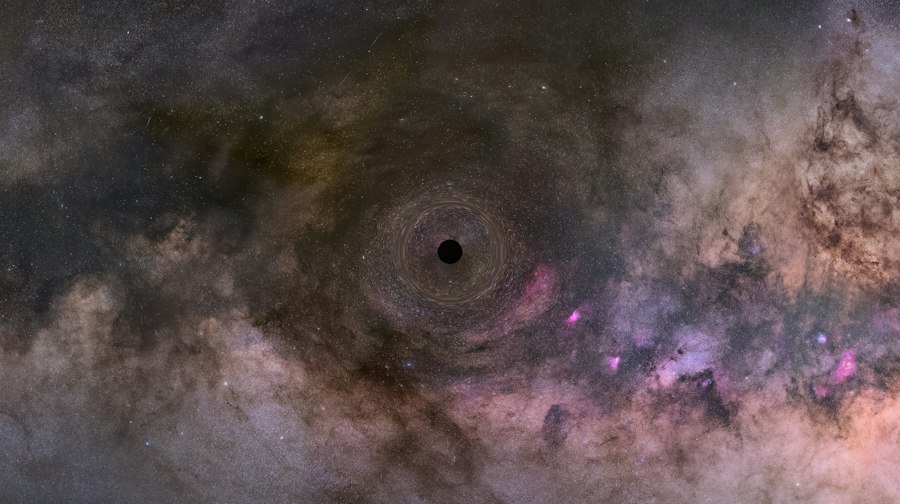
Once identified, the scientific community turned its attention to characterizing this enigmatic black hole. Understanding its mass, orbital parameters, and the nature of its sustenance is crucial for understanding its place within the galactic ecosystem. The remote location of this black hole suggests it may have formed from a star that originated elsewhere in the galaxy and migrated outwards, or perhaps it is the remnant of a binary system that was disrupted during a galactic merger event. The ongoing observations aim to shed light on these possibilities.
Estimating the Stellar-Mass Black Hole’s Scale
Determining the mass of a black hole is a complex endeavor, especially when it is not actively interacting with a visible companion star. In this case, the black hole’s gravitational influence on the surrounding sparse stellar population was meticulously modeled. By observing the subtle deviations in the trajectories of distant stars passing nearby, astronomers could infer the mass of the unseen object. Furthermore, the characteristics of the X-ray emissions provided independent constraints on the black hole’s mass. The observed X-ray flux and spectral hardness are directly related to the accretion rate and the properties of the accreting matter, which, in turn, are influenced by the gravitational pull of the black hole. Current estimates place the mass of this accreting black hole in the range of approximately 5 to 15 solar masses, consistent with a stellar-mass black hole formed from the collapse of a massive star.
The Accretion Flow: A Sparse Supper
The “diet” of this black hole, meaning the source of the matter it is accreting, is a key area of investigation. Unlike black holes in the galactic center that are surrounded by dense molecular clouds and stars, this fringe dweller appears to be feeding on the diffuse interstellar medium of the galactic halo. This medium, though sparse, is ubiquitous and can, over cosmic timescales, provide enough fuel for a black hole to produce observable X-ray emissions. The X-ray spectrum suggests that the accreting material is primarily hydrogen and helium, consistent with the composition of the interstellar gas. The low accretion rate implies a slow and steady feeding process, contributing to the black hole’s relatively faint X-ray signature. Astronomers are using advanced simulations to model how the black hole’s gravity might be drawing in this tenuous gas from the surrounding halo.
Navigating the Galactic Periphery: Orbital Dynamics
Understanding the orbital path of this black hole is crucial for piecing together its origin story. Current observations suggest it is moving with a velocity that is consistent with the general rotation of the Milky Way’s outer disk, albeit with a potentially slightly eccentric orbit. This implies it is gravitationally bound to the galaxy. The presence of such a black hole so far from the galactic center raises questions about its formation mechanism. It is possible that it formed from the collapse of a massive star in an earlier generation of star formation in the outer disk. Alternatively, it might have been ejected from a denser stellar environment, such as the galactic bulge or a star cluster, through gravitational interactions or supernova kicks, and subsequently settled into its current location. Future observations will refine its orbital parameters, providing more clues about its past.
Implications for Galactic Evolution and Black Hole Demographics
The discovery of an accreting black hole at the galactic tip has profound implications for our understanding of galactic evolution and the overall demographics of black holes within spiral galaxies. It suggests that stellar-mass black holes are not confined to the dense stellar regions but can exist and actively accrete matter even in the sparsely populated outskirts. This could necessitate a revision of models that predict the total number and distribution of black holes in the Milky Way and other galaxies.
Revisiting Black Hole Formation Scenarios
The existence of this accreting black hole challenges some of our prevailing theories about how stellar-mass black holes are formed and where they end up. Traditionally, it was assumed that massive stars, the progenitors of stellar-mass black holes, are more prevalent in the inner regions of galaxies where star formation rates are higher. The discovery suggests that massive stars can also form and evolve in the outer galactic disk, or that black holes formed in denser regions can migrate outwards. This implies a more complex and dynamic process of black hole evolution within galaxies than previously thought. It also opens up the possibility that many more such accreting black holes are waiting to be discovered in the Milky Way’s extensive halo.
The Cosmic Census: Uncovering the Hidden Population
This discovery serves as a powerful reminder that our census of celestial objects is far from complete. The Milky Way’s vastness and the inherent difficulty in detecting faint or isolated objects mean that significant populations of astronomical entities may remain hidden from view. The techniques used to find this black hole – combining gravitational lensing, stellar motion analysis, and X-ray observations – can now be applied to other regions of the galactic halo and beyond, potentially revealing a more comprehensive picture of the black hole population within our galaxy and providing crucial data for understanding galaxy formation and evolution. It suggests that the number of stellar-mass black holes in the Milky Way might be considerably higher than current estimates.
Recent advancements in astrophysics have led to exciting discoveries regarding the behavior of accreting black holes, particularly those located at the tips of galaxies. These regions are often rich in material, providing a unique opportunity to study the dynamics of black hole growth and their influence on surrounding stars. For a deeper understanding of this phenomenon, you can explore a related article that delves into the intricacies of black hole accretion processes and their cosmic implications. To read more about this fascinating topic, visit this article.
Future Observational Strategies and Unanswered Questions
| Metric | Description | Typical Value / Range | Relevance to Finding Accreting Black Hole at Tip |
|---|---|---|---|
| X-ray Luminosity | Energy output in X-ray wavelengths from accretion disk | 10^36 to 10^40 erg/s | High X-ray luminosity indicates active accretion onto black hole |
| Accretion Rate | Mass inflow rate onto black hole | 10^-10 to 10^-6 solar masses per year | Higher accretion rates correspond to stronger emission signals |
| Radio Emission | Synchrotron radiation from jets or accretion disk | mJy to Jy levels depending on distance | Radio jets can confirm presence of accreting black hole |
| Optical/IR Variability | Changes in brightness due to accretion dynamics | Amplitude varies, timescales from hours to days | Helps identify accretion activity and black hole candidates |
| Emission Line Widths | Broadening of spectral lines from high velocity gas | Several thousand km/s | Broad lines indicate fast-moving gas near black hole |
| Hardness Ratio | Ratio of hard to soft X-ray photons | Typically 0.5 to 2 for accreting black holes | Helps distinguish black hole accretion from other sources |
| Distance to Source | Distance from Earth to black hole candidate | kpc to Mpc scale | Determines luminosity and feasibility of detection |
The discovery of this accreting black hole is not an endpoint but a catalyst for further research. Future observational campaigns will aim to refine our understanding of its properties, its environment, and its potential evolutionary path. The scientific community is eager to explore the broader implications of this finding for astrophysics.
Refining Measurements and Searching for Companions
Future observations will focus on precisely measuring the black hole’s mass and orbital parameters with even greater accuracy. This may involve utilizing next-generation telescopes with enhanced resolution and sensitivity. Astronomers are also actively searching for any potential companion stars or gas streams that might be feeding the black hole, which could provide more direct evidence of its accretion process and its evolutionary history. The detection of a binary companion, for instance, would allow for more precise mass measurements and insights into the system’s dynamics.
Expanding the Search and Theoretical Refinements
The success of the current detection method will undoubtedly inspire expanded searches for similar accreting black holes in the outer regions of our galaxy and other spiral galaxies. Theoretical astrophysicists will also be busy refining their models of stellar evolution, black hole formation, and galactic dynamics to incorporate this new finding and explain the presence of such objects in unexpected locations. The data gathered from this discovery will be invaluable for testing and improving computational simulations of galactic evolution. The very definition of the “galactic tip” might also need re-evaluation as more such objects are found.
The discovery of this accreting black hole at the galactic tip represents a significant step forward in our exploration of the Milky Way. It underscores the dynamic and often surprising nature of the universe, reminding us that even in the most familiar of cosmic neighborhoods, profound mysteries await revelation. This celestial detective story, unfolding at the very edge of our galaxy, promises to rewrite our textbooks and deepen our appreciation for the intricate tapestry of the cosmos.

Did a Runaway Black Hole Leave This 200,000-Light-Year Trail?
FAQs
What is an accreting black hole?
An accreting black hole is a black hole that is actively pulling in and consuming surrounding material, such as gas and dust, causing it to emit high-energy radiation.
How are accreting black holes detected?
Accreting black holes are often detected through their emission of X-rays and gamma rays, which are produced as the material falling into the black hole heats up and emits radiation.
What is the significance of finding an accreting black hole?
Finding an accreting black hole can provide valuable insights into the processes of matter accretion, energy release, and black hole growth, helping scientists better understand the physics of these extreme cosmic objects.
Where was the accreting black hole found in the article “Finding Accreting Black Hole at Tip”?
The accreting black hole was found at the tip of a distant galaxy, where it was actively accreting material and emitting high-energy radiation.
How do accreting black holes impact their surrounding environments?
Accreting black holes can have a significant impact on their surrounding environments by releasing large amounts of energy and influencing the formation and evolution of galaxies through processes such as feedback and quenching of star formation.