Einstein’s Theory of Gravity: A Journey into the Fabric of Spacetime
For centuries, Isaac Newton’s law of universal gravitation reigned supreme, elegantly describing the force that pulls us to the Earth and holds the planets in their orbits. Newton’s vision was one of a universe governed by action at a distance, where mass attracted mass instantaneously across the vast expanse of space. This perspective, while remarkably successful, presented a fundamental mystery: how did this force communicate itself from one object to another without any apparent medium? It was a question that gnawed at the edges of scientific understanding, a celestial whisper that would eventually lead to a revolution in our perception of the cosmos. Enter Albert Einstein, a patent clerk with an extraordinary mind, who, through a relentless pursuit of theoretical elegance and profound insight, would fundamentally reshape our understanding of gravity, replacing the familiar notion of a force with a breathtakingly new concept: the curvature of spacetime.
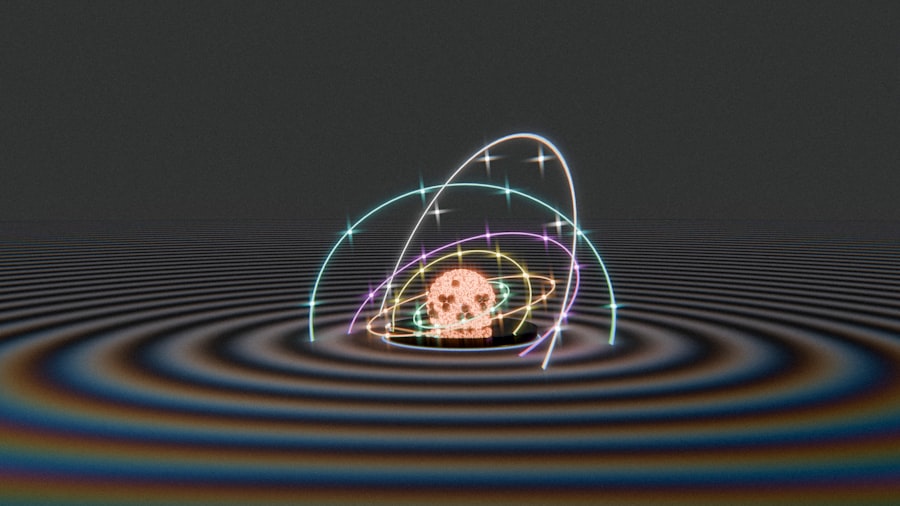
Einstein’s General Theory of Relativity, published in its final form in 1915, offered a radical departure from Newtonian physics. It proposed that gravity is not a force in the traditional sense, but rather a consequence of the geometric structure of spacetime itself. Imagine spacetime as a vast, invisible fabric. Massive objects, like stars and planets, warp and curve this fabric around them, much like a heavy ball placed on a stretched rubber sheet creates a dip. It is this curvature, this distortion of the very canvas of reality, that dictates the motion of objects. When smaller objects, or even light, travel through this curved region, they follow the contours of the warped spacetime, appearing to be pulled towards the massive object by a mysterious force. This ingenious shift in perspective provided answers to long-standing questions and opened up a universe of new phenomena that Newtonian gravity could not explain.
The Genesis of a Revolution: From Special to General Relativity
Einstein’s path to general relativity was a journey that began with his groundbreaking special theory of relativity in 1905. Special relativity dealt with the relationship between space and time and the behavior of objects moving at constant speeds. Its most famous implication is the equivalence of mass and energy, encapsulated in the iconic equation E=mc². However, special relativity was limited; it only applied to inertial frames of reference, meaning systems that are not accelerating. The perplexing nature of gravity, which inherently involves acceleration, remained outside its purview.
The Equivalence Principle: A Fleeting Insight
The spark that ignited Einstein’s quest for general relativity was the “happiest thought of his life,” as he described it. He envisioned a person falling freely from a roof. In this state of freefall, the person would feel weightless. Their own body, and any objects they might be carrying, would appear to float around them. This led Einstein to a profound realization: the effects of gravity are indistinguishable from the effects of acceleration. This insight, known as the equivalence principle, became a cornerstone of his developing theory. If an observer is in a closed box accelerating upwards, they will feel a force pushing them towards the floor, identical to the sensation of standing on Earth under the influence of gravity. Conversely, an observer in freefall in a gravitational field experiences weightlessness, just as an observer in a spaceship accelerating in empty space would. This equivalence suggested that gravity was not a force acting on objects, but rather a property of the observer’s reference frame, intimately linked to the geometry of space and time.
The Search for a Gravitational Theory
The equivalence principle, however, was not a complete theory of gravity. It provided a clue, a hint towards a deeper connection between gravity and motion, but it did not explain how gravity worked. Einstein spent years grappling with the mathematical framework required to incorporate acceleration and gravity into his relativistic picture of the universe. He realized that a theory that included acceleration would need to abandon the fixed, flat geometry of spacetime posited by special relativity. Instead, spacetime itself had to be dynamic, capable of being influenced and shaped by the presence of matter and energy.
Einstein’s theory of gravity, known as General Relativity, revolutionized our understanding of how massive objects influence the fabric of space-time. For a deeper exploration of this groundbreaking theory and its implications for modern physics, you can read a related article that delves into the intricacies of gravitational waves and their significance in astrophysics. To learn more, visit this article.
The Geometry of Warped Spacetime: Introducing the Einstein Field Equations
The mathematical heart of general relativity lies in the Einstein field equations. These are a set of ten coupled, non-linear differential equations that relate the geometry of spacetime (represented by the Einstein tensor) to the distribution of matter and energy within that spacetime (represented by the stress-energy tensor). In essence, the equations tell us how matter and energy tell spacetime how to curve, and how that curvature tells matter and energy how to move.
The Tensor Calculus: A New Language for Gravity
To formulate these equations, Einstein had to master and employ a new and complex mathematical tool: tensor calculus. Developed by mathematicians like Gregorio Ricci-Curbastro and Tullio Levi-Civita, tensor calculus provided the language to describe quantities that have both magnitude and direction, and whose values change depending on the observer’s point of view. Spacetime itself, in general relativity, is not a simple three-dimensional space plus a separate time dimension. It is a unified four-dimensional manifold, and its geometric properties are described by a metric tensor. The Einstein tensor, derived from the metric tensor, captures the curvature of spacetime, while the stress-energy tensor encapsulates the density and flux of energy and momentum.
The Equations Themselves: A Concise Statement of Cosmic Rules
The Einstein field equations can be symbolically represented as:
$G_{\mu\nu} + \Lambda g_{\mu\nu} = \frac{8\pi G}{c^4} T_{\mu\nu}$
Where:
- $G_{\mu\nu}$ is the Einstein tensor, representing the curvature of spacetime.
- $\Lambda$ is the cosmological constant, a term Einstein later introduced and later famously called his “biggest blunder,” though it has found renewed relevance in modern cosmology to explain the accelerated expansion of the universe.
- $g_{\mu\nu}$ is the metric tensor, defining the distances and time intervals in spacetime.
- $G$ is Newton’s gravitational constant.
- $c$ is the speed of light.
- $T_{\mu\nu}$ is the stress-energy tensor, representing the distribution of matter and energy.
This seemingly complex equation is a remarkably compact and elegant statement of how gravity operates. It is the direct consequence of the principle of equivalence and the idea that gravity is a geometric phenomenon.
Observational Proofs: Confirming the Curvature of Light
When Einstein first proposed his theory of general relativity, it was a bold, abstract concept with little direct observational evidence to support it. However, the theory made several specific predictions that differed from Newtonian predictions, offering a unique opportunity for empirical verification. The most famous of these confirmations came from observations of how gravity bends light.
The Bending of Starlight: A Celestial Spectacle
One of the most striking predictions of general relativity is that light, which has energy and momentum (and therefore can be considered as having mass-energy), should have its path deflected by the gravitational pull of massive objects. According to general relativity, light travels in straight lines in flat spacetime. However, in the presence of a massive object, spacetime is curved, and light must follow the contours of this curvature. This means that light passing near a massive object, like the Sun, will be bent.
In 1919, during a total solar eclipse, British astronomer Sir Arthur Eddington led expeditions to observe stars whose light passed close to the Sun. The predictions of general relativity were that the apparent positions of these stars would be shifted from their normal positions due to the Sun’s gravity bending their light. The observational results were astonishing. The measured deflection of starlight matched Einstein’s predictions with remarkable accuracy, far exceeding the values predicted by Newton’s corpuscular theory of light. This successful prediction rocketed Einstein to international fame and solidified general relativity as the leading theory of gravity.
Gravitational Lensing: Cosmic Magnifying Glasses
The phenomenon of light bending around massive objects leads to another fascinating prediction: gravitational lensing. When a massive object, such as a galaxy or a cluster of galaxies, lies between an observer and a distant light source (like a quasar or another galaxy), the gravity of the intervening object can bend the light from the distant source. This bending can create distorted, magnified, or even multiple images of the background object. Gravitational lensing acts like a cosmic magnifying glass, allowing astronomers to study distant objects that would otherwise be too faint to observe. The discovery of numerous instances of gravitational lensing has provided abundant evidence for the validity of general relativity, allowing scientists to probe the distribution of matter in the universe, including dark matter, which does not emit or interact with light.
Beyond the Newtonian Horizon: Phenomena Explained by General Relativity
While Newtonian gravity provided a remarkably accurate description of gravity for most everyday situations, it encountered difficulties with certain astronomical observations. General relativity not only explained these anomalies but also predicted entirely new phenomena that expanded our understanding of the universe.
The Precession of Mercury’s Orbit: A Stubborn Anomaly Solved
One of the longest-standing puzzles in celestial mechanics was the anomalous precession of Mercury’s perihelion. The perihelion is the point in Mercury’s orbit where it is closest to the Sun. While Newton’s laws could account for most of the precession caused by the gravitational pull of other planets, there remained a small but persistent discrepancy of about 43 arcseconds per century that could not be explained. This tiny anomaly gnawed at astronomers for decades. Einstein’s general theory of relativity provided an elegant solution. The curved spacetime around the Sun causes Mercury’s orbit to deviate slightly from a perfect ellipse, leading to an extra precession that precisely matched the observed discrepancy. This was one of the earliest and most convincing pieces of evidence for the accuracy of general relativity.
Gravitational Waves: Ripples in the Fabric of Spacetime
General relativity also predicted the existence of gravitational waves – disturbances in the curvature of spacetime that propagate outwards at the speed of light, much like ripples on the surface of a pond. These waves are generated by catastrophic cosmic events involving accelerated massive objects, such as the merger of black holes or neutron stars. For decades, gravitational waves remained a theoretical prediction, elusive to direct detection due to their incredibly weak nature. However, in 2015, the Laser Interferometer Gravitational-Wave Observatory (LIGO) made the first direct detection of gravitational waves, opening a new window into the universe and providing a powerful new tool for astronomical observation. The subsequent detections of gravitational waves from various cosmic events have further validated Einstein’s theory and ushered in the era of gravitational-wave astronomy, allowing us to “hear” the universe in a fundamentally new way.
Einstein’s theory of gravity, often referred to as General Relativity, has transformed our understanding of the universe by explaining how massive objects warp the fabric of spacetime. For those interested in delving deeper into this fascinating topic, a related article can be found at My Cosmic Ventures, which explores the implications of Einstein’s work on modern astrophysics and cosmology. This resource provides valuable insights into how his theories continue to influence contemporary research and our perception of gravity in the cosmos.
The Frontiers of Gravity: Black Holes, Cosmology, and the Quest for Quantum Gravity
Einstein’s theory of general relativity has proven to be a remarkably robust framework for understanding gravity, but it also points towards the limits of our current understanding and the frontiers of ongoing scientific inquiry. General relativity, while successful, presents challenges when dealing with extremely dense and compact objects, and it ultimately clashes with the principles of quantum mechanics, leading to the quest for a unified theory of quantum gravity.
Black Holes: Singularities in Spacetime
General relativity predicts the existence of black holes – regions of spacetime where gravity is so strong that nothing, not even light, can escape. These enigmatic objects are formed when massive stars collapse under their own gravity. At the heart of a black hole lies a singularity, a point of infinite density and curvature where the known laws of physics break down. Understanding black holes requires delving deep into the implications of Einstein’s equations, and their observation, such as through the Event Horizon Telescope’s imaging of the supermassive black hole M87*, has provided further confirmation of the theory’s profound predictions.
The Expanding Universe: Cosmology and the Cosmological Constant
General relativity also forms the bedrock of modern cosmology. The equations, when applied to the universe as a whole, suggest that the universe is not static but is either expanding or contracting. Einstein’s initial reluctance to accept an expanding universe led him to introduce the cosmological constant (Lambda, $\Lambda$), a term in his field equations that would keep the universe static. However, observations by Edwin Hubble in the late 1920s confirmed that the universe is indeed expanding. While Einstein later regretted its inclusion, the cosmological constant has experienced a resurgence in modern cosmology, playing a crucial role in explaining the observed accelerated expansion of the universe, attributed to a mysterious force known as dark energy.
The Quest for Quantum Gravity: Unifying the Great Theories
One of the most significant challenges in modern physics is the reconciliation of general relativity with quantum mechanics. General relativity describes gravity on macroscopic scales, while quantum mechanics governs the subatomic world. These two theories, despite their immense success in their respective domains, are fundamentally incompatible in extreme conditions, such as the singularity of a black hole or the earliest moments of the universe. Physicists are actively pursuing theories of quantum gravity, such as string theory and loop quantum gravity, in the hope of unifying these two pillars of modern physics into a single, comprehensive framework that can explain all physical phenomena. The journey to decipher Einstein’s theory of gravity, therefore, is far from over; it continues to inspire new questions and drive the exploration of the universe’s deepest mysteries.

Physics Can’t Explain Gravity (And That’s a Problem)
FAQs
What is Einstein’s theory of gravity?
Einstein’s theory of gravity, also known as the general theory of relativity, is a fundamental theory in physics that describes gravity as a curvature of spacetime caused by the presence of mass and energy.
How does Einstein’s theory of gravity differ from Newton’s theory of gravity?
Einstein’s theory of gravity differs from Newton’s theory in that it provides a more accurate and comprehensive description of gravity. While Newton’s theory describes gravity as a force acting at a distance, Einstein’s theory explains gravity as the curvature of spacetime caused by mass and energy.
What are the key concepts of Einstein’s theory of gravity?
The key concepts of Einstein’s theory of gravity include the curvature of spacetime, the equivalence principle, and the prediction of phenomena such as gravitational time dilation, gravitational waves, and the bending of light.
How has Einstein’s theory of gravity been confirmed by observations and experiments?
Einstein’s theory of gravity has been confirmed by numerous observations and experiments, including the bending of light around massive objects, the precession of the orbit of Mercury, the detection of gravitational waves, and the accurate prediction of the behavior of objects in strong gravitational fields.
What are the implications of Einstein’s theory of gravity for our understanding of the universe?
Einstein’s theory of gravity has profound implications for our understanding of the universe, including the prediction of black holes, the expansion of the universe, and the possibility of time travel in the presence of strong gravitational fields. It also provides the foundation for modern cosmology and our understanding of the large-scale structure of the universe.