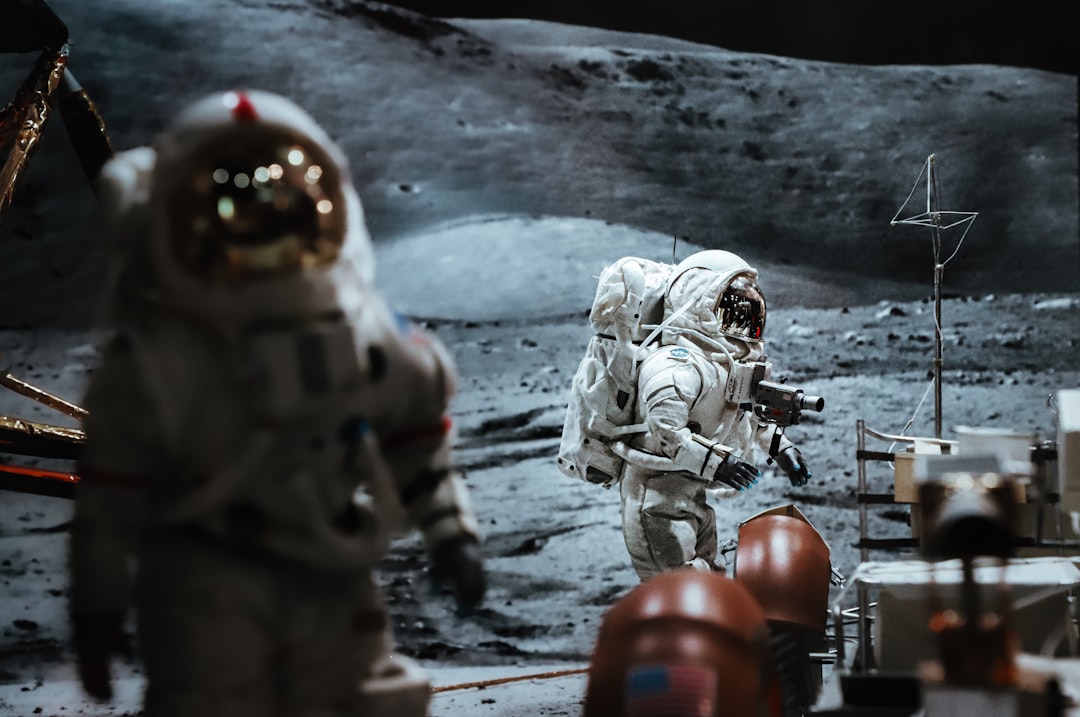
The Apollo program, a monumental undertaking by the United States National Aeronautics and Space Administration (NASA), successfully landed humans on the Moon six times between 1969 and 1972. Despite the overwhelming scientific evidence, meticulous documentation, and eyewitness testimonies, a persistent minority continues to assert that these missions were elaborate hoaxes, staged in a film studio. This article aims to systematically dismantle the core arguments presented by moon landing hoax proponents, offering a robust defense of the authenticity of the Apollo missions.
The roots of moon landing hoax theories can be traced back to the burgeoning counter-culture movement of the 1960s and 70s, an era characterized by widespread distrust in government institutions. The sheer audacity of the lunar landings, coupled with the inherent mystery of space travel, provided fertile ground for conspiratorial thinking. Early proponents, often lacking scientific or engineering backgrounds, seized upon perceived anomalies in photographs and videos, interpreting them as proof of fakery.
Early Allegations and Media Dissemination
Initial claims often revolved around simplistic misinterpretations of photographic principles and the unique environment of the Moon. These theories gained traction through fringe publications, talk radio, and later, the burgeoning internet, which provided an unfettered platform for the dissemination of unsubstantiated claims. The narrative evolved over time, adapting to incorporate new (often misinterpreted) scientific findings and addressing previous rebuttals. It is a constantly moving target, much like trying to nail jelly to a wall; as one argument is debunked, another, equally baseless, often emerges to take its place.
The Role of Misinformation and Confirmation Bias
A significant factor in the persistence of these theories is confirmation bias – the tendency to seek out and interpret information in a way that confirms one’s pre-existing beliefs. Individuals predisposed to distrust official narratives often find their beliefs reinforced by the echo chamber of hoax communities, where any evidence supporting the landings is dismissed as part of the “cover-up.” The readily available nature of information, both accurate and inaccurate, makes it challenging for some to discern reputable sources from those peddling misinformation.
The authenticity of the Apollo moon landings has been a topic of debate for decades, with various conspiracy theories suggesting that the landings were staged. For a comprehensive exploration of this subject, you can read the article titled “Debunking the Moon Landing Hoax: Evidence and Analysis” on My Cosmic Ventures. This article provides a detailed examination of the evidence supporting the reality of the Apollo missions and addresses common misconceptions. You can find it here: Debunking the Moon Landing Hoax: Evidence and Analysis.
Confronting the Core Arguments: Debunking Common Hoax Claims
Numerous specific allegations have been levied against the authenticity of the Apollo missions. Each, when examined under the lens of scientific scrutiny, reveals a lack of understanding of physics, photography, or the lunar environment.
The Waving Flag Anomaly
One of the most frequently cited “proofs” of a hoax is the appearance of a waving American flag in photographs and videos. Hoax proponents argue that a flag cannot wave in the vacuum of space, thus proving it was filmed on Earth.
- The Fixed Rod Explanation: The flag planted by the Apollo 11 astronauts was not simply a piece of cloth. It was a specially designed telescoping pole with a horizontal bar extending from the top to make the flag appear to fly. This horizontal bar was not fully extended, causing the fabric to crinkle and fold, creating the illusion of waving. Even in a vacuum, a crumpled piece of fabric will retain its folds. It’s akin to a bedsheet that has been rumpled; it doesn’t magically become flat just because there’s no wind.
- Absence of Air Resistance: The absence of atmospheric pressure on the Moon means that any motion would persist for longer as there is no air resistance to dampen it. If the flag had been unfurled in segments, some parts might have appeared to “wave” from the initial momentum of straightening out.
The Parallel Shadows Argument
Another common claim revolves around the shadows in lunar photographs, which are sometimes alleged to be non-parallel, suggesting multiple light sources (studio lights) rather than a single sun.
- Perspective and Converging Lines: In photography, parallel lines appear to converge as they recede into the distance, a fundamental principle of perspective. This effect is noticeable even in Earth-based landscapes. The lunar surface, with its undulating topography and uneven terrain, further exacerbates this effect. When viewed across vast, barren landscapes, shadows can appear to converge or diverge due to changes in elevation and the perspective of the camera, much like parallel railway tracks appear to meet on the horizon.
- The Sun as a Distant Point Source: The sun is effectively a point source of light from the Moon’s perspective, extremely far away. Therefore, all shadows cast by objects on a flat, even surface would be parallel. However, the lunar surface is not flat. Craters, hills, and depressions create a complex topography where shadows will naturally appear to fall in different directions depending on the object’s position relative to the camera and the surrounding terrain.
The Van Allen Radiation Belts
Skeptics assert that astronauts could not have survived the intense radiation of the Van Allen belts, two toroidal regions of charged particles held in place by Earth’s magnetic field.
- Traverse Time and Shielding: The Apollo spacecraft passed through the thinnest part of the Van Allen belts relatively quickly, typically within an hour or two. The Command Module’s aluminum hull provided sufficient shielding against the radiation encountered during this brief transit. It’s not a protracted journey through a radiation inferno, but a swift passage through a potentially hazardous corridor.
- Proton vs. Electron Radiation: While the Van Allen belts contain high-energy protons and electrons, the most damaging proton radiation is concentrated in the inner belt, which the Apollo trajectory largely avoided. The missions were carefully planned to minimize exposure, and the dosage received by astronauts was well within safe limits, comparable to doses received by airline pilots over their careers.
The Lack of Stars in Apollo Photographs
Many hoax theorists point to the apparent absence of stars in lunar photographs as evidence of fakery, arguing that a black sky should be teeming with visible stars.
- Exposure Settings for Bright Subjects: The lunar surface and the astronauts’ spacesuits illuminated by the bright sun are incredibly bright. To properly expose these subjects, the camera’s shutter speed must be fast and the aperture small. This setting, while perfect for the illuminated foreground, does not allow enough light from the faint, distant stars to register on the film. It’s like trying to photograph a brightly lit stage from a dark audience; the stage lights will overwhelm any ambient light from the audience.
- Absence of an Atmosphere: On Earth, our atmosphere scatters light, making stars less visible during the day. On the Moon, with no atmosphere, there is no scattering of sunlight. The sky appears a stark, featureless black, even with the sun present. This means that a star would appear just as it does in deep space, and requires a longer exposure to capture.
The C-Rock Anomaly
A particularly fanciful claim centers around a rock in an Apollo 16 photograph that appears to have a letter “C” inscribed on it, suggesting it was a prop from a film set.
- Hair or Dust on the Negative: The most plausible explanation for the “C” is a stray hair or fiber on the photographic negative when it was printed. Such artifacts are common in analog photography and often appear as anomalies on the final image. The “C” is also inconsistent with the texture and shadows of the rock, further indicating it is not an intentional inscription. It’s a speck of dust masquerading as a smoking gun.
- Absurdity of the Claim: The idea that NASA, a meticulously organized and highly scrutinized organization, would leave an obvious “C” on a prop rock for the world to see defies all logic and common sense. It’s an argument that collapses under its own weight of absurdity.
The Verifiable Evidence: Beyond Debunking
Beyond systematically dismantling hoax claims, there exists a wealth of positive evidence that unequivocally confirms the authenticity of the Apollo missions. This evidence spans multiple disciplines and comes from diverse sources.
Lunar Samples and Geochemistry
Perhaps the most compelling evidence comes from the nearly 382 kilograms (842 pounds) of lunar rocks, core samples, pebbles, dust, and soil brought back by the Apollo missions.
- Unique Isotopic Signatures: These samples have been exhaustively studied by scientists worldwide for decades. Their geological composition, isotopic ratios, and mineralogy are utterly unique and distinct from any terrestrial rocks or meteorites found on Earth. They bear the unmistakable hallmarks of exposure to the extreme conditions of the lunar surface – solar wind, cosmic rays, and micrometeorite impacts – conditions impossible to replicate in a laboratory setting or on Earth.
- Independent Analysis: Scientists from over 135 countries have had access to these samples, and not a single reputable study has ever concluded that they are of terrestrial origin. The sheer volume and consistency of these analyses represent an insurmountable barrier for hoax theories.
Lunar Ranging Retroreflectors
The Apollo 11, 14, and 15 missions left behind arrays of retroreflectors on the Moon’s surface. These passive optical devices bounce lasers fired from Earth directly back to their source.
- Ongoing Measurements: These retroreflectors are still actively used today by observatories around the world to precisely measure the distance to the Moon and study its orbital dynamics. The continuous reception of laser pulses from these specific locations on the Moon serves as irrefutable, independently verifiable proof that humans visited and left equipment on the lunar surface. It’s a constant, silent affirmation, a beacon of truth shining across the vastness of space.
Third-Party Lunar Orbiter Imagery
Several nations and space agencies have launched lunar orbiters that have captured high-resolution images of the Apollo landing sites, clearly showing the descent stages of the lunar modules, equipment, and even astronaut footprints.
- LRO and Chandrayaan-1: NASA’s Lunar Reconnaissance Orbiter (LRO) has provided incredibly detailed images, showing not only the lander modules but also the tracks left by the lunar rovers and the locations of scientific instruments. Similarly, India’s Chandrayaan-1 and Japan’s SELENE (Kaguya) missions have independently captured images corroborating the presence of Apollo hardware on the Moon. These are not grainy, ambiguous images, but high-resolution photographic documents of humanity’s indelible mark on a celestial body.
Eyewitness Testimonies and Radio Transcripts
Hundreds of thousands of people were involved in the Apollo program, from engineers and scientists to manufacturing personnel and tracking station operators.
- Multitude of Witnesses: The sheer scale of the operation, involving a vast global network of tracking stations and personnel, makes a secret, staged mission utterly improbable. The meticulous logs, radio transmissions, and endless documentation of every aspect of the missions, all publicly available, represent an open book of humanity’s greatest exploratory endeavor. To suggest such a vast conspiracy without a single credible leak or insider confession is to defy reason itself.
The Enduring Legacy of Human Endeavor

The Apollo missions were a testament to human ingenuity, determination, and the power of scientific collaboration. To deny their authenticity is not merely to misinterpret facts; it is to dismiss one of humanity’s greatest achievements, a beacon of what we can accomplish when we set our sights on the seemingly impossible. The evidence is not merely overwhelming; it is a tapestry woven from independent observations, scientific data, and historical records, all pointing to one undeniable conclusion: humans walked on the Moon. The moon landing hoax theories, ultimately, are not about science but about a distrust of authority and a misunderstanding of the rigorous process of scientific verification. Just as a strong tide eventually washes away flimsy sand castles, so too does robust evidence erode the foundations of unsubstantiated claims.
SHOCKING: Why Physicists Are Finally Admitting The Big Bang Failed
FAQs
1. Were the Apollo moon landings real or staged?
The Apollo moon landings were real. NASA successfully sent astronauts to the Moon six times between 1969 and 1972, with extensive documentation, telemetry data, rock samples, and third-party tracking confirming the missions’ authenticity.
2. What evidence supports the authenticity of the Apollo moon landings?
Evidence includes thousands of photographs and hours of video footage, lunar rock samples analyzed worldwide, retroreflectors left on the Moon’s surface that are still used for laser ranging experiments, and independent tracking by observatories and other countries.
3. Why do some people believe the moon landings were faked?
Some conspiracy theories arose due to misunderstandings of photographic anomalies, skepticism about the technology of the 1960s, and mistrust of government institutions. However, these claims have been thoroughly debunked by experts and scientific analysis.
4. How did NASA ensure the safety and success of the Apollo missions?
NASA conducted rigorous testing, simulations, and training for astronauts, developed advanced spacecraft technology, and implemented multiple safety protocols. The missions were monitored continuously by mission control and supported by a global network of tracking stations.
5. Can the Apollo moon landings be independently verified today?
Yes. Modern lunar missions, such as those by NASA’s Lunar Reconnaissance Orbiter, have photographed Apollo landing sites, showing equipment and rover tracks. Additionally, laser ranging experiments using retroreflectors left by Apollo astronauts continue to provide data, confirming their presence on the Moon.