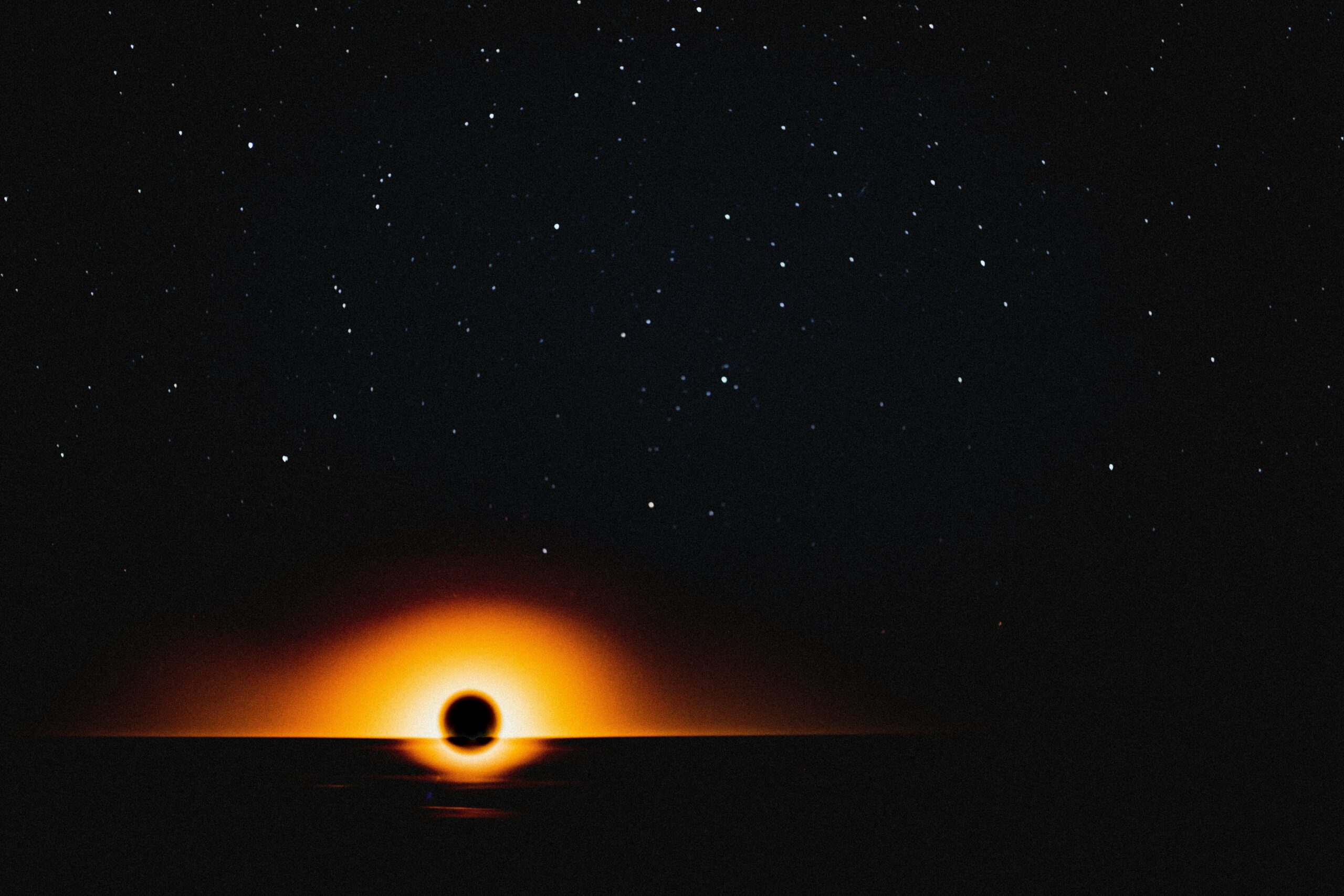
You stand at the precipice of the known, gazing into a void that defies comprehension. Black holes, once theoretical curiosities, are now revealing themselves as architects of reality, not merely passive observers. You might think of them as cosmic vacuum cleaners, greedily consuming everything in their path. But the truth, as you’re about to discover, is far more profound. These enigmatic entities are not just bending space and time; they are, in a fundamental sense, shifting reality’s paradigm. Prepare to have your understanding of the universe rewired.
You’ve likely encountered the popular image of a black hole: a shadowy maw with an alluring, inescapable gravitational pull. But peel back the sensationalism, and you are presented with an object of immense density, a point in spacetime where gravity is so powerful that nothing, not even light, can escape its clutches. This isn’t just a cosmic accident; it’s a fundamental consequence of the universe’s laws, a testament to the extreme nature of matter and energy.
Gravity’s Ultimate Expression: The Birth of a Black Hole
You can visualize the birth of a stellar-mass black hole as the grand finale of a massive star’s life. When a star, at least many times more massive than our Sun, exhausts its nuclear fuel, it can no longer support itself against its own immense gravity. The core collapses inward with ferocious speed.
Stellar Collapse: A Fiery Demise
- Imagine a star many times the size of our Sun, burning brightly for millions of years. Its internal nuclear furnace creates outward pressure, balancing the inward pull of gravity.
- When the fuel runs out, this delicate balance is shattered. The core collapses under its own weight, imploding with unimaginable force.
- This catastrophic collapse triggers a supernova explosion, blasting the outer layers of the star into space. What remains is the incredibly dense, collapsed core – the progenitor of a black hole.
The Singularity: A Point of Infinite Density
- All the mass of the original star is squeezed into an infinitesimally small point. This is the singularity, a place where our current understanding of physics breaks down. Density becomes infinite, and spacetime itself curvature becomes infinite. You cannot truly “see” the singularity, for it is hidden behind the event horizon.
The Event Horizon: The Point of No Return
You’ve heard the term, but what does it truly mean? The event horizon isn’t a tangible surface you can touch; it’s a boundary, a cosmic threshold. Crossing it is a one-way ticket.
Spacetime’s Warped Boundary: A Cosmic Waterfall
- Think of the event horizon as the edge of a cosmic waterfall. Once you go over, there’s no swimming back upstream. The gravitational pull is so immense that even traveling at the speed of light, you would be pulled inexorably inward.
- For you, standing outside this boundary, the light from objects falling in would become increasingly redshifted, stretching to longer and longer wavelengths. Time, for them, would appear to slow down, eventually seeming to freeze at the horizon from your perspective.
The Schwarzschild Radius: Defining the Unseen
- The size of the event horizon is determined by the mass of the black hole. This is quantified by the Schwarzschild radius. A more massive black hole has a larger Schwarzschild radius, meaning its event horizon is further out. This is a crucial detail as it dictates the “reach” of the black hole’s inescapable gravity.
Black holes have profoundly altered our understanding of the universe and the fundamental laws of physics. Their existence challenges traditional notions of space and time, leading to groundbreaking theories that reshape our perception of reality. For a deeper exploration of how black holes have influenced scientific thought and our comprehension of the cosmos, you can read the article titled “Black Holes: The Cosmic Enigmas That Redefine Reality” at this link.
Beyond Gravity: Black Holes as Cosmic Transformers
You may have considered black holes as mere gravitational wells. However, their influence extends far beyond simply pulling matter in. They actively participate in celestial evolution, shaping galaxies and influencing the very fabric of the cosmos.
Galactic Engines: Fueling Cosmic Growth
You might be surprised to learn that supermassive black holes, residing at the centers of most galaxies, are not just passengers but active participants in galactic evolution. They are the engines that can drive or stifle star formation.
Accretion Disks: The Feast of Cosmic Power
- Imagine a swirling disk of gas and dust, spiraling towards the black hole. As this matter gets closer, friction heats it to millions of degrees, emitting intense radiation across the electromagnetic spectrum. This is the accretion disk, a luminous spectacle that often outshines the entire surrounding galaxy.
- This energy output from the accretion disk can have a profound impact on the host galaxy, influencing the rate at which new stars are born.
Jets: Cosmic Beams of Energy
- Not all the material from the accretion disk falls into the black hole. Some of it is channeled by magnetic fields and ejected outward in powerful, collimated beams called relativistic jets. These jets can extend for hundreds of thousands of light-years, influencing the intergalactic medium and even affecting the formation of new stars in distant parts of the galaxy. You are witnessing the sheer power of these cosmic transformers.
Hawking Radiation: A Slow Evaporation of the Void
You might think of black holes as eternal entities, but Stephen Hawking proposed a groundbreaking idea: black holes aren’t entirely black. They radiate energy, albeit incredibly slowly.
Quantum Fluctuations: Birth of Virtual Particles
- You can visualize the quantum vacuum not as empty space, but as a sea of constantly appearing and disappearing virtual particle-antiparticle pairs. Normally, these pairs annihilate each other almost instantly, and nothing comes of it.
- However, near the event horizon of a black hole, one particle can fall into the black hole while the other escapes. To an outside observer, it appears as if the black hole has emitted a particle.
The Slow Dissolution: A Cosmic Sunset
- This process, known as Hawking radiation, means that black holes slowly lose mass and energy over time. For stellar-mass black holes, this evaporation process would take an unfathomably long time, far longer than the current age of the universe. Supermassive black holes would take even longer. You are witnessing a cosmic process that, in eons beyond our current grasp, will see these behemoths fade into nothingness.
Shifting Paradigms: The Theoretical Frontier

You’ve explored the observable effects of black holes, but their existence also pushes the boundaries of theoretical physics, forcing us to reconsider fundamental concepts of space, time, and information.
Information Paradox: Where Does It All Go?
You’ve encountered the idea that information, once lost, is lost forever. But what happens to the information contained within matter that falls into a black hole? This is the heart of the notorious information paradox.
Quantum Mechanics vs. General Relativity: A Cosmic Clash
- Quantum mechanics dictates that information is never truly lost; it is merely transformed. General relativity, on the other hand, suggests that anything crossing the event horizon is irretrievably gone, including its information.
- This fundamental conflict between two cornerstones of modern physics is a major puzzle. Resolving it could lead to a unified theory of quantum gravity.
Potential Resolutions: Holography and Beyond
- The holographic principle suggests that the information about a 3D volume can be encoded on its 2D surface. Applied to black holes, this means the information about everything that falls in might be stored on the event horizon.
- Other theories propose that information might be encoded in Hawking radiation itself, or that it might take vastly longer to escape than previously thought, existing in a subtly altered form. You are on the cusp of understanding a profound truth about the universe’s fundamental nature.
Wormholes and Alternative Realities: The Realm of Speculation
You might find yourself captivated by the more speculative implications of black hole physics, such as the potential for wormholes and shortcuts through spacetime.
Einstein-Rosen Bridges: A Theoretical Shortcut
- The mathematical framework of general relativity allows for the possibility of “wormholes,” also known as Einstein-Rosen bridges. These are theoretical tunnels that could connect distant regions of spacetime, or even different universes.
- While mathematically plausible, the existence and stability of traversable wormholes remain highly speculative. They would likely require exotic matter with negative energy density to keep them open, something we have not yet definitively observed.
Bridges to Other Universes? The Ultimate Frontier
- Could black holes be gateways to other dimensions or even parallel universes? This is a question that pushes the boundaries of our imagination and current scientific understanding. While not directly proven, the concept of wormholes stemming from black hole theory opens up tantalizing possibilities about the true architecture of reality. You are venturing into the realm of the truly unknown.
The Fabric of Spacetime: A Dynamic Medium
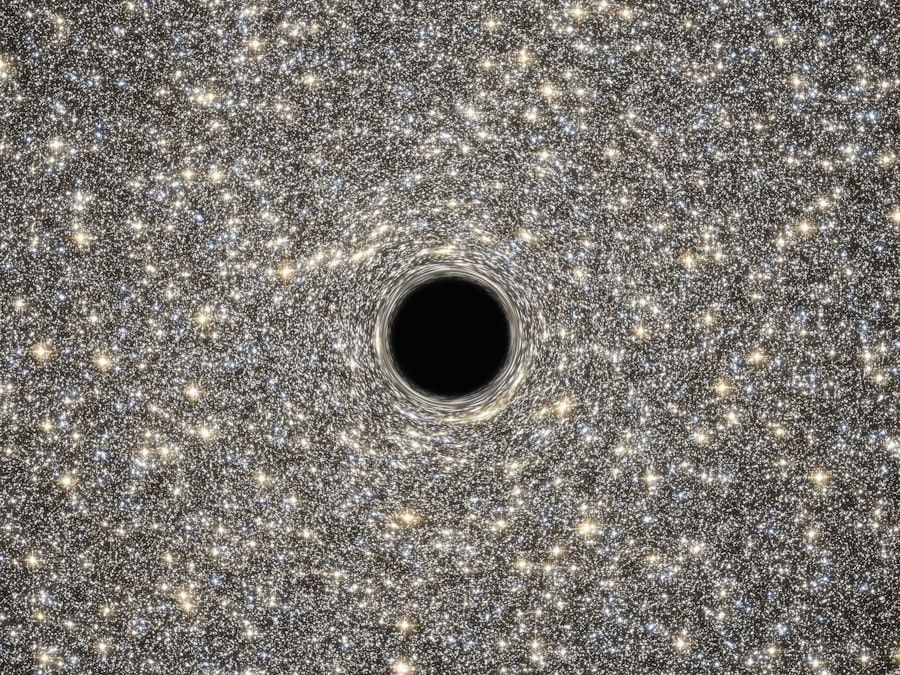
You’ve seen how black holes bend and warp spacetime. This ability reveals that spacetime is not a static backdrop but a dynamic, malleable medium that responds to the presence of mass and energy.
Gravitational Waves: Ripples in the Cosmic Ocean
You might have thought of gravity as an instantaneous force. However, Einstein’s theory of general relativity revealed that changes in gravitational fields propagate as waves.
The Symphony of Collisions: A New Era of Astronomy
- When massive objects like black holes merge, they create profound disturbances in spacetime, sending ripples outward in all directions: gravitational waves. These waves are a direct consequence of the dynamic nature of spacetime.
- The groundbreaking detection of gravitational waves in 2015 by the LIGO observatory marked a new era in astronomy. It allowed us to “hear” the universe for the first time, observing cosmic events that were previously invisible. Merging black holes are a significant source of these detectable waves.
Unveiling the Universe’s Secrets: A Deafening Silence Broken
- By studying gravitational waves, you can glean information about the mass, spin, and distance of the colliding objects – in this case, black holes. This opens up entirely new avenues for understanding the distribution and evolution of these enigmatic objects throughout cosmic history. You are now equipped with a new sense to perceive the universe’s most violent and hidden events.
Time Dilation: The Subjectivity of Clocks
You’ve probably heard that time can slow down. Black holes provide an extreme example of this phenomenon, demonstrating the relativity of time itself.
Near the Abyss: Time’s Elasticity Stretched to the Limit
- As you approach a black hole, the intense gravitational field causes time to dilate, or slow down, relative to an observer far away. This isn’t a trick of perception; it’s a physical reality.
- If you were to hover just outside the event horizon of a black hole for a short time and then return, you would find that far more time had passed for those on Earth than for you. You have experienced a profound shift in your personal temporal reality.
The Relativity of All Things: A Fundamental Insight
- This time dilation effect, a direct consequence of spacetime curvature, reinforces the notion that time is not absolute but is relative to the observer’s gravitational environment. It’s a stark reminder that your perception of time is not a universal constant, but rather a localized experience.
The discovery of black holes has profoundly altered our understanding of reality, challenging long-held beliefs about the nature of space and time. These enigmatic cosmic entities not only serve as a testament to the complexities of gravitational forces but also raise intriguing questions about the fabric of the universe itself. For a deeper exploration of how black holes have reshaped our perception of the cosmos, you can read more in this insightful article on mycosmicventures.com.
The Future of Exploration: Probing the Unknown
| Aspect | Impact |
|---|---|
| Gravitational pull | Revealed the extreme power of gravity and its effect on space and time |
| Event horizon | Introduced the concept of a boundary beyond which nothing can escape, not even light |
| Space-time curvature | Highlighted the warping of space and time around black holes, challenging traditional notions of physics |
| Singularity | Proposed the existence of a point of infinite density at the center of a black hole, defying known laws of physics |
| Information paradox | Raised questions about the conservation of information in black holes, leading to new theories in quantum mechanics |
You stand at the dawn of a new understanding, armed with observations and theories that are rapidly redefining our cosmic perspective. The exploration of black holes is far from over.
Advanced Observatories: Expanding Our Vision
You can look forward to a future where our ability to observe and understand black holes will be significantly enhanced.
The Event Horizon Telescope: A Zoom Lens on the Void
- The Event Horizon Telescope (EHT) collaboration, which provided the first direct image of a black hole’s shadow in 2019, is just the beginning. Future iterations and upgrades will offer even higher resolution, allowing us to study the immediate vicinity of black holes with unprecedented detail. You are witnessing a blurry first glimpse of a cosmic leviathan.
Gravitational Wave Detectors: Listening to the Universe’s Roar
- The next generation of gravitational wave detectors, such as LISA (Laser Interferometer Space Antenna), will be sensitive to a wider range of frequencies, allowing us to detect mergers of supermassive black holes and other cosmic cataclysms that were previously beyond our reach. You are preparing to hear the truly deafening roars of the cosmos.
Theoretical Advancements: A Deeper Understanding
You are also witnessing a period of intense theoretical work, pushing the boundaries of our understanding of fundamental physics.
Unified Theories: A Quest for Wholeness
- The ongoing quest for a unified theory of quantum gravity, which aims to reconcile general relativity and quantum mechanics, is directly influenced by the mysteries of black holes. You are part of a scientific endeavor that seeks to unlock the fundamental rules of the universe.
- These theories promise to provide deeper insights into the nature of spacetime, singularities, and the ultimate fate of information.
The Next Paradigm Shift: Beyond Our Current Comprehension
- As you continue to unravel the secrets of black holes, you are not merely adding facts to a cosmic encyclopedia. You are fundamentally shifting our paradigm of reality. These enigmatic objects are not just endpoints of stellar evolution; they are cosmic laboratories, offering profound clues about the very nature of existence. You are witnessing a profound and exciting transformation in humanity’s understanding of the cosmos, one that will continue to unfold for generations to come.

Physicists Think Reality Might Be 2D
FAQs
What is a black hole?
A black hole is a region in space where the gravitational pull is so strong that nothing, not even light, can escape from it. It is formed when a massive star collapses under its own gravity.
How have black holes changed our understanding of reality?
Black holes have changed our understanding of reality by challenging our previous understanding of physics and the laws of nature. They have forced scientists to rethink concepts such as space, time, and gravity, and have led to the development of new theories and ideas in the field of astrophysics.
What are some of the key discoveries related to black holes?
Some key discoveries related to black holes include the confirmation of their existence through the detection of gravitational waves, the understanding of their role in the evolution of galaxies, and the exploration of their impact on the fabric of space-time.
What are the implications of black holes for our understanding of the universe?
The implications of black holes for our understanding of the universe are significant. They have provided insights into the behavior of matter and energy in extreme conditions, the formation and evolution of galaxies, and the nature of space-time itself.
What are some ongoing research and future prospects related to black holes?
Ongoing research related to black holes includes the study of their properties, the exploration of their role in the early universe, and the search for new ways to observe and understand these enigmatic cosmic phenomena. Future prospects include the development of new technologies and instruments to study black holes in more detail, as well as the potential for new breakthroughs in our understanding of the universe.