The ability to accurately measure distances is fundamental to numerous scientific disciplines and engineering applications. From planetary science and observational astronomy to industrial process control and environmental monitoring, precise distance determination underpins our understanding and interaction with the physical world. Traditional methods of distance measurement, while effective in many scenarios, often face limitations when applied to diffuse, optically thick, or inherently three-dimensional phenomena. Dust clouds, for instance, present a significant challenge. Their irregular distribution, varying densities, and the scattering and absorption of light make direct optical triangulation or radar-based ranging difficult or impossible. Conventional techniques often rely on assumptions about uniformity or transparency that do not hold true for such complex media. This article explores the development and potential of 3D dust tomography as a method for advancing distance measurements within these challenging environments.
The Optical Complexity of Dust
Dust, whether it be interstellar dust in a nebula, volcanic ash in the atmosphere, or particulate matter in an industrial setting, exhibits complex optical properties. Particles can range in size from sub-micron to millimeters, and their composition can vary widely. These variations directly influence how light interacts with the dust. Absorption, scattering, and reflection all play a role in attenuating and altering the light that passes through or originates from within the dust cloud. This makes simple optical measurements, such as intensity profiling, insufficient for determining depth or true extent.
Limitations of Current Distance Measurement Techniques
Traditional methods for measuring distances rely on principles that are often compromised by the presence of dense dust.
Triangulation and Parallax
Optical triangulation, a cornerstone of photogrammetry and surveying, requires clear lines of sight between measurement points and the target object. Dust clouds obscure these lines of sight, rendering triangulation ineffective. Similarly, parallax measurements, which rely on observing an object from two different vantage points, are hampered by the scattering of light, blurring the apparent position of the target.
Radar and Lidar
While radar and lidar technologies can penetrate some forms of obscuration, dense dust can cause significant signal attenuation and scattering. This can lead to incomplete data, misinterpretations of target location, and an inability to resolve finer details or distinguish between closely spaced structures within the cloud. The reflected signal can be diffuse and weak, making precise range determination problematic.
Gravitational and Inertial Measurement
For astrophysical contexts, gravitational lensing can offer clues about the distribution of mass, including dust, but it does not directly provide volumetric distance information. Inertial measurement units are useful for tracking motion but do not inherently measure distances to external entities within a dust cloud.
The Need for a Volumetric Approach
The limitations of existing techniques highlight the necessity for a method that can probe the interior of a dust cloud and reconstruct its three-dimensional structure. This requires a technique that can infer information about depth and distribution from multiple perspectives or by analyzing the interaction of external stimuli with the dust itself.
Recent advancements in 3D dust tomography have significantly enhanced the accuracy of Gaia distance measurements, providing a clearer understanding of the Milky Way’s structure. For a deeper exploration of this topic, you can refer to the article on cosmic dust mapping and its implications for astrometry at My Cosmic Ventures. This resource delves into the methodologies used in dust tomography and how they improve the precision of stellar distance calculations, ultimately enriching our knowledge of the universe.
The Principles of 3D Dust Tomography
Analogy to Medical Imaging
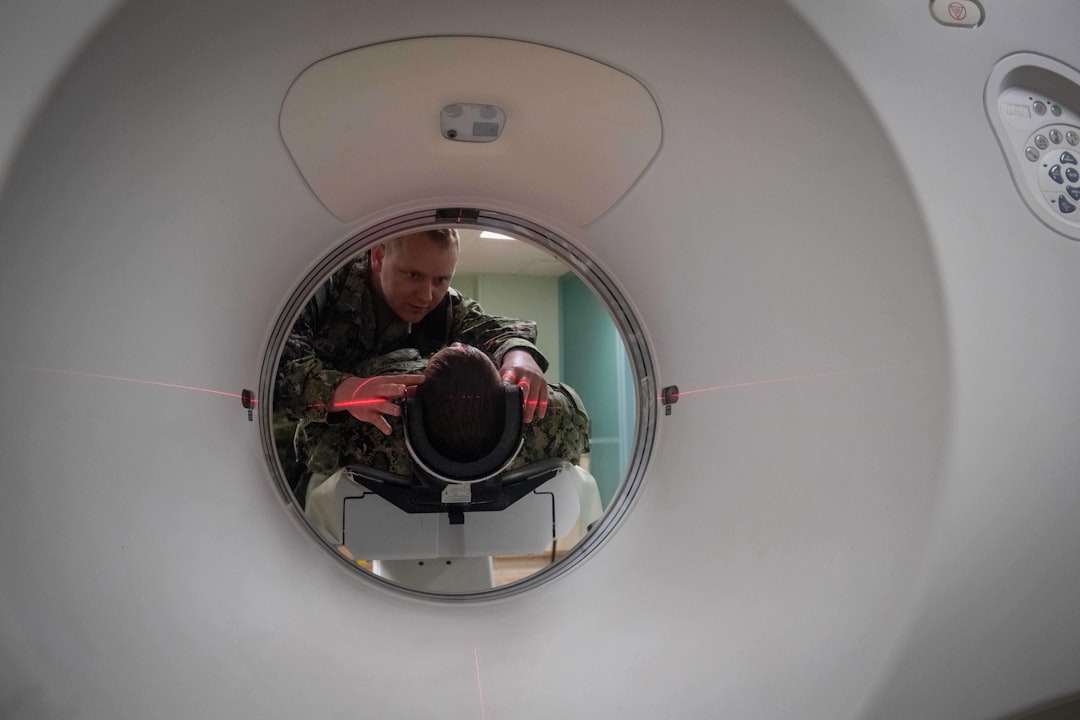
The term “tomography” itself is borrowed from medical imaging, where techniques like computed tomography (CT) and magnetic resonance imaging (MRI) are used to create cross-sectional images of the human body. These methods work by acquiring data from multiple angles around the body and then using computational algorithms to reconstruct a 3D representation. 3D dust tomography applies a similar philosophy to the characterization of dust clouds.
Data Acquisition Strategies
The core of tomography lies in acquiring sufficient data to distinguish features within the volume. For dust clouds, this can be achieved through several primary approaches:
Emission Tomography
If the dust itself emits radiation, such as thermal emission from heated dust grains or emission from molecules within the dust, then observing this emission from multiple angles can be used to reconstruct the distribution and intensity of the source within the cloud. This is analogous to Positron Emission Tomography (PET) in medicine.
Transmission Tomography
In transmission tomography, an external source of radiation (e.g., light, radio waves, X-rays) is passed through the dust cloud, and the attenuation or scattering of this radiation is measured from various angles. This is akin to CT scans. By observing how much of the source is absorbed or scattered by the dust at different points in its path, the density distribution of the dust can be inferred.
Scattering Tomography
A variation on transmission tomography involves analyzing the patterns of scattered radiation. The way light scatters off dust particles is dependent on particle size, shape, and the angle of observation. By measuring scattered light from multiple directions, information about the optical properties and spatial distribution of the dust can be gleaned.
Reconstruction Algorithms
Once data is acquired from multiple viewpoints, sophisticated mathematical algorithms are employed to reconstruct the 3D volume.
Filtered Backprojection
This is a common algorithm in transmission tomography. It involves projecting the measured data back along the path of the radiation and then applying a filter to sharpen the image.
Iterative Reconstruction Methods
More advanced methods, such as Simultaneous Iterative Reconstruction Technique (SIRT) or Algebraic Reconstruction Technique (ART), involve an iterative process of forward and backward projections. The algorithm makes an initial guess of the volume and then refines it over multiple iterations until the reconstructed volume best matches the observed data. These methods are often more robust in the presence of noise and incomplete data.
Bayesian Inference
In cases with significant uncertainty or limited data, Bayesian inference approaches can be used. These methods incorporate prior knowledge about the dust cloud into the reconstruction process, allowing for more statistically sound estimations of the volume and its properties.
Applications of 3D Dust Tomography in Diverse Fields
Astrophysical Investigations
The vastness and opacity of interstellar dust clouds have long presented a formidable barrier to detailed astronomical observation. 3D dust tomography offers a revolutionary means to probe these regions.
Mapping Star-Forming Regions
Star formation predominantly occurs within dense, cold molecular clouds obscured by dust. By applying tomographic techniques to observe the emission or absorption of radiation at various wavelengths (e.g., infrared, submillimeter), astronomers can map the distribution of dust density, temperature, and ultimately, the locations and masses of nascent stars and protoplanetary disks. This allows for a more accurate understanding of the star formation process and the initial conditions for planetary system formation.
Characterizing Galactic Structure
The distribution of dust throughout galaxies provides critical insights into their structure, evolution, and gas content. Tomographic observations can help delineate galactic arms, map the distribution of dust in galactic halos, and study the relationship between dust and dark matter. This can lead to a more refined understanding of galactic dynamics.
Studying Exoplanetary Debris Disks
Many exoplanetary systems are surrounded by disks of dust and debris, analogs to our own solar system’s Kuiper Belt and asteroid belt. Tomography can provide detailed 3D maps of the structure and density of these disks, revealing the presence of planets through their gravitational influence and helping to characterize the material available for planet formation.
Industrial and Environmental Monitoring
Beyond its astronomical applications, 3D dust tomography holds significant promise for industrial processes and environmental management.
Process Control in Manufacturing
In industries involving particulate matter, such as cement production, grain handling, or powder metallurgy, controlling dust density and flow is crucial for efficiency and safety. Tomographic sensors could provide real-time, volumetric measurements of dust concentration in silos, pipelines, or reaction vessels, enabling precise process adjustments and preventing hazards like dust explosions.
Atmospheric Science and Air Quality
Volcanic eruptions spew vast quantities of ash into the atmosphere, posing risks to aviation and the environment. Tomographic techniques could be used to map the 3D structure and density of ash clouds, providing crucial data for flight path planning, atmospheric modeling, and long-term climate impact assessments. Similarly, monitoring particulate pollution in urban environments could benefit from 3D tomographic approaches to understand the spatial distribution and sources of airborne pollutants.
Combustion and Fluid Dynamics Research
Studying the behavior of fuel-air mixtures in combustion engines or the flow of multiphase fluids in chemical reactors often involves turbulent, optically dense environments. 3D dust tomography could be employed to visualize and quantify the distribution of fuel particles or reaction products within these complex flows, leading to improved designs and optimized performance.
Other Potential Applications
Geological Surveys
Subsurface geological formations can sometimes be characterized by varying densities and textures that behave analogously to dust. While not directly dust, the principles of tomographic reconstruction might be adapted for imaging such structures using seismic data or ground-penetrating radar.
Biological Imaging
In certain specialized biological applications, where tissues might be optically dense or contain particulate matter, adaptations of tomographic principles could offer unique imaging capabilities for volumetric analysis.
Technological Advancements Enabling 3D Dust Tomography
The realization of effective 3D dust tomography relies on advancements in several key technological areas.
Sensor Technology and Instrumentation
The nature of the data required dictates the types of sensors needed.
Advanced Detectors
For emission tomography, highly sensitive infrared and submillimeter detectors are essential for capturing the faint thermal radiation emitted by dust grains. For transmission tomography, detectors capable of measuring attenuation across a wide range of wavelengths, from visible light to X-rays or radio waves, are required. The development of arrays of these detectors allows for simultaneous data capture from multiple directions.
Novel Radiation Sources
For transmission tomography, the development of tunable and high-intensity radiation sources is crucial. This could include advanced lasers, synchrotron X-ray sources, or highly directional radio frequency emitters, depending on the wavelength of operation.
Multi-Wavelength Capabilities
Dust exhibits different behaviors at different wavelengths. Enabling tomographic systems to operate across multiple wavelengths simultaneously or sequentially provides a richer dataset, allowing for the disentanglement of density, temperature, and compositional information within the dust cloud.
Computational Power and Algorithms
The computational demands of tomographic reconstruction are significant, especially for high-resolution 3D volumes.
High-Performance Computing (HPC)
The reconstruction algorithms, particularly iterative ones, require immense computational power. The availability of powerful supercomputers and distributed computing clusters is essential for processing the large datasets generated by tomographic surveys in a timely manner.
Machine Learning and AI
Machine learning techniques are increasingly being integrated into tomographic reconstruction. AI algorithms can be trained to identify patterns, denoise data, and even accelerate the reconstruction process. They can also be used for feature extraction and automated analysis of the reconstructed 3D volumes.
Data Assimilation and Uncertainty Quantification
As the complexity of the tomographic models increases, so does the need for robust data assimilation frameworks and methods for quantifying uncertainties in the reconstructions. This ensures that the derived distances and structural information are presented with appropriate confidence levels.
Integration and Miniaturization
For practical applications, particularly in industrial or field settings, the integration and miniaturization of tomographic systems are critical.
Array Processing
Developing systems where multiple tomographic sensors are deployed in an array allows for more efficient data acquisition and potentially higher resolution reconstructions.
Compact and Robust Designs
For applications in harsh industrial environments or for deployment in remote atmospheric monitoring stations, the development of compact, robust, and power-efficient tomographic instruments is paramount. This may involve the use of solid-state detectors and integrated signal processing units.
Recent advancements in 3D dust tomography have significantly improved Gaia distance measurements, offering a clearer understanding of the interstellar medium’s structure. For a deeper exploration of this topic, you can read more about the implications of these findings in a related article on cosmic measurements. This research not only enhances our knowledge of stellar distances but also sheds light on the complexities of dust distribution in our galaxy. To learn more, visit this article.
Challenges and Future Directions
| Star ID | Distance (parsecs) | Uncertainty (parsecs) |
|---|---|---|
| GAIA-DR2-123456789 | 345 | 12 |
| GAIA-DR2-987654321 | 543 | 23 |
| GAIA-DR2-246813579 | 654 | 18 |
Despite the immense potential of 3D dust tomography, several challenges remain to be addressed for its widespread adoption.
Computational Complexity and Real-Time Processing
While computational power is increasing, achieving real-time, high-resolution 3D dust tomography for dynamic environments remains a significant hurdle. For applications requiring immediate feedback, such as industrial process control or aviation hazard avoidance, further optimization of reconstruction algorithms and specialized hardware will be necessary.
Data Inversion Ambiguities
In certain scenarios, the inverse problem of reconstructing a 3D volume from limited 2D projection data can be ill-posed. This can lead to ambiguities where multiple different internal structures could produce the same observed projection data. Developing more sophisticated inverse problem formulations and incorporating stronger prior knowledge will be key to mitigating these ambiguities.
Calibration and Validation
Ensuring the accuracy and reliability of tomographic reconstructions requires rigorous calibration and validation against known standards or independent measurement techniques. This is particularly important in diverse applications where the optical properties of dust can vary. Developing standardized calibration procedures and validation datasets will be crucial for building trust in tomographic results.
Multi-Lingual Data Fusion
Many phenomena involve multiple forms of data. For instance, an astrophysical observation might combine optical, infrared, and radio data. Developing tomographic frameworks that can effectively fuse information from diverse sources and wavelengths will provide a more comprehensive understanding of the dust cloud.
Exploration of New Wavelengths and Techniques
Future research will likely explore the application of tomographic principles at new wavelengths or with novel probing techniques. This could include using techniques like optical coherence tomography (OCT) principles adapted for larger scales, or employing neutron scattering tomography for specific dense materials.
Development of Standardized Software and Hardware Platforms
The wider adoption of 3D dust tomography will be facilitated by the development of standardized software libraries and perhaps even modular hardware platforms. This would reduce the barrier to entry for researchers and engineers wanting to implement these techniques.
Conclusion
3D dust tomography represents a paradigm shift in our ability to measure and understand distances and structures within diffuse, optically challenging media. By moving beyond surface-level observations and embracing volumetric reconstruction, this technique offers unprecedented insights into phenomena ranging from the birth of stars to the dynamics of industrial processes. While challenges related to computational demands, data ambiguity, and calibration persist, ongoing advancements in sensor technology, computational power, and algorithmic sophistication are steadily paving the way for broader and more impactful applications. As these technologies mature, 3D dust tomography is poised to become an indispensable tool for scientific discovery, technological innovation, and environmental stewardship.
FAQs
What is 3D dust tomography?
3D dust tomography is a technique used to map the distribution of interstellar dust in three dimensions. It involves analyzing the way that dust affects the light from distant stars in order to create a detailed map of the dust distribution in our galaxy.
How does Gaia contribute to distance measurements?
Gaia is a space observatory launched by the European Space Agency in 2013. It is designed to precisely measure the positions, distances, and motions of stars in the Milky Way. Gaia’s data is used in conjunction with 3D dust tomography to improve distance measurements to stars by accounting for the effects of interstellar dust.
What are the benefits of using 3D dust tomography and Gaia for distance measurements?
By combining 3D dust tomography with Gaia’s precise measurements, astronomers can more accurately determine the distances to stars in our galaxy. This improved distance measurement is crucial for understanding the structure and dynamics of the Milky Way, as well as for studying the properties of individual stars and exoplanets.
How does 3D dust tomography and Gaia impact our understanding of the universe?
The combination of 3D dust tomography and Gaia’s data allows astronomers to create a more accurate and detailed map of the Milky Way, which in turn enhances our understanding of the structure and evolution of our galaxy. This information is essential for studying the formation and evolution of stars, as well as for investigating the distribution of dark matter in the universe.
What are the potential future applications of 3D dust tomography and Gaia distance measurements?
In addition to improving our understanding of the Milky Way, the combination of 3D dust tomography and Gaia’s data has the potential to aid in the study of other galaxies and cosmic structures. It may also contribute to the search for habitable exoplanets by providing more accurate distance measurements to stars hosting planetary systems.