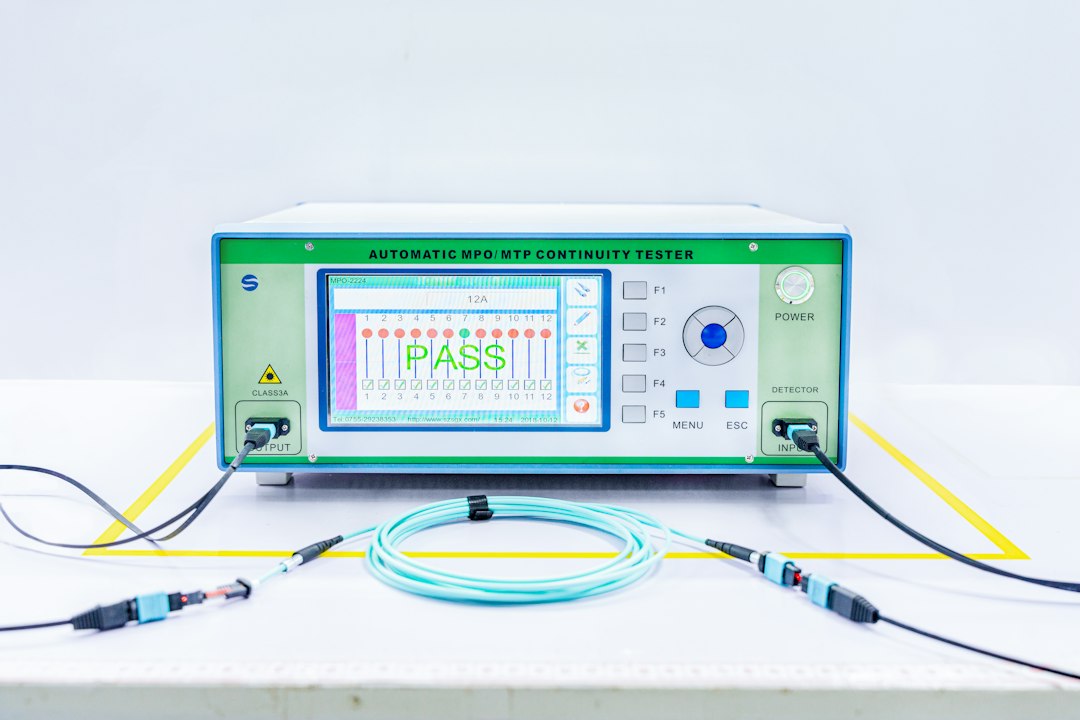
The Evolving Landscape of Phase Shift Probe Laser Technology
Phase shift probe laser technology stands as a cornerstone in the realm of precision measurement, enabling scientists and engineers to probe microscopic and macroscopic phenomena with unprecedented accuracy. This sophisticated technique, which leverages the phase information encoded within a laser beam, has witnessed significant advancements in recent years, pushing the boundaries of what is measurable. From the nanoscale intricacies of material surfaces to the subtle deformations of large structures, phase shift probe lasers are proving indispensable. The core principle involves interrogating a target with a laser beam and analyzing the phase shift of the reflected or transmitted light. This phase shift is directly related to changes in the optical path length, which in turn can be correlated with physical quantities such as distance, displacement, vibration, and refractive index. The inherent sensitivity of optical phase allows for measurements far surpassing those achievable with conventional interferometric methods.
The journey of phase shift probe laser technology began with fundamental principles of interferometry, evolving through the development of more stable laser sources, sophisticated detectors, and advanced signal processing algorithms. Early implementations often relied on continuous-wave (CW) lasers and homodyne or heterodyne detection schemes. However, the quest for higher resolution, faster acquisition, and the ability to measure in more challenging environments has spurred continuous innovation. This article will delve into the recent breakthroughs in phase shift probe laser technology, exploring the underlying principles, key technological advancements, diverse applications, and the future trajectory of this transformative field. Understanding these advancements is crucial for anyone involved in high-precision metrology, scientific research, and advanced manufacturing.
In recent advancements in laser technology, the phase shift probe laser has garnered significant attention for its applications in precision measurement and imaging. For a deeper understanding of this innovative technology and its implications in various fields, you can explore a related article that discusses the fundamentals and applications of phase shift probe lasers. To read more, visit this link.
Fundamental Principles of Phase Shift Interferometry
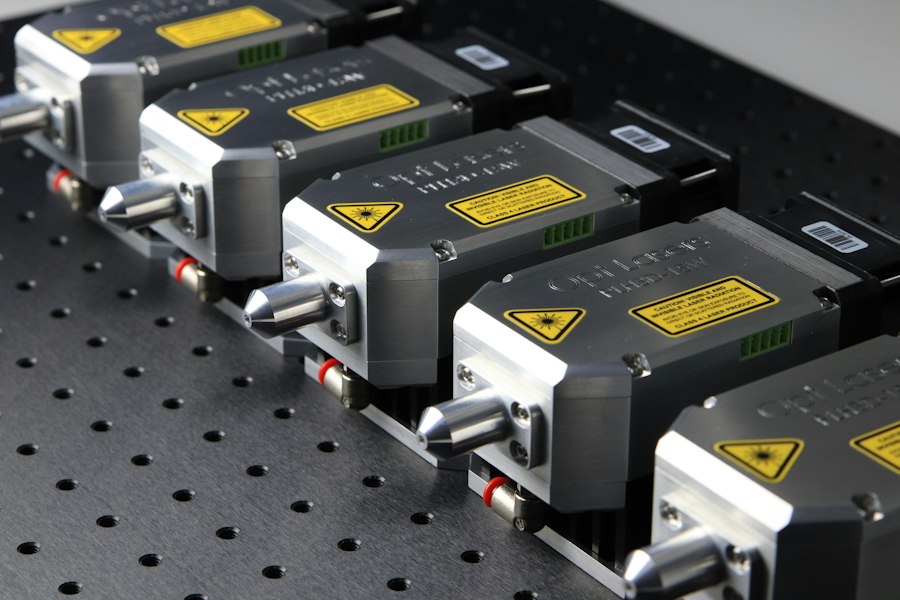
The essence of phase shift probe laser technology lies in its ability to extract precise dimensional and dynamic information by precisely measuring the phase difference between two or more light beams. At its heart, the technique is rooted in interferometry, a method that exploits the wave nature of light. When two coherent light waves are superimposed, they interfere, creating a pattern of constructive and destructive interference. The intensity of the resulting interference pattern is directly dependent on the phase difference between the waves. In phase shift interferometry, this phase difference is systematically varied, and the resulting intensity changes are recorded. By analyzing these changes, the original phase difference, and consequently the physical quantity being measured, can be determined with remarkable accuracy.
Interferometric Configurations and Beam Manipulation
Various interferometric configurations are employed in phase shift probe laser systems, each optimized for specific measurement scenarios. The most common include the Michelson interferometer, the Mach-Zehnder interferometer, and the Twyman-Green interferometer. In a Michelson interferometer, a beam splitter divides an incident laser beam into two paths: a reference path and a measurement path. The light in the measurement path interacts with the target, while the light in the reference path travels an unchanging path. The two beams are then recombined, and their interference is observed. The phase shift in the measurement arm, caused by changes in the target’s position or surface topography, directly influences the interference pattern.
Encoding Information in Optical Phase
The power of phase shift interferometry stems from its ability to encode information in the optical phase. Unlike intensity-based measurements, which are susceptible to fluctuations in light source intensity and detector sensitivity, phase is a more robust parameter. Even minute changes in the optical path length, on the order of a fraction of a wavelength of light, can be detected by measuring corresponding phase shifts. This sensitivity is what allows for sub-wavelength resolution in many phase shift probe laser applications. The relationship between the optical path length difference ($\Delta L$) and the phase difference ($\Delta \phi$) is given by $\Delta \phi = \frac{2\pi}{\lambda} \Delta L$, where $\lambda$ is the wavelength of the laser light. Therefore, by accurately measuring $\Delta \phi$, one can precisely determine $\Delta L$.
Key Technological Advancements Driving Precision
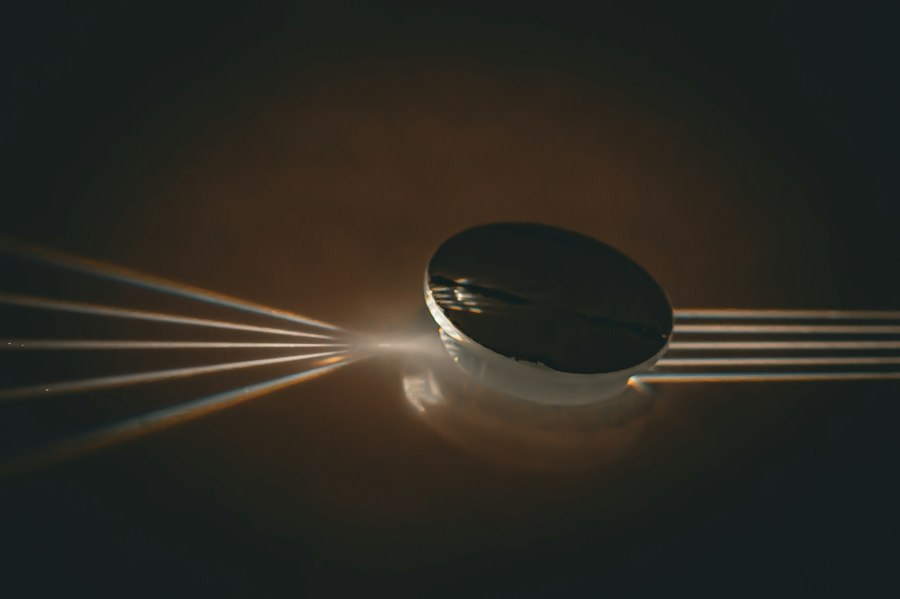
The remarkable progress in phase shift probe laser technology is a testament to the synergistic development of several key technologies. These advancements span laser sources, optical components, detector technology, and sophisticated signal processing techniques, each contributing to enhanced accuracy, speed, and versatility.
Novel Laser Sources and Wavelength Control
The selection of the laser source is paramount for the performance of any phase shift probe system. Modern systems benefit from the availability of highly stable, monochromatic, and coherent laser sources. These include various types of solid-state lasers, gas lasers, and semiconductor lasers, often engineered for specific wavelength requirements and coherence lengths. Advancements in tunable lasers and frequency-stabilized lasers have further expanded the capabilities of phase shift probe systems, allowing for measurements across different spectral ranges and enabling techniques like wavelength scanning interferometry, which can overcome ambiguities in phase measurements over longer distances. The development of ultrashort pulse lasers has also opened new avenues, enabling time-resolved phase measurements and the study of ultrafast phenomena.
High-Sensitivity Photodetectors and Imaging Systems
The detection of the interference pattern is critical for extracting phase information. Significant improvements in photodetector technology have led to detectors with higher quantum efficiency, lower noise levels, and faster response times. Charge-coupled devices (CCDs) and scientific complementary metal-oxide-semiconductor (CMOS) image sensors are widely used, providing high spatial resolution for detailed surface analysis. For applications requiring extremely high sensitivity or fast acquisition, avalanche photodiodes (APDs) and photomultiplier tubes (PMTs) are employed. Furthermore, the development of array detectors has enabled parallel acquisition of interference fringes, dramatically reducing measurement times and making real-time monitoring feasible.
Advanced Phase Extraction Algorithms and Signal Processing
While hardware advancements are crucial, the sophisticated algorithms used to extract phase information from the raw intensity data are equally important. Traditional methods like the five-bucket algorithm have been augmented by more robust and accurate techniques. Spatial phase unwrapping algorithms are essential for reconstructing the continuous phase map from the phase difference modulo $2\pi$. Temporal phase unwrapping techniques are employed when measuring dynamic events. Modern signal processing approaches leverage techniques such as Fourier transform analysis, wavelet transforms, and advanced filtering methods to improve signal-to-noise ratio, reduce errors caused by environmental noise (vibrations, air turbulence), and enhance the overall accuracy and reliability of the measurements. Machine learning algorithms are also beginning to be explored for optimizing phase retrieval and error correction.
Diverse Applications Across Scientific and Industrial Domains
The enhanced precision and versatility of modern phase shift probe laser technology have propelled its adoption across a broad spectrum of scientific research and industrial applications. Its ability to perform non-contact, high-resolution measurements makes it ideal for situations where physical contact is impossible or undesirable.
Nanotechnology and Surface Metrology
In the realm of nanotechnology, phase shift probe lasers are indispensable tools for characterizing the surface topography and nanoscale features of materials. Atomic force microscopes (AFMs) often employ interferometric techniques for precise positioning of the scanning tip and for measuring the surface profile with sub-nanometer resolution. Optical profilometers utilizing phase shift interferometry can rapidly map the surface roughness, waviness, and defect distribution of microelectronic components, optical surfaces, and advanced materials. This allows for critical quality control in semiconductor fabrication, the manufacturing of high-performance optics, and the development of novel nanomaterials. For instance, measuring the surface finish of silicon wafers or the precise dimensions of microfluidic channels relies heavily on the precision offered by these laser techniques.
Biomedical Imaging and Diagnostics
The biomedical field has also benefited immensely from advancements in phase shift probe laser technology. Optical coherence tomography (OCT), a non-invasive imaging modality, uses interferometry to generate cross-sectional images of biological tissues with high resolution. By analyzing the interference of light reflected from different depths within the tissue, OCT can visualize microstructures, detect subtle changes indicative of disease, and guide surgical procedures. Phase-sensitive OCT further enhances the capabilities by measuring blood flow velocity (Doppler OCT) and quantifying tissue elasticity. This has revolutionized ophthalmology, cardiology, and dermatology, enabling earlier and more accurate diagnoses. Research into using phase shift probes for intracellular imaging and drug delivery monitoring is also ongoing.
Industrial Inspection and Quality Control
In industrial settings, phase shift probe lasers are employed for a wide range of inspection and quality control tasks. Non-contact measurement of dimensions, shape, and surface defects of manufactured parts is crucial for ensuring product quality and reducing waste. This includes applications in the automotive industry for inspecting engine components, in aerospace for verifying the integrity of critical structures, and in the electronics industry for quality assurance of printed circuit boards. The ability to perform measurements at high speed allows for in-line inspection, enabling real-time feedback to manufacturing processes. Examples include checking the flatness of turbine blades, the roundness of precision bearings, and the consistency of coatings on various surfaces.
Advanced Manufacturing and Metrology
The rise of additive manufacturing (3D printing) has created new challenges and opportunities for metrology. Phase shift probe lasers are vital for verifying the accuracy and quality of 3D-printed parts. They can measure the dimensions and surface finish of complex geometries, ensuring that the printed objects meet design specifications. In precision engineering, where tolerances are extremely tight, these laser techniques are used to calibrate machine tools, measure the form and position of critical features on components, and ensure the overall accuracy of manufacturing processes. The development of in-situ monitoring systems, which use phase shift probes to track the manufacturing process in real-time, is also a significant area of advancement.
Recent advancements in phase shift probe laser technology have opened new avenues for precision measurements in various scientific fields. Researchers are exploring innovative applications that leverage the unique properties of these lasers to enhance imaging techniques and improve data accuracy. For a deeper understanding of these developments, you can read more in this insightful article on the topic. To learn more about the implications of these advancements, visit this article.
Future Trends and Emerging Opportunities
| Parameter | Value | Unit | Description |
|---|---|---|---|
| Wavelength | 1550 | nm | Operating wavelength of the probe laser |
| Output Power | 10 | mW | Typical output power of the probe laser |
| Phase Noise | -90 | dBc/Hz | Phase noise at 1 kHz offset frequency |
| Linewidth | 100 | kHz | Laser linewidth (full width at half maximum) |
| Modulation Bandwidth | 10 | GHz | Maximum modulation bandwidth for phase modulation |
| Polarization | Linear | – | Polarization state of the laser output |
| Operating Temperature | 20-30 | °C | Recommended operating temperature range |
| Frequency Stability | ±1 | MHz | Frequency stability over 1 hour |
The continuous evolution of phase shift probe laser technology suggests a future brimming with exciting possibilities and new frontiers. Ongoing research and development are focused on further enhancing performance, expanding application domains, and integrating these advanced metrology tools into novel systems.
Towards Higher Resolution and Extended Measurement Ranges
The relentless pursuit of higher resolution and broader measurement ranges remains a primary driver for innovation. Researchers are exploring new optical designs, advanced laser sources with even narrower linewidths, and detector technologies that can capture fainter signals with greater fidelity. The development of techniques that can extend the unambiguous measurement range of interferometers, such as multi-wavelength interferometry and synthetic wavelength interferometry, is also a key area of focus. This will enable the precise measurement of larger objects or more complex surfaces without the need for time-consuming phase unwrapping procedures. Exploring novel interferometric configurations and exploiting the polarization state of light are also avenues for achieving higher resolution.
Integration with Artificial Intelligence and Machine Learning
The integration of artificial intelligence (AI) and machine learning (ML) with phase shift probe laser systems holds immense potential for transforming data analysis and interpretation. AI algorithms can be trained to identify subtle patterns in interferometric data that might be missed by human operators, leading to improved defect detection and anomaly identification. ML can also be used to optimize measurement parameters in real-time, adapt to changing environmental conditions, and automate complex data processing tasks, making these systems more user-friendly and efficient. Furthermore, AI can assist in the design of novel interferometric systems and the development of more robust phase retrieval algorithms, pushing the boundaries of what is achievable.
Miniaturization and Portable Metrology Solutions
The trend towards miniaturization in electronics and sensors is also impacting phase shift probe laser technology. Efforts are underway to develop smaller, more portable, and cost-effective phase shift probe systems. This would enable their deployment in a wider range of applications, including field measurements, on-site inspections, and integration into portable diagnostic devices. The development of compact laser diodes, micro-optics, and integrated sensor chips will be crucial for achieving this goal. Such portable systems could revolutionize fields like structural health monitoring of bridges and buildings, field-based medical diagnostics, and environmental monitoring.
New Applications in Quantum Metrology and Advanced Sensing
The fundamental principles underlying phase shift probe laser technology also find relevance in emerging fields like quantum metrology and advanced sensing. Researchers are investigating how to leverage quantum phenomena, such as entanglement, to further enhance the precision and sensitivity of interferometric measurements, potentially surpassing the classical limits. The development of phase shift probes for measuring quantum states of light or for quantum entanglement verification are active areas of research. Furthermore, adapting these techniques for sensing other physical parameters beyond displacement, such as magnetic fields or gravitational waves, through indirect optical interactions is an exciting prospect for the future. The development of phase-sensitive techniques for detecting minute changes in refractive index could also lead to novel applications in chemical sensing and material characterization.

Physicists Just Measured a Negative Second.
FAQs
What is a phase shift probe laser?
A phase shift probe laser is a type of laser used in various scientific and industrial applications to measure distances, surface profiles, and vibrations with high precision.
How does a phase shift probe laser work?
A phase shift probe laser works by emitting a laser beam onto a target surface and measuring the phase shift of the reflected beam. This phase shift is used to calculate the distance or profile of the surface being measured.
What are the advantages of using a phase shift probe laser?
Some advantages of using a phase shift probe laser include high accuracy, non-contact measurement, fast data acquisition, and the ability to measure difficult-to-reach surfaces or objects.
Where are phase shift probe lasers commonly used?
Phase shift probe lasers are commonly used in fields such as metrology, 3D scanning, industrial automation, robotics, and quality control for precise measurements and inspections.
What factors should be considered when choosing a phase shift probe laser?
When choosing a phase shift probe laser, factors to consider include the required measurement range, accuracy, speed, laser wavelength, power consumption, and compatibility with the specific application or environment.