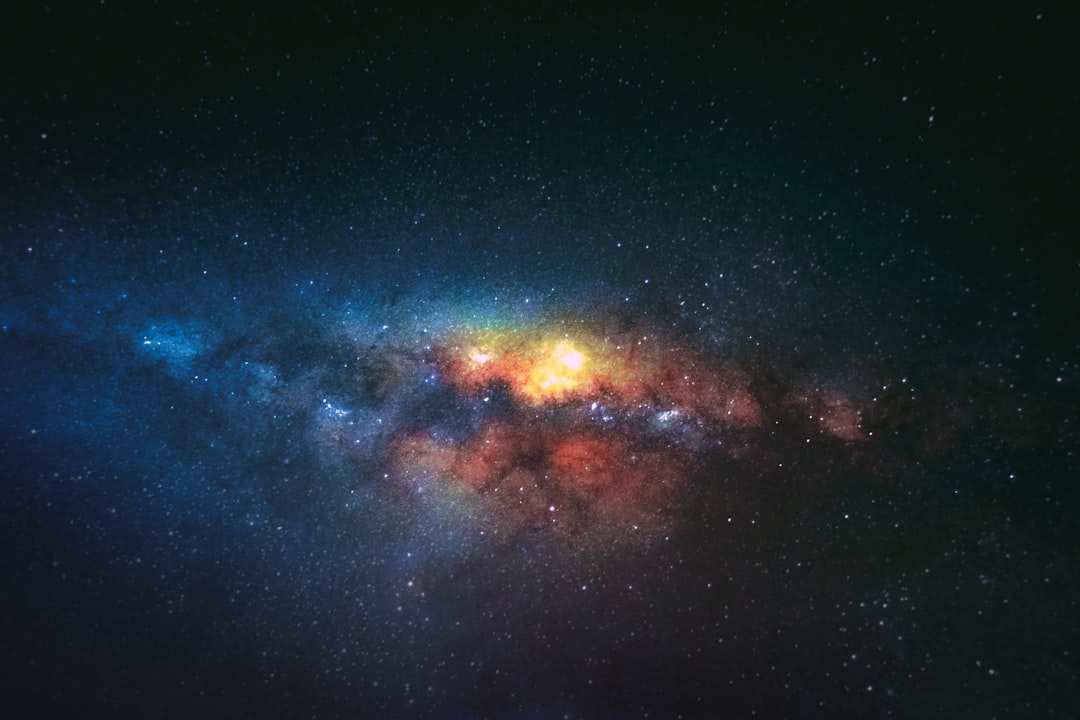
A vast void, spanning an astonishing 330 million light-years, has been identified within the cosmic tapestry. This colossal anomaly, observed in the distribution of galaxies, challenges current astrophysical models and prompts a re-evaluation of our understanding of large-scale cosmic structures. Its sheer size and the apparent scarcity of matter within its boundaries suggest a phenomenon that demands further investigation, potentially pointing to fundamental aspects of the universe yet to be fully comprehended.
The identification of this remarkable void is not a singular event but the culmination of decades of meticulous observation and data analysis by astronomers. The endeavor began with the systematic mapping of the universe, a monumental task that involves charting the positions and movements of billions of galaxies.
Early Galactic Surveys and the Seeds of Anomalies
The initial efforts to map the universe, such as the Sloan Digital Sky Survey (SDSS), laid the groundwork for identifying deviations from expected galactic distributions. These surveys, while revolutionary, were primarily concerned with charting the observable universe and cataloging its contents.
The Redshift as a Cosmic Ruler
The concept of redshift, the stretching of light waves from receding celestial objects, became a crucial tool. By measuring the redshift of distant galaxies, astronomers could infer their distance from Earth and, consequently, their location in three-dimensional space. This technique allowed for the construction of large-scale maps of the cosmos.
Unexpected Clusters and Voids
As these maps grew more detailed, patterns began to emerge. While the general distribution of galaxies generally followed predictions of a hierarchical structure, with galaxies clustering together and forming filaments and walls surrounding vast, relatively empty regions known as voids, certain areas defied these expectations. The discovery of the “Boötes Void” in the early 1980s, a region roughly 330 million light-years across, was an early indicator that the universe’s structure might be more complex than initially modeled.
Modern Observational Techniques and Refined Mapping
The advent of more powerful telescopes and advanced computational methods has significantly enhanced our ability to probe deeper into the universe and with greater precision. These improvements have been instrumental in refining galactic distribution maps and the identification of subtle, yet significant, cosmic structures.
Large-Scale Structure Surveys
Contemporary surveys, such as the Dark Energy Survey (DES) and the upcoming Vera C. Rubin Observatory, are designed to map billions of galaxies with unprecedented detail. These projects extend the reach and resolution of previous efforts, allowing for the detection of anomalies that might have been overlooked in earlier, less comprehensive studies.
Cosmic Microwave Background Radiations (CMB) as a Cosmic Blueprint
While the void itself is defined by the distribution of matter, observations of the Cosmic Microwave Background (CMB) radiation – the afterglow of the Big Bang – provide complementary information about the early universe. Fluctuations in the CMB are believed to be the seeds from which large-scale structures, including voids, eventually grew. Consistent discrepancies between CMB predictions and observed large-scale structures have fuelled ongoing research.
Recent discoveries in astrophysics have unveiled a fascinating phenomenon: a massive hole in space located 330 million light years away from Earth. This enigmatic void, which has sparked considerable interest among scientists, challenges our understanding of cosmic structures and the distribution of galaxies. For more insights into this intriguing topic and related cosmic phenomena, you can read the article at My Cosmic Ventures.
Defining the Void: Characteristics and Extent
The newly discovered void is characterized by an exceptionally low density of galaxies and other luminous matter. Its sheer scale presents a significant challenge to existing cosmological models that describe the formation and evolution of the universe.
The Scale of the Anomaly
To comprehend the immensity of this void, consider its dimensions. Spanning 330 million light-years, it dwarfs many previously identified cosmic structures of a similar nature. A light-year, the distance light travels in one year, is approximately 9.46 trillion kilometers. This means the void is a region of space so vast it would take light over three hundred million years to traverse it from one side to the other.
Comparison with Known Cosmic Structures
Previous voids, such as the aforementioned Boötes Void, were already considered exceptionally large. However, this new discovery represents a significant increase in scale, pushing the boundaries of what was thought to be possible within our current cosmological framework.
Implications for Cosmic Web Filaments
The universe is often visualized as a “cosmic web,” a network of filaments and walls of galaxies that surround vast, empty regions. This newly discovered void is situated within, or perhaps is a defining feature of, a particularly sparse section of this web, suggesting that the filaments surrounding it might be more pronounced or that the void itself has actively influenced their formation.
The Absence of Matter: A Cosmic Enigma
The defining characteristic of this void is its relative emptiness. While no region of space is entirely devoid of matter, the density of galaxies, gas, and other baryonic matter within this anomaly is remarkably low compared to the average density of the universe.
Galactic Depopulation
Surveys have revealed a significant deficit of galaxies within this region. The galaxies that are present are typically found along the fringes of the void, forming a sort of boundary. This scarcity points to fundamental processes that have prevented the formation and accumulation of matter in this volume of space.
The Role of Dark Matter and Dark Energy
While visible matter is sparse, the void’s existence is still governed by the principles of gravity, which are heavily influenced by dark matter and dark energy. Understanding how these unseen components of the universe interact and contribute to such large-scale structures is paramount.
Limits of Observational Detection
The very nature of a void makes it challenging to detect. Luminous objects are what astronomers primarily observe. Therefore, the absence of these objects is what defines the void. The deeper and more comprehensive the surveys, the more accurately these empty regions can be mapped.
Theoretical Implications and Cosmological Models

The discovery of such a colossal void poses a significant challenge to the standard Lambda-CDM model, the prevailing cosmological model that describes the universe’s evolution from the Big Bang to the present day. This model, while successful in explaining many observed phenomena, may require refinement or even revision.
Challenging the Lambda-CDM Model
The Lambda-CDM model is built upon the assumption of an initially nearly homogeneous and isotropic universe, with small density fluctuations that have grown over time through gravitational attraction. The existence of exceptionally large voids suggests that either the initial conditions were not as uniform as assumed, or that the processes driving structure formation operate differently on these immense scales.
The Standard Model’s Prediction of Void Size
According to the Lambda-CDM model, the largest voids are expected to be of a certain characteristic size, dictated by the cosmological parameters and the epoch of structure formation. An anomaly of this magnitude prompts questions about whether the model can adequately account for such extreme underdensities.
Potential for New Physics
The discrepancy between theoretical predictions and the observed void could be a hint towards new physics. This might involve modifications to gravity on large scales, or perhaps a deeper understanding of the properties of dark energy and its influence on cosmic expansion.
Alternative Cosmological Scenarios
The existence of this void might lend support to alternative cosmological models that propose different mechanisms for the universe’s large-scale structure formation.
Non-Gaussianity in the Early Universe
One possibility is that the initial fluctuations in the early universe were not statistically Gaussian, as assumed by the standard model. A certain type of non-Gaussianity could lead to the formation of much larger voids than predicted by standard theory.
Quantum Fluctuations and Exotic Initial Conditions
The initial quantum fluctuations that seeded the universe’s structure are a subject of ongoing research. Exotic initial conditions or the influence of quantum gravity effects in the very early universe could potentially lead to the formation of these superstructures.
The Epoch of Reionization and its Influence
The epoch of reionization, when the first stars and galaxies began to emit ultraviolet radiation that ionized the neutral hydrogen in the universe, is a crucial period in cosmic history. The distribution of these early luminous objects could have played a role in carving out large voids.
The Influence of Early Sources of Radiation
Regions with fewer early luminous sources of radiation might have remained neutral for longer, and subsequent gravitational collapse might have been hindered in these areas, contributing to void formation.
Observational Evidence from the CMB
While the void is a feature of later cosmic evolution, the CMB holds imprints of the early universe. Scientists are seeking correlations between CMB features and the predicted formation of such large voids.
The Role of Dark Energy and Dark Matter
The precise nature and behavior of dark energy and dark matter are crucial to understanding the formation and evolution of cosmic structures, including voids. Their influence on the expansion of the universe and gravitational attraction plays a pivotal role.
Dark Energy: The Accelerating Expander
Dark energy is thought to be responsible for the accelerating expansion of the universe. Its repulsive force could have played a significant role in preventing matter from collapsing and forming structures within this vast region.
Uniformity vs. Spatial Variations of Dark Energy
While broadly assumed to be uniform, there is ongoing research into whether dark energy could exhibit spatial variations or fluctuations that might contribute to the formation of such large underdense regions.
The Cosmological Constant and Beyond
The simplest model for dark energy is the cosmological constant, but alternative models propose dynamic fields that could behave differently over cosmic time and potentially influence void formation.
Dark Matter: The Gravitational Scaffold
Dark matter, though invisible, provides the gravitational scaffolding around which visible matter congregates. Its distribution and gravitational influence are key to understanding how structures form.
Dark Matter Halos and Void Formation
The formation of dark matter halos is a precursor to the formation of galaxies. The absence of significant dark matter halos within this void suggests a lack of the fundamental gravitational wells needed for structure to form.
Satellite Galaxies and Void Boundaries
The presence and distribution of satellite galaxies around larger galaxies at the edges of the void can provide clues about the dark matter distribution and the gravitational dynamics at play.
The Interplay Between Dark Energy and Dark Matter
The balance between the attractive force of dark matter and the repulsive force of dark energy dictates the large-scale structure of the universe. This void might represent a region where dark energy’s influence has been particularly effective in counteracting the clumping of dark matter.
Gravitational Instability Theory and Void Sizes
The theory of gravitational instability predicts that overdense regions will collapse to form structures, while underdense regions will expand and become voids. The size of these voids is directly related to the initial density fluctuations and the expansion rate of the universe.
Simulation and Modeling Efforts
Cosmological simulations are crucial for testing models of structure formation. These simulations attempt to reproduce the observed cosmic web, and the ability to generate voids of this magnitude is a key test of their accuracy.
Recent discoveries in the cosmos have unveiled a fascinating phenomenon, including a massive hole in space that spans an astonishing 330 million light years. This enigmatic void has sparked interest among astronomers and astrophysicists alike, leading to various theories about its formation and implications for our understanding of the universe. For those intrigued by this cosmic mystery, you can explore more about the topic in a related article found here, which delves deeper into the implications of such vast emptiness in the fabric of space-time.
Future Research and Observational Prospects
| Distance | 330 million light years |
|---|---|
| Size | Unknown |
| Location | Space |
| Discovery | 2019 |
| Implications | Unknown |
The discovery of this 330-million-light-year hole necessitates further investigation to unravel its origins and implications. Future observational campaigns and theoretical advancements will be critical in understanding this cosmic anomaly.
Targeted Observational Campaigns
New and ongoing observational projects are poised to provide more detailed insights into the void and its surroundings.
Spectroscopic Surveys for Redshift and Composition
More detailed spectroscopic surveys can precisely measure the redshifts of galaxies at the void’s periphery, mapping its boundaries with greater accuracy. Analyzing the chemical composition of these galaxies can also reveal their evolutionary history.
Deep Field Observations for Faint Structures
Deep field observations using advanced telescopes could potentially reveal faint, diffuse structures or even isolated galaxies that might have been missed in previous surveys.
Gravitational Lensing Studies
Gravitational lensing, the bending of light by mass, can be used to map the distribution of dark matter even in regions where luminous matter is sparse. Studying lensing effects around the void could reveal the distribution of dark matter within this region.
Advanced Theoretical Modeling and Simulations
Theoretical astrophysicists will continue to refine their models to accommodate this new discovery.
Numerical Simulations of Large-Scale Structure Formation
Sophisticated numerical simulations will be employed to explore scenarios that could lead to the formation of such exceptionally large voids, potentially incorporating non-standard initial conditions or modifications to cosmological parameters.
Investigating Alternative Gravity Theories
The discovery might prompt a renewed look at alternative theories of gravity, exploring whether they can better explain the formation and existence of these super-voids.
Searching for Similar Anomalies
The discovery of one such anomaly raises the question of whether others exist and have yet to be found.
Machine Learning for Anomaly Detection
Machine learning algorithms are increasingly being used to analyze vast datasets from astronomical surveys, efficiently identifying patterns and anomalies that might escape human observation.
Cosmological Volume Exploration
Future surveys aiming to map even larger volumes of the universe will be essential in determining the frequency and distribution of such voids, providing a statistical context for the current discovery.
The discovery of this 330-million-light-year hole in space is a monumental event in cosmology. It serves as a powerful reminder that our understanding of the universe is dynamic and ever-evolving. By challenging existing paradigms, such discoveries push the boundaries of scientific inquiry, driving us to seek deeper truths about the cosmos we inhabit. The meticulous work of astronomers, coupled with sophisticated theoretical frameworks, will undoubtedly illuminate the secrets held within this colossal cosmic enigma.
FAQs
What is the 330 million light year hole in space?
The 330 million light year hole in space refers to a region of the universe where there is a conspicuous absence of galaxies. This void, known as the “supervoid,” is one of the largest structures ever discovered in the universe.
How was the 330 million light year hole in space discovered?
The supervoid was discovered using data from the Sloan Digital Sky Survey, which mapped the three-dimensional distribution of galaxies in the universe. Astronomers noticed an unusually large empty region in the map, indicating the presence of a massive void.
What causes the 330 million light year hole in space?
The exact cause of the supervoid is still not fully understood, but it is believed to be the result of the complex interplay between dark matter, dark energy, and the expansion of the universe. These factors can lead to the formation of large empty regions in space.
How does the 330 million light year hole in space impact the universe?
The supervoid has significant implications for our understanding of the large-scale structure of the universe. It challenges existing models of cosmology and raises questions about the nature of dark matter and dark energy. Studying the supervoid can provide valuable insights into the fundamental forces shaping the cosmos.
What are the implications of the 330 million light year hole in space for future research?
The discovery of the supervoid has sparked renewed interest in studying the large-scale structure of the universe. Astronomers are eager to investigate the properties of the void and its impact on the cosmic microwave background radiation, as well as to explore its connections to other cosmic structures. This research could lead to breakthroughs in our understanding of the universe’s evolution.