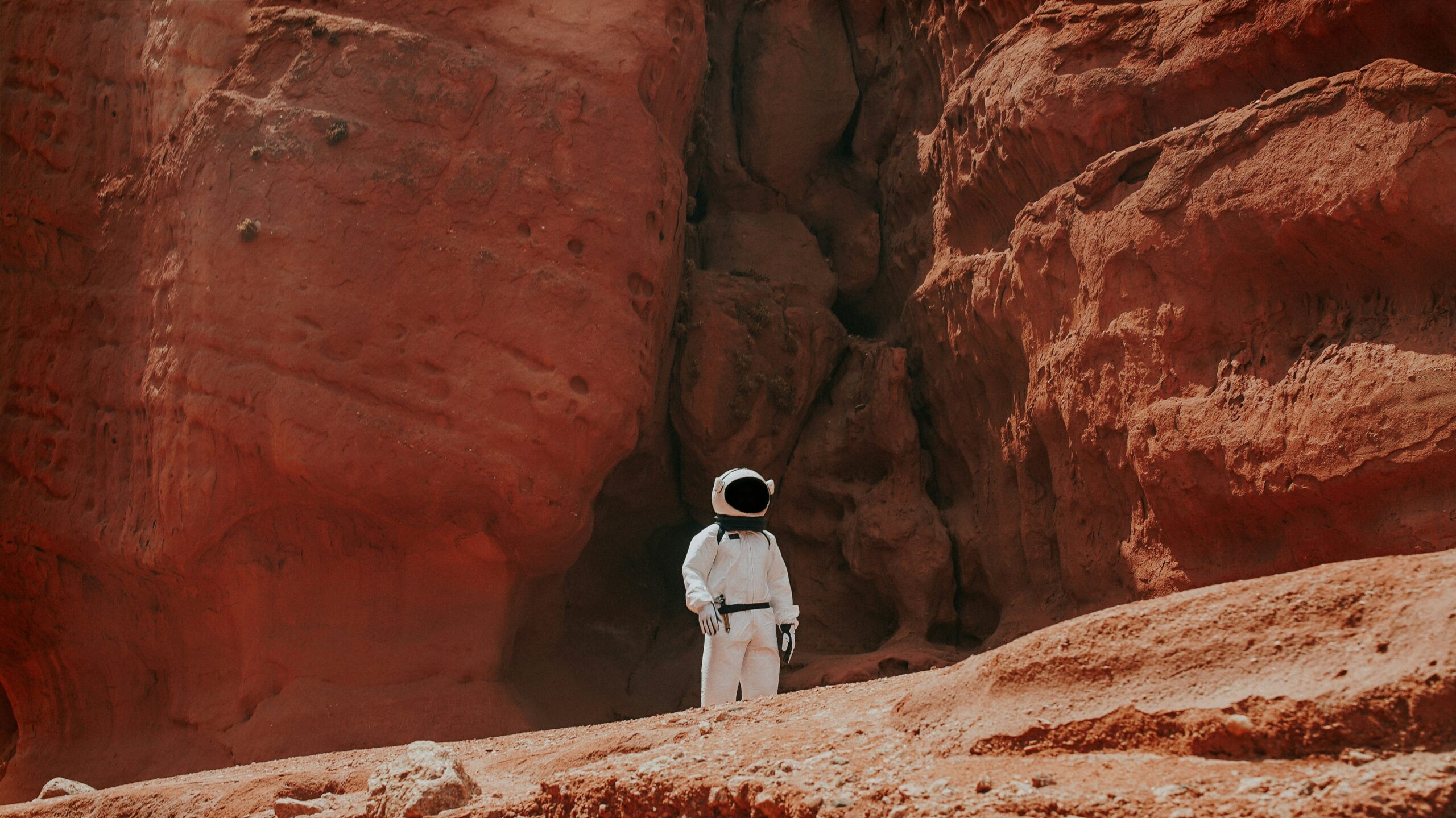
- Cosmos: A Spacetime Odyssey (2014)
This groundbreaking series, hosted by the charismatic astrophysicist Neil deGrasse Tyson, is a spiritual successor to Carl Sagan’s iconic “Cosmos: A Personal Voyage.” “A Spacetime Odyssey” masterfully blends stunning visual effects, engaging storytelling, and scientific accuracy to explore the vastness of the universe, from the smallest atom to the largest galaxy. Tyson guides viewers on a remarkable journey through time and space, delving into fundamental concepts of physics, astronomy, biology, and the history of scientific discovery. The series doesn’t shy away from humanity’s place in the cosmos, reflecting on our origins, our evolution, and our ongoing quest for knowledge. Each episode is a curated experience, featuring breathtaking CGI recreations of cosmic events, historical reenactments of scientific breakthroughs, and accessible explanations of complex theories.
The Legacy of Sagan and the Modern Interpretation
The show deliberately draws parallels to its predecessor, honoring Carl Sagan’s legacy of scientific wonder and eloquent communication. However, “A Spacetime Odyssey” is not merely a tribute; it’s a modern reinterpretation for a new generation. Tyson’s hosting style, while different from Sagan’s, is equally captivating and invites curiosity. The visual technology available today allows for unprecedented depictions of cosmic phenomena, from the formation of stars to the intricate dance of galaxies. The narrative arc of the series often connects the grand cosmic narrative to the story of life on Earth, emphasizing our profound interconnectedness with the universe. This approach makes abstract scientific concepts feel relatable and deeply personal, fostering a sense of awe and responsibility towards our planet and our cosmic neighborhood.
If you’re interested in exploring the wonders of the universe further, you might find the article on the latest advancements in space exploration particularly enlightening. It delves into groundbreaking missions and technologies that are reshaping our understanding of the cosmos. For more details, check out the article here: Latest Advancements in Space Exploration.
Exploring the Fabric of Reality
Episodes meticulously dissect various aspects of the universe’s grand design. One might explore the life cycle of stars, detailing their birth in nebulae, their fiery existence as fusion furnaces, and their eventual, often spectacular, demise as supernovae or black holes. Another could delve into the exotic nature of black holes, unraveling the mysteries of their event horizons and the mind-bending physics that govern them. The series also ventures into the realm of exoplanets, showcasing the incredible diversity of worlds beyond our solar system and the ongoing search for extraterrestrial life. Furthermore, it tackles fundamental questions about the origins of the universe itself, explaining the Big Bang theory and the subsequent expansion and evolution of cosmic structures.
The Human Element in Scientific Discovery
Beyond the pure science, “Cosmos” shines a spotlight on the human stories behind scientific progress. It celebrates the relentless curiosity, the ingenious experiments, and the occasional leaps of faith that have propelled our understanding forward. Key figures in scientific history are brought to life, their struggles, triumphs, and contributions highlighted. This historical perspective reinforces the idea that science is a collaborative and evolving human endeavor, built upon the foundations laid by generations of thinkers. It emphasizes that the pursuit of knowledge is a continuous journey, with new discoveries constantly refining our understanding of the universe. The series is an inspiring call to action, encouraging viewers to embrace their own innate curiosity and to participate in the ongoing exploration of the cosmos.
From the Microscopic to the Macroscopic
A particular strength of “A Spacetime Odyssey” lies in its ability to bridge the gap between the astonishingly large and the infinitesimally small. It demonstrates how the same fundamental laws of physics operate at all scales, from the quantum realm within atoms to the vast cosmic web of galaxies. This interconnectedness is presented not as a dry scientific fact, but as a testament to the elegant simplicity and profound unity of the universe. The visual storytelling effectively illustrates these connections, using animation and special effects to represent abstract concepts like gravitational waves or the quantum foam of spacetime. The overall effect is one of profound realization: that we are, in essence, stardust, intricately woven into the fabric of the cosmos, and our understanding of the universe is a reflection of our understanding of ourselves.
- The Inexplicable Universe: Understanding Quantum Physics (2012)
This four-part documentary series, led by renowned theoretical physicist Brian Greene, offers a remarkably lucid and engaging exploration of quantum mechanics. Greene, an exceptional communicator, guides the audience through the often counter-intuitive world of subatomic particles, quantum entanglement, wave-particle duality, and superposition. Unlike many documentaries that simplify quantum physics to the point of inaccuracy, “The Inexplicable Universe” endeavors to present the core concepts with a level of detail that is both accessible and scientifically robust. Greene uses vivid analogies, thought experiments, and illustrative graphics to help viewers grasp concepts that challenge our everyday understanding of reality.
In the fascinating realm of space science, documentaries play a crucial role in educating the public about the mysteries of the universe. A particularly engaging piece is available at My Cosmic Ventures, which explores the latest discoveries in astrophysics and the potential for life beyond Earth. For those interested in delving deeper into these captivating topics, you can check out the article on their website that discusses groundbreaking research and the future of space exploration. To learn more, visit My Cosmic Ventures for insights that will expand your understanding of the cosmos.
Unraveling the Quantum Realm
The series systematically breaks down the foundational principles of quantum mechanics. It begins by introducing the bizarre behavior of particles at the smallest scales, highlighting how they don’t conform to classical physics. Concepts like the uncertainty principle, which states that we cannot simultaneously know both the position and momentum of a particle with perfect accuracy, are explained with clarity. The documentary also delves into the concept of superposition, where a particle can exist in multiple states at once until it is observed, a phenomenon famously illustrated by Schrödinger’s cat thought experiment.
The Weirdness of Entanglement
A significant portion of the series is dedicated to the mind-bending phenomenon of quantum entanglement. Greene explains how two or more particles can become linked in such a way that they share the same fate, regardless of the distance separating them. Measuring the state of one entangled particle instantaneously influences the state of the other, a concept Einstein famously described as “spooky action at a distance.” The implications of entanglement for future technologies, such as quantum computing and secure communication, are also explored.
From Observation to Reality
The role of observation in quantum mechanics is another key theme. The documentary explores how the act of measuring a quantum system can fundamentally alter its state. This observer effect raises profound philosophical questions about the nature of reality and whether it exists independently of our perception. Greene navigates these philosophical waters with a balanced perspective, presenting the scientific evidence while acknowledging the ongoing debates and interpretations within the physics community.
The Quest for a Unified Theory
“The Inexplicable Universe” also touches upon the ongoing quest for a unified theory that would reconcile quantum mechanics with Einstein’s theory of general relativity. Greene discusses string theory and other theoretical frameworks that attempt to describe all fundamental forces and particles in a single, elegant model. While these theories are highly speculative, they represent humanity’s deepest aspirations to understand the fundamental workings of the cosmos, a quest that continues to drive scientific inquiry. The series provides a glimpse into the cutting edge of theoretical physics, showcasing the intellectual bravery and persistent effort required to push the boundaries of human knowledge.
- Voyager: To the Outer Limits (2009)
This compelling documentary chronicles the extraordinary 30-year mission of NASA’s Voyager probes, tasked with exploring the outer planets of our solar system and beyond. Launched in 1977, Voyager 1 and Voyager 2 provided humanity with its first close-up views of Jupiter, Saturn, Uranus, and Neptune, delivering a treasure trove of scientific data and breathtaking imagery. The film beautifully captures the ambition, the ingenuity, and the sheer audacity of the Voyager program, showcasing the engineering challenges, the scientific discoveries, and the enduring legacy of these robotic pioneers.
The Grand Tour of the Outer Planets
The documentary vividly recounts the “Grand Tour” phase of the Voyager missions. Voyager 1 and 2 provided unprecedented close-up observations of Jupiter’s swirling storms, its volcanic moon Io, and the intricate rings of Saturn. The probes then went on to discover new moons, study the magnetic fields of these giant planets, and capture images of atmospheric phenomena that defied previous scientific understanding. The film highlights the dedicated teams of scientists and engineers who meticulously planned the trajectories and interpreted the vast amounts of data received across millions of miles.
Beyond the Planets: The Interstellar Frontier
“Voyager: To the Outer Limits” doesn’t end with Neptune. The series powerfully illustrates the probes’ continued journey into interstellar space, making them humanity’s farthest-reaching emissaries. The documentary explains the concept of the heliosphere, the bubble of charged particles emitted by our Sun, and how Voyager 1 and 2 have crossed its boundary to enter the region between the stars. The scientific instruments on board continue to gather data about this mysterious and unexplored territory, providing invaluable insights into the cosmic environment surrounding our solar system.
The Golden Record: A Message in a Bottle
A particularly poignant aspect of the Voyager story, and a key focus of the documentary, is the Golden Record. Attached to each probe, these phonograph records contain sounds and images selected to portray the diversity of life and culture on Earth. The film explores the selection process and the profound symbolism of these records, intended to communicate with any intelligent extraterrestrial civilization that might encounter the probes in the distant future. It’s a testament to humanity’s enduring hope and curiosity, sending a unique message in a cosmic bottle.
The Enduring Legacy of Human Ingenuity
The documentary emphasizes that the Voyager mission is a triumph of human ingenuity, perseverance, and collaborative spirit. It showcases how a relatively small team, armed with incredible vision and technological prowess, managed to achieve what was once thought impossible. The ongoing data stream from the Voyagers continues to inform our understanding of the heliosphere and the interstellar medium, demonstrating the long-term value of ambitious scientific exploration. The film serves as a powerful reminder of what humanity can achieve when it dares to dream big and push the boundaries of what is known.
- The Story of Science (2010)
This ambitious BBC documentary series, hosted by astrophysicist Brian Cox, embarks on a sweeping journey through the history of human scientific discovery. Cox, known for his accessible and engaging presentation style, traces the evolution of scientific thought from the earliest attempts to understand the world around us to the cutting edge of modern research. The series emphasizes that science is not a static body of knowledge but a dynamic, evolving process driven by human curiosity, observation, and the relentless pursuit of understanding.
From Ancient Wonders to the Scientific Revolution
The series begins by exploring the early civilizations and their remarkable astronomical observations and mathematical achievements. It then shifts focus to the Scientific Revolution, highlighting the contributions of figures like Nicolaus Copernicus, Galileo Galilei, Isaac Newton, and Johannes Kepler. Cox explains how these individuals challenged established dogma, developed new methodologies, and laid the groundwork for much of modern science. The documentary emphasizes the shift from reliance on ancient authorities to empirical observation and mathematical reasoning.
The Dawn of Modern Physics and Beyond
“The Story of Science” delves into the breakthroughs of the 19th and 20th centuries, including the development of electromagnetism, the theory of relativity, and quantum mechanics. Cox masterfully explains the significance of these discoveries and the minds behind them, such as Michael Faraday, James Clerk Maxwell, Albert Einstein, and Niels Bohr. The series highlights how each scientific advancement built upon previous knowledge, often leading to unexpected paradigm shifts. The visual storytelling, often featuring stunning landscapes and CGI, helps to illustrate abstract theoretical concepts.
The Grand Unification and Our Place in the Universe
Later episodes explore the grand quest for a unified understanding of the universe, touching upon topics like particle physics, cosmology, and the search for extraterrestrial life. Cox brings to life the ongoing scientific endeavor to understand the fundamental forces and particles that govern reality. He often connects these vast scientific narratives to humanity’s own place in the cosmos, reflecting on our origins and our unique perspective as observers of the universe. The series consistently reinforces the idea that science is a continuous and collaborative human project, with each generation building upon the discoveries of those who came before.
The Enduring Power of Curiosity
Throughout the series, Cox underscores the fundamental role of curiosity as the driving force behind scientific progress. He portrays scientists not just as brilliant minds, but as individuals driven by an insatiable desire to ask “why?” and “how?” The documentary celebrates the human capacity for wonder and the persistent effort required to unravel the mysteries of the universe, inspiring viewers to embrace their own intellectual curiosity and to see science as an ongoing adventure.
- Nova: Black Holes (1997)
While older, this “Nova” special remains a benchmark for its clear and engaging explanation of one of the most fascinating and enigmatic objects in the universe: black holes. Hosted by astrophysicist Kip Thorne, a leading expert on general relativity and gravitational waves, the documentary delves into the theoretical underpinnings of black holes, their formation, their properties, and the ongoing quest to observe them directly. Thorne’s ability to simplify complex physics without sacrificing accuracy makes this a must-watch for anyone interested in these cosmic leviathans.
Einstein’s Predictions and the Birth of the Concept
The documentary begins by tracing the theoretical origins of black holes back to Albert Einstein’s theory of general relativity. Thorne explains how Einstein’s equations predicted the existence of regions in spacetime where gravity is so strong that nothing, not even light, can escape. The film then introduces the concept of stellar collapse, the process by which massive stars end their lives, creating the conditions necessary for a black hole to form. The historical context of these groundbreaking ideas is effectively conveyed.
The Anatomy of a Black Hole
“Nova: Black Holes” meticulously breaks down the anatomy of a black hole. Thorne explains the singularity at its center, a point of infinite density, and the event horizon, the boundary beyond which escape is impossible. The documentary uses stunning visualizations and analogies to help viewers conceptualize these extreme phenomena. The idea of spaghettification, the stretching and squeezing of matter as it approaches a black hole, is vividly illustrated. The concept of a Kerr black hole, which rotates, and its implications, are also touched upon.
Observing the Unobservable
One of the most compelling aspects of the documentary is its exploration of the scientific efforts to detect and study black holes, despite their invisibility. Thorne discusses indirect methods, such as observing the gravitational effects of black holes on nearby stars and gas, and the analysis of X-ray emissions from accretion disks. The film highlights the development of powerful telescopes and the sophisticated techniques used by astronomers to infer the presence of these objects lurking in the darkness of space. The early, pioneering work in this field is given due credit.
Beyond the Horizon: Mysteries and Theories
The documentary doesn’t shy away from the profound mysteries that black holes present. It discusses theories about what might lie beyond the event horizon, the possibility of wormholes, and the potential role of black holes in the formation of galaxies. Thorne also touches upon the information paradox, a theoretical problem in physics concerning whether information is lost when matter falls into a black hole. The film leaves the audience with a sense of the vast unknown and the ongoing scientific endeavor to unlock the secrets of these cosmic enigmas. This documentary, even with its release date, continues to be a vital resource for understanding these immense gravitational entities.
- The Universe (2007-2015)
This expansive documentary series, spanning multiple seasons, offers an encyclopedic exploration of the cosmos. From the formation of stars and planets to the mysteries of dark matter and dark energy, “The Universe” tackles a vast array of astronomical subjects with impressive breadth and depth. Each episode is dedicated to a specific celestial phenomenon or concept, drawing upon the latest scientific research and employing state-of-the-art CGI to bring the wonders of space to life.
Cosmic Origins and Stellar Evolution
Early seasons of “The Universe” often focus on the fundamental building blocks of the cosmos. Episodes explore the Big Bang, the formation of the first stars and galaxies, and the life cycles of stars of various masses. Viewers are taken on a journey through nebulae, supernovae, and the creation of heavier elements within stellar furnaces. The series excels at illustrating the vast timescales involved in these processes, fostering a profound appreciation for the cosmic evolution that led to the universe we see today.
Planets, Moons, and the Search for Life
A significant portion of the series is dedicated to the study of planets and moons, both within our solar system and around other stars. Episodes examine the diverse geological features of Earth’s neighbors, explore the potential for life on icy moons like Europa and Enceladus, and detail the discovery and characterization of exoplanets. The series highlights the ongoing quest to find habitable worlds and the scientific methodologies employed in the search for extraterrestrial life.
The Unseen Universe: Dark Matter and Dark Energy
As the series progresses, “The Universe” tackles some of the most perplexing mysteries in modern cosmology, namely dark matter and dark energy. Episodes are dedicated to explaining what these enigmatic substances are, the evidence for their existence, and their profound impact on the structure and expansion of the universe. The series engages with the cutting-edge research and theoretical models attempting to unravel these cosmic enigmas, showcasing the frontiers of scientific inquiry.
Galaxy Collisions and Cosmic Cataclysms
The dramatic forces that shape galaxies are also a recurring theme. Episodes depict the awe-inspiring spectacle of galaxy collisions, the formation of galactic clusters, and the violent processes that occur at the centers of galaxies, such as the activity of supermassive black holes. These often visually spectacular episodes underscore the dynamic and ever-changing nature of the universe.
The Future of the Cosmos
Later seasons of “The Universe” look towards the future, exploring theories about the ultimate fate of the universe. Whether it’s a “Big Freeze,” a “Big Rip,” or a “Big Crunch,” the series delves into the scientific predictions and ongoing debates about the long-term destiny of all existence. This forward-looking perspective provides a thought-provoking conclusion to the immense scope of the series.
- Hubble (2010-2011)
This captivating documentary, often presented in IMAX format, offers an unparalleled journey through the cosmos as seen through the eyes of the Hubble Space Telescope. “Hubble” showcases the breathtaking images captured by the telescope, revealing the beauty and complexity of nebulae, galaxies, star clusters, and planets with astonishing clarity. Beyond the visual splendor, the film also delves into the scientific significance of Hubble’s discoveries, highlighting how it has revolutionized our understanding of the universe.
A Window to the Universe
The documentary emphasizes the revolutionary impact of the Hubble Space Telescope. Launched in 1990, its placement above Earth’s atmosphere provided an unobstructed view of the cosmos, free from the distortions caused by atmospheric turbulence. “Hubble” illustrates how this vantage point has enabled scientists to observe phenomena with unprecedented detail, from the faint light of distant galaxies to the subtle features of planets within our own solar system.
Unveiling Cosmic Wonders
The film is a visual feast, showcasing some of Hubble’s most iconic images. Viewers are treated to stunning depictions of the Pillars of Creation in the Eagle Nebula, the distant galaxies of the Hubble Deep Field, and the intricate spiral arms of galaxies like Andromeda. The documentary explains the scientific context behind these images, detailing what they reveal about star formation, galactic evolution, and the composition of the universe. The sheer artistry and grandeur of these cosmic landscapes are brought to the forefront.
Scientific Discoveries and Their Impact
Beyond the aesthetic appeal, “Hubble” delves into the profound scientific discoveries made possible by the telescope. It highlights how Hubble has provided crucial data for refining estimates of the age and expansion rate of the universe, revealed the existence of dark energy, and offered groundbreaking insights into the births and deaths of stars. The film emphasizes the role of the telescope in answering fundamental questions about our cosmic origins and the vastness of the universe.
The Human Element of Exploration
“Hubble” also touches upon the human element of space exploration. It often features interviews with the scientists and astronauts involved in the telescope’s development, maintenance, and the interpretation of its data. The film celebrates the dedication, ingenuity, and collaborative spirit that have made the Hubble mission such a resounding success, demonstrating humanity’s enduring drive to explore and understand the universe.
- Into the Universe with Stephen Hawking (2010-2011)
Filmmaker and presenter Stephen Hawking, alongside a team of animated guides, takes viewers on a mind-bending exploration of the universe’s greatest mysteries in this documentary series. Hawking, a theoretical physicist renowned for his work on black holes and cosmology, uses his distinctive voice and intellect to tackle profound questions about the cosmos, our place within it, and the potential for life beyond Earth. The series combines scientific exposition with speculative thought experiments and compelling visuals.
The Search for Extraterrestrial Life
A significant focus of the series is the persistent question of whether we are alone in the universe. Hawking explores the vastness of space, the sheer number of stars and planets, and the statistical probabilities that suggest life could exist elsewhere. The documentary examines the conditions necessary for life as we know it and speculates on the potential forms extraterrestrial life might take, from simple microbes to advanced civilizations.
The Nature of Time and Space
“Into the Universe” delves into the complex and often counter-intuitive concepts of time and space. Hawking guides viewers through Einstein’s theories of relativity, explaining how gravity warps spacetime and how time itself can be relative. The series explores the implications of these theories, from the existence of wormholes to the possibility of time travel, all presented in a way that is both intellectually stimulating and surprisingly accessible.
The Origin and Future of the Universe
The series also examines the grand narrative of the universe, from its explosive beginnings with the Big Bang to its potential ultimate fate. Hawking discusses the formation of galaxies, stars, and planets, as well as the ongoing expansion of the universe. He speculates on various cosmological models for the universe’s eventual end, prompting viewers to ponder the long-term trajectory of all existence.
The Potential for Alien Worlds
Hawking’s series also takes viewers on speculative journeys to hypothetical alien worlds. Through CGI and imaginative storytelling, the documentary visualizes planets that could harbor life, exploring the diverse environmental conditions that might arise and the unique evolutionary paths that life could take. This segment allows for a more creative exploration of astrobiology and the sheer potential for diversity within the cosmos. The series, despite its speculative elements, is grounded in scientific principles and aims to ignite curiosity about the universe’s most profound questions.
- The Fabric of the Cosmos (2011)
This four-part documentary series, also hosted by astrophysicist Brian Greene, embarks on a profound exploration of space, time, matter, and the fundamental laws that govern reality. Building upon the themes of “The Inexplicable Universe,” Greene takes a broader philosophical and scientific journey, unraveling the intricate connections between these core components of existence. The series uses elegant analogies, animated sequences, and clear explanations to demystify complex scientific theories.
Space and Time: A Unified Continuum
The initial episodes of “The Fabric of the Cosmos” focus on the revolutionary concepts of spacetime introduced by Albert Einstein. Greene meticulously explains how space and time are not separate entities but are inextricably linked, forming a dynamic fabric that can be stretched, bent, and warped by mass and energy. The documentary delves into the implications of this unified continuum for our understanding of gravity, motion, and the very structure of the universe.
The Nature of Reality: Particles and Forces
The series then shifts its focus to the fundamental building blocks of matter and the forces that govern their interactions. Greene explores the quantum realm, discussing the bizarre behavior of subatomic particles, wave-particle duality, and the enigmatic nature of quantum entanglement. He also touches upon the Standard Model of particle physics and the ongoing quest for a unified theory that can explain all fundamental forces.
Causality and the Arrow of Time
“The Fabric of the Cosmos” also grapples with the concept of causality and the unidirectional nature of time, often referred to as the “arrow of time.” Greene examines why time seems to flow only forward and explores various theories, including entropy and the initial conditions of the universe, that attempt to explain this fundamental aspect of our experience. The documentary raises questions about whether this arrow is absolute or if our perception of time is limited.
The Nature of Consciousness and Reality
In its final episodes, the series ventures into more philosophical territory, exploring the nature of consciousness and how it relates to our perception of reality. Greene discusses how our brains process information and construct our experience of the world, touching upon concepts from neuroscience and physics that hint at the deep interconnectedness between the observer and the observed. The documentary leaves the viewer with a sense of wonder about the profound mysteries that still lie at the heart of existence.
- Apollo 11 (2019)
This remarkable documentary, acclaimed for its archival footage and immersive presentation, revisits the historic Apollo 11 mission that landed the first humans on the Moon in 1969. Culled from over 11,000 hours of uncatalogued NASA footage and audio recordings, “Apollo 11” offers a visceral and awe-inspiring experience of this pivotal moment in human history. The film places the viewer directly into the boots of the astronauts, the mission control room, and the collective consciousness of a world captivated by this ambitious quest.
The Journey to the Moon
The documentary meticulously reconstructs the journey from launch to lunar landing. It showcases the immense engineering feat of the Saturn V rocket, the nail-biting tension of the ascent, and the precise maneuvers required for lunar orbit and descent. The sheer scale of the undertaking, the risks involved, and the dedication of the thousands of individuals who made it possible are all vividly portrayed through the raw, uncensored footage.
Landing on Tranquility Base
The heart of the film lies in the actual lunar landing and the first steps on the Moon. The footage, lovingly restored and presented in stunning clarity, captures Neil Armstrong’s iconic words, “That’s one small step for man, one giant leap for mankind.” The documentary conveys the profound sense of awe, isolation, and accomplishment felt by the astronauts as they explored the lunar surface, planting the flag and collecting samples.
Mission Control: The Ground Game
Crucially, “Apollo 11” also dedicates significant attention to Mission Control in Houston. Viewers witness the intense focus, the split-second decisions, and the overwhelming relief of the flight directors, engineers, and technicians who guided the mission from Earth. The audio recordings capture the palpable tension and the joyous celebrations as the mission unfolded, providing a vital counterpoint to the astronaut’s perspective and highlighting the immense teamwork involved.
The Legacy of Apollo
The documentary concludes by reflecting on the enduring legacy of the Apollo 11 mission. It underscores how this achievement not only represented a triumph of human ambition and technological prowess but also fostered a sense of global unity and inspired generations to pursue scientific and exploratory endeavors. “Apollo 11” is more than just a historical documentary; it is an emotional and profound testament to humanity’s ability to dream big and achieve the seemingly impossible, serving as a powerful reminder of our capabilities when we push the boundaries of exploration.

What If the Laws of Physics Have a Past?
FAQs
What is a space science documentary?
A space science documentary is a film or video production that explores various aspects of space science, including astronomy, astrophysics, cosmology, and space exploration. These documentaries often feature interviews with scientists, stunning visuals of space, and explanations of complex scientific concepts.
What topics are typically covered in a space science documentary?
Space science documentaries often cover a wide range of topics, including the formation and evolution of the universe, the study of celestial bodies such as stars and galaxies, the search for extraterrestrial life, the history of space exploration, and the future of space travel and colonization.
How are space science documentaries created?
Space science documentaries are typically created through a combination of scientific research, interviews with experts in the field, computer-generated imagery (CGI), and footage from space missions. Filmmakers and producers work closely with scientists and researchers to ensure the accuracy and authenticity of the content.
Where can I watch space science documentaries?
Space science documentaries can be found on various streaming platforms, such as Netflix, Amazon Prime, and Disney+, as well as on television channels dedicated to science and nature programming. They may also be available for purchase or rental on DVD or Blu-ray.
What are some popular space science documentaries?
Some popular space science documentaries include “Cosmos: A Spacetime Odyssey,” “The Planets,” “The Farthest: Voyager in Space,” “Apollo 11,” and “The Universe.” These documentaries have received critical acclaim for their engaging storytelling and stunning visuals of the cosmos.