
Black holes have long captivated the imagination of scientists and the general public alike. These enigmatic cosmic entities, formed from the remnants of massive stars that have undergone gravitational collapse, possess gravitational fields so intense that nothing, not even light, can escape their grasp. The concept of a black hole challenges the very fabric of our understanding of physics, particularly in the realms of general relativity and quantum mechanics.
As researchers delve deeper into the mysteries surrounding these celestial phenomena, they uncover not only the nature of black holes but also their profound implications for the universe at large. The study of black holes has evolved significantly since their theoretical inception in the early 20th century. Initially dismissed as mere mathematical curiosities, black holes are now recognized as fundamental components of the cosmos.
They play a crucial role in galaxy formation and evolution, influencing the dynamics of stars and gas in their vicinity. As scientists continue to explore these cosmic giants, they are driven by a desire to answer pressing questions about their formation, behavior, and the role they play in the broader context of astrophysics.
Key Takeaways
- Black holes are mysterious and fascinating cosmic entities that have captured the imagination of scientists and the public alike.
- Next-generation telescopes are essential for advancing our understanding of black holes and their role in the universe.
- Advancements in telescope technology, such as the Event Horizon Telescope, have enabled scientists to capture the first-ever image of a black hole.
- Next-gen telescopes will play a crucial role in unraveling the mysteries of black holes, including their formation, behavior, and impact on the surrounding environment.
- Observing black holes presents numerous challenges, including their immense distance from Earth and the need for advanced technology to capture clear images.
The Need for Next-Gen Black Hole Telescopes
As the quest to understand black holes intensifies, the limitations of current observational technologies become increasingly apparent. Traditional telescopes, while powerful, often struggle to capture the elusive signals emitted by black holes. The need for next-generation black hole telescopes arises from the desire to probe deeper into the mysteries of these cosmic giants.
Enhanced observational capabilities are essential for capturing high-resolution images and gathering data that can shed light on the complex processes occurring around black holes. Next-gen telescopes promise to revolutionize black hole research by providing unprecedented access to previously hidden phenomena. With advancements in technology, these instruments will enable astronomers to observe black holes across various wavelengths, from radio waves to X-rays.
This multi-wavelength approach is crucial for understanding the diverse environments surrounding black holes and for piecing together the intricate puzzle of their formation and evolution. The urgency for these advanced tools is underscored by the rapid pace of discoveries in astrophysics, where new findings often challenge existing theories and necessitate further investigation.
Advancements in Telescope Technology
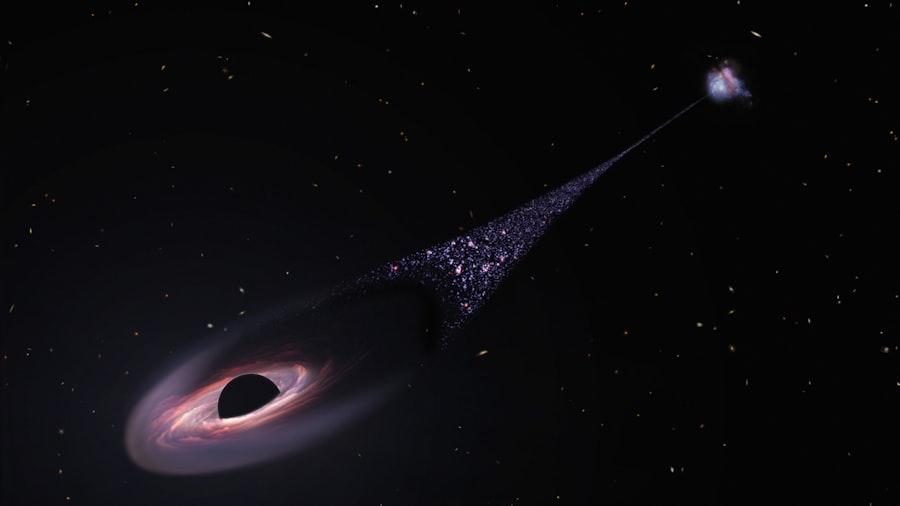
The field of astronomy has witnessed remarkable advancements in telescope technology over recent years. Innovations such as adaptive optics, which corrects for atmospheric distortions, and interferometry, which combines signals from multiple telescopes to achieve higher resolution, have significantly enhanced observational capabilities. These technological breakthroughs have laid the groundwork for the development of next-generation telescopes specifically designed to study black holes.
One notable advancement is the emergence of space-based telescopes that operate beyond Earth’s atmosphere. By eliminating atmospheric interference, these instruments can capture clearer images and detect faint signals that ground-based telescopes might miss. The James Webb Space Telescope (JWST), launched in late 2021, exemplifies this trend.
With its ability to observe infrared wavelengths, JWST is poised to provide valuable insights into the early universe and the formation of black holes. Such advancements not only improve observational precision but also expand the range of phenomena that can be studied, paving the way for groundbreaking discoveries.
The Role of Next-Gen Telescopes in Understanding Black Holes
| Telescope | Key Features | Contribution to Understanding Black Holes |
|---|---|---|
| Event Horizon Telescope (EHT) | Global network of radio telescopes | First image of a black hole’s event horizon in M87 galaxy |
| James Webb Space Telescope (JWST) | Large infrared telescope | Studying the formation and evolution of black holes |
| Chandra X-ray Observatory | High-resolution X-ray imaging | Observing X-ray emissions from black hole accretion disks |
Next-generation telescopes are set to play a pivotal role in advancing our understanding of black holes. By employing cutting-edge technologies and innovative observational strategies, these instruments will enable astronomers to investigate various aspects of black holes, including their formation mechanisms, growth patterns, and interactions with surrounding matter. The ability to capture high-resolution images of black hole accretion disks and jets will provide critical insights into the processes that govern their behavior.
Moreover, next-gen telescopes will facilitate the study of supermassive black holes located at the centers of galaxies. These colossal entities are believed to influence galaxy dynamics and evolution significantly. By observing their gravitational effects on nearby stars and gas clouds, astronomers can glean information about their mass and spin, which are essential parameters for understanding their formation history.
The data collected by these advanced instruments will contribute to refining existing models and may even lead to new theoretical frameworks that better explain the complexities of black hole physics.
Challenges in Observing Black Holes
Despite advancements in technology, observing black holes remains a formidable challenge for astronomers. One of the primary difficulties lies in their inherent nature; black holes do not emit light directly, making them invisible against the backdrop of space. Instead, they are detected through their interactions with surrounding matter, such as gas and dust that spiral into them, forming an accretion disk that emits radiation across various wavelengths.
This indirect observation requires sophisticated techniques and instruments capable of discerning faint signals amidst cosmic noise. Additionally, the extreme gravitational forces near a black hole can warp spacetime itself, complicating observations further. The phenomenon known as gravitational lensing can distort light from background objects, making it challenging to interpret data accurately.
Furthermore, the dynamic environments surrounding black holes can lead to variability in emissions over time, necessitating continuous monitoring and advanced data analysis techniques. These challenges underscore the importance of developing next-gen telescopes equipped with enhanced capabilities to overcome these observational hurdles.
Collaborative Efforts in Developing Next-Gen Telescopes
The development of next-generation telescopes is not a solitary endeavor; it involves extensive collaboration among scientists, engineers, and institutions worldwide. International partnerships are crucial for pooling resources, expertise, and funding necessary for ambitious projects aimed at advancing our understanding of black holes. Collaborative efforts often lead to innovative solutions that address complex engineering challenges while fostering a spirit of shared discovery.
One prominent example is the Event Horizon Telescope (EHT) collaboration, which successfully captured the first-ever image of a black hole’s event horizon in 2019. This groundbreaking achievement was made possible through a global network of radio telescopes working in unison to create an Earth-sized virtual telescope. Such collaborative initiatives highlight the power of teamwork in tackling scientific challenges and underscore the importance of fostering a global scientific community dedicated to unraveling the mysteries of black holes.
Potential Discoveries with Next-Gen Black Hole Telescopes
The potential discoveries that next-generation black hole telescopes could yield are vast and varied. With enhanced observational capabilities, astronomers may uncover new classes of black holes or gain insights into their formation processes. For instance, studying primordial black holes—hypothetical black holes formed shortly after the Big Bang—could provide valuable information about the early universe and its evolution.
Additionally, next-gen telescopes may reveal previously unseen phenomena associated with black holes, such as exotic jets or outflows that influence star formation in their host galaxies. By observing these interactions in detail, researchers could gain a deeper understanding of how black holes shape their environments and contribute to cosmic evolution. Furthermore, advancements in gravitational wave detection technology may allow astronomers to observe mergers between black holes with unprecedented precision, offering insights into their population statistics and growth mechanisms.
Impact of Black Hole Research on Astrophysics
The study of black holes has far-reaching implications for astrophysics as a whole. Understanding these enigmatic objects not only sheds light on fundamental questions about gravity and spacetime but also informs theories related to galaxy formation and evolution.
For instance, studies on accretion processes have implications for understanding high-energy astrophysical phenomena such as gamma-ray bursts and active galactic nuclei. As researchers continue to unravel the complexities surrounding black holes, they contribute to a more comprehensive understanding of the universe’s structure and dynamics.
Future Applications of Next-Gen Telescope Technology
The technological advancements achieved through next-generation telescope development extend beyond black hole research; they hold promise for a wide range of astronomical applications. Enhanced imaging capabilities could revolutionize our understanding of exoplanets by allowing astronomers to study their atmospheres and potential habitability more effectively. Additionally, improved sensitivity across various wavelengths may facilitate observations of distant galaxies and cosmic events that were previously beyond reach.
Furthermore, advancements in data analysis techniques developed for next-gen telescopes could be applied to other fields within astronomy and beyond. Machine learning algorithms designed to process vast amounts of data could enhance our ability to identify patterns and anomalies in complex datasets across various scientific disciplines. As technology continues to evolve, the potential applications stemming from next-gen telescope innovations will likely extend far beyond their original intent.
Public Interest and Education in Black Hole Research
Public interest in black hole research has surged in recent years, fueled by captivating discoveries and popular media portrayals. Documentaries, books, and films have brought these cosmic phenomena into mainstream consciousness, sparking curiosity among people of all ages. This heightened interest presents an opportunity for educators and scientists to engage with the public and foster a deeper understanding of astrophysics.
Educational initiatives aimed at demystifying black holes can inspire future generations of scientists and astronomers. Outreach programs that incorporate interactive exhibits or virtual reality experiences allow individuals to explore complex concepts related to black holes in an accessible manner. By promoting public engagement with scientific research, educators can cultivate a sense of wonder about the universe while encouraging critical thinking skills essential for navigating an increasingly complex world.
The Exciting Future of Black Hole Exploration
The future of black hole exploration is undeniably exciting as next-generation telescopes promise to unlock new realms of understanding about these enigmatic cosmic entities. With advancements in technology enabling unprecedented observations across various wavelengths, astronomers stand poised to make groundbreaking discoveries that could reshape our comprehension of fundamental physics and cosmic evolution. As collaborative efforts continue to drive innovation in telescope development, researchers remain committed to unraveling the mysteries surrounding black holes.
The potential implications extend beyond astrophysics; they touch upon fundamental questions about existence itself. As public interest grows alongside scientific advancements, society stands at the threshold of a new era in cosmic exploration—one where the secrets held by black holes may finally be revealed.
Next-generation black hole telescopes are set to revolutionize our understanding of the universe, providing unprecedented insights into the nature of these enigmatic cosmic giants. For a deeper exploration of the advancements in astronomical technology and their implications for black hole research, you can read more in this related article: here.
WATCH THIS! The Invisible Threat: A Rogue Black Hole Headed for Our Solar System?
FAQs
What are next generation black hole telescopes?
Next generation black hole telescopes are advanced instruments designed to observe and study black holes in greater detail than ever before. These telescopes utilize cutting-edge technology to capture high-resolution images and data from black holes, providing valuable insights into their behavior and properties.
How do next generation black hole telescopes work?
Next generation black hole telescopes typically use a combination of advanced optics, imaging sensors, and data processing techniques to capture and analyze light and other radiation emitted by black holes. These telescopes may also incorporate techniques such as interferometry to enhance their resolution and sensitivity.
What are the advantages of next generation black hole telescopes?
Next generation black hole telescopes offer several advantages over previous generations of telescopes, including higher resolution, greater sensitivity, and the ability to capture a wider range of wavelengths. These advancements enable scientists to study black holes in unprecedented detail and to explore new aspects of their behavior and environment.
What can we learn from next generation black hole telescopes?
Next generation black hole telescopes can provide valuable insights into the formation, evolution, and behavior of black holes. By studying the radiation emitted by black holes, scientists can learn about their mass, spin, accretion processes, and interactions with their surrounding environment. This information can help to test and refine theories of black hole physics and astrophysics.
What are some examples of next generation black hole telescopes?
Examples of next generation black hole telescopes include the Event Horizon Telescope (EHT), the European Extremely Large Telescope (E-ELT), and the James Webb Space Telescope (JWST). These telescopes are equipped with advanced technology and capabilities that enable them to study black holes with unprecedented precision and detail.