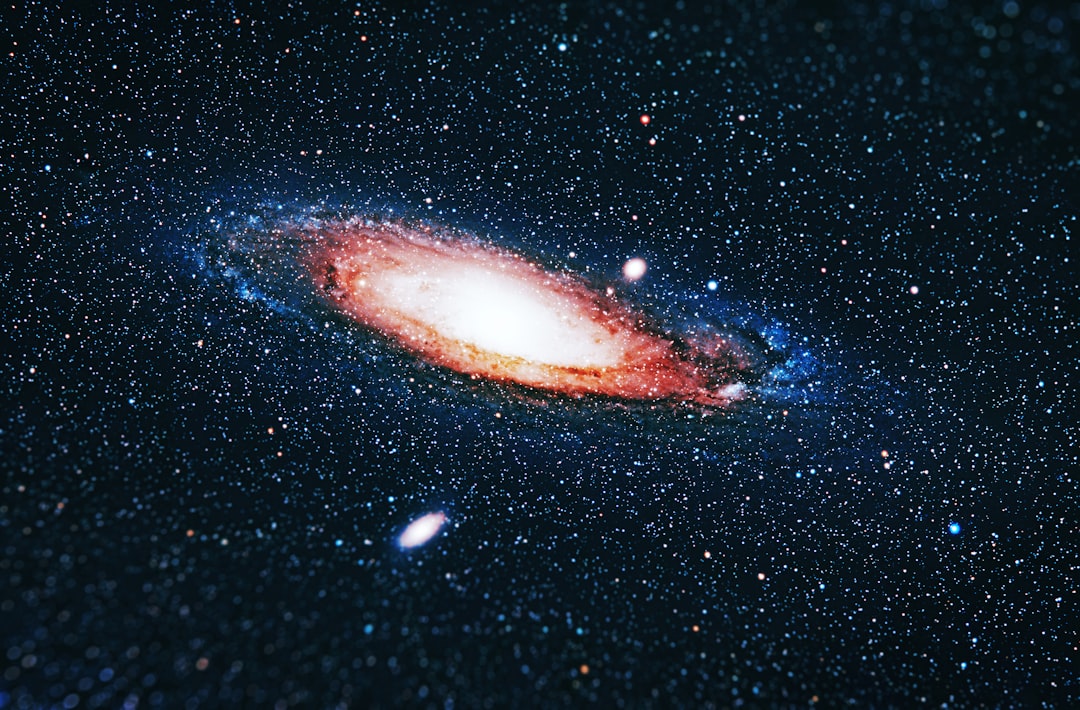
As you delve into the vast and intricate universe, you may find yourself captivated by the Standard Model of Cosmology, a framework that seeks to explain the fundamental aspects of the cosmos. This model serves as a cornerstone for understanding the universe’s structure, evolution, and the forces that govern it. It encompasses a variety of phenomena, from the birth of galaxies to the mysterious forces that drive their expansion.
By grasping the principles of this model, you can gain insight into the nature of reality itself and your place within it. The Standard Model of Cosmology is built upon a foundation of empirical observations and theoretical physics. It integrates concepts from general relativity, quantum mechanics, and particle physics to create a cohesive narrative about the universe’s history.
As you explore this model, you will encounter key elements such as the Big Bang, dark matter, dark energy, and cosmic microwave background radiation. Each component plays a vital role in shaping our understanding of the cosmos and invites you to ponder profound questions about existence, time, and space.
Key Takeaways
- The Standard Model of Cosmology provides a framework for understanding the universe’s evolution and composition.
- The Big Bang Theory explains the universe’s origin and early expansion, supported by evidence such as cosmic microwave background radiation.
- Dark matter and dark energy are mysterious components that make up the majority of the universe’s mass and energy.
- Cosmic microwave background radiation offers crucial insights into the early universe and supports the Big Bang Theory.
- The $\Lambda$CDM model, which includes dark energy and cold dark matter, is a leading theory for understanding the universe’s composition and evolution.
The Big Bang Theory and the Birth of the Universe
At the heart of the Standard Model lies the Big Bang Theory, which posits that the universe began as an infinitely dense point approximately 13.8 billion years ago.
As you consider this monumental event, you may find it fascinating to think about how everything we see today—stars, galaxies, and even yourself—originated from this initial explosion.
The Big Bang Theory is supported by a wealth of observational evidence. For instance, you might be intrigued by the discovery of cosmic background radiation, which serves as a remnant of that explosive moment. Additionally, the abundance of light elements such as hydrogen and helium aligns with predictions made by nucleosynthesis models.
As you explore these findings, you will appreciate how they collectively reinforce the idea that our universe has a definitive beginning, challenging long-held notions about eternity and permanence.
Understanding Dark Matter and Dark Energy

As you navigate through cosmological concepts, you will inevitably encounter dark matter and dark energy—two enigmatic components that make up a significant portion of the universe. Dark matter is thought to account for about 27% of the universe’s total mass-energy content. Although it cannot be observed directly, its presence is inferred from gravitational effects on visible matter.
You may find it intriguing that galaxies rotate at speeds that would cause them to fly apart if only visible matter were present; thus, dark matter acts as an invisible glue holding galaxies together. On the other hand, dark energy constitutes approximately 68% of the universe and is responsible for its accelerated expansion. This mysterious force counteracts gravity on cosmic scales, leading to an ever-increasing distance between galaxies.
As you ponder these concepts, you might feel a sense of wonder at how little we truly understand about these components. The quest to uncover their nature is one of the most pressing challenges in modern cosmology, inviting you to consider what lies beyond our current knowledge.
The Role of Cosmic Microwave Background Radiation
| Aspect | Details |
|---|---|
| Discovery | Discovered in 1965 by Arno Penzias and Robert Wilson |
| Origin | Remnant radiation from the Big Bang |
| Temperature | Approximately 2.7 Kelvin |
| Uniformity | Highly uniform in all directions |
| Importance | Provides crucial evidence for the Big Bang theory |
One of the most compelling pieces of evidence supporting the Big Bang Theory is cosmic microwave background (CMB) radiation. This faint glow permeates the universe and is a remnant from when the universe was just 380,000 years old. As you learn about CMB radiation, you will discover that it provides a snapshot of the early universe, revealing information about its temperature fluctuations and density variations.
These tiny fluctuations are crucial for understanding how matter clumped together to form galaxies and large-scale structures. The CMB serves not only as a relic of the past but also as a tool for testing cosmological models. By analyzing its properties, you can glean insights into fundamental parameters such as the universe’s age, composition, and curvature.
The precision measurements made by missions like the Wilkinson Microwave Anisotropy Probe (WMAP) and the Planck satellite have significantly refined our understanding of cosmology. As you explore these findings, you may find yourself contemplating how this ancient light connects us to the very origins of existence.
Exploring the Expansion of the Universe
The expansion of the universe is another cornerstone of modern cosmology that invites your curiosity. Initially discovered by Edwin Hubble in the 1920s, this phenomenon reveals that galaxies are moving away from each other at speeds proportional to their distances—a relationship known as Hubble’s Law. As you reflect on this observation, consider how it fundamentally alters your perception of space and time; rather than being static entities, they are dynamic and ever-changing.
The implications of an expanding universe are profound. You may find it fascinating to think about how this expansion affects our understanding of cosmic evolution and structure formation. Over billions of years, gravitational interactions have shaped galaxies and clusters while also leading to vast cosmic voids.
As you explore these concepts further, you might ponder what lies beyond our observable universe and how expansion might continue to influence its fate.
The Inflationary Model and Early Universe Cosmology
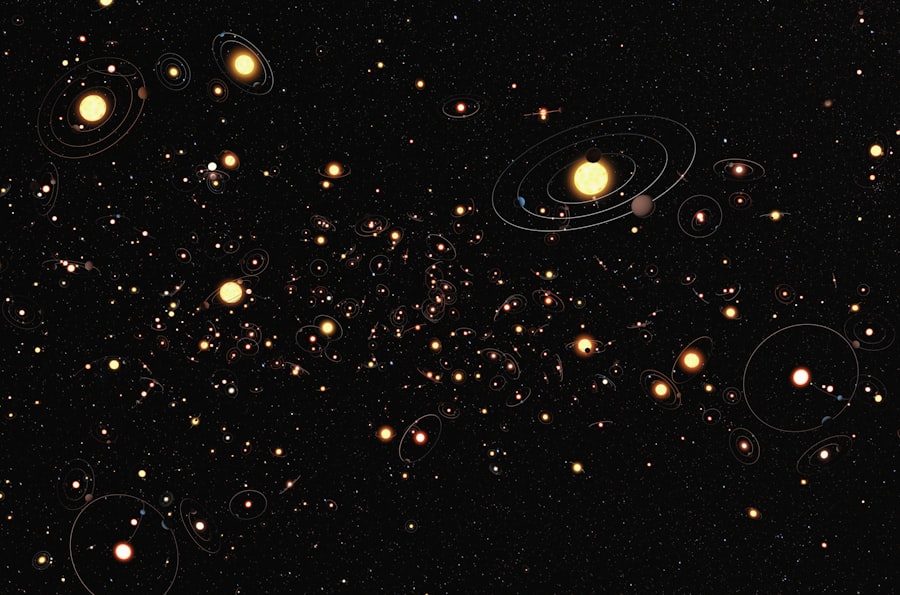
To comprehend the early moments following the Big Bang, you will encounter the inflationary model—a theory proposing that a rapid exponential expansion occurred within a fraction of a second after the initial explosion. This period of inflation helps explain several puzzling features of our universe, such as its large-scale uniformity and flatness. As you delve into this model, consider how it addresses questions that arise from traditional Big Bang cosmology.
Inflation posits that quantum fluctuations during this brief period seeded the structures we observe today. You may find it intriguing to think about how tiny variations in density led to the formation of galaxies and clusters over billions of years. The inflationary model not only enriches your understanding of cosmic history but also opens up new avenues for research into fundamental physics and quantum mechanics.
The Importance of Baryonic Matter in Cosmology
While dark matter and dark energy dominate discussions in cosmology, baryonic matter—the ordinary matter that makes up stars, planets, and living beings—remains crucial for understanding the universe’s evolution. Comprising only about 5% of the total mass-energy content, baryonic matter plays a vital role in structure formation and cosmic evolution. As you explore this aspect of cosmology, consider how baryonic matter interacts with dark matter to create galaxies and other celestial structures.
Baryonic matter is responsible for many observable phenomena in the universe. You might find it fascinating to learn how stars form from clouds of gas and dust through gravitational collapse or how supernovae enrich interstellar space with heavy elements essential for life. By studying baryonic matter’s behavior and distribution, you can gain insights into galaxy formation processes and the overall dynamics of cosmic evolution.
The $\Lambda$CDM Model and its Components
The $\Lambda$CDM model—Lambda Cold Dark Matter—is widely regarded as the standard model for cosmology today. It elegantly combines dark energy (represented by Lambda) with cold dark matter (CDM) to explain various cosmic phenomena.
In this framework, Lambda represents a constant energy density filling space homogeneously, driving the accelerated expansion of the universe. Cold dark matter refers to non-relativistic particles that interact primarily through gravity. Together, these components create a comprehensive picture that aligns with observations such as galaxy clustering patterns and cosmic microwave background radiation fluctuations.
As you explore $\Lambda$CDM further, consider how it serves as a unifying theory that connects disparate aspects of cosmology.
Testing the $\Lambda$CDM Model with Observational Data
To validate or challenge any scientific model, rigorous testing against observational data is essential—and the $\Lambda$CDM model is no exception. You may find it fascinating to learn about various methods used by astronomers to gather data that either supports or refutes this model. Observations from telescopes like Hubble or ground-based observatories provide critical insights into galaxy distributions, supernovae luminosities, and gravitational lensing effects.
One significant test involves measuring Type Ia supernovae as standard candles to determine distances in an expanding universe. By comparing these distances with redshift data from distant galaxies, researchers can assess whether their observations align with predictions made by $\Lambda$CDM. As you explore these methodologies further, consider how they contribute to refining our understanding of cosmic parameters such as Hubble’s constant or dark energy’s equation of state.
Implications and Future of Cosmological Research
As you contemplate the implications of current cosmological research, it’s clear that our understanding is still evolving. The mysteries surrounding dark matter and dark energy remain at the forefront of scientific inquiry; new experiments and observations continue to challenge existing theories while offering tantalizing glimpses into what lies beyond our current knowledge. You may find it exciting to think about how advancements in technology—such as next-generation telescopes or particle accelerators—could reshape our understanding in profound ways.
Moreover, future research may lead to groundbreaking discoveries that could unify disparate aspects of physics into a single coherent framework. As scientists strive to answer fundamental questions about gravity’s role on cosmic scales or explore potential connections between quantum mechanics and general relativity, your curiosity will be essential in driving this quest for knowledge forward.
The $\Lambda$CDM Model and the Quest for a Unified Theory of Cosmology
In conclusion, your journey through cosmology reveals not only a rich tapestry woven from various threads but also an ongoing quest for understanding that transcends individual components like dark matter or baryonic matter. The $\Lambda$CDM model stands as a testament to human ingenuity—a framework that synthesizes diverse observations into a coherent narrative about our universe’s past, present, and future. As you reflect on this journey through cosmological concepts—from the Big Bang to dark energy—you may feel inspired by humanity’s relentless pursuit of knowledge amidst uncertainty.
The quest for a unified theory continues; each discovery brings us closer to unraveling nature’s deepest secrets while reminding us just how much there is yet to learn about our place in this vast cosmos.
The Standard Model of Cosmology, often referred to as the $\Lambda$CDM model, is a pivotal framework in understanding the universe’s composition and evolution. It incorporates the cosmological constant (denoted by $\Lambda$) and Cold Dark Matter (CDM) to explain the observed phenomena such as the cosmic microwave background radiation and the large-scale structure of the cosmos. For those interested in delving deeper into the intricacies of this model and its implications on our understanding of the universe, a related article can be found on My Cosmic Ventures. This resource provides insightful discussions and updates on the latest research and developments in cosmology.
FAQs
What is the Standard Model of Cosmology ($\Lambda$CDM)?
The Standard Model of Cosmology, also known as $\Lambda$CDM, is the prevailing theory that describes the evolution and large-scale structure of the universe. It is based on the idea that the universe is dominated by dark energy ($\Lambda$) and cold dark matter (CDM), along with ordinary matter and radiation.
What is dark energy in the context of $\Lambda$CDM?
Dark energy is a hypothetical form of energy that is thought to permeate all of space and is responsible for the observed acceleration of the universe’s expansion. In the $\Lambda$CDM model, dark energy is represented by the cosmological constant $\Lambda$.
What is cold dark matter (CDM) in the context of $\Lambda$CDM?
Cold dark matter is a type of matter that does not interact with electromagnetic radiation and is non-relativistic, meaning it moves at speeds much slower than the speed of light. It is believed to make up a significant portion of the total matter in the universe and plays a crucial role in the formation of large-scale structures such as galaxies and galaxy clusters.
What are the key components of the $\Lambda$CDM model?
The key components of the $\Lambda$CDM model include dark energy (represented by the cosmological constant $\Lambda$), cold dark matter, ordinary matter, and radiation. These components interact through the force of gravity and other fundamental forces, leading to the observed evolution and structure of the universe.
How does the $\Lambda$CDM model explain the observed properties of the universe?
The $\Lambda$CDM model successfully explains a wide range of observed properties of the universe, including the cosmic microwave background radiation, the large-scale distribution of galaxies, the abundance of light elements, and the accelerated expansion of the universe. It provides a framework for understanding the formation and evolution of cosmic structures on the largest scales.
What are some of the challenges or limitations of the $\Lambda$CDM model?
While the $\Lambda$CDM model has been remarkably successful in explaining many aspects of the universe, it also faces challenges and limitations. Some of these include the nature of dark energy, the identity of dark matter particles, and discrepancies between observations and theoretical predictions on smaller scales. Ongoing research and observations aim to address these challenges and refine our understanding of the universe.