
The Simulation Hypothesis posits that what individuals perceive as reality may actually be an intricate simulation, akin to a highly advanced computer program. This idea suggests that the universe, with all its complexities and nuances, could be a construct created by a more advanced civilization. The notion challenges the very fabric of existence, prompting individuals to question the nature of their reality.
If one were to accept this hypothesis, it would imply that everything from the stars in the sky to the ground beneath their feet is merely a sophisticated illusion, designed to mimic the real world. This concept has gained traction in both philosophical and scientific circles, igniting debates about the nature of consciousness and existence. Proponents argue that as technology advances, the possibility of creating such simulations becomes increasingly plausible.
They suggest that if future civilizations possess the capability to simulate entire worlds, it stands to reason that they might choose to do so. This leads to a profound inquiry: if countless simulations exist, what are the odds that one is living in the original reality? The implications of this hypothesis extend far beyond mere speculation, inviting individuals to reconsider their understanding of life and existence itself.
Key Takeaways
- The simulation hypothesis proposes that our reality might be an artificial simulation created by advanced beings or technology.
- Philosophical and scientific theories provide a foundation for considering the possibility that our universe is simulated.
- Advances in computer simulations and virtual reality technologies make the concept of a simulated reality increasingly plausible.
- Quantum physics phenomena and unexplained anomalies may offer indirect evidence supporting the simulation hypothesis.
- Exploring the simulation hypothesis raises important ethical, existential, and philosophical questions about the nature of reality and human existence.
Theoretical Frameworks: Examining the philosophical and scientific basis for the simulation hypothesis
The philosophical underpinnings of the Simulation Hypothesis can be traced back to thinkers like René Descartes, who famously pondered the nature of reality and deception in his meditations. Descartes’ “Evil Demon” thought experiment questioned whether an omnipotent being could manipulate perceptions, leading to a reality that is fundamentally different from what is perceived. This philosophical inquiry laid the groundwork for contemporary discussions surrounding simulated realities, as it raises questions about the reliability of human perception and cognition.
In addition to philosophical considerations, scientific frameworks also lend credence to the Simulation Hypothesis. The rapid advancements in technology, particularly in fields like artificial intelligence and virtual reality, suggest that creating a convincing simulation may not be as far-fetched as it once seemed.
This intersection of philosophy and science creates a rich tapestry of inquiry, inviting individuals to explore the implications of living in a potentially simulated universe.
Simulation Technology: Understanding the advancements in computer simulation and virtual reality

The evolution of simulation technology has been nothing short of remarkable. Over the past few decades, advancements in computing power and graphics have enabled the creation of increasingly realistic virtual environments. Video games, for instance, have transformed from simple pixelated graphics into immersive experiences that can replicate real-world physics and interactions.
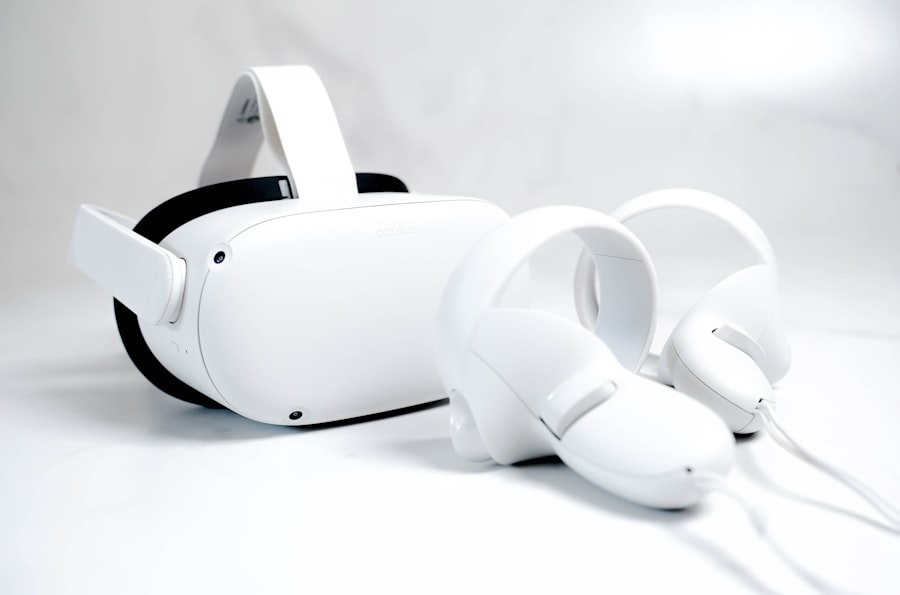
This progression raises intriguing questions about the potential for future simulations to become indistinguishable from reality itself. Moreover, developments in virtual reality (VR) technology have further blurred the lines between actual experiences and simulated ones. With VR headsets becoming more accessible, individuals can now immerse themselves in entirely fabricated worlds that feel remarkably real.
This technological trajectory suggests that as society continues to innovate, the possibility of creating a fully realized simulated reality becomes more attainable. The implications of such advancements are profound, as they challenge traditional notions of existence and perception.
Evidence from Quantum Physics: Analyzing how quantum mechanics supports the idea of a simulated reality
| Quantum Physics Concept | Description | Relation to Simulated Reality | Supporting Evidence / Experiment |
|---|---|---|---|
| Wave-Particle Duality | Particles exhibit both wave-like and particle-like properties depending on observation. | Suggests reality depends on observation, similar to rendering in simulations. | Double-slit experiment showing interference patterns collapse when observed. |
| Quantum Superposition | Particles exist in multiple states simultaneously until measured. | Implying underlying probabilistic computation rather than fixed reality. | Schrödinger’s cat thought experiment and actual superposition in qubits. |
| Quantum Entanglement | Particles become linked so that the state of one instantly influences another, regardless of distance. | Hints at non-local information processing, akin to centralized simulation control. | Bell test experiments confirming entanglement and violation of local realism. |
| Quantum Decoherence | Process by which quantum systems lose coherence and behave classically when interacting with environment. | Could be interpreted as ‘rendering’ of reality when information is accessed. | Experiments showing transition from quantum to classical states in controlled environments. |
| Planck Scale Limits | Smallest measurable units of space and time, suggesting discrete rather than continuous reality. | Supports idea of a pixelated or quantized simulation grid. | Observations of minimum length scales and energy quanta in particle physics. |
| Quantum Zeno Effect | Frequent observation can freeze the evolution of a quantum state. | Analogous to a simulation pausing or updating states only when observed. | Experiments demonstrating inhibited decay of unstable particles under continuous measurement. |
Quantum physics introduces a level of complexity that aligns intriguingly with the Simulation Hypothesis. At its core, quantum mechanics reveals that particles exist in states of probability until observed, leading to phenomena such as wave-particle duality. This peculiar behavior raises questions about the nature of reality itself—if observation plays a crucial role in determining outcomes, could it be that consciousness interacts with a simulated framework?
Some theorists argue that quantum entanglement and non-locality further support the idea of a simulated universe. These phenomena suggest that particles can be interconnected across vast distances, defying classical notions of space and time. If reality operates on principles akin to those found in computer programming—where information can be manipulated instantaneously—then it becomes conceivable that what individuals perceive as reality is merely a complex simulation governed by underlying rules.
Anomalies and Glitches: Investigating unexplained phenomena and inconsistencies that could indicate a simulated reality
Throughout history, humanity has encountered various anomalies and unexplained phenomena that challenge conventional understanding. From déjà vu experiences to instances where individuals perceive coincidences as significant patterns, these occurrences raise questions about the nature of reality. Some proponents of the Simulation Hypothesis suggest that such anomalies could be indicative of glitches within a simulated framework—moments where the underlying code falters or reveals itself.
For instance, reports of unexplained synchronicities or instances where individuals feel as though they are experiencing a “glitch” in reality have fueled speculation about the nature of existence. These experiences often lead individuals to question whether their perceptions are reliable or if they are merely products of a sophisticated simulation. By examining these anomalies through the lens of simulation theory, one can explore how they might serve as evidence for an underlying artificial construct.
Simulation Theory in Pop Culture: Exploring how the concept of a simulated reality has been portrayed in movies, books, and other media
The concept of a simulated reality has permeated popular culture, inspiring countless works across various media. Films like “The Matrix” have become iconic representations of the Simulation Hypothesis, depicting a dystopian future where humanity is unknowingly trapped within a computer-generated illusion. Such narratives resonate with audiences because they tap into deep-seated fears about control, autonomy, and the nature of existence itself.
Literature has also explored themes related to simulated realities, with authors like Philip K. Dick delving into questions of identity and perception in works such as “Ubik” and “Do Androids Dream of Electric Sheep?” These stories challenge readers to confront their understanding of what it means to be human in a world where reality can be manipulated at will. By engaging with these narratives, individuals are invited to reflect on their own experiences and beliefs regarding existence.
The Simulation Argument: Delving into the reasoning behind the hypothesis and the potential implications for our understanding of reality
The Simulation Argument, popularized by philosopher Nick Bostrom, presents a compelling case for considering the possibility that humanity exists within a simulation. Bostrom’s argument posits that if advanced civilizations possess the capability to create realistic simulations, then it is statistically probable that most beings would inhabit such simulations rather than an original reality. This line of reasoning challenges individuals to confront uncomfortable truths about their existence and raises questions about free will and determinism.
The implications of accepting this argument are profound. If one were to acknowledge that they might be living in a simulation, it could lead to existential crises or shifts in perspective regarding purpose and meaning. Individuals may grapple with feelings of insignificance or question their agency within a predetermined framework.
Conversely, embracing this possibility could inspire curiosity about the nature of existence and encourage exploration beyond conventional boundaries.
Testing the Simulation: Examining proposed experiments and methods for proving or disproving the simulation hypothesis
As intriguing as the Simulation Hypothesis may be, it also raises questions about how one might test its validity. Various scientists and philosophers have proposed experiments aimed at uncovering evidence for or against the hypothesis. One such approach involves examining cosmic rays or high-energy particles for signs of computational limits—essentially searching for discrepancies that might indicate underlying code or constraints within the fabric of reality.
Another proposed method involves exploring quantum phenomena for anomalies that could suggest manipulation or interference consistent with a simulated environment. By investigating these avenues, researchers hope to uncover evidence that either supports or refutes the notion that humanity exists within a simulation. However, these experiments also highlight the challenges inherent in testing such an abstract hypothesis—how does one measure or observe something as elusive as reality itself?
Ethical and Existential Considerations: Discussing the moral and existential implications of living in a simulated reality
The prospect of living within a simulated reality raises significant ethical considerations that warrant exploration. If individuals are indeed part of an elaborate simulation created by advanced beings, questions arise regarding autonomy and moral responsibility. Are actions within this framework meaningful if they are predetermined by external forces?
Furthermore, what ethical obligations do creators have toward their simulated beings? Existentially, grappling with the possibility of living in a simulation can lead individuals to confront profound questions about identity and purpose. If one’s experiences are orchestrated by an external entity, it may challenge traditional notions of self-determination and agency.
This confrontation with existential uncertainty can evoke feelings of anxiety or liberation—individuals may find solace in recognizing their place within a grander design or struggle with feelings of insignificance in an artificial construct.
The Search for Truth: Considering the implications of proving or disproving the simulation hypothesis for our understanding of the universe
The quest for truth surrounding the Simulation Hypothesis has far-reaching implications for humanity’s understanding of existence itself. If evidence were to emerge supporting the idea that reality is indeed a simulation, it would necessitate a reevaluation of fundamental beliefs about consciousness, identity, and purpose. Such revelations could reshape philosophical discourse and prompt new inquiries into what it means to be human.
Conversely, disproving the hypothesis would also carry significant weight—affirming humanity’s place within an objective reality governed by natural laws would provide reassurance against existential uncertainties. Regardless of which outcome prevails, engaging with these questions fosters deeper contemplation about humanity’s role within the universe and encourages exploration beyond conventional boundaries.
Embracing the Unknown: Reflecting on the significance of the simulation hypothesis for our perception of reality and the human experience
Ultimately, embracing the unknown inherent in the Simulation Hypothesis invites individuals to reflect on their perceptions of reality and existence itself. Whether one views life as an intricate simulation or an authentic experience shaped by natural laws, engaging with these ideas encourages curiosity and exploration beyond established norms. The very act of questioning one’s reality fosters growth and introspection—inviting individuals to seek meaning amidst uncertainty.
In navigating this complex landscape, humanity is reminded that understanding may not always come easily; rather, it often requires grappling with ambiguity and embracing diverse perspectives. The Simulation Hypothesis serves as a catalyst for deeper inquiry into existence—encouraging individuals to explore their beliefs while remaining open to new possibilities that challenge conventional wisdom about what it means to be alive in this vast universe.
If you’re intrigued by the concept of proving that we might be living in a simulation, you might find the article on My Cosmic Ventures particularly enlightening. It delves into various philosophical arguments and scientific theories that support the simulation hypothesis, offering a comprehensive overview of the topic.
WATCH THIS! Scientists Say The Universe Is A Quantum Computer (And We Are The Output)
FAQs
What does it mean to say we are living in a simulation?
Living in a simulation means that our reality is artificially created by an advanced computer or entity, rather than existing as a natural, physical universe. This concept suggests that everything we experience is part of a programmed environment.
Who first proposed the idea that we might be living in a simulation?
The idea was popularized by philosopher Nick Bostrom in 2003 through his paper “Are You Living in a Computer Simulation?” He argued that one of three propositions is likely true: civilizations go extinct before becoming technologically mature, advanced civilizations are not interested in running simulations, or we are almost certainly living in a simulation.
What are some scientific approaches to testing if we live in a simulation?
Scientists have proposed several methods, such as looking for anomalies or “glitches” in physical laws, searching for limits in the resolution of space-time, or detecting patterns that resemble computer code in cosmic background radiation. However, no definitive test currently exists.
Can quantum mechanics provide evidence for or against the simulation hypothesis?
Some interpretations of quantum mechanics, like the observer effect and wave function collapse, have been discussed in the context of simulations. However, these phenomena do not conclusively prove or disprove the simulation hypothesis; they remain open to interpretation.
Is there any consensus among scientists about the simulation hypothesis?
No, the scientific community remains divided. While some researchers consider it a plausible philosophical idea, others view it as untestable and speculative. It is generally regarded as a hypothesis rather than an established scientific theory.
What philosophical implications arise if we prove we are in a simulation?
Proving we live in a simulation would challenge our understanding of reality, consciousness, and existence. It could raise questions about free will, the nature of the creators, and the purpose of the simulation.
Are there any technological limitations to proving the simulation hypothesis?
Yes, current technology may be insufficient to detect or analyze the underlying structure of a simulated reality. The creators of the simulation could also design it to be indistinguishable from “true” reality, making proof inherently difficult.
How does the simulation hypothesis relate to virtual reality and computer simulations today?
The hypothesis draws an analogy between our universe and advanced virtual reality or computer simulations created by humans. As technology improves, the idea that future civilizations could simulate entire universes becomes more conceivable, inspiring the hypothesis.
What role does mathematics play in the simulation hypothesis?
Mathematics is often cited as the fundamental language of the universe. Some proponents argue that the universe’s mathematical structure suggests it could be a programmed simulation, as computer simulations rely on mathematical algorithms.
Where can I learn more about the simulation hypothesis?
You can explore academic papers by Nick Bostrom, books on philosophy of mind and metaphysics, scientific articles discussing quantum physics and cosmology, and documentaries or lectures on the topic. Online platforms like academic journals and educational websites also provide valuable resources.