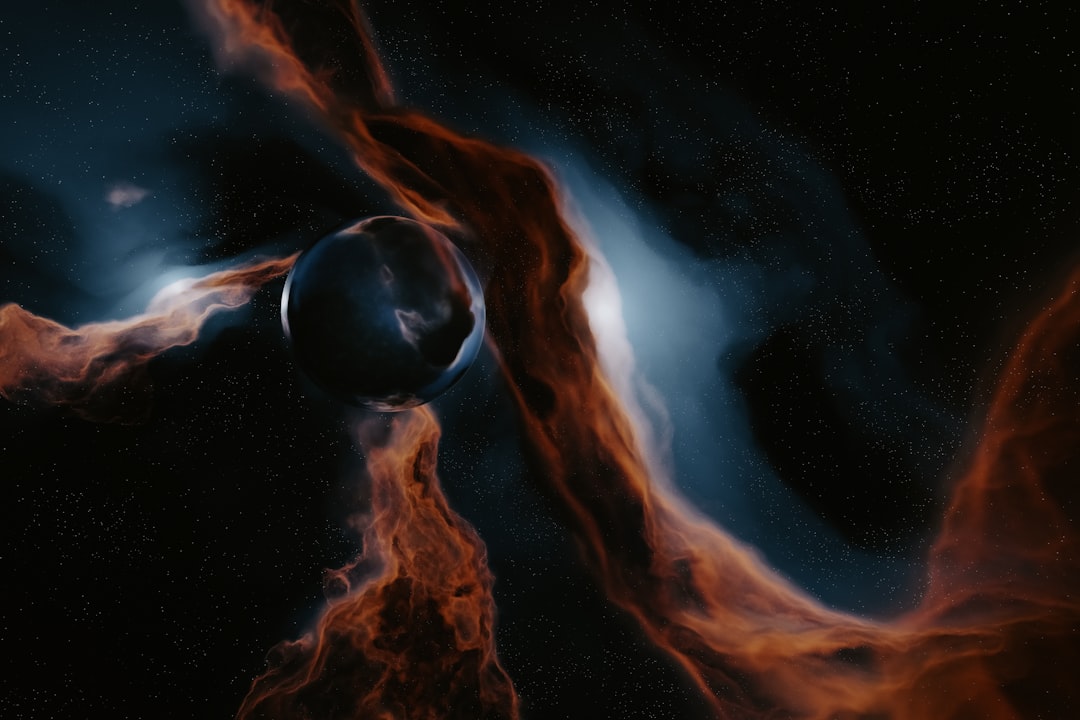
In the vast expanse of the universe, black holes have long captivated the imagination of astronomers and physicists alike. These enigmatic entities, known for their immense gravitational pull, have traditionally been associated with the remnants of massive stars that have collapsed under their own gravity. However, a new category of black holes has emerged in recent years: free floating black holes.
Unlike their more familiar counterparts, which are typically found at the centers of galaxies or in binary systems, free floating black holes wander through the cosmos in isolation. This article delves into the nature, discovery, characteristics, and implications of these elusive cosmic wanderers. The concept of free floating black holes challenges conventional understandings of black hole formation and distribution.
As researchers continue to explore the universe’s depths, they are uncovering evidence that suggests these solitary black holes may be more common than previously thought. The implications of their existence extend beyond mere curiosity; they could reshape our understanding of cosmic evolution and the dynamics of galaxies. By examining the characteristics and potential impacts of free floating black holes, scientists hope to unravel some of the mysteries surrounding these fascinating objects.
Key Takeaways
- Free floating black holes are black holes that do not orbit any star and are not part of any galaxy.
- These black holes are formed from the remnants of massive stars that have exploded as supernovae.
- Free floating black holes were first discovered in 2005 through a process called gravitational microlensing.
- Characteristics of free floating black holes include their ability to wander through space and their potential to merge with other black holes.
- The mystery of free floating black holes lies in their elusive nature and the potential impact they could have on the universe.
What are Free Floating Black Holes?
Free floating black holes are defined as black holes that do not reside within a galaxy or a binary system but instead drift through interstellar space. They are not bound to any particular star or stellar cluster, making them unique in the realm of astrophysics. These black holes can vary in size, from stellar-mass black holes formed from the remnants of massive stars to potentially primordial black holes that may have formed in the early universe.
The existence of free floating black holes raises intriguing questions about their origins and how they fit into the broader framework of cosmic evolution. While stellar-mass black holes are typically formed through the gravitational collapse of massive stars, free floating black holes may have different formation pathways. Some theories suggest that they could be remnants of supernova explosions that were ejected from their host galaxies, while others propose that they might have formed in dense regions of the early universe where matter was concentrated.
The Discovery of Free Floating Black Holes
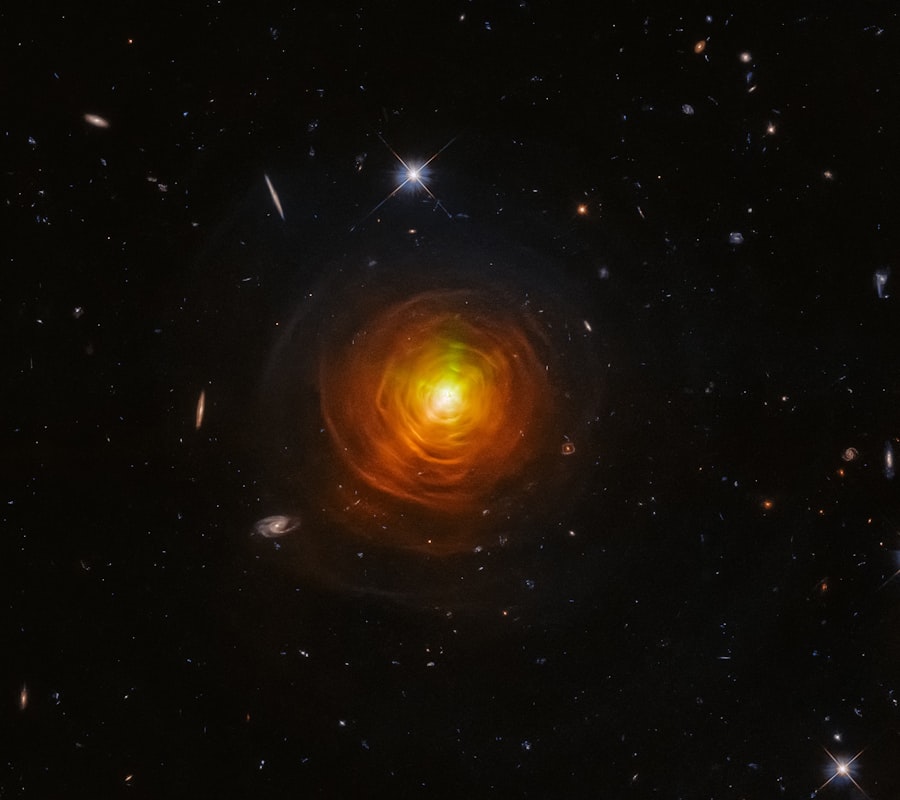
The search for free floating black holes has gained momentum in recent years, thanks in part to advancements in observational technology and techniques. Astronomers have employed various methods to detect these elusive objects, including gravitational microlensing, which involves observing the bending of light from distant stars as it passes near a black hole. This technique has proven effective in identifying potential candidates for free floating black holes.
One significant milestone in the discovery of free floating black holes occurred when researchers analyzed data from the European Space Agency’s Gaia mission. Gaia’s precise measurements of star positions and movements allowed scientists to identify anomalies that could indicate the presence of a black hole nearby. These findings have sparked excitement within the scientific community, as they suggest that free floating black holes may be more prevalent than previously believed.
Characteristics of Free Floating Black Holes
| Characteristic | Description |
|---|---|
| Mass | Variable, can range from a few solar masses to millions of solar masses |
| Spin | Can have angular momentum, which affects their behavior and interactions with other objects |
| Event Horizon | The boundary beyond which nothing, not even light, can escape the black hole’s gravitational pull |
| Accretion Disk | Material that falls into the black hole forms a disk and emits radiation as it spirals inward |
| Gravitational Lensing | Black holes can bend and distort light, creating gravitational lensing effects |
Free floating black holes exhibit several distinctive characteristics that set them apart from their more conventional counterparts. One notable feature is their isolation; unlike black holes that are part of binary systems or located at galactic centers, free floating black holes exist independently in the vastness of space. This isolation can make them challenging to detect, as they do not emit light or other forms of radiation that would make them visible to traditional telescopes.
Another characteristic is their potential mass range. Free floating black holes can vary significantly in size, with some being relatively small—just a few times the mass of our Sun—while others could be much larger, possibly even reaching hundreds or thousands of solar masses. This diversity raises questions about their formation processes and the conditions necessary for their existence.
Additionally, their movement through space can be influenced by gravitational interactions with other celestial bodies, leading to complex dynamics that researchers are still working to understand.
The Formation of Free Floating Black Holes
The formation mechanisms behind free floating black holes remain an area of active research and debate among astrophysicists. One widely accepted theory posits that many free floating black holes originated from supernova explosions. When a massive star exhausts its nuclear fuel, it undergoes a catastrophic collapse, resulting in a supernova event that can eject material into space.
If the conditions are right, some of this material may escape the gravitational pull of the host galaxy, allowing for the formation of a free floating black hole. Another intriguing possibility is that primordial black holes could account for some free floating examples. These hypothetical black holes would have formed shortly after the Big Bang due to density fluctuations in the early universe.
If they exist, primordial black holes could provide insights into both dark matter and the conditions present in the nascent universe. Understanding how these different formation pathways contribute to the population of free floating black holes is crucial for piecing together the cosmic puzzle.
The Mystery of Free Floating Black Holes

Despite significant progress in understanding free floating black holes, many mysteries remain. One pressing question is how many such black holes exist within our galaxy and beyond. Estimates vary widely, with some researchers suggesting that there could be millions or even billions of free floating black holes in the Milky Way alone.
However, accurately determining their numbers is complicated by their elusive nature and the limitations of current observational techniques. Another mystery revolves around their influence on surrounding matter and cosmic structures. Free floating black holes may interact with nearby stars and gas clouds through gravitational forces, potentially affecting their motion and evolution.
These interactions could lead to phenomena such as gravitational lensing or even accretion events if a nearby star strays too close to a black hole’s event horizon. Understanding these dynamics is essential for comprehending how free floating black holes fit into the larger tapestry of cosmic evolution.
The Role of Free Floating Black Holes in the Universe
Free floating black holes may play a more significant role in the universe than previously thought. Their presence could influence star formation rates and galactic dynamics by altering gravitational fields within their vicinity. As they drift through space, they may interact with gas clouds and other celestial bodies, potentially triggering new star formation or disrupting existing systems.
Moreover, free floating black holes could contribute to our understanding of dark matter—a mysterious substance that makes up a significant portion of the universe’s mass but remains largely undetectable through conventional means. If primordial black holes exist as a form of dark matter, studying free floating black holes could provide valuable insights into this elusive component of the cosmos.
The Search for Free Floating Black Holes
The quest to identify and study free floating black holes is ongoing and has become a focal point for many astrophysicists. Various observational campaigns are underway, utilizing advanced telescopes and innovative techniques to detect these elusive objects. Gravitational microlensing remains one of the most promising methods for identifying potential candidates, as it allows astronomers to observe how light from distant stars is affected by the gravitational field of a nearby black hole.
In addition to microlensing surveys, researchers are also exploring other avenues for detection, such as monitoring gravitational waves produced by merging black holes or employing radio telescopes to observe emissions from accreting material around nearby black holes. As technology continues to advance, scientists hope to refine their search methods and uncover more about these enigmatic cosmic wanderers.
The Potential Impact of Free Floating Black Holes on Planets and Stars
The presence of free floating black holes raises intriguing possibilities regarding their impact on nearby stars and planets. As these solitary entities drift through space, their gravitational influence could affect the orbits and stability of surrounding celestial bodies. For instance, if a free floating black hole were to pass close to a star system, it could disrupt planetary orbits or even lead to catastrophic events such as stellar collisions.
Additionally, if a free floating black hole were to come into proximity with a gas cloud or star cluster, it might trigger new star formation by compressing material through its gravitational pull. This dynamic interaction highlights the potential role that free floating black holes could play in shaping cosmic structures and influencing stellar evolution across vast distances.
The Future of Research on Free Floating Black Holes
As research on free floating black holes continues to evolve, scientists are optimistic about uncovering new insights into these mysterious objects. Ongoing observational campaigns and advancements in technology will likely enhance our ability to detect and study these elusive entities more effectively. Future missions aimed at exploring gravitational waves and high-energy astrophysics may also provide valuable data on free floating black holes and their interactions with other cosmic phenomena.
Moreover, interdisciplinary collaboration among astronomers, physicists, and cosmologists will be essential for piecing together the complex puzzle surrounding free floating black holes. By combining theoretical models with observational data, researchers hope to develop a more comprehensive understanding of these enigmatic objects and their role within the broader context of cosmic evolution.
Unraveling the Enigma of Free Floating Black Holes
In conclusion, free floating black holes represent a fascinating frontier in astrophysics that challenges existing paradigms about these enigmatic entities. Their isolation from galaxies and binary systems raises important questions about their origins, characteristics, and potential impacts on surrounding matter. As researchers continue to explore this uncharted territory, they are uncovering new insights that could reshape our understanding of cosmic evolution.
The ongoing search for free floating black holes promises to yield exciting discoveries in the coming years. By employing innovative observational techniques and fostering collaboration across disciplines, scientists aim to unravel the mysteries surrounding these elusive wanderers and illuminate their role within the grand tapestry of the universe. As we delve deeper into this cosmic enigma, humanity’s understanding of its place in the cosmos continues to expand, revealing new layers of complexity and wonder in the universe’s intricate design.
Recent studies have suggested the existence of free-floating stellar mass black holes, which are intriguing cosmic entities that roam the universe independently of any host star. For a deeper understanding of these fascinating objects and their implications for astrophysics, you can explore a related article on this topic at My Cosmic Ventures. This resource provides insights into the formation, detection, and significance of these elusive black holes in the broader context of cosmic evolution.
WATCH THIS! The Invisible Threat: A Rogue Black Hole Headed for Our Solar System?
FAQs
What is a free floating stellar mass black hole?
A free floating stellar mass black hole is a black hole that is not gravitationally bound to any star or other object. These black holes are thought to have formed from the collapse of massive stars and can range in size from a few times the mass of the sun to tens of times the mass of the sun.
How are free floating stellar mass black holes detected?
Free floating stellar mass black holes are detected through their gravitational effects on surrounding objects. This can include the distortion of light from background stars, the acceleration of nearby stars, or the emission of X-rays from material falling into the black hole.
What are the potential implications of free floating stellar mass black holes?
Free floating stellar mass black holes could have significant implications for our understanding of the universe. They may contribute to the dark matter content of galaxies, and their interactions with other objects could provide valuable insights into the dynamics of galactic systems.
Are free floating stellar mass black holes a threat to Earth?
While free floating stellar mass black holes are incredibly dense and have strong gravitational effects, the likelihood of one coming close enough to Earth to pose a threat is extremely low. The nearest known black hole, V616 Monocerotis, is about 3,000 light years away.
Can free floating stellar mass black holes be used for space travel?
The extreme gravitational forces near a black hole make it a challenging environment for space travel. While there has been speculation about using black holes for propulsion in science fiction, the practical challenges and risks involved make this concept highly speculative at present.