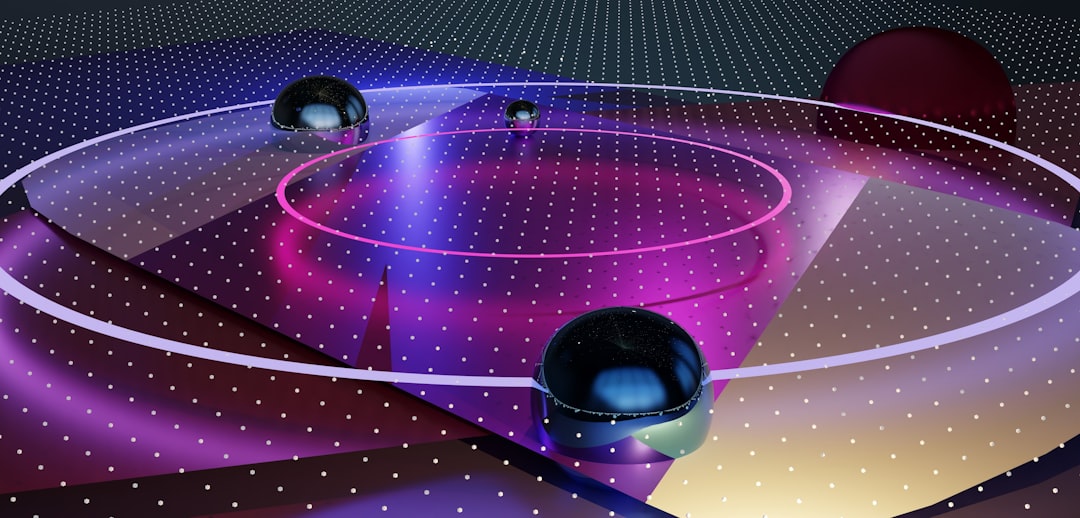
Gravitational waves are disturbances in spacetime produced by accelerating massive objects. Albert Einstein predicted their existence in 1916 through his General Theory of Relativity. The Laser Interferometer Gravitational-Wave Observatory (LIGO) achieved the first direct detection of gravitational waves in 2015, providing scientists with a new method to observe cosmic phenomena that cannot be detected through electromagnetic radiation.
Standard sirens are astronomical objects that can be used to measure cosmic distances. Unlike traditional standard candles, which rely on known luminosity, standard sirens utilize gravitational wave data to determine distances to their sources. When gravitational wave detectors measure the amplitude and frequency of waves from events such as binary neutron star mergers, scientists can calculate the distance to these sources.
By combining this distance information with redshift measurements obtained through electromagnetic observations, researchers can study the expansion rate of the universe and investigate the properties of dark energy.
Key Takeaways
- Standard sirens are cosmic events, like neutron star collisions, that emit gravitational waves and help measure cosmic distances.
- The discovery of gravitational waves confirmed a key prediction of Einstein’s theory of relativity.
- Standard sirens provide an independent method to study the expansion rate of the universe.
- Detecting standard sirens faces challenges such as weak signals and the need for precise measurements.
- Future advancements in gravitational wave detection will enhance our understanding of black hole mergers and the universe’s evolution.
The Discovery of Gravitational Waves
The journey to the discovery of gravitational waves was long and fraught with challenges. Although Einstein’s theoretical predictions laid the groundwork, it took nearly a century for technology to catch up with theory. The LIGO project, initiated in the 1990s, involved constructing highly sensitive detectors capable of measuring minute changes in distance caused by passing gravitational waves.
The detectors utilize laser interferometry to detect these changes, which are on the order of a fraction of the diameter of a proton. On September 14, 2015, LIGO made history by detecting gravitational waves from a pair of merging black holes approximately 1.
This groundbreaking event not only confirmed Einstein’s predictions but also opened a new era in astrophysics known as gravitational wave astronomy.
The detection was followed by several more observations, including those from neutron star mergers, which provided additional data and insights into the nature of these cosmic events. Each detection has contributed to a growing understanding of the universe’s most violent phenomena and has underscored the importance of gravitational waves as a new tool for exploring the cosmos.
What Are Standard Sirens?

Standard sirens are astronomical objects that serve as reliable distance indicators due to their well-defined intrinsic properties. Unlike standard candles, which rely on measuring brightness to determine distance, standard sirens utilize gravitational waves to infer distances based on their known physical characteristics. For instance, when two neutron stars or black holes merge, they emit gravitational waves that can be detected by observatories like LIGO and Virgo.
The amplitude and frequency of these waves carry information about the masses and distances of the merging objects. The concept of standard sirens is particularly powerful because it allows astronomers to bypass some of the limitations associated with traditional distance measurement methods. By combining gravitational wave data with electromagnetic observations—such as light emitted during a merger—scientists can create a more comprehensive picture of these cosmic events.
This dual approach enhances the accuracy of distance measurements and provides valuable insights into the properties of the universe.
How Do Standard Sirens Help in Detecting Gravitational Waves?
Standard sirens play a crucial role in enhancing the detection and analysis of gravitational waves. When a gravitational wave event occurs, it is often accompanied by electromagnetic signals, such as gamma-ray bursts or optical counterparts. By identifying these signals and correlating them with gravitational wave data, astronomers can determine the distance to the source with remarkable precision.
This synergy between gravitational wave detection and electromagnetic observations is what makes standard sirens so valuable. For example, during the merger of two neutron stars in August 2017, LIGO detected gravitational waves while observatories around the world captured electromagnetic signals from the event. This multi-messenger approach allowed scientists to pinpoint the location of the merger in space and calculate its distance accurately.
The ability to use standard sirens in this way not only enhances our understanding of individual events but also contributes to broader cosmological studies by providing data on the expansion rate of the universe.
The Role of Standard Sirens in Cosmology
| Metric | Description | Typical Value / Range | Unit |
|---|---|---|---|
| Hubble Constant (H₀) | Rate of expansion of the Universe measured using standard sirens | 67 – 74 | km/s/Mpc |
| Luminosity Distance (DL) | Distance to the gravitational wave source inferred from waveform amplitude | 100 – 1000 | Megaparsecs (Mpc) |
| Redshift (z) | Cosmological redshift of the source, often obtained from electromagnetic counterpart | 0.01 – 0.1 | Dimensionless |
| Signal-to-Noise Ratio (SNR) | Measure of detection confidence for gravitational wave events | 8 – 30 | Dimensionless |
| Chirp Mass (Mchirp) | Combination of component masses that determines the inspiral waveform | 1.2 – 30 | Solar Masses (M☉) |
| Event Rate | Number of detectable standard siren events per year | 10 – 100 | Events/year |
| Distance Uncertainty | Relative error in luminosity distance measurement from gravitational waves | 5% – 20% | Percentage |
In cosmology, understanding the expansion rate of the universe is fundamental to unraveling its history and fate. The Hubble constant, which describes how fast galaxies are receding from us due to cosmic expansion, has been a subject of intense study and debate among astronomers. Standard sirens offer a new method for measuring this constant by providing direct distance measurements to gravitational wave sources.
By analyzing multiple gravitational wave events involving standard sirens, researchers can create a more accurate picture of cosmic expansion. This method has the potential to resolve discrepancies between different measurement techniques that have yielded conflicting values for the Hubble constant. As more standard siren events are detected, they will contribute significantly to refining our understanding of cosmic expansion and may even shed light on the mysterious nature of dark energy.
Standard Sirens and the Expansion of the Universe
The relationship between standard sirens and the expansion of the universe is profound and multifaceted. As standard sirens provide accurate distance measurements, they enable astronomers to map out how galaxies are moving away from each other over time. This mapping is essential for understanding not only how fast the universe is expanding but also how this expansion has changed throughout its history.
The integration of standard siren data with other cosmological observations—such as those from supernovae or cosmic microwave background radiation—can lead to a more cohesive model of cosmic evolution. By comparing distances derived from standard sirens with redshift data from distant galaxies, researchers can gain insights into how different factors have influenced cosmic expansion over billions of years. This comprehensive approach may ultimately help answer fundamental questions about the universe’s origin, structure, and ultimate fate.
Challenges in Detecting Standard Sirens and Gravitational Waves
Despite their promise, detecting standard sirens and gravitational waves presents several challenges. The sensitivity required to observe these faint signals necessitates advanced technology and significant resources. LIGO and similar observatories must operate under extremely controlled conditions to minimize noise and interference that could obscure gravitational wave signals.
Moreover, while gravitational wave events are becoming more frequent with advancements in detection technology, they still occur relatively infrequently compared to other astronomical phenomena. This rarity means that researchers must be strategic in their observational campaigns, often relying on rapid follow-up observations across multiple wavelengths to capture electromagnetic counterparts associated with gravitational wave events. The coordination required for such multi-messenger astronomy can be logistically complex and demands collaboration across various scientific disciplines.
The Future of Standard Sirens and Gravitational Wave Detection
Looking ahead, the future of standard sirens and gravitational wave detection appears promising. As technology continues to advance, new observatories are being developed that will enhance sensitivity and expand detection capabilities. Projects like LIGO’s upcoming upgrades and future space-based observatories such as LISA (Laser Interferometer Space Antenna) aim to detect lower-frequency gravitational waves that could originate from different types of cosmic events.
These advancements will likely lead to an increase in detected standard siren events, providing astronomers with a wealth of data for cosmological studies. As more events are cataloged, researchers will refine their models of cosmic expansion and gain deeper insights into fundamental questions about dark energy and the overall structure of the universe.
Standard Sirens and Black Hole Mergers
Black hole mergers represent one of the most exciting applications for standard sirens in astrophysics. When two black holes spiral toward each other and eventually merge, they emit powerful gravitational waves that can be detected across vast distances. These events not only provide opportunities for studying black hole properties but also serve as potential standard sirens for measuring cosmic distances.
The first detection of gravitational waves from black hole mergers demonstrated that these events could be used as standard sirens. By analyzing multiple black hole merger events, researchers can gather data on their masses and distances, contributing valuable information about their formation processes and distribution throughout the universe. This knowledge enhances our understanding of black hole populations and their role in cosmic evolution.
Standard Sirens and Neutron Star Collisions
Neutron star collisions offer another compelling avenue for utilizing standard sirens in astrophysical research. These cataclysmic events produce both gravitational waves and electromagnetic signals—such as gamma-ray bursts—that can be observed across various wavelengths. The simultaneous detection of these signals allows astronomers to use neutron star mergers as standard sirens for precise distance measurements.
The significance of neutron star collisions extends beyond distance measurement; they also play a crucial role in understanding heavy element formation in the universe. Observations following neutron star mergers have revealed that these events are responsible for producing elements like gold and platinum through rapid neutron capture processes. By studying these collisions as standard sirens, researchers can gain insights into both cosmic distances and nucleosynthesis processes that shape elemental abundances in galaxies.
The Promise of Standard Sirens in Unraveling the Mysteries of the Universe
In conclusion, standard sirens represent a transformative development in astrophysics that holds immense promise for unraveling some of the universe’s most profound mysteries. By combining gravitational wave observations with electromagnetic signals from astronomical events, researchers can achieve unprecedented accuracy in measuring cosmic distances and understanding the expansion rate of the universe. As technology continues to advance and more standard siren events are detected, scientists will be better equipped to address fundamental questions about dark energy, cosmic evolution, and the nature of gravity itself.
The synergy between gravitational wave astronomy and traditional observational techniques heralds a new era in our quest to comprehend the cosmos—a journey that promises to deepen humanity’s connection to the universe while illuminating its most enigmatic aspects.
Recent advancements in the detection of gravitational waves have opened new avenues for understanding the universe, particularly through the study of standard sirens. These cosmic events, which serve as distance markers, allow astronomers to measure the expansion of the universe with unprecedented accuracy. For more insights into the implications of standard sirens and their role in cosmology, you can read the related article on this topic at My Cosmic Ventures.
FAQs
What are standard sirens in the context of gravitational waves?
Standard sirens are astrophysical sources of gravitational waves, such as merging neutron stars or black holes, whose intrinsic properties allow scientists to measure their distance directly from the gravitational wave signal. This makes them analogous to “standard candles” in electromagnetic astronomy.
How do standard sirens help measure cosmic distances?
Standard sirens provide a way to determine the absolute distance to the source by analyzing the amplitude and waveform of the gravitational waves they emit. Since the gravitational wave signal encodes the luminosity distance without relying on a cosmic distance ladder, it offers an independent method for measuring distances in the universe.
Why are standard sirens important for cosmology?
Standard sirens enable precise measurements of the Hubble constant and other cosmological parameters by providing an independent and direct way to measure distances to faraway galaxies. This helps resolve discrepancies between different methods of measuring the expansion rate of the universe.
What types of astrophysical events serve as standard sirens?
The most common standard sirens are binary neutron star mergers and black hole-neutron star mergers. These events produce strong gravitational wave signals with well-understood physics, allowing accurate distance estimation.
Do standard sirens require electromagnetic counterparts?
While gravitational wave signals alone can provide distance measurements, identifying an electromagnetic counterpart (such as a gamma-ray burst or kilonova) helps determine the redshift of the host galaxy. Combining distance and redshift is essential for cosmological studies.
How accurate are distance measurements from standard sirens?
The accuracy depends on the signal-to-noise ratio of the gravitational wave detection and the ability to identify the host galaxy. Current measurements can achieve distance uncertainties of around 10-20%, with improvements expected as detectors become more sensitive.
What gravitational wave detectors are used to observe standard sirens?
Ground-based detectors like LIGO, Virgo, and KAGRA currently observe gravitational waves from compact binary mergers. Future detectors such as the space-based LISA will expand the range and types of standard sirens detectable.
Can standard sirens help test theories of gravity?
Yes, by comparing the distance measurements from gravitational waves with those from electromagnetic observations, scientists can test the consistency of general relativity and explore alternative theories of gravity.
What challenges exist in using standard sirens for cosmology?
Challenges include accurately identifying the host galaxy to obtain redshift, dealing with weak or absent electromagnetic counterparts, and improving detector sensitivity to increase the number of observed events.
What is the future outlook for standard sirens in astrophysics?
As gravitational wave detectors improve and more events are observed, standard sirens will become a powerful tool for precision cosmology, helping to refine measurements of the universe’s expansion and test fundamental physics.