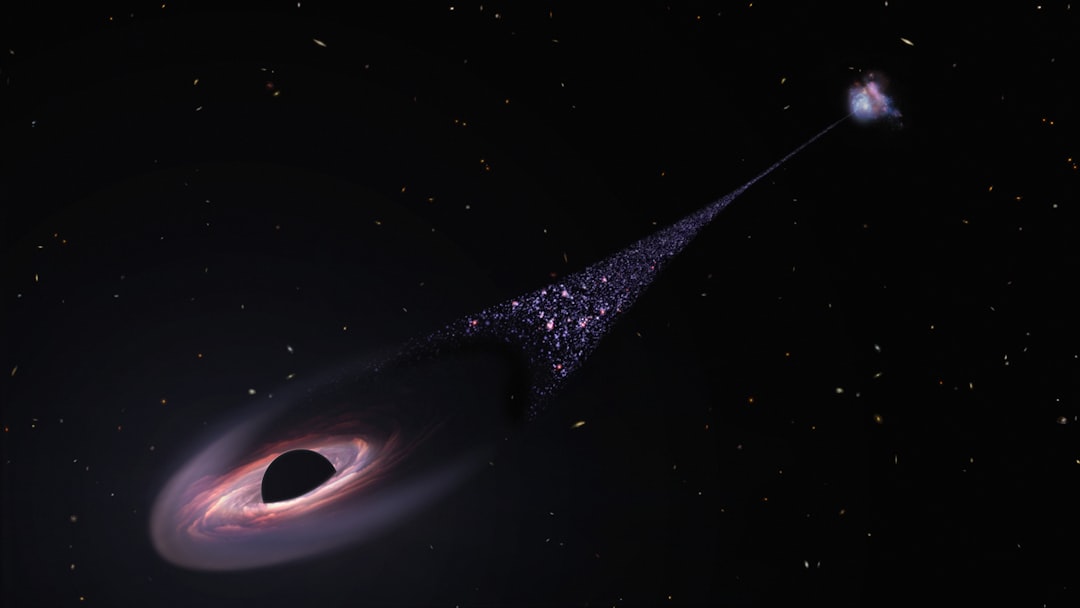
Primordial black holes (PBHs) are a theoretical concept in astrophysics, hypothesized to have formed during the early universe, shortly after the Big Bang. Unlike stellar black holes that form from collapsed massive stars, PBHs are thought to have originated from density fluctuations in the primordial plasma that constituted the early universe. These fluctuations potentially created regions where matter concentration was sufficient to trigger gravitational collapse, forming black holes with a wide range of masses.
The theoretical framework for PBHs provides potential explanations for several cosmological phenomena. These objects could range from microscopic masses of a few grams to supermassive structures, making them distinct from stellar black holes which have a minimum mass threshold. Scientists study PBHs as possible contributors to dark matter and as probes of early universe conditions.
Their existence would offer valuable data points for understanding cosmic inflation and the fundamental physics that governed the universe’s earliest moments.
Key Takeaways
- Primordial black holes are hypothetical black holes formed shortly after the Big Bang, distinct from those formed by collapsing stars.
- They may produce detectable gravitational waves, offering a new way to observe and study these elusive objects.
- Primordial black holes could contribute to dark matter, potentially explaining some of the universe’s missing mass.
- Understanding primordial black holes helps reveal conditions in the early universe and the evolution of cosmic structures.
- Ongoing and future research aims to improve detection methods and explore the astrophysical applications of primordial black holes and their gravitational wave signals.
The Formation of Primordial Black Holes
The formation of primordial black holes is rooted in the dynamics of the early universe, particularly during the inflationary period that followed the Big Bang. During this time, the universe underwent rapid expansion, leading to quantum fluctuations in density. These fluctuations could have created regions where matter was denser than average, allowing gravity to take hold and initiate the collapse of these regions into black holes.
The precise mechanisms behind this process are still a topic of active research, but it is generally accepted that these early black holes could have formed within a fraction of a second after the Big Bang. The mass distribution of primordial black holes is thought to be influenced by several factors, including the rate of expansion of the universe and the nature of the matter present during this epoch.
This wide range of potential masses makes primordial black holes an intriguing subject for astrophysicists, as they could play a significant role in shaping cosmic structures and influencing gravitational interactions throughout the universe.
Detecting Primordial Black Holes
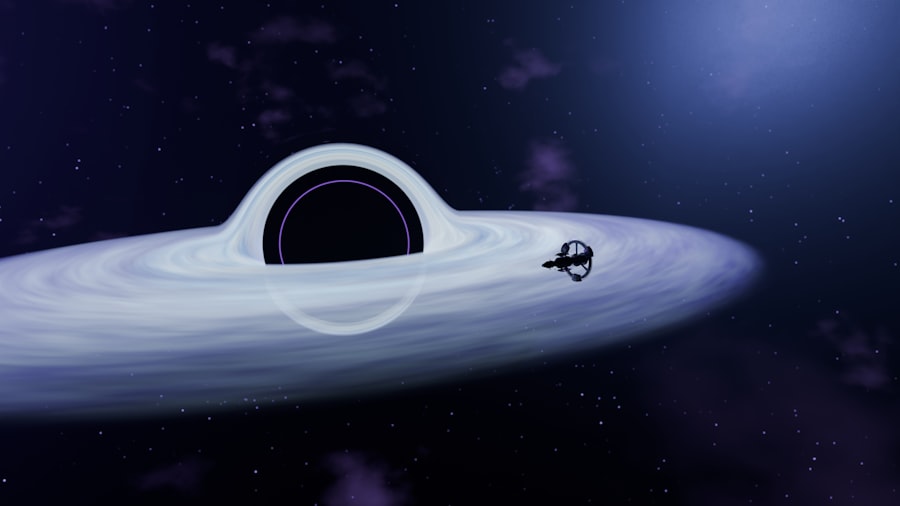
Detecting primordial black holes presents a unique challenge for astronomers and physicists alike. Unlike stellar black holes, which can be observed through their interactions with surrounding matter or through gravitational waves produced during mergers, primordial black holes may not leave such clear signatures. Their detection often relies on indirect methods, such as observing their gravitational effects on nearby objects or their potential influence on cosmic microwave background radiation.
One promising avenue for detection involves studying gravitational lensing effects caused by primordial black holes. When a primordial black hole passes in front of a distant light source, its gravitational field can bend and magnify the light from that source, creating observable distortions. By analyzing these distortions in light from distant galaxies or quasars, researchers can infer the presence of primordial black holes.
Additionally, researchers are exploring other methods, such as looking for Hawking radiation—hypothetical radiation emitted by black holes due to quantum effects—which could provide another means of detecting these elusive objects.
The Role of Gravitational Waves in Understanding Primordial Black Holes
Gravitational waves have emerged as a revolutionary tool in astrophysics, providing new insights into various cosmic phenomena, including primordial black holes. These ripples in spacetime are generated by accelerating masses, such as merging black holes or neutron stars. The detection of gravitational waves has opened up a new window for understanding the universe’s most violent events and has also raised questions about the potential contributions of primordial black holes to this phenomenon.
The merger of primordial black holes could produce detectable gravitational waves, offering a unique opportunity to study their properties and distribution in the universe. If primordial black holes exist in significant numbers, their mergers could contribute to the overall population of gravitational wave events observed by detectors like LIGO and Virgo. By analyzing these signals, scientists can glean information about the masses and spins of these primordial black holes, helping to refine models of their formation and evolution.
How Gravitational Waves are Produced by Primordial Black Holes
| Metric | Description | Typical Values / Range | Relevance to Primordial Black Holes (PBHs) |
|---|---|---|---|
| Mass Range | Mass of primordial black holes | 10^15 g to 100 solar masses | Determines gravitational wave frequency and merger rates |
| Gravitational Wave Frequency | Frequency of waves emitted during PBH mergers | 10 Hz to 10 kHz (LIGO band), up to mHz (LISA band) | Detectable by current and future GW observatories |
| Merger Rate | Number of PBH binary mergers per cubic gigaparsec per year | 0.1 to 100 Gpc^-3 yr^-1 (model dependent) | Helps constrain PBH abundance and distribution |
| Stochastic Gravitational Wave Background | Integrated GW signal from unresolved PBH mergers | Energy density fraction Ω_GW ~ 10^-9 to 10^-7 | Potential indirect evidence for PBHs |
| Spin Parameter (a*) | Dimensionless spin of PBHs | Typically low (a* < 0.1) for primordial origin | Distinguishes PBHs from astrophysical black holes |
| Redshift of Mergers | Cosmic time when PBH mergers occur | z ~ 0 to > 20 | High redshift mergers support primordial origin |
Gravitational waves produced by primordial black holes arise primarily from their mergers. When two primordial black holes orbit each other, they lose energy through the emission of gravitational waves, causing them to spiral closer together until they eventually collide. This merger event generates a burst of gravitational waves that can be detected by observatories on Earth and in space.
The characteristics of these gravitational waves depend on several factors, including the masses and spins of the merging black holes. For instance, if two primordial black holes with relatively low masses merge, they may produce a different gravitational wave signature compared to two more massive ones. This variability provides researchers with valuable data that can be used to infer properties about primordial black holes and their formation processes.
Furthermore, studying these gravitational wave events can help scientists understand how often such mergers occur and what implications they may have for cosmic evolution.
The Impact of Primordial Black Holes on the Universe
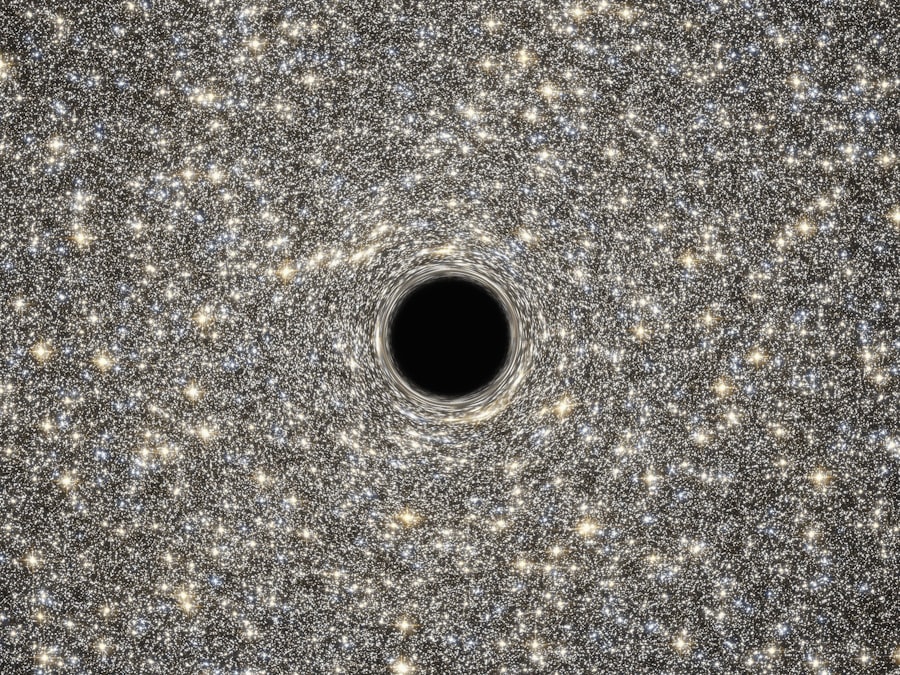
Primordial black holes could have far-reaching implications for our understanding of the universe’s structure and evolution. Their existence might help explain certain phenomena that remain enigmatic within current cosmological models. For instance, if a significant population of primordial black holes exists, they could contribute to dark matter—a mysterious substance that makes up about 27% of the universe’s total mass-energy content but has yet to be directly detected.
Moreover, primordial black holes may influence galaxy formation and evolution by acting as seeds around which matter can accumulate. Their gravitational pull could affect the dynamics of surrounding matter, potentially leading to the formation of stars and galaxies in ways that differ from traditional models based solely on baryonic matter. This interaction between primordial black holes and normal matter could reshape our understanding of cosmic history and provide new insights into how structures in the universe came to be.
The Search for Primordial Black Holes in the Cosmos
The search for primordial black holes is an ongoing endeavor that combines theoretical predictions with observational efforts across various wavelengths. Researchers are employing multiple strategies to identify potential signatures of these elusive objects. One approach involves analyzing data from gravitational wave observatories like LIGO and Virgo to identify events that may be attributed to primordial black hole mergers.
In addition to gravitational wave detection, astronomers are also investigating other avenues for finding primordial black holes. For example, they are examining cosmic microwave background radiation for anomalies that could indicate interactions with primordial black holes or searching for high-energy cosmic rays that might result from their decay or interactions with surrounding matter. As technology advances and observational techniques improve, scientists hope to uncover more evidence supporting or refuting the existence of primordial black holes.
Primordial Black Holes and Dark Matter
The relationship between primordial black holes and dark matter is one of the most compelling aspects of their study.
However, its presence is inferred through its gravitational effects on visible matter.
Some theories propose that primordial black holes could constitute a portion or even all of dark matter. If this is true, it would fundamentally alter our understanding of both dark matter and black hole formation. The mass range of primordial black holes aligns with certain dark matter candidates, suggesting that they could account for some observed gravitational effects attributed to dark matter without requiring additional exotic particles or forces.
This connection has spurred further research into both fields as scientists seek to unravel the complexities surrounding dark matter’s nature and origins.
The Connection Between Primordial Black Holes and the Early Universe
Primordial black holes serve as a bridge between our understanding of cosmology and particle physics during the early universe’s formative moments. Their potential existence provides insights into conditions shortly after the Big Bang when quantum fluctuations played a crucial role in shaping cosmic structures. By studying these early formations, researchers can gain valuable information about inflationary models and how they relate to current observations.
The connection between primordial black holes and the early universe also raises questions about fundamental physics. For instance, understanding how these black holes formed may shed light on quantum gravity theories and how gravity behaves at extremely small scales. As scientists continue to explore this relationship, they may uncover new principles governing our universe’s evolution and structure.
The Potential Use of Primordial Black Holes in Astrophysics
Primordial black holes hold significant potential for advancing various fields within astrophysics beyond their role as dark matter candidates or cosmic structure influencers. Their unique properties may provide insights into fundamental questions about gravity, quantum mechanics, and cosmology itself. For example, studying their formation mechanisms could lead to breakthroughs in understanding how gravity operates under extreme conditions.
Moreover, if primordial black holes exist in sufficient numbers, they could serve as tools for probing other aspects of astrophysics. Their interactions with surrounding matter might produce observable effects that can be studied across different wavelengths—from radio waves to gamma rays—offering a multi-faceted approach to understanding cosmic phenomena. This versatility makes them an exciting area for future research endeavors.
The Future of Research on Primordial Black Holes and Gravitational Waves
The future of research on primordial black holes and their connection to gravitational waves is poised for significant advancements as technology continues to evolve. Upcoming gravitational wave observatories are expected to enhance sensitivity and detection capabilities, allowing scientists to explore previously inaccessible regions of parameter space where primordial black holes might exist. As researchers refine their models and develop new observational strategies, they will likely uncover more evidence regarding the nature and distribution of primordial black holes in the universe.
This ongoing exploration promises not only to deepen our understanding of these enigmatic objects but also to shed light on broader questions about dark matter, cosmic evolution, and fundamental physics itself. The interplay between theoretical predictions and observational data will continue to drive progress in this exciting field for years to come.
Recent studies have suggested that primordial black holes (PBHs) could be a significant source of gravitational waves, potentially offering insights into the early universe. For a deeper understanding of this fascinating topic, you can explore the article on cosmic phenomena at