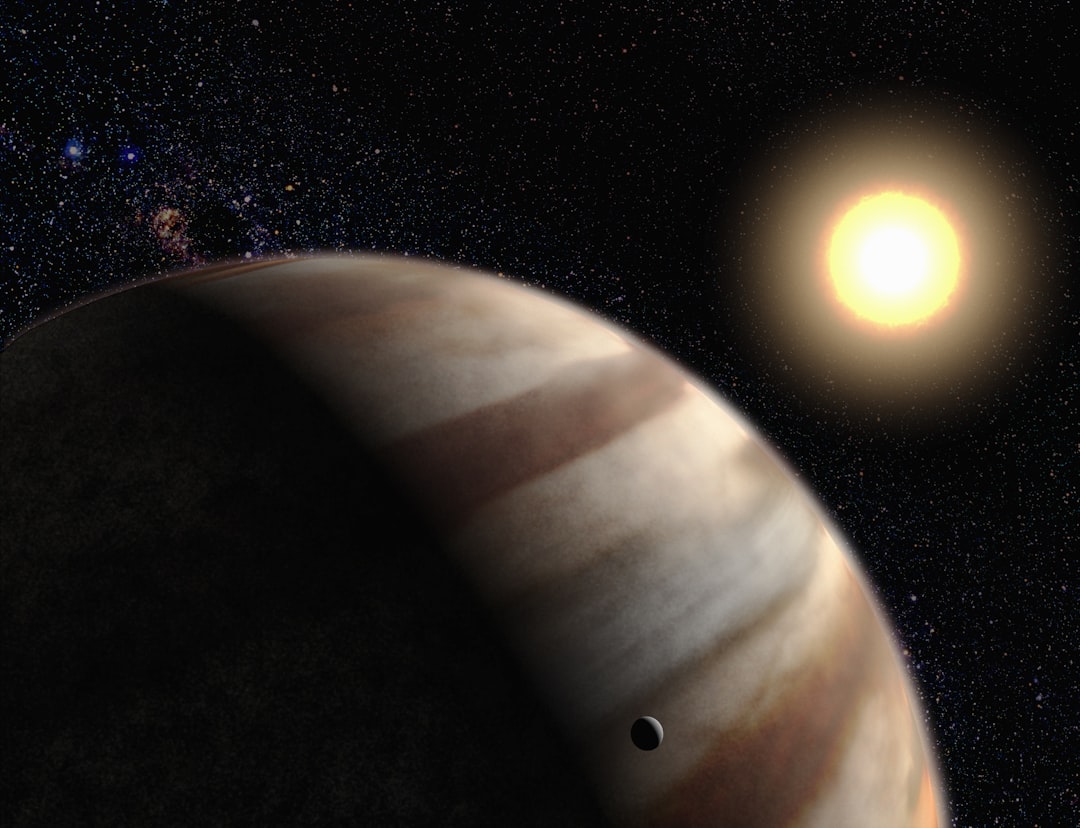
Jupiter, the largest planet in our solar system, is a celestial giant that captivates astronomers and space enthusiasts alike. With its immense size and striking bands of color, it serves as a focal point for scientific inquiry. However, what often garners equal attention are the numerous moons that orbit this gas giant.
Jupiter boasts a staggering total of 79 known moons, each with its own unique characteristics and mysteries. These moons range from the large and geologically active to the small and irregularly shaped, providing a diverse array of subjects for study. The exploration of these moons not only enhances our understanding of Jupiter itself but also offers insights into the broader dynamics of our solar system.
The significance of Jupiter’s moons extends beyond mere numbers; they are key players in the complex gravitational ballet that defines the Jovian system. Their interactions with one another and with Jupiter itself create fascinating phenomena, such as tidal heating and orbital resonances. As scientists continue to study these moons, they uncover clues about their formation, evolution, and potential for harboring life.
The exploration of these celestial bodies is not just an academic pursuit; it holds the promise of answering fundamental questions about the origins of life and the conditions necessary for its existence elsewhere in the universe.
Key Takeaways
- Jupiter’s moons play a crucial role in space exploration and understanding the solar system.
- The Galilean moons, Io, Europa, Ganymede, and Callisto, are of particular interest due to their unique geological features and potential for life.
- The lesser moons of Jupiter also contribute to the planet’s magnetosphere and have their own origins and evolution.
- Exploring Jupiter’s moons presents significant challenges, but holds great potential for scientific discovery.
- The future of Jupiter’s moon exploration is promising, with ongoing missions and plans for further study.
The Galilean Moons: Io, Europa, Ganymede, and Callisto
Among Jupiter’s many moons, the Galilean moons stand out as the most significant due to their size and geological diversity. Discovered by Galileo Galilei in 1610, Io, Europa, Ganymede, and Callisto are often referred to as the “Galilean moons.” Each of these moons presents a unique environment that has intrigued scientists for centuries. Io, for instance, is renowned for its extreme volcanic activity, making it the most geologically active body in the solar system.
Its surface is dotted with hundreds of volcanoes, some of which erupt with plumes that reach heights of over 300 kilometers. This intense geological activity is primarily driven by tidal heating caused by gravitational interactions with Jupiter and its other moons. In contrast to Io’s fiery landscape, Europa presents a starkly different environment.
Covered by a thick layer of ice, Europa is believed to harbor a subsurface ocean beneath its frozen crust. This ocean may contain more than twice the amount of water found on Earth, raising tantalizing possibilities about the potential for life. The surface of Europa is marked by intriguing features such as ridges and cracks, suggesting that the ice is dynamic and may be influenced by the ocean beneath.
Ganymede, the largest moon in the solar system, is unique in that it possesses its own magnetic field, likely generated by a liquid iron or iron-sulfide core. Its surface features a mix of two types of terrain: bright regions with ridges and grooves and darker areas filled with impact craters. Callisto, on the other hand, is heavily cratered and appears to be one of the oldest landscapes in the solar system, providing a record of its history.
The Lesser Moons of Jupiter
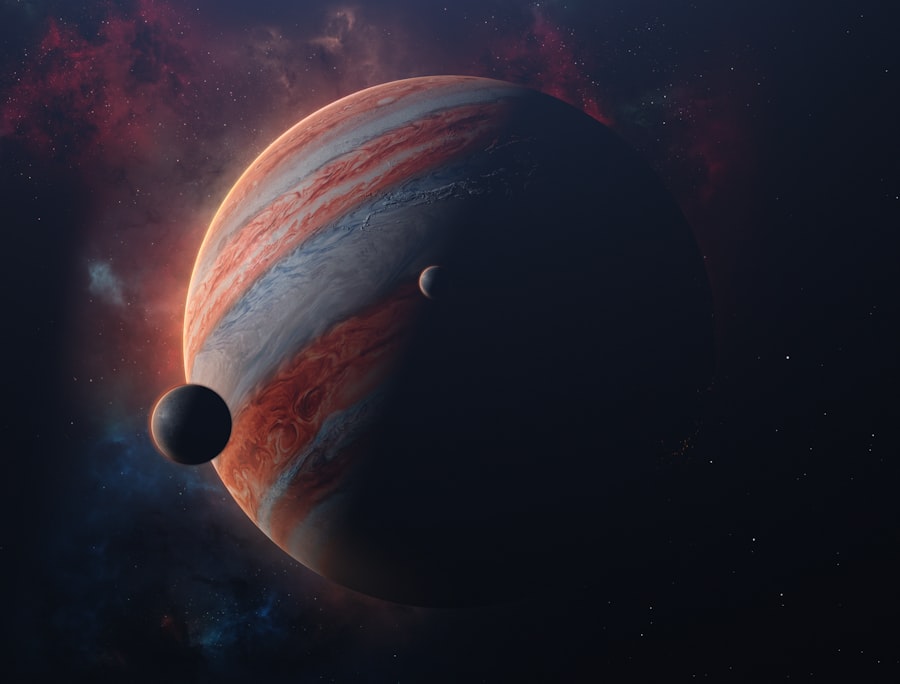
Beyond the Galilean moons lie a multitude of lesser-known satellites that orbit Jupiter. These smaller moons vary significantly in size and composition, with many being irregularly shaped and exhibiting chaotic orbits. Some of these moons are thought to be captured asteroids or fragments from larger bodies that were torn apart by Jupiter’s immense gravitational pull.
The lesser moons are often categorized into groups based on their orbital characteristics and physical properties. Despite their smaller size and relative obscurity compared to their Galilean counterparts, these lesser moons play an essential role in understanding Jupiter’s gravitational influence and its history. For instance, some of these moons exhibit retrograde orbits, indicating that they may have been captured rather than formed in situ.
This capture process can provide insights into the early solar system’s dynamics and the interactions between celestial bodies. Additionally, studying these smaller moons can help scientists understand the processes that govern moon formation and evolution around gas giants.
The Role of Jupiter’s Moons in Space Exploration
| Jupiter’s Moons | Key Role in Space Exploration |
|---|---|
| Io | Study of volcanic activity and geology |
| Europa | Potential for hosting extraterrestrial life |
| Ganymede | Largest moon in the solar system, study of its magnetic field and subsurface ocean |
| Callisto | Study of its ancient surface and potential for a subsurface ocean |
Jupiter’s moons have become focal points for space exploration missions aimed at unraveling their secrets. The exploration of these celestial bodies has been driven by a desire to understand not only their individual characteristics but also their implications for planetary science as a whole. Missions such as NASA’s Galileo spacecraft and Juno mission have provided invaluable data about Jupiter and its moons, revealing intricate details about their geology, atmospheres, and potential for life.
The upcoming Europa Clipper mission exemplifies the growing interest in exploring Jupiter’s moons further. Scheduled for launch in the 2020s, this mission aims to investigate Europa’s icy surface and subsurface ocean in greater detail. By employing advanced instruments capable of analyzing surface composition and measuring ice thickness, scientists hope to determine whether Europa possesses the necessary conditions for life.
Such missions underscore the importance of Jupiter’s moons as targets for exploration, as they may hold answers to some of humanity’s most profound questions about life beyond Earth.
The Geological Features of Jupiter’s Moons
The geological features of Jupiter’s moons are as diverse as they are fascinating. Each moon presents a unique landscape shaped by various geological processes over billions of years. Io’s surface is characterized by extensive volcanic plains and lava flows, showcasing an active geology driven by tidal heating from its proximity to Jupiter.
The constant reshaping of its surface through volcanic eruptions creates a dynamic environment that challenges our understanding of planetary geology. Europa’s icy surface is equally captivating, with features such as ridges, cracks, and chaotic terrain suggesting a complex interplay between ice and liquid water beneath. The presence of these features indicates that Europa’s ice shell is not static; rather, it may be influenced by tidal forces from Jupiter’s gravity as well as thermal processes from the subsurface ocean.
Ganymede’s varied terrain includes both ancient impact craters and younger regions marked by tectonic activity, hinting at a history of geological evolution that continues to unfold.
The Potential for Life on Jupiter’s Moons
The potential for life on Jupiter’s moons has captured the imagination of scientists and laypeople alike. Europa stands out as a prime candidate due to its subsurface ocean, which may provide an environment conducive to life as we know it. The presence of liquid water is often considered a key ingredient for life, making Europa an intriguing target for astrobiological studies.
Scientists speculate that hydrothermal vents on the ocean floor could create conditions similar to those found in Earth’s deep oceans, where life thrives despite extreme conditions. In addition to Europa, Ganymede and Callisto also present possibilities for hosting life. Ganymede’s subsurface ocean may be more stable than Europa’s due to its thicker ice shell, while Callisto’s ancient surface could harbor microbial life in its subsurface layers.
The exploration of these moons could yield groundbreaking discoveries about life’s resilience in extreme environments and expand our understanding of where life might exist beyond Earth.
The Influence of Jupiter’s Moons on the Planet’s Magnetosphere
Jupiter’s moons exert a significant influence on the planet’s magnetosphere, creating complex interactions that shape both their environments and Jupiter itself. The immense magnetic field generated by Jupiter interacts with its moons in various ways, leading to phenomena such as auroras and charged particle interactions. Io plays a particularly crucial role in this dynamic system; its volcanic eruptions release sulfur dioxide into space, contributing to a torus of charged particles around Jupiter.
This interaction between Io and Jupiter’s magnetosphere creates spectacular auroras at both poles of the planet. The charged particles emitted by Io become trapped within Jupiter’s magnetic field lines, resulting in intense radiation belts that pose challenges for future exploration missions. Understanding these interactions is vital for comprehending not only the behavior of Jupiter’s magnetosphere but also how it affects its moons’ atmospheres and potential habitability.
The Origins and Evolution of Jupiter’s Moons
The origins and evolution of Jupiter’s moons remain subjects of ongoing research and debate among scientists. Current theories suggest that some moons formed from the same protoplanetary disk that surrounded Jupiter during its formation over four billion years ago. Others may have been captured from the asteroid belt or formed from debris resulting from collisions with larger bodies.
This diverse origin story contributes to the varied characteristics observed among Jupiter’s moons today. As researchers delve deeper into the history of these celestial bodies, they uncover clues about their evolutionary paths. For instance, studies suggest that tidal heating has played a significant role in shaping Io’s volcanic activity while influencing Europa’s icy shell dynamics.
Understanding these processes not only sheds light on the history of Jupiter’s moons but also provides insights into moon formation around gas giants throughout the universe.
The Future of Jupiter’s Moon Exploration
The future of exploration around Jupiter’s moons looks promising as new missions are planned to investigate their mysteries further. NASA’s Europa Clipper mission is set to launch in the coming years with advanced instruments designed to analyze Europa’s surface composition and search for signs of habitability beneath its icy crust. This mission represents a significant step forward in our quest to understand whether life exists beyond Earth.
These missions aim to provide comprehensive data about each moon’s geology, potential subsurface oceans, and overall habitability prospects. As technology advances and international collaboration increases within space agencies worldwide, humanity stands on the brink of uncovering new revelations about these enigmatic worlds orbiting one of our solar system’s most magnificent planets.
The Challenges of Exploring Jupiter’s Moons
Exploring Jupiter’s moons presents numerous challenges that scientists must navigate carefully. One significant hurdle is the harsh environment surrounding these celestial bodies; radiation levels near Jupiter are incredibly high due to its powerful magnetic field. This radiation poses risks not only to spacecraft electronics but also to any potential future human explorers who may venture into this region.
Additionally, reaching these distant moons requires advanced propulsion technologies capable of enduring long-duration missions through deep space. The vast distances involved mean that communication delays can hinder real-time data transmission between spacecraft and mission control on Earth. Overcoming these challenges necessitates innovative engineering solutions while ensuring that scientific objectives remain at the forefront throughout each mission.
The Importance of Jupiter’s Moons in Understanding the Solar System
Jupiter’s moons hold immense importance in unraveling the complexities of our solar system’s history and evolution. By studying these diverse celestial bodies, scientists gain insights into planetary formation processes that shaped not only gas giants but also terrestrial planets like Earth. The unique geological features observed on each moon provide valuable data regarding how different environments can evolve over time under varying conditions.
Moreover, exploring these moons enhances our understanding of potential habitability beyond Earth’s confines—an endeavor that could redefine humanity’s place within the cosmos. As researchers continue to investigate these enigmatic worlds orbiting Jupiter—a planet whose very existence influences countless aspects across our solar system—they contribute significantly toward answering fundamental questions about life itself while expanding our knowledge about planetary systems throughout the universe. In conclusion, Jupiter’s moons represent a rich tapestry woven into the fabric of our solar system’s narrative—a narrative filled with intrigue waiting patiently for explorers willing enough to uncover its secrets one mission at a time.
The exploration of the Jupiter system has always been a fascinating subject for astronomers and space enthusiasts alike. Recent advancements in technology have allowed for more detailed studies of Jupiter and its moons, providing new insights into their composition and behavior. An interesting article that delves into the latest findings and missions related to Jupiter system exploration can be found on My Cosmic Ventures. For more in-depth information, you can read the article by visiting this