In the vast and intricate field of cosmology, the concept of “function without intent” emerges as a thought-provoking paradigm that challenges traditional notions of purpose and design in the universe. This idea posits that certain cosmic phenomena and structures may operate effectively without any underlying intention or conscious design. It invites scholars and enthusiasts alike to reconsider the nature of existence, the mechanisms that govern the cosmos, and the philosophical implications of a universe that may not adhere to anthropocentric views of purpose.
As cosmologists delve deeper into the mysteries of the universe, the exploration of function without intent becomes increasingly relevant, prompting questions about the origins of cosmic order and the role of chance in shaping reality. The notion of function without intent also intersects with various philosophical and scientific discussions, particularly those concerning determinism, randomness, and the nature of existence itself. By examining how certain cosmic functions can manifest independently of any perceived intent, researchers can gain insights into the fundamental laws that govern the universe.
This exploration not only enriches our understanding of cosmological phenomena but also encourages a broader contemplation of humanity’s place within the cosmos. As such, the study of function without intent serves as a bridge between scientific inquiry and philosophical reflection, inviting a deeper engagement with the mysteries that lie beyond human comprehension.
Key Takeaways
- Function without intent explores how cosmic phenomena can have roles or effects without purposeful design.
- Understanding function in cosmology helps explain natural processes and structures in the universe.
- Intent in cosmology is often absent, highlighting the distinction between natural function and purposeful action.
- The concept challenges traditional views by suggesting functions can arise spontaneously in cosmic systems.
- This idea influences cosmological theories and prompts new approaches to studying the universe’s origins and behavior.
The Role of Function in Cosmology
Function plays a pivotal role in cosmology, serving as a lens through which scientists interpret the behavior and evolution of celestial bodies and cosmic structures. In this context, function refers to the observable effects and interactions that arise from physical laws governing matter and energy. For instance, gravitational forces dictate the orbits of planets around stars, while nuclear fusion processes within stars generate light and heat essential for life on Earth.
These functions are not merely incidental; they are fundamental to understanding how the universe operates on both macroscopic and microscopic scales. Moreover, the role of function extends beyond mere mechanics; it encompasses the relationships between various cosmic entities and their environments. The intricate dance of galaxies colliding and merging, for example, illustrates how function can lead to the formation of new structures and phenomena.
Such interactions reveal a dynamic universe where change is constant, driven by underlying physical principles rather than any predetermined intent. By studying these functions, cosmologists can develop models that predict future cosmic events and enhance our understanding of the universe’s past.
Understanding Intent in Cosmology

The concept of intent in cosmology often evokes discussions about purpose and design within the universe. Traditionally, many cultures have ascribed intentionality to cosmic phenomena, viewing them as manifestations of a higher power or intelligence. This perspective suggests that celestial bodies and their behaviors are not random but rather serve specific purposes within a grand design.
However, as scientific inquiry has advanced, particularly through the lens of empirical observation and mathematical modeling, the notion of intent has become increasingly scrutinized. In contemporary cosmology, intent is often viewed through a more secular lens, where natural processes are seen as outcomes of physical laws rather than deliberate actions. This shift has led to a growing acceptance of randomness and chance as integral components of cosmic evolution.
For instance, the formation of galaxies, stars, and planets can be attributed to gravitational interactions and quantum fluctuations rather than any conscious design. This understanding challenges traditional views of purpose in the universe and invites a reevaluation of humanity’s role within it.
Unveiling the Mysteries of Function Without Intent
| Aspect | Description | Example | Significance |
|---|---|---|---|
| Function Without Intent | Phenomena or processes that serve a purpose without deliberate design or conscious planning. | Natural selection leading to complex organs like the eye. | Demonstrates how complexity can arise from non-intentional processes. |
| Emergent Properties | New attributes of a whole that arise from the interaction of parts, not predictable from individual components. | Flocking behavior in birds. | Shows how collective behavior can produce functional outcomes without central control. |
| Self-Organization | Process where a structure or pattern appears in a system without external control. | Formation of snowflakes. | Illustrates spontaneous order arising from simple rules. |
| Adaptation | Changes in organisms or systems that improve survival or efficiency without conscious intent. | Camouflage in animals. | Enhances understanding of evolutionary processes. |
| Random Mutation | Unplanned genetic changes that can lead to new functions. | Antibiotic resistance in bacteria. | Highlights role of chance in functional innovation. |
The exploration of function without intent unveils profound mysteries about the nature of existence itself. By examining how certain cosmic functions arise independently of any perceived intention, researchers can gain insights into the fundamental principles that govern reality. For example, phenomena such as black holes or dark matter may operate according to established physical laws without any inherent purpose or design.
This realization prompts questions about the nature of reality: Is it possible for complex systems to emerge from simple rules without any guiding hand? Furthermore, this exploration encourages a deeper appreciation for the role of chance in shaping cosmic events. The universe is replete with instances where randomness plays a crucial role in determining outcomes.
The formation of life on Earth, for instance, may be seen as an accident of cosmic proportions rather than a predetermined event. By embracing function without intent, cosmologists can explore how complexity arises from simplicity, leading to new understandings of both the universe and humanity’s place within it.
The Impact of Function Without Intent on Cosmological Theories
The concept of function without intent has significant implications for cosmological theories and models. Traditional frameworks often rely on deterministic principles that suggest a clear cause-and-effect relationship between cosmic events. However, acknowledging function without intent introduces an element of unpredictability that challenges these deterministic models.
This shift encourages researchers to consider alternative explanations for cosmic phenomena that account for randomness and chance. For instance, theories surrounding cosmic inflation—the rapid expansion of space in the early universe—may benefit from incorporating elements of function without intent. By recognizing that certain aspects of inflation could arise from random fluctuations rather than intentional design, cosmologists can develop more nuanced models that better reflect observed data.
This approach not only enhances theoretical frameworks but also fosters interdisciplinary dialogue between cosmology and philosophy, prompting deeper inquiries into the nature of existence.
Exploring the Concept of Function Without Intent in Cosmology
Exploring the concept of function without intent in cosmology requires an interdisciplinary approach that bridges scientific inquiry with philosophical reflection. Researchers must grapple with questions about causality, randomness, and the nature of existence itself. By examining how cosmic functions manifest independently of any perceived intention, scholars can uncover new insights into the fundamental laws governing reality.
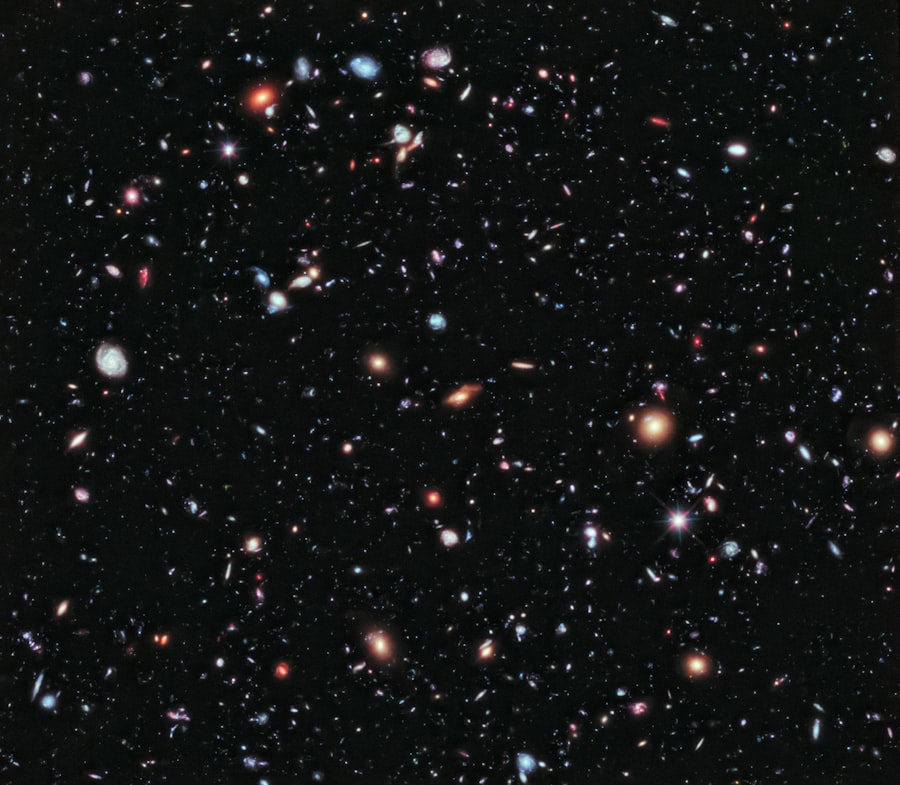
One avenue for exploration lies in studying emergent phenomena—complex systems that arise from simple interactions among their components. For example, galaxies form through gravitational interactions among stars and dark matter without any overarching design guiding their development. This perspective encourages researchers to investigate how complexity can emerge from simplicity, leading to a deeper understanding of both cosmic structures and their underlying principles.
The Relationship Between Function and Intent in Cosmology
The relationship between function and intent in cosmology is complex and multifaceted. While function refers to observable effects arising from physical laws, intent encompasses notions of purpose and design often attributed to higher powers or intelligences. As cosmologists delve into this relationship, they must navigate philosophical questions about causality and randomness while remaining grounded in empirical observation.
One key aspect of this relationship is recognizing that while certain functions may appear intentional from a human perspective, they may not necessarily reflect any underlying purpose within the cosmos itself. For instance, the formation of planetary systems around stars can be seen as a natural outcome of gravitational forces rather than an intentional act by a creator. This realization invites scholars to reconsider anthropocentric views on purpose while acknowledging the intricate interplay between function and intent in shaping our understanding of reality.
Theoretical Implications of Function Without Intent in Cosmology
The theoretical implications of function without intent in cosmology extend far beyond mere academic discourse; they challenge foundational assumptions about existence itself. By embracing this concept, researchers can develop new frameworks that account for randomness and chance as integral components of cosmic evolution. This shift encourages a reevaluation of traditional models that rely heavily on deterministic principles.
For example, theories surrounding dark energy—the mysterious force driving the accelerated expansion of the universe—may benefit from incorporating elements of function without intent. By recognizing that certain aspects of dark energy could arise from random fluctuations rather than intentional design, cosmologists can develop more nuanced models that better reflect observed data. This approach not only enhances theoretical frameworks but also fosters interdisciplinary dialogue between cosmology and philosophy.
Practical Applications of Function Without Intent in Cosmology
The practical applications of function without intent in cosmology are vast and varied, influencing both theoretical research and observational practices. By embracing this concept, researchers can develop innovative methodologies for studying cosmic phenomena that account for randomness and chance as integral components of cosmic evolution. For instance, advancements in computational modeling allow scientists to simulate complex cosmic interactions without imposing predetermined outcomes.
These simulations can reveal emergent behaviors that arise from simple rules governing matter and energy, providing valuable insights into how galaxies form or how stars evolve over time. Such practical applications not only enhance our understanding of the universe but also pave the way for new discoveries that challenge existing paradigms.
Challenges and Controversies Surrounding Function Without Intent in Cosmology
Despite its intriguing implications, the concept of function without intent in cosmology is not without its challenges and controversies.
This tension raises important questions about how researchers navigate philosophical implications while remaining grounded in empirical observation.
Moreover, debates surrounding function without intent often intersect with broader discussions about determinism versus free will—a topic that has long captivated philosophers and scientists alike.
The Future of Function Without Intent in Cosmology
As cosmologists continue to explore the mysteries of existence through the lens of function without intent, they stand at the forefront of a paradigm shift that challenges traditional notions of purpose and design within the universe. This exploration invites deeper inquiries into the nature of reality itself—prompting scholars to reconsider humanity’s place within an intricate cosmos governed by physical laws rather than predetermined intentions. Looking ahead, the future of function without intent in cosmology holds immense potential for advancing both theoretical frameworks and practical applications.
By embracing randomness as an integral component of cosmic evolution, researchers can develop innovative methodologies for studying celestial phenomena while fostering interdisciplinary dialogue between science and philosophy. Ultimately, this journey into the unknown promises to unveil new insights into the fundamental principles governing reality—inviting humanity to engage with the cosmos in ways previously unimagined.
In the study of cosmology, the concept of function without intent raises intriguing questions about the nature of the universe and its underlying mechanisms. For a deeper exploration of this topic, you can refer to a related article on the subject at My Cosmic Ventures, which delves into the philosophical implications of cosmic phenomena and their seemingly purposeless existence.
WATCH THIS! The 27-Order-of-Magnitude Secret That Connects Your Brain to the Cosmos
FAQs
What does “function without intent” mean in cosmology?
“Function without intent” in cosmology refers to the idea that certain structures or processes in the universe serve a purpose or have a function without being designed or intended by any conscious agent. It emphasizes natural phenomena arising from physical laws rather than purposeful creation.
How is the concept of function used in cosmology?
In cosmology, “function” often describes the role or effect of cosmic structures or processes, such as galaxies, black holes, or cosmic inflation, in the evolution and behavior of the universe. These functions emerge from natural interactions rather than intentional design.
Why is intent considered irrelevant in cosmological functions?
Intent is considered irrelevant because cosmology studies the universe as a natural system governed by physical laws. Functions observed in cosmic phenomena result from these laws and random processes, not from conscious planning or purpose.
Can cosmological phenomena have functions similar to biological systems?
While cosmological phenomena can have roles or effects that resemble functions, they differ fundamentally from biological functions because they do not arise from evolutionary adaptation or purposeful design but from physical processes and interactions.
How does the idea of function without intent relate to the anthropic principle?
The anthropic principle observes that the universe’s properties allow for the existence of observers like humans. Function without intent aligns with this by suggesting that cosmic features serve functions (e.g., enabling life) without any intentional design behind them.
Is the concept of function without intent widely accepted in cosmology?
Yes, it is widely accepted that cosmic structures and processes operate according to natural laws without intentional design. This perspective underpins much of modern cosmology and the scientific study of the universe.
Does function without intent imply the universe is purposeless?
Function without intent means that functions arise naturally without conscious purpose. It does not necessarily address philosophical questions about ultimate purpose but focuses on the scientific understanding that cosmic functions emerge from physical laws.