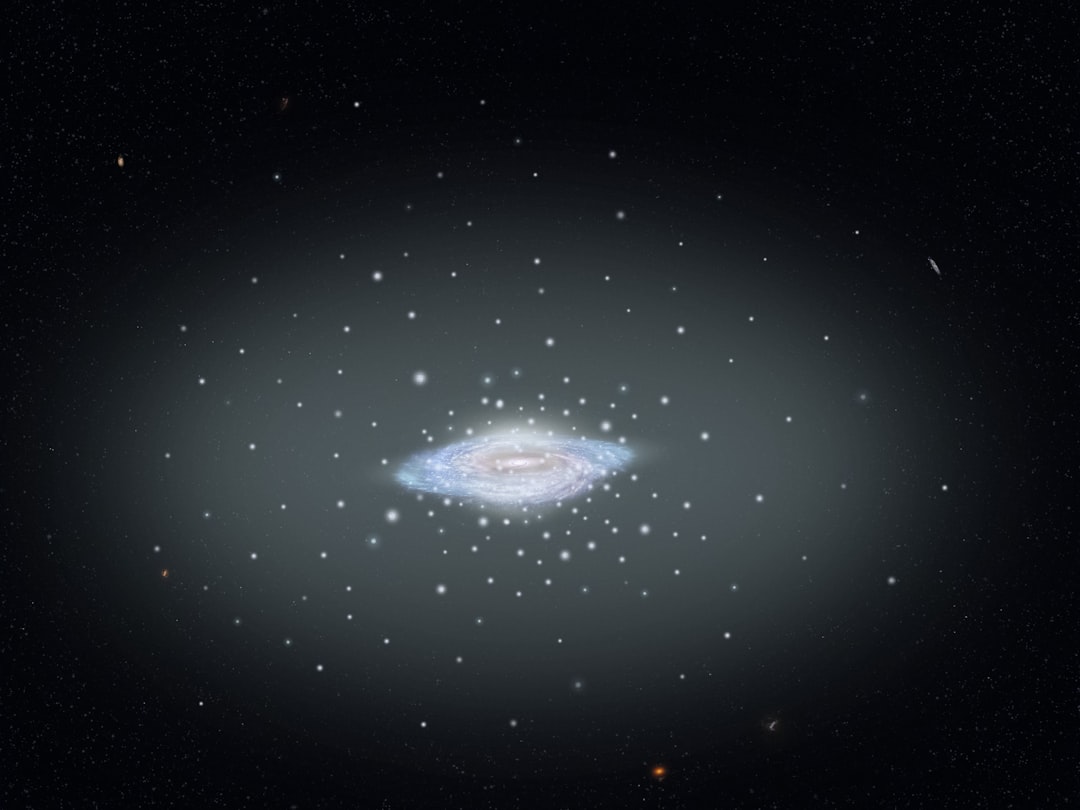
The cosmos, in its vastness, continues to present phenomena that challenge our understanding of gravitational dynamics. Among these is the Laniakea Supercluster, a colossal structure of galaxies stretching across millions of light-years. While its existence has been well-established, a prevailing theory, dubbed the “Cosmic Drain Theory,” offers a compelling, albeit still debated, explanation for its formation and the peculiar motion of its constituent galaxies. This theory posits that Laniakea is not merely a collection of matter, but rather a region of spacetime acting as a gravitational sink, actively drawing in matter from surrounding, less dense regions.
The Genesis of Laniakea: A Gravitational Eddy
For decades, astronomers have cataloged and mapped the distribution of galaxies, revealing that they are not uniformly spread throughout the universe. Instead, they aggregate into vast structures known as clusters and superclusters. The Laniakea Supercluster, identified in 2014, is one of the largest known, encompassing approximately 100,000 galaxies spread across an immense volume of space. Its definition was rooted in understanding the flow of galaxies, not just their location. This required mapping what is known as the “velocity field” of the universe – the direction and speed at which galaxies are moving.
The Velocity Field: More Than Just Static Locations
The concept of a velocity field is crucial to grasping the Cosmic Drain Theory. Imagine the universe as a fluid. Galaxies, in this analogy, are like tiny particles suspended within this fluid. Their movement, dictated by gravity, reveals the underlying currents and forces at play. Early maps of the universe focused on the positions of galaxies, akin to noting where particles are located in a still pond. However, to understand the dynamics, particularly the formation of large-scale structures, astronomers needed to observe how these “particles” were moving. This led to extensive surveys and complex computational models to reconstruct these cosmic flows. The identification of Laniakea emerged from this analysis, defining it as a region defined by inward-flowing galactic trajectories.
From Clusters to Superclusters: A Hierarchical Structure
The formation of cosmic structures is understood to be a hierarchical process. Small regions of slightly higher density in the early universe, due primarily to the invisible presence of dark matter, attracted more matter. Over billions of years, these small collections grew into galaxies. Galaxies then clustered together, and these clusters, in turn, coalested into larger superclusters. Laniakea represents a significant level in this cosmic hierarchy, a scale where gravity has had ample time to sculpt the distribution of matter into an exceptionally large and coherent entity.
The Laniakea Supercluster, a vast collection of galaxies that includes our Milky Way, has sparked significant interest in the field of cosmology, particularly regarding the cosmic drain theory. This theory suggests that the gravitational pull of massive structures in the universe influences the motion of galaxies, leading to a sort of cosmic “drain” effect. For a deeper understanding of this fascinating topic, you can explore a related article that delves into the implications of the Laniakea Supercluster on our understanding of the universe at My Cosmic Ventures.
The Pull of the Great Attractor: A Central Influence
Central to the Cosmic Drain Theory is the concept of a “Great Attractor.” This is not a single object, but rather a region of immense gravitational influence that lies within or near Laniakea. This region is composed of a concentration of galaxy clusters, including the Norma Cluster and the Shapley Supercluster, along with a significant amount of unseen dark matter. The theory posits that the Great Attractor is the primary driver behind the inward flow of galaxies that defines Laniakea.
Defining the Great Attractor: A Gravitational Hub
The Great Attractor was first hypothesized in the late 1970s and early 1980s when astronomers observed that our own Milky Way galaxy, along with many of its neighbors, were moving towards a particular point in the sky at a significant speed. This motion was inconsistent with the distribution of visible matter, suggesting the presence of a massive, unseen gravitational source pulling everything towards it. Subsequent research has gradually refined the location and composition of this region, confirming it as a major gravitational nexus in our cosmic neighborhood.
Dark Matter’s Role: The Invisible Architect
The Cosmic Drain Theory heavily relies on the presence and influence of dark matter. While dark matter does not emit or interact with light, its gravitational effects are undeniable. It is estimated that dark matter constitutes roughly 85% of the total matter in the universe. In regions like the Great Attractor, the concentration of dark matter is significantly higher than average. This increased density translates to a stronger gravitational pull, making these regions exceptionally effective at attracting surrounding matter, including visible galaxies. Without the pervasive influence of dark matter, the formation of such massive structures as Laniakea would be difficult to explain within our current understanding of gravity.
The Mechanics of the Cosmic Drain: Inward Flow Dynamics
The core tenet of the Cosmic Drain Theory is the continuous influx of galaxies towards the center of Laniakea. This is not a passive accumulation, but an active process driven by gravity. Galaxies within Laniakea are observed to be generally flowing inwards, towards the most dense regions, much like water flowing down a drain. This implies that Laniakea’s gravitational influence extends far beyond its visible boundaries, shaping the motion of galaxies in a vast surrounding volume.
Defining the Boundaries: A Dynamic Frontier
The boundaries of Laniakea are not defined by a solid edge, but rather by the watershed divide of gravitational flow. Galaxies on one side of this divide are drawn towards Laniakea, while those on the other side may be flowing towards different superclusters or even expanding away from Laniakea’s influence. Identifying these boundaries requires careful analysis of galactic velocities. Astronomers essentially map the points where the gravitational pull of Laniakea becomes the dominant force directing a galaxy’s motion. This makes the “edge” of Laniakea a dynamic concept, rather than a fixed one.
The Virial Radius: A Measure of Gravitational Dominance
Within the context of galaxy clusters and superclusters, the concept of the virial radius is often employed. This radius defines the region within which the gravitational pull of the cluster or supercluster is strong enough to bind its constituent members and prevent them from being stripped away by the expansion of the universe. For Laniakea, its immense size suggests a very large virial radius, encompassing a vast volume of space where its gravitational dominance is the primary factor dictating galactic motion.
Evidence Supporting the Cosmic Drain Theory
Several lines of evidence lend credence to the Cosmic Drain Theory. The observed velocity field of galaxies in our local universe, the large-scale structure of galactic distributions, and redshift survey data all point towards a coherent inflow of matter towards the region identified as Laniakea.
Galactic Redshifts: Tracing Cosmic Motion
Redshift is a fundamental tool in astronomy that allows us to measure the speed at which distant objects are moving away from us, or towards us. This phenomenon occurs because the wavelength of light emitted by a moving object is stretched (redshifted) if the object is moving away, and compressed (blueshifted) if it is moving towards us. By measuring the redshift of thousands of galaxies, astronomers can construct detailed maps of their velocities. The data obtained from large redshift surveys has been instrumental in identifying the coherent inward flow of galaxies that characterizes Laniakea and supports the Cosmic Drain Theory.
The Cosmic Microwave Background (CMB): Echoes of the Early Universe
While the CMB primarily provides information about the early universe, subtle variations within it, known as anisotropies, can also be used to infer the large-scale structure and peculiar velocities of matter today. The gravitational influence of massive structures like Laniakea can leave imprints on the CMB. While not a direct confirmation of the drain mechanism, consistent observations in this regard would strengthen the theory.
The Laniakea Supercluster, which encompasses our Milky Way galaxy, has sparked intriguing discussions about the cosmic structures that shape our universe. One particularly fascinating aspect is the cosmic drain theory, which suggests that gravitational forces from massive structures influence the movement of galaxies within the supercluster. For those interested in exploring this concept further, you can read a related article that delves into the implications of these gravitational interactions and their role in the larger cosmic landscape. Check out the insightful details in this article to enhance your understanding of the universe’s grand design.
Challenges and Future Directions
Despite the compelling evidence, the Cosmic Drain Theory is not without its challenges and areas for further investigation. The precise definition of Laniakea’s boundaries remains an active area of research, and the exact mechanisms of matter accretion at such vast scales require continued theoretical refinement.
The Role of Dark Energy: A Counteracting Force
The expansion of the universe, driven by dark energy, presents a significant counteracting force to gravitational attraction. The Cosmic Drain Theory must account for how Laniakea’s gravitational pull overcomes cosmic expansion over such immense distances. Understanding the interplay between gravity and dark energy on these scales is crucial for validating the theory.
Numerical Simulations: Recreating Cosmic Evolution
Sophisticated numerical simulations play a vital role in testing cosmological theories. Astronomers create virtual universes, seeding them with initial conditions similar to the early universe, and then allow them to evolve under the influence of gravity and dark energy. By comparing the structures and galactic flows that emerge from these simulations with observational data, scientists can assess the plausibility of theories like the Cosmic Drain Theory. Refined simulations are continuously being developed to better model the formation and dynamics of superclusters like Laniakea.
The Future of Cosmic Cartography: Refining our View
As our observational capabilities improve with new telescopes and more comprehensive surveys, our maps of the universe will become increasingly detailed. This will allow for more precise measurements of galactic velocities and a more accurate definition of supercluster boundaries. Future cosmic cartography will undoubtedly refine our understanding of Laniakea and potentially offer further evidence for or against the Cosmic Drain Theory. The ongoing quest to understand the universe’s large-scale structures remains a dynamic and exciting frontier in astrophysics.
FAQs
What is the Laniakea Supercluster?
The Laniakea Supercluster is a massive structure in the universe that contains our own Milky Way galaxy, as well as thousands of other galaxies. It was first identified in 2014 and is estimated to be about 520 million light-years in diameter.
What is the Cosmic Drain Theory?
The Cosmic Drain Theory suggests that the Laniakea Supercluster is exerting a gravitational pull on the surrounding galaxies, causing them to move towards the center of the supercluster. This theory helps explain the movement of galaxies within the supercluster.
How was the Laniakea Supercluster discovered?
The Laniakea Supercluster was discovered using data from the Sloan Digital Sky Survey and other astronomical observations. By mapping the movements of galaxies in the universe, astronomers were able to identify the boundaries of the supercluster.
What are the implications of the Cosmic Drain Theory?
The Cosmic Drain Theory has significant implications for our understanding of the large-scale structure of the universe. It helps explain the dynamics of galaxies within the Laniakea Supercluster and provides insight into the gravitational forces at work on a cosmic scale.
What are scientists hoping to learn from studying the Laniakea Supercluster and the Cosmic Drain Theory?
By studying the Laniakea Supercluster and the Cosmic Drain Theory, scientists hope to gain a better understanding of the formation and evolution of large-scale structures in the universe. This research could also provide insights into the nature of dark matter and dark energy, which are thought to play a significant role in the dynamics of the cosmos.