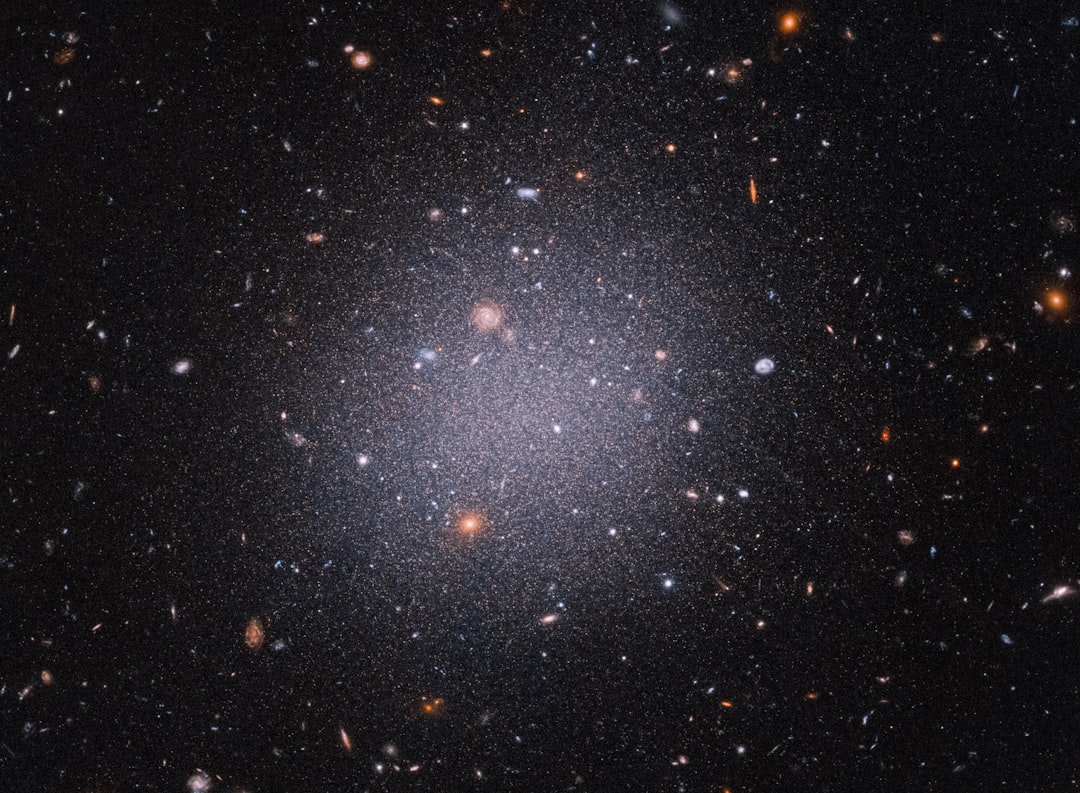
The birth of galaxies represents one of the most profound mysteries in cosmology, a puzzle that has captivated astronomers and physicists alike for decades. In the early universe, mere moments after the Big Bang, matter began to coalesce under the influence of gravity, forming the first stars and galaxies. This process, known as cosmic structure formation, is a complex interplay of physical forces and conditions that shaped the universe as it exists today.
The initial fluctuations in density, driven by quantum fluctuations during inflation, laid the groundwork for the formation of these massive structures. As regions of higher density attracted more matter, they grew into the galaxies that populate the cosmos. Understanding how galaxies formed and evolved is crucial for comprehending the larger narrative of the universe.
Theories suggest that galaxies began as small clumps of gas and dark matter, which gradually merged and accumulated more material over billions of years. This process not only led to the creation of stars but also to the intricate web of galaxies observed today. The study of galaxy formation involves a multitude of disciplines, including astrophysics, cosmology, and even particle physics, as researchers seek to piece together this cosmic puzzle.
By examining the light from distant galaxies and utilizing advanced telescopes, scientists can trace back the history of these celestial bodies, revealing insights into their origins and development.
Key Takeaways
- Galaxies form through complex processes involving black holes, dark matter, and cosmic structures.
- Supermassive black holes play a crucial role in shaping their host galaxies and influencing star and planet formation.
- The cosmic web connects galaxies, revealing large-scale structures that inform our understanding of the universe.
- Computer simulations are essential tools for bridging theoretical models with observational data in galaxy formation studies.
- Ongoing research aims to develop a unified model of galaxy formation and black hole cosmology, addressing future challenges in cosmology.
The Role of Black Holes in Galaxy Formation
Black holes play a pivotal role in the formation and evolution of galaxies, acting as both catalysts and anchors in the cosmic landscape. These enigmatic entities, formed from the remnants of massive stars that have undergone gravitational collapse, exert an immense gravitational pull that influences their surroundings. In many cases, supermassive black holes—those with masses millions to billions of times that of the Sun—reside at the centers of galaxies.
Their presence is not merely a byproduct of galaxy formation; rather, they are integral to the processes that shape galaxies themselves. The relationship between black holes and their host galaxies is complex and multifaceted. As gas and dust spiral into a black hole, they can release vast amounts of energy in the form of radiation, which can heat surrounding gas and trigger star formation.
This feedback mechanism can regulate star formation rates within galaxies, influencing their growth and evolution over time. Additionally, the merger of galaxies often leads to the merging of their central black holes, which can result in significant gravitational waves and further impact the dynamics of the host galaxies. Thus, black holes are not just passive observers in the cosmic dance; they actively shape their environments and contribute to the ongoing evolution of galaxies.
Exploring the Cosmic Web: How Galaxies are Connected

The universe is not a random collection of isolated galaxies; rather, it is structured like a vast cosmic web. This web consists of filaments of dark matter and gas that connect clusters and superclusters of galaxies across immense distances. The interconnectedness of galaxies is a fundamental aspect of cosmic evolution, influencing how they form, grow, and interact with one another.
The large-scale structure of the universe reveals that galaxies are often found in groups or clusters, bound together by gravity and interconnected through vast cosmic filaments. The cosmic web plays a crucial role in galaxy formation by providing a framework within which matter can accumulate. As gas flows along these filaments toward denser regions, it can cool and collapse to form new stars and galaxies.
This process is not uniform; different regions of the cosmic web experience varying rates of star formation and galaxy growth depending on their local environment. Observations from telescopes such as the Hubble Space Telescope and upcoming missions like the James Webb Space Telescope aim to map this intricate structure in greater detail, shedding light on how galaxies are influenced by their surroundings and how they evolve over cosmic time.
The Evolution of Black Holes and Their Impact on the Universe
| Epoch | Black Hole Type | Typical Mass Range (Solar Masses) | Key Characteristics | Impact on Universe |
|---|---|---|---|---|
| Early Universe (First Billion Years) | Primordial Black Holes | 0.1 – 1000 | Formed from density fluctuations shortly after Big Bang | Potential seeds for galaxy formation, influence on dark matter distribution |
| Stellar Evolution Era | Stellar-Mass Black Holes | 5 – 50 | Result from collapse of massive stars | Drive high-energy phenomena like X-ray binaries, influence star formation |
| Galaxy Formation Period | Intermediate-Mass Black Holes | 100 – 100,000 | Formed via mergers or direct collapse in dense star clusters | Possible role in early galaxy core development and dynamics |
| Modern Universe | Supermassive Black Holes | 1 million – 10 billion | Located at centers of galaxies, grow via accretion and mergers | Regulate galaxy evolution through feedback, power quasars and AGN |
| Future Universe | Black Hole Mergers | Varies (up to trillions) | Coalescence of black holes forming larger ones | Emit gravitational waves, influence large-scale structure |
Black holes are not static entities; they evolve over time through various processes that significantly impact their host galaxies and the universe at large. As black holes consume surrounding material, they grow in mass and can influence their environments through powerful jets and outflows. These phenomena can regulate star formation within galaxies by heating or expelling gas that would otherwise contribute to new stars.
The interplay between black holes and their host galaxies is a dynamic relationship that shapes both entities over billions of years. Moreover, black holes can also merge with one another, particularly in dense environments such as galaxy clusters. When two supermassive black holes collide, they release an enormous amount of energy in the form of gravitational waves—ripples in spacetime that were first detected by LIGO in 2015.
These mergers not only alter the mass distribution within galaxies but also provide valuable insights into the nature of gravity and spacetime itself. As researchers continue to study these events, they gain a deeper understanding of how black holes evolve and their broader implications for cosmic evolution.
Unraveling the Mysteries of Dark Matter and Dark Energy
Dark matter and dark energy are two of the most enigmatic components of the universe, constituting approximately 95% of its total mass-energy content yet remaining largely invisible to direct observation. Dark matter is thought to be responsible for the gravitational effects observed in galaxies and galaxy clusters, while dark energy is believed to drive the accelerated expansion of the universe.
The existence of dark matter is inferred from its gravitational influence on visible matter, such as stars and gas within galaxies. Observations reveal that galaxies rotate at speeds that cannot be explained solely by their visible mass; thus, dark matter is posited to exist in large halos surrounding galaxies. On the other hand, dark energy presents a different challenge, as it appears to counteract gravity on cosmological scales, leading to an accelerated expansion of space itself.
The interplay between dark matter and dark energy remains one of the most pressing questions in modern cosmology, with researchers employing various observational techniques and theoretical models to unravel their mysteries.
The Interplay Between Supermassive Black Holes and Their Host Galaxies

The relationship between supermassive black holes and their host galaxies is a subject of intense study in astrophysics. Observations have shown a correlation between the mass of supermassive black holes and various properties of their host galaxies, such as stellar velocity dispersion and bulge mass. This relationship suggests that black hole growth is intimately linked to galaxy evolution, with feedback mechanisms playing a crucial role in regulating star formation rates.
As supermassive black holes accrete material from their surroundings, they can emit powerful jets that influence star formation within their host galaxies. These jets can heat surrounding gas or expel it entirely, thereby regulating how much material is available for star formation. This feedback loop creates a dynamic interplay where black holes shape their environments while also being influenced by them.
Understanding this relationship is essential for developing comprehensive models of galaxy formation and evolution.
The Cosmic Puzzle: Bridging the Gap Between Theory and Observations
Bridging the gap between theoretical models and observational data is a fundamental challenge in cosmology. While simulations provide valuable insights into galaxy formation processes, they must be validated against real-world observations to ensure their accuracy. Advances in observational technology have allowed astronomers to gather increasingly detailed data about distant galaxies, enabling them to test theoretical predictions against empirical evidence.
One significant area where theory meets observation is in understanding galaxy morphology—the shapes and structures that galaxies exhibit. Observational surveys have revealed a diverse array of galaxy types, from spiral to elliptical forms, each with distinct characteristics influenced by their formation histories. By comparing these observations with simulations that model galaxy evolution under various conditions, researchers can refine their understanding of how different factors contribute to galaxy morphology.
The Role of Computer Simulations in Understanding Galaxy Formation
Computer simulations have become indispensable tools in modern astrophysics, allowing researchers to model complex processes involved in galaxy formation and evolution. These simulations incorporate various physical laws governing gravity, hydrodynamics, and thermodynamics to create virtual universes where researchers can observe how galaxies form over time. By adjusting parameters such as dark matter density or gas cooling rates, scientists can explore different scenarios and gain insights into how these factors influence galaxy growth.
One notable example is the Illustris project, which produced one of the most detailed simulations of galaxy formation to date. By simulating billions of particles over vast cosmic volumes, researchers were able to recreate a universe that closely resembles our own in terms of galaxy distribution and properties. Such simulations not only enhance understanding but also provide predictions that can be tested against observational data from telescopes around the world.
The Influence of Black Holes on the Formation of Stars and Planets
Black holes exert a profound influence on their surroundings beyond merely shaping galaxies; they also play a role in star and planet formation processes. As gas clouds collapse under gravity to form stars, nearby black holes can affect this process through their gravitational pull or energetic outflows. For instance, when material falls into a black hole, it releases energy that can heat surrounding gas clouds or trigger shock waves—conditions conducive to star formation.
Additionally, black holes can impact planetary systems by altering gravitational dynamics within their vicinity.
This interplay between black holes and star-planet systems adds another layer to our understanding of cosmic evolution, highlighting how these enigmatic entities shape not only galaxies but also individual stellar systems.
The Quest for a Unified Model of Galaxy Formation and Black Hole Cosmology
The quest for a unified model that integrates galaxy formation with black hole cosmology represents one of the most ambitious goals in modern astrophysics. Researchers aim to develop comprehensive frameworks that account for all known phenomena—from dark matter interactions to feedback mechanisms involving supermassive black holes—into cohesive models that accurately describe how galaxies evolve over time. Such models must reconcile various observations across different scales—from individual star systems to entire galaxy clusters—while incorporating theoretical insights gained from simulations.
Achieving this synthesis requires collaboration across disciplines within astrophysics as well as advancements in observational techniques that allow for more precise measurements of key parameters influencing galaxy evolution.
The Future of Cosmology: New Discoveries and Challenges Ahead
As technology continues to advance, the future of cosmology holds great promise for new discoveries that could reshape our understanding of the universe. Upcoming missions such as NASA’s James Webb Space Telescope are poised to revolutionize observations by providing unprecedented detail about distant galaxies and their formation processes. These observations will likely lead to new insights into dark matter, dark energy, black hole dynamics, and more.
However, challenges remain as researchers strive to unravel complex phenomena within an ever-expanding universe. The interplay between theory and observation will continue to be crucial as scientists work towards developing unified models that encompass all aspects of galaxy formation and evolution. As new data emerges from both ground-based observatories and space missions, cosmologists will be better equipped to tackle these challenges head-on while deepening humanity’s understanding of its place within this vast cosmos.
Recent advancements in our understanding of galaxy formation have been significantly influenced by black hole cosmology models. These models suggest that supermassive black holes at the centers of galaxies play a crucial role in their evolution and structure. For a deeper exploration of this topic, you can read more in the article on galaxy formation and black hole interactions. This article delves into the intricate relationship between black holes and the galaxies they inhabit, shedding light on the processes that govern cosmic evolution.
WATCH THIS 🛑 The Impossible Proof: Our Universe Is a Black Hole’s Interior
FAQs
What is a galaxy formation black hole cosmology model?
A galaxy formation black hole cosmology model is a theoretical framework that explains how galaxies form and evolve in the universe, incorporating the role of black holes, particularly supermassive black holes, in influencing galaxy structure and dynamics.
How do black holes influence galaxy formation?
Black holes, especially supermassive black holes at the centers of galaxies, can affect galaxy formation by regulating star formation through feedback mechanisms such as energetic jets and radiation. This feedback can heat or expel gas, impacting the growth and evolution of the host galaxy.
What role does cosmology play in galaxy formation models?
Cosmology provides the large-scale context for galaxy formation models by describing the overall structure, expansion, and composition of the universe. It sets initial conditions such as the distribution of dark matter and baryonic matter, which influence how galaxies and black holes form and evolve over time.
Are black holes necessary for galaxy formation?
While galaxies can form without black holes, the presence of supermassive black holes is common in most large galaxies and is believed to play a significant role in their evolution. Black holes contribute to regulating star formation and shaping the central regions of galaxies.
What observational evidence supports the connection between black holes and galaxy formation?
Observations show correlations between the mass of supermassive black holes and properties of their host galaxies, such as the bulge mass and velocity dispersion. Additionally, active galactic nuclei (AGN) powered by accreting black holes influence their surroundings, supporting their role in galaxy evolution.
How do simulations incorporate black holes in galaxy formation models?
Cosmological simulations include black holes by modeling their growth through gas accretion and mergers, as well as their feedback effects on surrounding gas. These simulations help researchers understand the complex interactions between black holes and galaxy formation processes.
What are the main challenges in modeling galaxy formation with black holes?
Challenges include accurately simulating the small-scale physics of black hole accretion and feedback within large-scale cosmological simulations, limited observational data on early black hole formation, and understanding the interplay between dark matter, gas dynamics, and black hole activity.
Can black hole cosmology models explain the diversity of galaxy types?
Yes, by incorporating black hole feedback and cosmological factors, these models can help explain the wide range of galaxy morphologies, star formation rates, and evolutionary paths observed in the universe. However, ongoing research continues to refine these explanations.