
Dark matter, an enigmatic and elusive component of the universe, has captivated the attention of scientists and researchers for decades. It is believed to constitute approximately 27% of the universe’s total mass-energy content, yet it remains invisible and undetectable through conventional means. Unlike ordinary matter, which interacts with electromagnetic forces and can be observed through light, dark matter does not emit, absorb, or reflect any electromagnetic radiation.
This characteristic makes it extraordinarily challenging to study and understand. The existence of dark matter was first proposed in the early 20th century to explain discrepancies in the rotational speeds of galaxies, leading to the realization that there must be a significant amount of unseen mass exerting gravitational influence. The quest to comprehend dark matter is not merely an academic exercise; it holds profound implications for our understanding of the universe’s structure and evolution.
As researchers delve deeper into the mysteries surrounding dark matter, they are confronted with fundamental questions about the nature of reality itself. What is dark matter made of? How does it interact with other forms of matter?
These inquiries drive a multidisciplinary approach, drawing from astrophysics, particle physics, and cosmology to piece together the puzzle of dark matter’s existence and properties.
Key Takeaways
- Dark matter remains one of the most elusive components of the universe, with its nature still largely unknown.
- Various theoretical models and particle candidates are being explored to explain dark matter’s properties.
- Both particle physics experiments and astrophysical observations are crucial in the search for dark matter.
- Identifying dark matter candidates faces significant challenges due to their weak interactions and detection difficulties.
- Future research holds promise for breakthroughs that could reshape our understanding of physics and cosmology.
The Search for Dark Matter Candidates
The search for dark matter candidates has led scientists down various intriguing paths, each offering potential insights into this cosmic mystery. Among the leading candidates are Weakly Interacting Massive Particles (WIMPs), which are predicted to interact through the weak nuclear force and gravity. WIMPs are appealing because they arise naturally in many extensions of the Standard Model of particle physics, such as supersymmetry.
Their predicted mass range and interaction properties make them prime targets for experimental detection efforts. However, despite extensive searches in underground laboratories and particle accelerators, no definitive evidence for WIMPs has yet been found. Another promising candidate is axions, hypothetical particles that arise from theories attempting to solve the strong CP problem in quantum chromodynamics.
Axions are expected to be extremely light and weakly interacting, making them difficult to detect. Nevertheless, their unique properties have inspired innovative detection methods, such as haloscopes that aim to convert axions into detectable photons in the presence of strong magnetic fields. The diversity of potential dark matter candidates reflects the complexity of the problem at hand and underscores the need for continued exploration across various theoretical frameworks.
Exploring the Nature of Dark Matter

Understanding the nature of dark matter requires a multifaceted approach that encompasses both theoretical and observational strategies. Theoretical physicists have proposed numerous models to explain dark matter’s properties, ranging from particle candidates like WIMPs and axions to more exotic concepts such as primordial black holes and modified gravity theories. Each model presents its own set of predictions that can be tested against astronomical observations, providing a framework for evaluating their viability.
Observationally, astronomers have made significant strides in mapping the distribution of dark matter through gravitational lensing and galaxy cluster dynamics. Gravitational lensing occurs when massive objects bend light from more distant sources, allowing researchers to infer the presence and distribution of dark matter in galaxy clusters. These observations have revealed a complex web of dark matter that influences the formation and evolution of galaxies.
By combining theoretical predictions with observational data, scientists aim to refine their understanding of dark matter’s role in shaping the cosmos.
Particle Physics and Dark Matter
The intersection of particle physics and dark matter research is a vibrant area of inquiry that seeks to uncover the fundamental building blocks of the universe. Particle physicists are particularly interested in identifying new particles that could account for dark matter’s elusive nature. The Large Hadron Collider (LHC) at CERN has been instrumental in this pursuit, providing a platform for high-energy collisions that may produce dark matter candidates.
In addition to WIMPs and axions, other theoretical particles such as sterile neutrinos and supersymmetric particles have emerged as potential dark matter candidates. Each of these particles possesses unique properties that could explain dark matter’s behavior and interactions. The challenge lies in designing experiments capable of detecting these particles or their decay products amidst a background of ordinary matter interactions.
As particle physics continues to advance, it holds the promise of revealing new insights into the nature of dark matter and its role in the universe.
The Role of Astrophysics in Unveiling Dark Matter Candidates
| Dark Matter Candidate | Particle Type | Mass Range | Interaction Strength | Detection Method | Current Status |
|---|---|---|---|---|---|
| WIMPs (Weakly Interacting Massive Particles) | Hypothetical particle | 10 GeV – 10 TeV | Weak nuclear force | Direct detection, indirect detection, collider experiments | Not yet detected, strong experimental constraints |
| Axions | Light pseudoscalar boson | 10^-6 eV – 10^-3 eV | Extremely weak, coupling to photons | Haloscopes, helioscopes, resonant cavities | Ongoing searches, no confirmed detection |
| Sterile Neutrinos | Right-handed neutrino | keV – MeV | Very weak, mixing with active neutrinos | X-ray observations, beta decay experiments | Possible hints, no conclusive evidence |
| MACHOs (Massive Compact Halo Objects) | Astronomical objects (e.g., black holes, brown dwarfs) | 0.1 – 10 solar masses | Gravitational only | Gravitational microlensing | Constrained as dominant dark matter component |
| Primordial Black Holes | Black holes formed in early universe | 10^-16 – 100 solar masses | Gravitational only | Microlensing, gravitational waves, cosmic microwave background | Limited parameter space remains viable |
Astrophysics plays a crucial role in unraveling the mysteries surrounding dark matter candidates by providing observational evidence that can either support or challenge theoretical models. Through advanced telescopes and observational techniques, astrophysicists have gathered extensive data on galaxy formation, cosmic microwave background radiation, and large-scale structure formation. These observations offer critical insights into how dark matter influences the evolution of the universe.
One significant contribution from astrophysics is the study of cosmic microwave background (CMB) radiation, which provides a snapshot of the universe when it was just 380,000 years old.
Additionally, observations of galaxy clusters reveal how dark matter interacts with visible matter, shedding light on its gravitational effects.
By integrating astrophysical observations with theoretical models, scientists can refine their understanding of dark matter candidates and their implications for cosmology.
Theoretical Models of Dark Matter
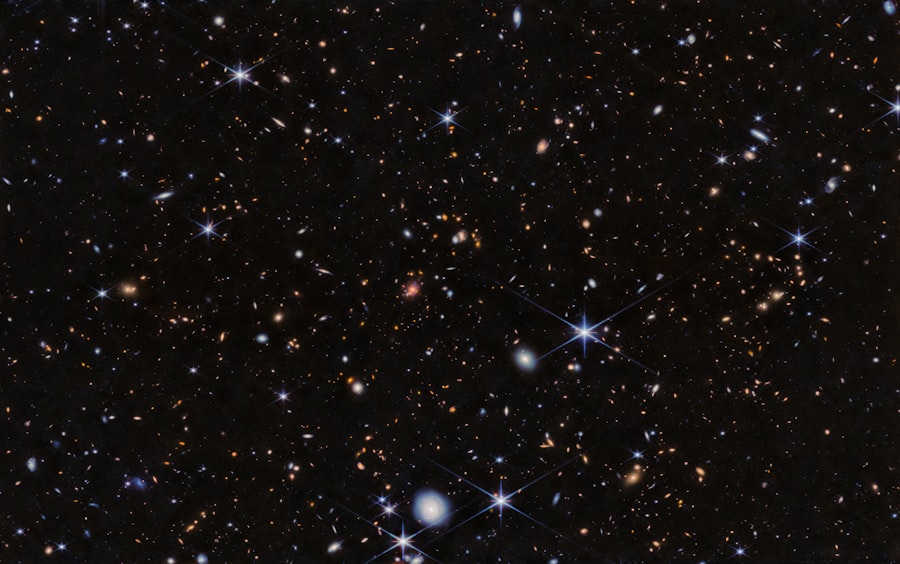
Theoretical models of dark matter encompass a wide range of ideas that attempt to explain its properties and behavior within the framework of modern physics. One prominent class of models includes supersymmetry (SUSY), which posits a partner particle for every known particle in the Standard Model. In this context, the lightest supersymmetric particle is often considered a viable dark matter candidate due to its stability and weak interactions.
Another intriguing model involves modified gravity theories, such as Modified Newtonian Dynamics (MOND) or TeVeS (Tensor-Vector-Scalar gravity). These theories propose alterations to our understanding of gravity at galactic scales, potentially eliminating the need for dark matter altogether. While these models offer alternative explanations for observed phenomena, they face challenges in accounting for large-scale structures and cosmic evolution as effectively as traditional dark matter models do.
Experimental Approaches to Detecting Dark Matter
Detecting dark matter remains one of the most significant challenges in contemporary physics, prompting researchers to develop innovative experimental approaches. Direct detection experiments aim to observe interactions between dark matter particles and ordinary matter by placing sensitive detectors deep underground or in isolated environments to minimize background noise. Facilities like LUX-ZEPLIN and XENONnT utilize liquid noble gas detectors to capture potential signals from WIMPs.
Indirect detection methods focus on identifying products resulting from dark matter annihilations or decays, such as gamma rays or neutrinos. Observatories like the Fermi Gamma-ray Space Telescope and IceCube Neutrino Observatory are at the forefront of this research, searching for excess signals that could indicate dark matter interactions. Each experimental approach contributes valuable data that can either confirm or refute existing theories about dark matter candidates.
The Connection Between Dark Matter and Cosmology
The relationship between dark matter and cosmology is profound, as dark matter plays a pivotal role in shaping the large-scale structure of the universe. Cosmological models rely on an understanding of dark matter’s distribution to explain phenomena such as galaxy formation and cosmic evolution. The Lambda Cold Dark Matter (ΛCDM) model serves as a standard framework for cosmology, incorporating both dark energy and cold dark matter to describe the universe’s expansion history.
Observations from large-scale surveys like the Sloan Digital Sky Survey (SDSS) have provided critical insights into how dark matter influences galaxy clustering and cosmic web formation. By mapping the distribution of galaxies and their clustering patterns, cosmologists can infer properties about dark matter’s density and behavior over time. This interplay between dark matter and cosmology not only enhances our understanding of cosmic evolution but also informs future research directions aimed at unraveling the mysteries surrounding this elusive substance.
Challenges in Identifying Dark Matter Candidates
Despite significant advancements in research, identifying definitive dark matter candidates remains fraught with challenges. One major obstacle is the lack of direct detection evidence for proposed particles like WIMPs or axions. As experimental techniques improve, researchers continue to push the boundaries of sensitivity; however, no conclusive signals have yet emerged from ongoing searches.
Additionally, theoretical uncertainties complicate efforts to pinpoint specific candidates. The vast array of models—ranging from supersymmetry to modified gravity—creates a landscape where multiple explanations coexist without clear resolution. This ambiguity necessitates a careful evaluation of experimental results against diverse theoretical frameworks, making it challenging to draw definitive conclusions about which candidates are most viable.
Future Prospects in Dark Matter Research
The future prospects for dark matter research are promising, with ongoing advancements in technology and methodology paving the way for new discoveries. Next-generation experiments are being designed with enhanced sensitivity to detect elusive particles or interactions that may have previously gone unnoticed. For instance, upcoming projects like DARWIN aim to combine multiple detection techniques to maximize sensitivity across various potential dark matter candidates.
Moreover, collaborations between astrophysicists and particle physicists are becoming increasingly common as researchers recognize the importance of interdisciplinary approaches in tackling complex questions about dark matter. As observational capabilities continue to improve with next-generation telescopes and satellite missions, scientists will be better equipped to test theoretical predictions against empirical data.
Implications of Unveiling Dark Matter Candidates for Physics
Unveiling dark matter candidates would have profound implications for physics as a whole, potentially reshaping our understanding of fundamental forces and particles.
Furthermore, understanding dark matter’s properties could illuminate aspects of cosmic evolution that remain enigmatic.
It may help resolve longstanding questions about galaxy formation, structure formation in the universe, and even the nature of gravity itself. As researchers continue their quest to unveil dark matter candidates, they stand on the precipice of potentially transformative discoveries that could redefine humanity’s understanding of the cosmos and its underlying principles.
Recent advancements in the search for dark matter candidates have sparked significant interest in the physics community. One particularly insightful article discusses the various theoretical frameworks and experimental approaches being explored to identify these elusive particles. For a deeper understanding of the current landscape in dark matter research, you can read more in this related article: Dark Matter Candidates: The Ongoing Quest.
FAQs
What is dark matter?
Dark matter is a form of matter that does not emit, absorb, or reflect light, making it invisible to current electromagnetic observation methods. It is believed to make up about 27% of the universe’s total mass and energy.
Why do physicists believe dark matter exists?
Physicists infer the existence of dark matter from its gravitational effects on visible matter, such as the rotation curves of galaxies, gravitational lensing, and the large-scale structure of the universe, which cannot be explained by ordinary matter alone.
What are the main candidates for dark matter in physics?
The primary dark matter candidates include Weakly Interacting Massive Particles (WIMPs), axions, sterile neutrinos, and Massive Compact Halo Objects (MACHOs). Each candidate has different properties and theoretical motivations.
What are WIMPs?
WIMPs are hypothetical particles that interact via the weak nuclear force and gravity but not electromagnetic force, making them difficult to detect. They are a popular dark matter candidate because they naturally arise in many extensions of the Standard Model of particle physics.
What are axions?
Axions are very light, neutral particles proposed to solve the strong CP problem in quantum chromodynamics. They are also considered a viable dark matter candidate due to their weak interactions and abundance in the early universe.
What are sterile neutrinos?
Sterile neutrinos are hypothetical neutrinos that do not interact via the weak nuclear force, unlike regular neutrinos. They could contribute to dark matter if they have the right mass and abundance.
What are MACHOs?
MACHOs (Massive Compact Halo Objects) are astrophysical objects like black holes, neutron stars, or brown dwarfs that could account for some dark matter. However, observations suggest they cannot make up all dark matter.
How do scientists search for dark matter candidates?
Scientists use direct detection experiments, indirect detection through astrophysical observations, and particle accelerators to search for dark matter candidates. These methods aim to observe interactions or decay products of dark matter particles.
Has dark matter been directly detected?
As of now, dark matter has not been directly detected. Experiments continue to improve in sensitivity, but no conclusive evidence for any dark matter candidate has been found.
Why is understanding dark matter important?
Understanding dark matter is crucial for explaining the formation and evolution of galaxies, the overall structure of the universe, and fundamental physics beyond the Standard Model. It remains one of the biggest open questions in modern physics.