Dark energy represents one of the most profound mysteries in modern astrophysics, a force that permeates the universe and drives its accelerated expansion. Discovered in the late 1990s through observations of distant supernovae, dark energy accounts for approximately 68% of the total energy content of the cosmos. Despite its significant presence, it remains elusive, with scientists struggling to understand its nature and implications.
The quest to comprehend dark energy is not merely an academic exercise; it has far-reaching implications for humanity’s understanding of the universe. As astronomers delve deeper into the cosmos, they seek to unravel the fundamental forces that govern its behavior.
The exploration of dark energy raises questions about the fate of the universe itself, including whether it will continue to expand indefinitely or eventually collapse. This ongoing investigation is crucial for both theoretical physics and practical applications, as it may redefine humanity’s place in the cosmos.
Key Takeaways
- Dark energy is a mysterious force that is causing the expansion of the universe to accelerate.
- The Vera C. Rubin Observatory is set to revolutionize astronomy with its advanced technology and capabilities.
- Vera C. Rubin’s pioneering work in studying galaxy rotation curves paved the way for our understanding of dark matter and dark energy.
- Understanding dark energy is one of the biggest mysteries in astrophysics and has profound implications for the fate of the universe.
- The Vera C. Rubin Observatory will play a crucial role in unraveling the secrets of dark energy through its cutting-edge technology and collaborative efforts.
Vera Rubin Observatory: A Game-Changer in Astronomy
The Vera Rubin Observatory, located in Chile’s Andes Mountains, is poised to revolutionize the field of astronomy. Named after the pioneering astronomer Vera Rubin, who made significant contributions to our understanding of dark matter and galaxy rotation curves, this state-of-the-art facility is equipped with advanced technology designed to survey the night sky in unprecedented detail. With its Large Synoptic Survey Telescope (LSST), the observatory will capture vast amounts of data, enabling astronomers to study celestial phenomena like never before.
One of the most remarkable features of the Rubin Observatory is its ability to conduct a comprehensive survey of the southern sky over a ten-year period. This ambitious project aims to create a detailed map of the universe, cataloging billions of stars, galaxies, and other celestial objects.
The Legacy of Vera Rubin

Vera Rubin’s legacy extends far beyond her groundbreaking research; she is a symbol of perseverance and dedication in a field historically dominated by men. Her work on galaxy rotation curves provided compelling evidence for the existence of dark matter, fundamentally altering our understanding of the universe’s composition. Rubin faced numerous challenges throughout her career, including gender bias and institutional barriers, yet she remained steadfast in her pursuit of knowledge.
Her tenacity inspired countless young astronomers, particularly women, to pursue careers in science. The establishment of the Vera Rubin Observatory serves as a fitting tribute to her contributions and vision. By naming the observatory after her, the scientific community acknowledges her pivotal role in advancing astrophysics and promoting diversity within the field.
The observatory not only honors her legacy but also embodies her commitment to exploring the cosmos and unraveling its mysteries. As researchers utilize this facility to investigate dark energy and other cosmic phenomena, they carry forward Rubin’s spirit of inquiry and determination.
Understanding Dark Energy: The Big Mystery in Astrophysics
| Topic | Data/Metric |
|---|---|
| Dark Energy | Estimated to make up about 68% of the universe |
| Expansion of the Universe | Observed to be accelerating due to dark energy |
| Unknown Nature | No direct evidence or understanding of what dark energy is |
| Research Efforts | Continued studies and experiments to unravel the mystery |
Dark energy remains one of the most perplexing enigmas in astrophysics, challenging scientists to rethink their understanding of fundamental forces. While its existence is inferred from observational data, such as the accelerated expansion of the universe, its true nature remains unknown. Various theories have been proposed to explain dark energy, ranging from a cosmological constant that fills space uniformly to dynamic fields that evolve over time.
Each hypothesis presents unique implications for cosmology and our understanding of gravity. The quest to understand dark energy is not merely an intellectual pursuit; it has profound implications for humanity’s grasp of the universe’s fate. If dark energy continues to dominate cosmic dynamics, it could lead to scenarios such as the “Big Freeze,” where galaxies drift apart until stars burn out and the universe becomes cold and dark.
Conversely, if dark energy behaves differently than current models predict, it could alter our understanding of cosmic evolution entirely. As researchers grapple with these possibilities, they are driven by a desire to uncover the truth behind this cosmic mystery.
The Role of the Vera Rubin Observatory in Unveiling Dark Energy
The Vera Rubin Observatory is set to play a pivotal role in advancing our understanding of dark energy through its comprehensive sky survey. By collecting vast amounts of data on billions of celestial objects, astronomers will be able to analyze how dark energy influences cosmic structures over time. The observatory’s ability to monitor changes in brightness and position will provide critical insights into the expansion rate of the universe and how it has evolved since the Big Bang.
One of the key initiatives at the Rubin Observatory is the Legacy Survey of Space and Time (LSST), which aims to create a detailed catalog of transient astronomical events such as supernovae and gravitational lensing phenomena. These observations will allow scientists to measure distances more accurately and refine their models of dark energy’s effects on cosmic expansion. By leveraging cutting-edge technology and innovative methodologies, the Rubin Observatory stands at the forefront of efforts to unveil the secrets surrounding dark energy.
Cutting-Edge Technology at the Vera Rubin Observatory
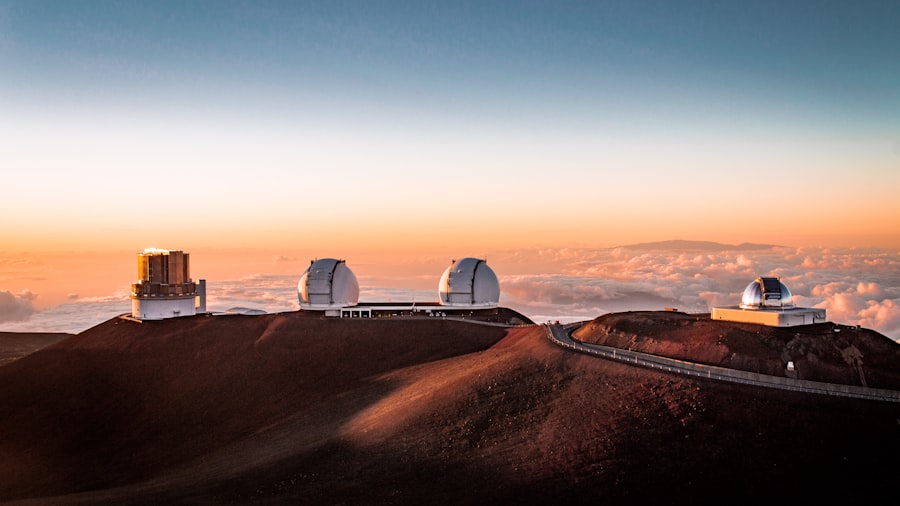
The technological advancements at the Vera Rubin Observatory are nothing short of revolutionary. The centerpiece of this facility is its Large Synoptic Survey Telescope (LSST), which boasts an impressive 8.4-meter primary mirror capable of capturing high-resolution images across a wide field of view. This design allows astronomers to survey large portions of the sky quickly and efficiently, gathering data that would have taken traditional telescopes years to compile.
In addition to its powerful optics, the LSST is equipped with advanced imaging sensors that can detect faint light from distant objects. This capability is crucial for studying phenomena associated with dark energy, such as supernovae and galaxy clusters. The observatory’s data processing systems are also state-of-the-art, enabling rapid analysis and dissemination of information to researchers worldwide.
By harnessing these cutting-edge technologies, the Vera Rubin Observatory is set to transform our understanding of dark energy and other cosmic mysteries.
Collaborative Efforts in Unveiling Dark Energy
The investigation into dark energy is inherently collaborative, drawing on expertise from various fields within astrophysics and beyond. The Vera Rubin Observatory serves as a hub for international collaboration, bringing together scientists from diverse backgrounds to tackle this complex problem. Researchers from institutions around the globe are working together to analyze data collected by the observatory, sharing insights and methodologies that enhance their collective understanding.
These collaborative efforts extend beyond academia; partnerships with technology companies and engineering firms are also essential for developing innovative solutions to challenges posed by large-scale astronomical surveys. By fostering an environment of cooperation and knowledge-sharing, the Vera Rubin Observatory exemplifies how teamwork can accelerate progress in unraveling one of science’s greatest mysteries—dark energy.
The Impact of Dark Energy on the Universe
Dark energy has profound implications for our understanding of the universe’s structure and evolution. Its presence influences how galaxies form and cluster together, shaping the large-scale architecture of cosmic structures. As researchers study dark energy’s effects on galaxy formation and distribution, they gain insights into fundamental questions about how matter interacts with this mysterious force.
Moreover, dark energy plays a crucial role in determining the ultimate fate of the universe. Current models suggest that if dark energy continues to dominate cosmic dynamics, it could lead to scenarios where galaxies drift apart indefinitely or even result in a “Big Rip,” where all matter is torn apart by accelerating expansion. Understanding these potential outcomes is essential for cosmologists as they seek to paint a comprehensive picture of our universe’s past, present, and future.
Vera Rubin Observatory: A Hub for Astronomical Discoveries
The Vera Rubin Observatory is not just a facility for studying dark energy; it is a vibrant hub for astronomical discoveries across various domains. Its comprehensive survey capabilities will enable researchers to explore a wide range of celestial phenomena, from transient events like supernovae to distant galaxies and exoplanets. The wealth of data generated by the observatory will provide opportunities for groundbreaking research that extends beyond dark energy.
As scientists analyze data from the LSST, they will uncover new insights into stellar evolution, galaxy formation, and even potential threats from near-Earth objects. The collaborative nature of research at the Rubin Observatory fosters an environment where interdisciplinary approaches can flourish, leading to innovative solutions and discoveries that may reshape our understanding of the cosmos.
The Future of Dark Energy Research at the Vera Rubin Observatory
Looking ahead, the future of dark energy research at the Vera Rubin Observatory appears promising. As data collection begins in earnest, astronomers anticipate uncovering new patterns and relationships that could shed light on this enigmatic force. The observatory’s long-term survey will provide a unique opportunity to track changes in cosmic expansion over time, allowing researchers to refine their models and test competing theories.
In addition to its observational capabilities, the Rubin Observatory will serve as a training ground for future generations of astronomers. By engaging students and early-career researchers in cutting-edge projects related to dark energy and other cosmic phenomena, it will inspire new talent and ideas that could drive future breakthroughs in astrophysics.
Unveiling the Secrets of Dark Energy
In conclusion, dark energy remains one of the most intriguing mysteries in astrophysics, challenging scientists to rethink their understanding of fundamental forces shaping our universe. The Vera Rubin Observatory stands at the forefront of this exploration, equipped with cutting-edge technology and fostering collaborative efforts among researchers worldwide. As astronomers embark on this ambitious journey to unveil dark energy’s secrets, they carry forward a legacy rooted in curiosity and determination.
The impact of their findings will extend far beyond academic circles; understanding dark energy could redefine humanity’s place in the cosmos and illuminate fundamental questions about existence itself. As we look toward an exciting future filled with discoveries at the Vera Rubin Observatory, one thing remains clear: unraveling the mysteries surrounding dark energy will be a monumental achievement that shapes our understanding of the universe for generations to come.
The Vera C. Rubin Observatory is set to revolutionize our understanding of dark energy with its unprecedented survey capabilities. As it prepares to embark on its mission, the observatory will provide critical data that could unlock the mysteries of the universe’s accelerated expansion. For those interested in exploring more about the impact of such astronomical advancements, a related article on the topic can be found on My Cosmic Ventures. This article delves into the broader implications of the observatory’s findings and how they might reshape our comprehension of cosmic phenomena. You can read more about it by visiting this link.
WATCH THIS!🚀 The DESI Shockwave: Dark Energy is NOT Constant🚀🚀
FAQs
What is the Vera C. Rubin Observatory?
The Vera C. Rubin Observatory, formerly known as the Large Synoptic Survey Telescope (LSST), is an astronomical observatory currently under construction in Chile. It is designed to conduct a 10-year survey of the sky, capturing images of the entire visible sky every few nights.
What is dark energy?
Dark energy is a mysterious force that is thought to be responsible for the accelerating expansion of the universe. It makes up about 68% of the universe and its existence was inferred from observations of distant supernovae in the late 1990s.
How will the Vera C. Rubin Observatory study dark energy?
The Vera C. Rubin Observatory will use its wide-field telescope and advanced camera to conduct a deep and wide survey of the sky, capturing images of billions of galaxies and other celestial objects. By studying the distribution and motion of these objects, scientists hope to gain a better understanding of the nature of dark energy and its effects on the universe.
When is the Vera C. Rubin Observatory expected to start operations?
The Vera C. Rubin Observatory is expected to start full science operations in 2023, after the completion of its construction and commissioning phase. However, some initial science observations may begin before that time.
What are some of the other scientific goals of the Vera C. Rubin Observatory?
In addition to studying dark energy, the Vera C. Rubin Observatory will also be used to study other astronomical phenomena such as supernovae, asteroids, the structure of the Milky Way, and the transient sky. Its wide-field survey capabilities will make it a powerful tool for a wide range of astronomical research.