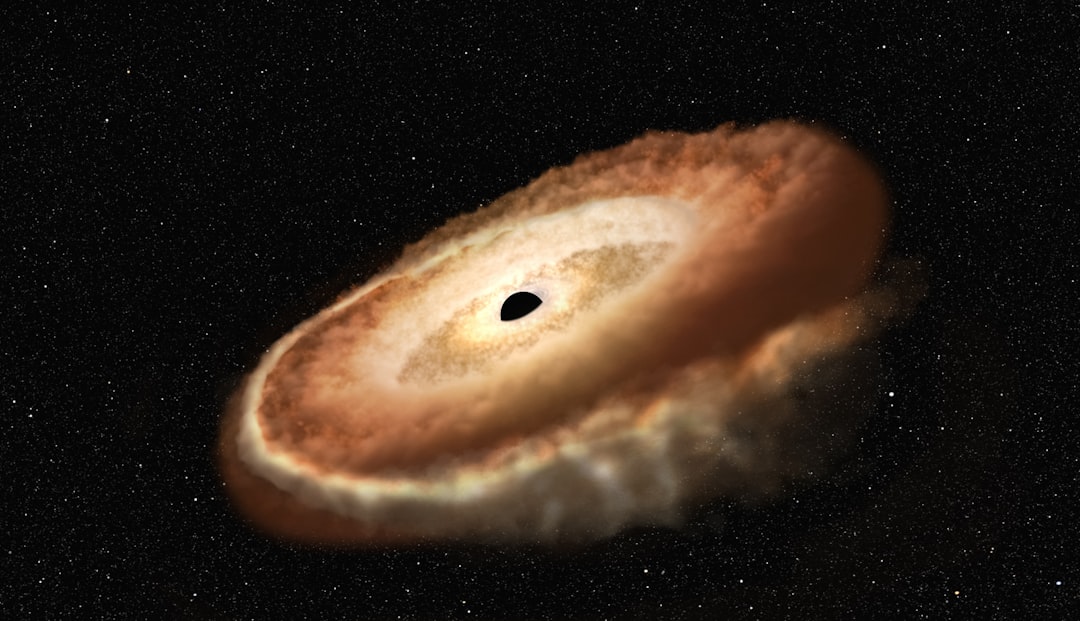
Cosmological coupling represents a fascinating intersection of cosmology and black hole physics, where the fundamental forces of the universe interact in complex ways. This concept suggests that black holes are not merely isolated entities but are influenced by the broader dynamics of the cosmos. The idea of cosmological coupling posits that the properties of black holes, such as their mass, charge, and spin, may be affected by the expansion of the universe and the distribution of dark energy.
This relationship opens up new avenues for understanding the nature of black holes and their role in the cosmic landscape. As researchers delve deeper into the mysteries of black holes, they are increasingly recognizing the importance of cosmological factors in shaping these enigmatic objects. The interplay between black holes and the universe’s expansion raises profound questions about the fundamental laws of physics.
By exploring cosmological coupling, scientists aim to uncover insights that could bridge gaps in our understanding of gravity, quantum mechanics, and the very fabric of spacetime itself. This exploration is not only crucial for theoretical advancements but also for practical applications in astrophysics and cosmology.
Key Takeaways
- Cosmological coupling influences black hole formation and evolution, linking black holes to the expansion of the universe.
- The Farrah Research Project provides new insights into how cosmological coupling operates within black hole environments.
- Observations suggest that cosmological coupling affects black hole growth and behavior over cosmic timescales.
- Understanding cosmological coupling has significant implications for astrophysics, potentially altering models of black hole dynamics.
- Ongoing collaborative research aims to overcome challenges in studying cosmological coupling and to explore future applications.
Understanding the Farrah Research Project
The Farrah Research Project stands at the forefront of investigating cosmological coupling in black holes. This ambitious initiative brings together a multidisciplinary team of astrophysicists, cosmologists, and theoretical physicists, all united by a common goal: to unravel the complexities of how black holes interact with cosmic phenomena. The project is named after a pioneering figure in astrophysics whose contributions have laid the groundwork for contemporary research in this field.
At its core, the Farrah Research Project employs a combination of observational data and advanced simulations to study black holes in various cosmic environments. By analyzing data from telescopes and space observatories, researchers can gather insights into the behavior of black holes and their surrounding regions. Simultaneously, sophisticated computational models allow scientists to simulate different scenarios involving cosmological coupling, providing a theoretical framework to interpret their findings.
This dual approach enhances the project’s ability to draw meaningful conclusions about the nature of black holes and their relationship with the universe.
The Role of Cosmological Coupling in Black Hole Formation
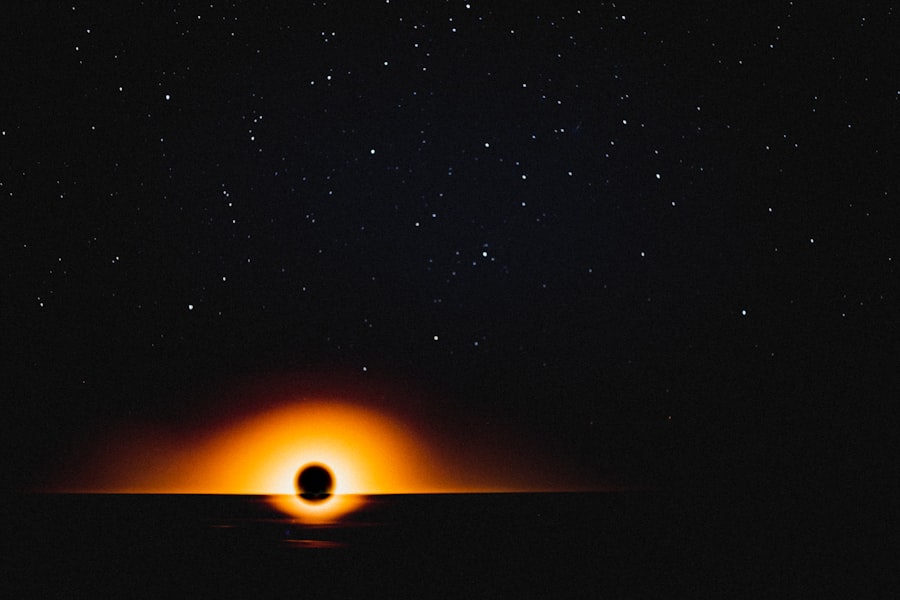
Cosmological coupling plays a pivotal role in understanding how black holes form and evolve over time. Traditional models of black hole formation often focus on stellar collapse or mergers between compact objects. However, incorporating cosmological factors into these models reveals a more intricate picture.
For instance, as the universe expands, regions of higher density can lead to gravitational instabilities that may facilitate black hole formation in ways previously unconsidered. Moreover, dark energy, which drives the accelerated expansion of the universe, may influence the growth and characteristics of black holes. The interaction between dark energy and matter can create conditions conducive to black hole formation, particularly in the early universe when density fluctuations were more pronounced.
By examining these processes through the lens of cosmological coupling, researchers can gain a deeper understanding of how black holes emerge from the cosmic tapestry.
Observing Cosmological Coupling in Black Hole Environments
| Metric | Description | Typical Value | Unit | Relevance to Cosmological Coupling |
|---|---|---|---|---|
| Black Hole Mass Growth Rate | Rate at which black hole mass increases over time | 10^-8 to 10^-5 | Solar masses per year | Indicates possible influence of cosmological expansion on mass accretion |
| Redshift (z) | Measure of the universe’s expansion at the black hole’s location | 0.01 to 7 | Dimensionless | Used to correlate black hole properties with cosmological time |
| Hubble Parameter (H) | Rate of expansion of the universe at given redshift | 50 to 100 | km/s/Mpc | Key parameter in modeling cosmological coupling effects |
| Black Hole Spin Parameter (a*) | Dimensionless measure of black hole angular momentum | 0 to 0.998 | Dimensionless | May affect coupling strength and observational signatures |
| Accretion Disk Luminosity | Energy output from matter accreting onto black hole | 10^42 to 10^47 | erg/s | Helps distinguish intrinsic growth from cosmological effects |
| Time Dilation Factor | Effect of cosmological expansion on observed time intervals | 1 to 8 | Dimensionless | Important for interpreting variability and growth rates |
Observing cosmological coupling in black hole environments presents both opportunities and challenges for researchers. Advanced observational techniques, such as gravitational wave detection and electromagnetic observations across various wavelengths, have opened new windows into the study of black holes. These methods allow scientists to gather data on black hole mergers, accretion processes, and other phenomena that may reveal signs of cosmological coupling.
For instance, gravitational waves emitted during black hole mergers can provide insights into how these events are influenced by cosmic expansion. By analyzing the frequency and amplitude of these waves, researchers can infer information about the masses and spins of the merging black holes, as well as their potential interactions with dark energy. Additionally, observations of accretion disks around supermassive black holes may reveal how cosmological factors affect their growth rates and energy output.
Such observations are crucial for validating theoretical models that incorporate cosmological coupling.
Implications of Cosmological Coupling for Black Hole Evolution
The implications of cosmological coupling extend beyond mere formation; they also significantly impact black hole evolution. As the universe continues to expand, black holes may experience changes in their properties due to interactions with dark energy and surrounding matter. For example, as galaxies evolve and merge over cosmic time, supermassive black holes at their centers may grow through accretion or mergers with other black holes.
Understanding how cosmological coupling influences these processes is essential for predicting the future behavior of black holes. Furthermore, cosmological coupling may shed light on the ultimate fate of black holes in an ever-expanding universe. Theories suggest that as dark energy continues to dominate cosmic dynamics, it could lead to scenarios where black holes become isolated from their host galaxies or even evaporate over vast timescales due to Hawking radiation.
By studying these evolutionary pathways through the lens of cosmological coupling, researchers can develop more comprehensive models that account for both local and cosmic influences on black hole behavior.
Farrah Research Findings on Cosmological Coupling
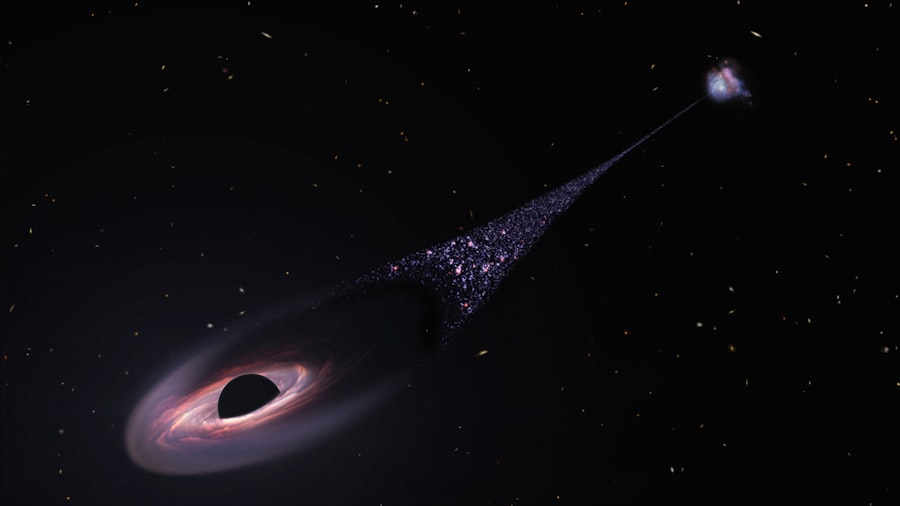
The Farrah Research Project has yielded significant findings regarding cosmological coupling and its effects on black holes. Through a combination of observational data analysis and theoretical modeling, researchers have identified patterns that suggest a strong correlation between cosmic expansion and black hole properties. For instance, preliminary results indicate that supermassive black holes in rapidly expanding regions exhibit distinct growth patterns compared to those in more stable environments.
Additionally, simulations conducted as part of the project have revealed how variations in dark energy density can influence black hole formation rates across different epochs of cosmic history. These findings challenge traditional notions about black hole formation and suggest that cosmological factors must be integrated into existing models to accurately describe their evolution. As researchers continue to analyze data and refine their simulations, they anticipate uncovering even more nuanced relationships between black holes and the cosmos.
Potential Applications of Cosmological Coupling in Astrophysics
The exploration of cosmological coupling holds promise for various applications within astrophysics. One potential application lies in refining models of galaxy formation and evolution. By incorporating insights gained from studying cosmological coupling in black holes, astrophysicists can develop more accurate simulations that account for the influence of dark energy on galactic dynamics.
This could lead to a better understanding of how galaxies interact with their central supermassive black holes over cosmic time. Moreover, findings related to cosmological coupling may have implications for gravitational wave astronomy. As researchers gain insights into how cosmic expansion affects black hole mergers, they can improve predictions regarding gravitational wave signals from such events.
This knowledge could enhance detection capabilities and provide valuable information about the population of merging black holes throughout the universe.
Challenges and Limitations in Studying Cosmological Coupling in Black Holes
Despite its potential significance, studying cosmological coupling in black holes presents several challenges and limitations. One major hurdle is the complexity inherent in modeling such interactions accurately. The interplay between dark energy, matter distribution, and gravitational forces is intricate, requiring sophisticated computational techniques and extensive observational data to draw meaningful conclusions.
Additionally, observational limitations pose another challenge. While advancements in technology have improved our ability to detect and analyze black holes, many aspects of their environments remain elusive. For instance, observing distant supermassive black holes or accurately measuring their properties can be hindered by cosmic dust or other intervening structures.
Collaborative Efforts in Unveiling Cosmological Coupling in Black Holes
Collaboration has emerged as a cornerstone of research into cosmological coupling in black holes. The complexity of this field necessitates interdisciplinary cooperation among astrophysicists, cosmologists, mathematicians, and computer scientists. By pooling expertise from diverse backgrounds, researchers can tackle the multifaceted challenges associated with studying these enigmatic objects.
International collaborations have also become increasingly common as scientists recognize that understanding cosmological coupling requires a global effort. Joint projects involving multiple institutions allow for shared resources, data access, and expertise exchange. Such collaborations enhance the overall quality of research while fostering innovation through diverse perspectives.
Future Directions in Farrah Research and Cosmological Coupling
Looking ahead, the Farrah Research Project aims to expand its scope by incorporating new technologies and methodologies into its investigations of cosmological coupling in black holes. As observational capabilities continue to improve with advancements in telescope technology and data analysis techniques, researchers anticipate uncovering new phenomena related to black hole behavior influenced by cosmic dynamics. Furthermore, ongoing theoretical developments will play a crucial role in shaping future research directions.
As scientists refine their models to account for cosmological coupling effects more accurately, they will be better equipped to make predictions about black hole evolution and interactions with their environments. This iterative process between observation and theory will drive progress in understanding these complex systems.
The Significance of Understanding Cosmological Coupling in Black Holes
In conclusion, comprehending cosmological coupling in black holes is essential for advancing knowledge within astrophysics and cosmology. This concept not only enriches our understanding of how black holes form and evolve but also highlights their interconnectedness with the broader universe. The Farrah Research Project exemplifies a concerted effort to explore these intricate relationships through innovative methodologies and collaborative approaches.
As researchers continue to investigate cosmological coupling’s implications for black hole behavior, they pave the way for new discoveries that could reshape our understanding of fundamental physics. Ultimately, unraveling these mysteries will contribute significantly to humanity’s quest for knowledge about the cosmos and our place within it.
Recent research on cosmological coupling in black holes has opened new avenues for understanding the fundamental nature of these enigmatic objects. A related article that delves deeper into this topic can be found at My Cosmic Ventures, where the implications of such coupling on black hole dynamics and their interactions with the surrounding universe are explored. This research not only enhances our comprehension of black holes but also sheds light on the broader implications for cosmology as a whole.
WATCH THIS 🛑 The Impossible Proof: Our Universe Is a Black Hole’s Interior
FAQs
What is cosmological coupling in the context of black holes?
Cosmological coupling refers to the theoretical interaction between black holes and the expansion of the universe. It suggests that the properties of black holes, such as their mass, may be influenced by the cosmological environment, potentially growing in tandem with the universe’s expansion.
Who is Farrah and what is their contribution to black hole research?
Farrah is a researcher who has contributed to the study of cosmological coupling in black holes. Their work involves investigating how black holes might be connected to cosmological parameters and how this relationship could impact our understanding of black hole growth and evolution.
How does cosmological coupling affect black hole growth?
If black holes are cosmologically coupled, their mass could increase as the universe expands, independent of traditional accretion processes. This means black holes might grow not only by absorbing matter but also through a direct relationship with the expansion of space itself.
What evidence supports the idea of cosmological coupling in black holes?
Research, including Farrah’s studies, has analyzed observational data from black holes and their host galaxies, finding correlations that suggest black hole masses may scale with cosmological parameters. However, this is an emerging area of study, and more data is needed to confirm these findings conclusively.
Why is the concept of cosmological coupling important in astrophysics?
Understanding cosmological coupling could reshape theories about black hole formation and growth, influence models of galaxy evolution, and provide insights into the interplay between local astrophysical objects and the large-scale structure of the universe.
Are there alternative explanations for black hole growth besides cosmological coupling?
Yes, traditional explanations for black hole growth include accretion of gas and dust, mergers with other black holes, and interactions with surrounding matter. Cosmological coupling is a newer hypothesis that adds a potential cosmological factor to these mechanisms.
What are the implications of cosmological coupling for future research?
If confirmed, cosmological coupling would prompt revisions in cosmological models and black hole physics. It would encourage new observational campaigns and theoretical work to explore how universal expansion influences compact objects and to refine our understanding of cosmic evolution.