The universe, in its vast expanse, is not a static entity. Instead, it is a grand theater where processes that mirror the everyday transitions we observe – like water turning to ice or vapor, or a molten metal solidifying – have occurred on scales so immense they warp our perception of time and space. These Cosmic Phase Transitions are fundamental transformations in the state of matter and energy that have shaped the very fabric of the cosmos, from its nascent moments to its current magnificent structure. Understanding these transitions is akin to deciphering the universe’s autobiography, each chapter a testament to dramatic shifts in its fundamental properties.
In the first fractions of a second after the Big Bang, the universe was a realm of unimaginable density and temperature, a primordial soup where the fundamental forces and particles that govern reality were not yet distinct. This epoch was a period of intense energetic flux, and the very rules of physics as we know them were in a state of potent, undifferentiated potential.
The Planck Epoch: A Realm Beyond Comprehension
The very first moments of the universe, from time zero to approximately $10^{-43}$ seconds (the Planck time), are shrouded in mystery. During the Planck epoch, the universe was so small and dense that gravity, the force that governs the large-scale structure of the cosmos, is believed to have been as strong as the other fundamental forces.
Quantum Gravity and the Limits of Knowledge
At these extreme energies, it is hypothesized that all four fundamental forces – gravity, electromagnetism, the strong nuclear force, and the weak nuclear force – were unified into a single, allembracing force. Our current understanding of physics, particularly general relativity and quantum mechanics, breaks down at these scales. Physicists are actively exploring theories like string theory and loop quantum gravity in an attempt to describe this epoch, akin to trying to describe the essence of pure color before it has been mixed into paints.
The Grand Unification Epoch: Forging the Forces
Following the Planck epoch, as the universe rapidly expanded and cooled, the unified force began to fracture. Between approximately $10^{-43}$ and $10^{-36}$ seconds after the Big Bang, the universe is thought to have undergone the first significant phase transition, where gravity separated from the other unified forces.
The Birth of the Strong Force
Later in this epoch, around $10^{-36}$ seconds, a crucial transition occurred: the strong nuclear force, responsible for binding quarks together to form protons and neutrons, separated from the electroweak force. This event, often referred to as the Grand Unification epoch, marked a significant step towards the emergence of distinct physical interactions. The universe, once a singular entity of unified forces, was beginning to differentiate, much like a single cell dividing to form specialized tissues.
The Electroweak Epoch: Splitting the Fundamental Interactions
The universe continued its rapid expansion and cooling, leading to another critical phase transition. Between $10^{-36}$ and $10^{-12}$ seconds, the electroweak epoch witnessed the separation of the electromagnetic and weak nuclear forces.
The Higgs Field and Mass Acquisition
This transition is profoundly linked to the Higgs field and the Higgs boson. As the universe cooled below a critical temperature, the Higgs field permeated space, and particles interacting with it acquired mass. Before this transition, all fundamental particles were massless, moving at the speed of light. The activation of the Higgs mechanism, a pivotal moment in cosmic history, endowed particles like quarks and leptons with their inertial properties, laying the groundwork for the formation of all the matter we observe today. This is analogous to an artist discovering the properties of canvas and pigment, enabling the creation of tangible forms.
The Quark-Gluon Plasma Epoch: A Sea of Free Quarks
Following the electroweak symmetry breaking, the universe was still an extremely hot and dense plasma. Between approximately $10^{-12}$ and $10^{-6}$ seconds after the Big Bang, quarks and gluons, the fundamental constituents of protons and neutrons, existed in a free, unbound state, forming a Quark-Gluon Plasma (QGP).
Confinement and Hadronization
Within this roiling plasma, quarks and gluons interacted intensely, creating a state of matter unlike anything seen in isolation today. As the universe continued to expand and cool, it eventually reached a critical temperature where the strong nuclear force became dominant enough to confine quarks together. This process, known as hadronization, led to the formation of composite particles like protons and neutrons, the building blocks of atomic nuclei. The transition from QGP to a state where quarks are bound within hadrons is a remarkable example of how fundamental forces dictate the state of matter.
The history of cosmic phase transitions is a fascinating topic that explores the changes in the state of matter in the early universe, particularly during events such as the Big Bang and the formation of fundamental forces. For a deeper understanding of this subject, you can refer to a related article that delves into the implications of these transitions on the evolution of the cosmos. To read more, visit this article.
The Dawn of Structure: From Plasma to Atoms
Following the initial chaotic epochs, the universe continued to evolve, allowing for the formation of stable structures and the eventual emergence of light that could travel freely across the cosmos.
The Big Bang Nucleosynthesis: Forging the First Elements
Between approximately 3 minutes and 20 minutes after the Big Bang, the universe had cooled sufficiently for protons and neutrons to fuse together, a process known as Big Bang Nucleosynthesis (BBN). This era saw the creation of the lightest atomic nuclei, primarily hydrogen and helium, along with trace amounts of lithium and beryllium.
The Primeval Abundances
The precise ratios of these light elements produced during BBN are sensitive to the baryon-to-photon ratio, a fundamental parameter of the early universe. The success of BBN in accurately predicting the observed abundances of these elements in the present-day universe provides one of the strongest pieces of evidence for the Big Bang model. This process was the cosmic forge, shaping the initial elemental composition of the universe.
The Recombination Epoch: The Universe Becomes Transparent
For hundreds of thousands of years after the Big Bang, the universe remained an opaque plasma. Electrons were too energetic to be bound to atomic nuclei, scattering photons and preventing light from traveling freely. This period, often referred to as the “dark ages,” continued until the universe cooled to approximately 3,000 Kelvin.
Decoupling of Radiation and Matter
Around 380,000 years after the Big Bang, during the epoch of recombination, electrons finally slowed down enough to bind with atomic nuclei, forming neutral atoms. This event marked a crucial phase transition where photons decoupled from matter, meaning they could now travel unimpeded through the cosmos. This freed light is what we observe today as the Cosmic Microwave Background (CMB) radiation, a faint afterglow of the Big Bang, offering an unprecedented snapshot of the universe at this pivotal moment. The universe transitioned from a cosmic fog to a transparent expanse, allowing the first light to illuminate the nascent cosmos.
Stellar Evolution: The Cosmic Alchemy
Once neutral atoms formed, gravity began to play a more dominant role, drawing matter together to form the first stars. These stars, the engines of cosmic creation, are themselves sites of profound phase transitions through nuclear fusion.
Star Formation: From Molecular Clouds to Fusion
The collapse of vast molecular clouds under their own gravity initiates the process of star formation. As a cloud collapses, gravitational potential energy is converted into thermal energy, causing the core to heat up.
Protostar Ignition
When the core of a forming star reaches a critical temperature and density, nuclear fusion ignites. This marks a transition from a gravitational collapse phase to a self-sustaining star, powered by the conversion of hydrogen into helium. The immense pressures and temperatures within a star are akin to the conditions of the early universe, albeit on a much smaller, more localized scale.
Stellar Nucleosynthesis: Creating Heavier Elements
Within the cores of stars, through a series of nuclear fusion reactions, lighter elements are transmuted into heavier ones. Hydrogen fuses into helium, helium into carbon and oxygen, and in more massive stars, further fusion can create elements up to iron.
The Stellar Forge and Supernovae
This process of stellar nucleosynthesis is the cosmic blacksmith shop, creating the elements that form planets, life, and everything we see around us. The fusion of elements beyond iron, which requires more energy than it releases, occurs in the extreme conditions of stellar explosions, known as supernovae. These cataclysmic events are crucial phase transitions that disperse heavy elements back into the interstellar medium, ready to be incorporated into future generations of stars and planets.
Galactic Evolution: The Cosmic Dance of Matter
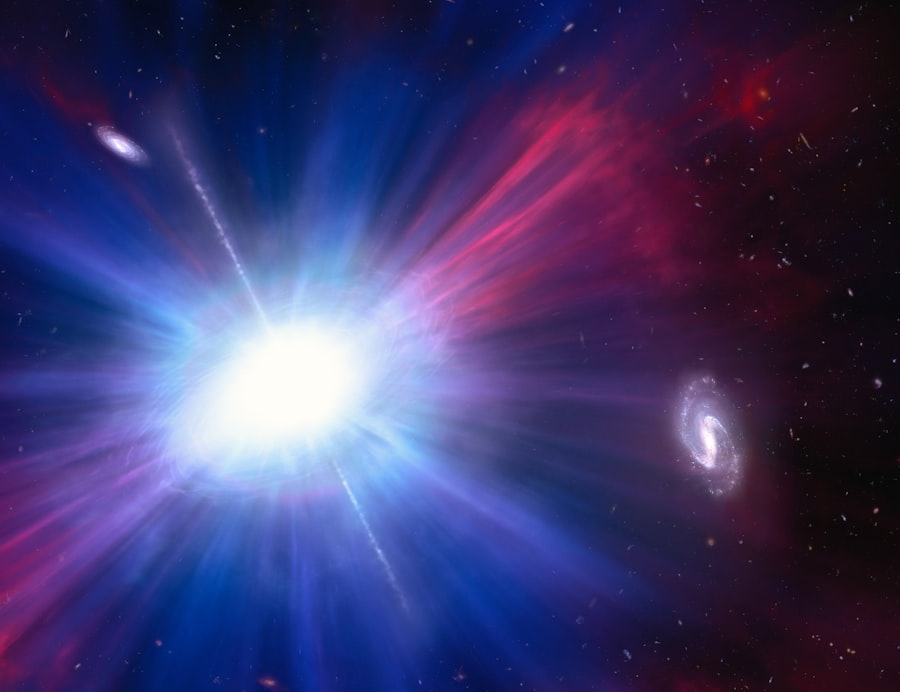
Galaxies, the vast stellar islands of the universe, are not static entities but dynamic systems undergoing continuous evolution, influenced by gravity, mergers, and internal processes.
Galaxy Formation: Accretion and Mergers
The current understanding suggests that galaxies form through the hierarchical assembly of smaller structures, driven by gravity. Initial overdensities in the early universe grow through the accretion of gas and dark matter.
The Role of Dark Matter Halos
Dark matter, which interacts only gravitationally, plays a crucial role in providing the gravitational scaffolding for galaxy formation. These halos of dark matter attract baryonic matter, leading to the formation of the first stars and eventually protogalaxies. Major mergers between smaller galaxies are also a significant pathway for galaxy growth, transforming their morphology and triggering bursts of star formation. This process is like a planetary system coalescing from a dust disk, but on a cosmic scale.
Galactic Nuclei: Supermassive Black Holes and Active Galaxies
At the heart of most massive galaxies lies a supermassive black hole. These behemoths, with masses millions to billions of times that of our Sun, profoundly influence their host galaxies.
Accretion Disks and Jets
When gas and dust fall into a supermassive black hole, they form an accretion disk. The immense gravitational forces and friction within this disk heat the material to extremely high temperatures, causing it to radiate intensely across the electromagnetic spectrum. In some cases, powerful jets of plasma are launched from near the black hole, impacting the surrounding galaxy. These “active galactic nuclei” represent a dramatic phase transition in the energy output of a galaxy, shaped by the enigmatic power of black holes.
The history of cosmic phase transitions is a fascinating topic that explores the fundamental changes in the state of the universe during its evolution. For those interested in delving deeper into this subject, a related article can be found at My Cosmic Ventures, which discusses various phase transitions that have occurred since the Big Bang and their implications for our understanding of the cosmos. This exploration not only sheds light on the early universe but also connects to modern theories in cosmology and particle physics.
The Universe’s Future: Potential Transitions
| Cosmic Phase Transition | Approximate Time After Big Bang | Energy Scale (GeV) | Key Physical Change | Significance in Cosmology |
|---|---|---|---|---|
| Planck Epoch Transition | 10^-43 seconds | 10^19 | Separation of gravity from other fundamental forces | Marks the beginning of classical spacetime and quantum gravity effects |
| Grand Unification Transition | 10^-36 seconds | 10^16 | Separation of strong force from electroweak force | Possible generation of topological defects like monopoles |
| Electroweak Phase Transition | 10^-12 seconds | 100 | Separation of electromagnetic and weak nuclear forces | Potential source of baryogenesis and matter-antimatter asymmetry |
| Quark-Hadron Transition | 10^-6 seconds | 0.2 | Quarks combine to form hadrons (protons, neutrons) | Formation of stable matter particles |
| Recombination | 380,000 years | ~0.0003 eV | Electrons combine with nuclei to form neutral atoms | Decoupling of matter and radiation; Cosmic Microwave Background formed |
The universe is not a finished product; it is a dynamic entity with a future that may involve further dramatic transformations, dictated by its underlying cosmological parameters.
Expansion and the Fate of the Universe
The observed accelerated expansion of the universe, driven by dark energy, suggests a future where galaxies will drift further and further apart, eventually becoming isolated islands in an ever-expanding void.
Heat Death or Big Rip?
One potential scenario is the “heat death” of the universe, where all energy is uniformly distributed, leaving no gradients for work to be done, and thus no astrophysical activity. Another, more dramatic possibility, is the “Big Rip,” where the expansion becomes so rapid that it tears apart galaxies, stars, atoms, and even spacetime itself. These are hypothetical future phase transitions, where the very nature of cosmic existence could fundamentally change.
The Anthropic Principle and Cosmic Coincidence
The finely tuned parameters of the universe, which allow for the existence of stars, galaxies, and life, have led to discussions about the anthropic principle. This principle suggests that the universe’s properties are the way they are because if they were different, we would not be here to observe them. The precise values of fundamental constants and the occurrence of specific phase transitions are critical for the emergence and sustenance of complexity.
Cosmic phase transitions are not mere footnotes in the history of the universe; they are the very chapters that define its evolution. From the initial breaking of fundamental symmetries in the nascent moments after the Big Bang to the ongoing nuclear furnaces within stars and the potential dramatic fates of the cosmos, these transformations are the engine of cosmic change, revealing a universe that is perpetually in motion and undergoing profound, fundamental shifts.
WATCH NOW ▶️ WARNING: The Universe Is Deleting Itself
FAQs
What are cosmic phase transitions?
Cosmic phase transitions refer to changes in the state of the universe’s fundamental fields and particles as it expanded and cooled after the Big Bang. These transitions are similar to phase changes in matter, like water freezing, but occur at a cosmic scale affecting the structure and properties of the universe.
When did the major cosmic phase transitions occur?
Major cosmic phase transitions occurred within the first fractions of a second to minutes after the Big Bang. Key transitions include the Grand Unified Theory (GUT) phase transition, the electroweak phase transition, and the quantum chromodynamics (QCD) phase transition.
Why are cosmic phase transitions important in cosmology?
Cosmic phase transitions are important because they shaped the fundamental forces and particles in the universe, influenced the formation of matter, and may have generated phenomena such as cosmic inflation, baryogenesis, and the cosmic microwave background radiation.
What evidence supports the occurrence of cosmic phase transitions?
Evidence for cosmic phase transitions comes from observations of the cosmic microwave background radiation, particle physics experiments, and theoretical models that explain the uniformity and structure of the universe, as well as the existence of matter over antimatter.
How do cosmic phase transitions relate to particle physics?
Cosmic phase transitions are closely linked to particle physics because they involve changes in the symmetry and interactions of fundamental particles and forces. Understanding these transitions helps physicists explore theories beyond the Standard Model and the conditions of the early universe.