
Black holes have long captivated the imagination of scientists and the general public alike. These enigmatic cosmic entities, formed from the remnants of massive stars that have undergone gravitational collapse, possess gravitational fields so intense that nothing, not even light, can escape their grasp. The concept of a black hole challenges the very fabric of our understanding of physics, particularly in the realms of general relativity and quantum mechanics.
As researchers delve deeper into the mysteries of the universe, black holes remain at the forefront of astrophysical inquiry, prompting questions about their formation, behavior, and role in the cosmos.
They serve as laboratories for testing the laws of physics under extreme conditions and offer insights into the nature of space and time.
As scientists continue to explore these cosmic giants, they are also uncovering the intricate relationships between black holes and their surrounding environments, including galaxies and dark matter. The quest to understand black holes is a journey that intertwines theoretical physics with observational astronomy, leading to groundbreaking discoveries that reshape our comprehension of the universe.
Key Takeaways
- Black holes are mysterious and fascinating objects in the universe.
- Observing black holes is challenging due to their nature of not emitting any light.
- The microlensing method involves using the gravitational lensing effect to detect black holes.
- Microlensing helps unveil black holes by detecting the temporary brightening of a background star caused by the gravitational field of the black hole.
- The microlensing method offers advantages such as being able to detect black holes that are otherwise difficult to observe.
The Challenge of Observing Black Holes
Observing black holes presents a unique set of challenges that stem from their very nature. Since black holes do not emit light or any form of electromagnetic radiation, they are inherently invisible to traditional observational methods. Instead, their presence is inferred through indirect means, such as the gravitational effects they exert on nearby stars and gas.
This reliance on indirect observation complicates efforts to study black holes, as researchers must develop innovative techniques to detect their influence on surrounding matter. Moreover, the vast distances involved in astronomical observations further complicate the task. Black holes are often located in distant galaxies, making them difficult to study with current technology.
As a result, astronomers must employ sophisticated instruments and methodologies to isolate these signals and gain insights into the properties and behaviors of black holes.
What is the Microlensing Method?

Microlensing is a powerful observational technique that has emerged as a valuable tool in the quest to study black holes. This method relies on the gravitational lensing effect, which occurs when a massive object, such as a star or a black hole, passes in front of a more distant light source. The gravitational field of the foreground object bends and magnifies the light from the background source, creating a temporary increase in brightness that can be detected by telescopes on Earth.
The microlensing effect is particularly useful for detecting objects that are otherwise difficult to observe directly. When a black hole passes in front of a distant star, it can create a distinctive light curve—a graph showing how the brightness of the star changes over time. By analyzing these light curves, astronomers can infer the presence of a black hole and gather information about its mass and distance from Earth.
This method has opened new avenues for exploring not only black holes but also other dark matter candidates that may not emit light.
How Does Microlensing Help Unveil Black Holes?
| Benefits of Microlensing in Unveiling Black Holes |
|---|
| 1. Reveals the presence of black holes through gravitational lensing effect |
| 2. Provides information about the mass and distribution of black holes |
| 3. Helps in studying the demographics of black holes in different galaxies |
| 4. Enables the detection of black holes that are otherwise difficult to observe |
Microlensing serves as a crucial tool for unveiling black holes by providing a means to detect their presence through their gravitational influence on light from distant stars. When a black hole passes in front of a background star, it creates a characteristic pattern in the star’s brightness over time. This phenomenon allows astronomers to identify potential black holes even when they are not directly observable.
The light curve produced during a microlensing event contains valuable information about the mass and location of the intervening object. Furthermore, microlensing can help identify not only isolated black holes but also those that exist within binary systems or clusters. By studying multiple microlensing events occurring simultaneously, researchers can gain insights into the distribution and population of black holes in various environments.
This capability enhances our understanding of how black holes form and evolve within galaxies, shedding light on their role in cosmic evolution.
Advantages of the Microlensing Method
The microlensing method offers several advantages that make it an attractive option for studying black holes. One significant benefit is its ability to detect objects that are otherwise invisible through conventional means. Since black holes do not emit light, traditional observational techniques often fall short in identifying them.
Microlensing circumvents this limitation by leveraging gravitational effects, allowing astronomers to uncover hidden black holes that would remain undetected otherwise. Additionally, microlensing provides a statistical approach to studying large populations of black holes across different regions of the universe. By monitoring numerous stars over extended periods, researchers can gather data on multiple microlensing events simultaneously.
This large-scale approach enables scientists to draw conclusions about the overall distribution and characteristics of black holes, contributing to a more comprehensive understanding of their role in cosmic evolution.
Examples of Black Holes Unveiled Through Microlensing
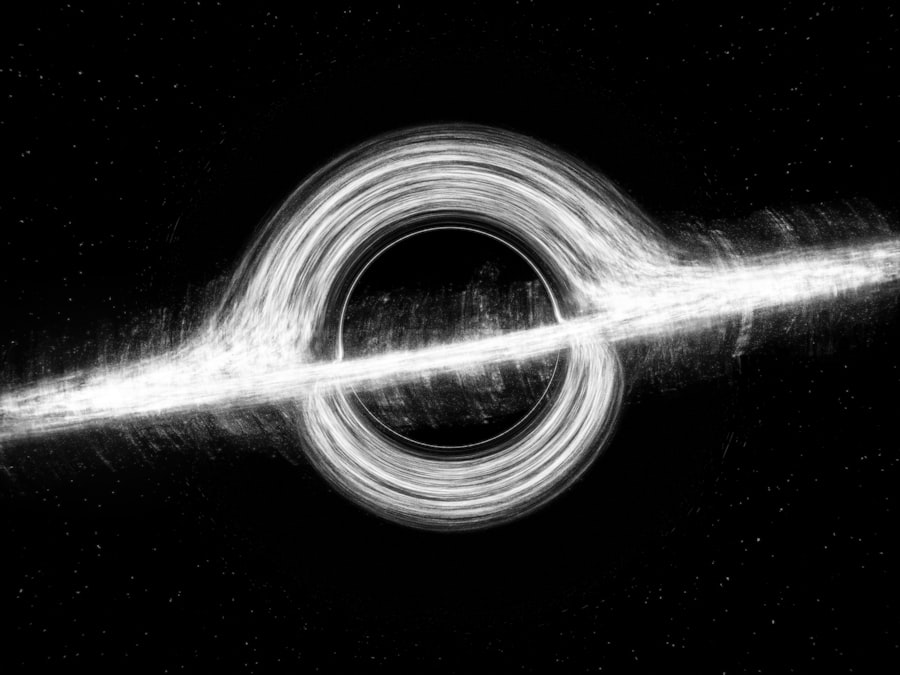
Several notable examples illustrate how microlensing has successfully unveiled black holes in recent years. One prominent case involved the detection of a stellar-mass black hole located in our Milky Way galaxy. Astronomers observed a microlensing event involving a distant star that revealed the presence of an unseen object exerting gravitational influence on it.
This discovery provided direct evidence for the existence of a black hole within our galactic neighborhood. Another significant example comes from observations conducted by the Optical Gravitational Lensing Experiment (OGLE), which has been instrumental in identifying microlensing events across various regions of the sky. Through this project, researchers have detected numerous microlensing events attributed to both stellar-mass and intermediate-mass black holes.
These findings have expanded our understanding of black hole populations and their distribution within galaxies.
Current and Future Applications of Microlensing in Black Hole Research
The applications of microlensing in black hole research continue to evolve as technology advances and observational techniques improve. Currently, astronomers are utilizing microlensing to probe not only stellar-mass black holes but also supermassive black holes located at the centers of galaxies. By monitoring distant quasars—extremely luminous objects powered by supermassive black holes—researchers can employ microlensing to study how these massive entities interact with their surroundings.
Looking ahead, future applications of microlensing hold great promise for enhancing our understanding of dark matter and its relationship with black holes. As scientists seek to unravel the mysteries surrounding dark matter’s composition and distribution, microlensing may provide critical insights into how it interacts with visible matter in the universe. This research could lead to groundbreaking discoveries that reshape our understanding of fundamental astrophysical processes.
Challenges and Limitations of the Microlensing Method
Despite its advantages, microlensing is not without challenges and limitations. One significant hurdle is the need for precise timing and monitoring of microlensing events. Since these events are transient and can last only days to weeks, astronomers must be vigilant in their observations to capture them effectively.
This requirement necessitates coordinated efforts among multiple observatories and telescopes worldwide. Additionally, interpreting microlensing data can be complex due to various factors that influence light curves. For instance, background stars may exhibit intrinsic variability unrelated to microlensing events, complicating data analysis.
Furthermore, distinguishing between different types of lensing objects—such as stars or compact objects like black holes—requires careful modeling and analysis. These challenges underscore the need for continued advancements in observational techniques and data analysis methods.
Collaborative Efforts in Microlensing Research
Collaboration plays a vital role in advancing microlensing research and maximizing its potential for uncovering black holes. International partnerships among astronomers and institutions have led to large-scale observational campaigns aimed at monitoring microlensing events across different regions of the sky. These collaborative efforts enable researchers to pool resources, share data, and enhance their collective understanding of black hole populations.
One notable example is the ongoing collaboration between various observatories involved in monitoring gravitational lensing events. By combining data from multiple telescopes equipped with different instruments, researchers can achieve more comprehensive coverage and improve their ability to detect transient microlensing events. Such collaborative initiatives not only enhance scientific output but also foster knowledge exchange among researchers from diverse backgrounds.
The Impact of Microlensing on Our Understanding of Black Holes
The impact of microlensing on our understanding of black holes cannot be overstated. By providing a means to detect these elusive objects indirectly, microlensing has opened new avenues for exploration within astrophysics. It has allowed scientists to uncover previously hidden populations of black holes and gain insights into their formation processes and interactions with surrounding matter.
Moreover, microlensing has contributed significantly to our understanding of dark matter’s role in shaping cosmic structures. As researchers continue to investigate how dark matter interacts with visible matter through gravitational lensing effects, they are uncovering fundamental truths about the universe’s composition and evolution. This knowledge not only enhances our comprehension of black holes but also informs broader questions about the nature of reality itself.
The Future of Black Hole Research through Microlensing
As research into black holes continues to advance, microlensing stands out as a promising method for unveiling their mysteries. Its ability to detect otherwise invisible objects through gravitational effects has revolutionized our approach to studying these enigmatic entities. With ongoing advancements in technology and collaborative efforts among astronomers worldwide, the future looks bright for microlensing research.
In conclusion, microlensing represents a powerful tool that will undoubtedly shape our understanding of black holes in the years to come. As scientists refine their techniques and expand their observational capabilities, they will continue to unlock new insights into these cosmic giants and their role within the universe’s grand tapestry. The journey into the depths of black hole research is far from over; rather, it is just beginning—a testament to humanity’s insatiable curiosity about the cosmos and its many wonders.
Microlensing is a powerful technique used to detect black holes by observing the gravitational effects they have on light from distant stars. When a black hole passes in front of a star, its intense gravitational field can bend and magnify the light from that star, creating a temporary increase in brightness. This phenomenon allows astronomers to infer the presence of otherwise invisible black holes. For a deeper understanding of this fascinating topic, you can read more in our related article on microlensing and its applications in black hole detection.
WATCH THIS! The Invisible Threat: A Rogue Black Hole Headed for Our Solar System?
FAQs
What is microlensing?
Microlensing is a phenomenon in which the gravitational field of a massive object, such as a black hole, bends and focuses light from a background source, causing a temporary increase in brightness as seen from Earth.
How does microlensing detect black holes?
When a black hole passes in front of a distant star, its gravitational field causes the star’s light to be bent and focused, resulting in a temporary increase in brightness. This effect can be observed from Earth and used to detect the presence of the black hole.
What are the advantages of using microlensing to detect black holes?
Microlensing can detect black holes that are not actively accreting matter, making it a valuable tool for finding isolated black holes in the universe. It is also sensitive to smaller black holes that may be difficult to detect using other methods.
Are there any limitations to using microlensing to detect black holes?
One limitation of microlensing is that it can only detect black holes that happen to pass in front of a background star, making it a relatively rare event. Additionally, the microlensing signal from a black hole can be difficult to distinguish from other types of massive objects, such as neutron stars or dark matter.