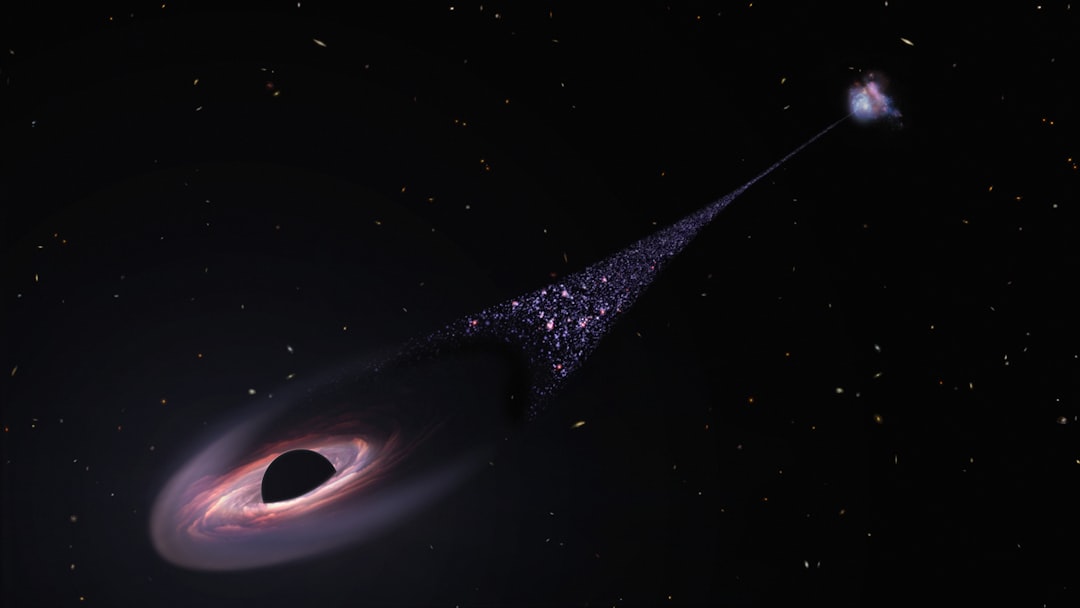
The cosmos is a realm of profound mysteries, and among its most enigmatic phenomena are black holes. These gravitational giants, born from the remnants of massive stars, possess the ability to warp space and time. One particularly intriguing aspect of their formation is the concept of natal kick velocity.
This term refers to the velocity imparted to a black hole at the moment of its birth, a phenomenon that can significantly influence its subsequent behavior and interactions within the universe. Understanding black hole natal kick velocity is crucial for unraveling the complexities of cosmic evolution and the dynamics of celestial bodies. As researchers delve deeper into the nature of black holes, they uncover the intricate relationships between these entities and their environments.
The natal kick velocity not only affects the trajectory of a newly formed black hole but also has far-reaching implications for the galaxies in which they reside. By examining this phenomenon, scientists can gain insights into the processes that govern galaxy formation, star cluster dynamics, and even the generation of gravitational waves. The exploration of black hole natal kick velocity thus serves as a gateway to understanding some of the universe’s most fundamental questions.
Key Takeaways
- Black hole natal kick velocity refers to the speed at which a black hole is ejected from its birthplace during a supernova explosion.
- It is measured by observing the motion of the black hole and its surrounding environment using techniques such as spectroscopy and astrometry.
- The natal kick velocity of black holes has significant implications for the evolution of galaxies, as it can affect the distribution of black holes and their impact on the surrounding environment.
- Black hole natal kick velocity plays a crucial role in the formation of binary black hole systems, as it determines the dynamics of their orbital motion and eventual merger.
- There is a connection between black hole natal kick velocity and the emission of gravitational waves, which provides valuable information about the properties of black holes and their interactions.
What is a Black Hole Natal Kick Velocity and How is it Measured?
Black hole natal kick velocity is defined as the speed at which a black hole is propelled away from its birthplace following its formation. This kick is primarily a result of asymmetrical supernova explosions, which occur when a massive star exhausts its nuclear fuel and collapses under its own gravity. The explosion can impart a significant amount of momentum to the newly formed black hole, causing it to recoil in a specific direction.
The magnitude of this kick can vary widely, with some black holes receiving velocities that can exceed thousands of kilometers per second. Measuring black hole natal kick velocity poses significant challenges for astronomers. Since black holes themselves do not emit light, their presence is often inferred through their interactions with surrounding matter or through gravitational effects on nearby stars.
One method involves observing the motion of companion stars in binary systems, where the dynamics can reveal information about the black hole’s mass and velocity. Additionally, simulations and theoretical models play a crucial role in estimating kick velocities by replicating supernova events and analyzing the resulting dynamics. By combining observational data with computational models, researchers can piece together a more comprehensive picture of how natal kicks influence black hole behavior.
The Implications of Black Hole Natal Kick Velocity on the Evolution of Galaxies
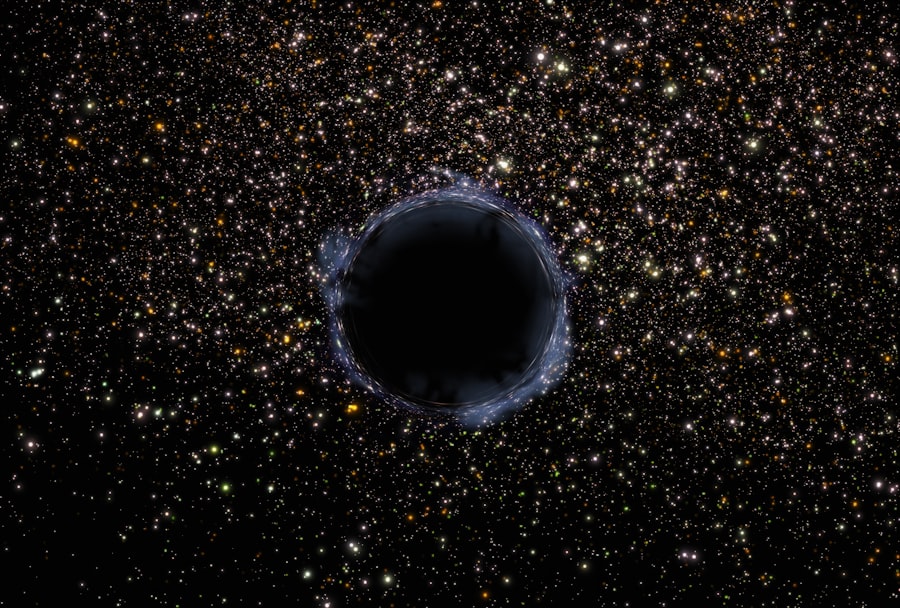
The implications of black hole natal kick velocity extend far beyond individual black holes; they resonate throughout entire galaxies. When a black hole receives a substantial kick, it can be ejected from its host star cluster or even from its galaxy altogether. This process can disrupt the delicate balance of gravitational forces within galaxies, leading to changes in star formation rates and the overall structure of galactic systems.
As black holes migrate through their environments, they can interact with other celestial bodies, potentially leading to mergers or collisions that further alter galactic dynamics. Moreover, the ejection of black holes from their birthplaces can contribute to the growth of supermassive black holes at the centers of galaxies. As these entities wander through space, they may encounter other black holes or dense stellar regions, facilitating mergers that can lead to the formation of larger black holes.
This process not only affects the individual black holes but also has profound implications for galaxy evolution, as supermassive black holes are believed to play a critical role in regulating star formation and influencing galactic morphology.
The Role of Black Hole Natal Kick Velocity in the Formation of Binary Black Hole Systems
| Parameter | Description |
|---|---|
| Black Hole Natal Kick Velocity | The velocity at which a black hole is ejected from its parent star during the supernova explosion |
| Binary Black Hole Systems | A system consisting of two black holes orbiting around a common center of mass |
| Formation Mechanism | The process by which binary black hole systems are created, influenced by the natal kick velocity |
| Impact of Natal Kick Velocity | The effect of natal kick velocity on the properties and characteristics of binary black hole systems |
The formation of binary black hole systems is another area where natal kick velocity plays a pivotal role. When two massive stars evolve close to one another, they may both end their lives as black holes. If these black holes are born with relatively low natal kick velocities, they are more likely to remain bound together in a binary system.
The dynamics of binary black hole systems are crucial for understanding gravitational wave emissions, as these systems are prime candidates for producing detectable waves when they merge. The natal kick velocities influence not only whether two black holes will remain in close proximity but also how they will interact over time.
As researchers continue to study these systems, they are uncovering how variations in natal kick velocities can lead to diverse outcomes in binary evolution, ultimately shaping the landscape of gravitational wave astronomy.
The Connection Between Black Hole Natal Kick Velocity and Gravitational Wave Emissions
Gravitational waves are ripples in spacetime caused by accelerating masses, and binary black hole mergers are among the most significant sources of these waves. The connection between black hole natal kick velocity and gravitational wave emissions is profound; understanding how kicks influence binary systems can provide insights into the characteristics of detected gravitational waves. For instance, if a binary system experiences a significant natal kick, it may alter the orbital parameters and merger timescale, affecting the frequency and amplitude of gravitational waves produced during a merger event.
Moreover, variations in natal kick velocities can lead to different merger scenarios, such as those involving highly eccentric orbits versus more circular ones. These differences can result in distinct gravitational wave signatures that researchers can analyze to glean information about the properties of the merging black holes. As gravitational wave observatories like LIGO and Virgo continue to detect events, correlating these observations with theoretical models of natal kicks will enhance our understanding of both black hole formation and the fundamental nature of gravity itself.
Theoretical Models Explaining Black Hole Natal Kick Velocity
Theoretical models play an essential role in explaining black hole natal kick velocity and its underlying mechanisms. One prominent model suggests that asymmetries in supernova explosions lead to varying amounts of momentum being imparted to newly formed black holes. These asymmetries can arise from factors such as magnetic fields or rotation within the collapsing star, which can influence how energy is distributed during the explosion.
By simulating these processes using advanced computational techniques, researchers can estimate potential kick velocities and explore how different conditions affect outcomes. Another approach involves examining the role of neutrinos in supernova dynamics. Neutrinos are elusive particles produced in vast quantities during supernova explosions and can carry away significant amounts of energy.
If a substantial fraction of this energy is emitted asymmetrically, it could result in a strong natal kick for the resulting black hole. By integrating neutrino physics into models of supernova explosions, scientists aim to refine their understanding of how these processes contribute to kick velocities and ultimately shape the population of black holes in the universe.
Observational Evidence of Black Hole Natal Kick Velocity in the Universe
Observational evidence supporting the existence and significance of black hole natal kick velocity is gradually accumulating through various astronomical studies. One compelling piece of evidence comes from observations of binary systems containing black holes. In some cases, researchers have detected high-velocity stars that appear to have been ejected from their birthplaces due to interactions with nearby black holes.
These observations lend credence to the idea that natal kicks can lead to significant changes in stellar trajectories. Additionally, studies involving gravitational wave detections have provided indirect evidence for natal kicks. The properties of merging binary black holes observed by LIGO and Virgo suggest that some systems may have experienced substantial kicks during their formation.
By analyzing the mass ratios and spins of merging black holes, scientists can infer information about their evolutionary histories and potential natal kick velocities. As observational techniques continue to improve, it is likely that more direct evidence will emerge, further illuminating this fascinating aspect of black hole physics.
The Relationship Between Black Hole Natal Kick Velocity and the Surrounding Environment
The surrounding environment plays a crucial role in shaping the effects of black hole natal kick velocity. When a black hole forms within a dense stellar cluster or a galactic core, its interactions with nearby stars and gas can significantly influence its trajectory after receiving a natal kick. In such environments, gravitational interactions may either enhance or dampen the effects of a natal kick, determining whether a black hole remains bound to its cluster or is ejected into intergalactic space.
Conversely, in less dense environments, such as isolated regions of space, a high natal kick velocity may lead to rapid ejection from any nearby structures. This dynamic interplay between natal kicks and environmental factors underscores the complexity of cosmic evolution and highlights how local conditions can shape the fates of individual black holes. Understanding these relationships is essential for constructing accurate models of galaxy formation and evolution.
The Impact of Black Hole Natal Kick Velocity on the Dynamics of Star Clusters
The dynamics within star clusters are profoundly influenced by black hole natal kick velocity. When a massive star collapses into a black hole within a cluster, its natal kick can disrupt existing stellar orbits and alter the gravitational landscape significantly. This disruption may lead to increased interactions among stars within the cluster, potentially resulting in stellar collisions or further star formation events.
Moreover, if multiple black holes form within a cluster and receive substantial kicks, they may interact with one another in complex ways that affect cluster stability over time. These interactions can lead to phenomena such as hierarchical mergers or ejections from the cluster altogether. As researchers continue to study star clusters and their dynamics, understanding how natal kicks influence these systems will be crucial for unraveling their evolutionary histories.
The Future of Studying Black Hole Natal Kick Velocity
The future of studying black hole natal kick velocity holds great promise as advancements in technology and observational techniques continue to evolve. Upcoming telescopes and gravitational wave observatories are expected to provide unprecedented insights into the properties and behaviors of black holes across various environments.
Furthermore, interdisciplinary collaborations between astrophysicists, cosmologists, and particle physicists will enhance our understanding of complex phenomena associated with black hole formation and evolution. By integrating knowledge from various fields, scientists will be better equipped to tackle fundamental questions about the nature of gravity, spacetime, and the origins of cosmic structures.
Unveiling the Mysteries of Black Hole Natal Kick Velocity
In conclusion, black hole natal kick velocity represents a fascinating intersection between stellar evolution and cosmic dynamics. As researchers continue to explore this phenomenon, they uncover vital insights into how newly formed black holes interact with their environments and influence galactic evolution. From shaping binary systems to generating gravitational waves, understanding natal kicks is essential for piecing together the intricate puzzle of our universe.
As observational techniques advance and theoretical models become more sophisticated, scientists are poised to unveil even more mysteries surrounding black hole natal kick velocity. This exploration not only enhances our comprehension of individual celestial bodies but also enriches our understanding of broader cosmic processes that govern galaxy formation and evolution. Ultimately, delving into this enigmatic aspect of astrophysics promises to illuminate some of the most profound questions about existence itself.
Recent studies on black hole natal kick velocity have revealed intriguing insights into the dynamics of stellar evolution and the formation of black holes. For a deeper understanding of this phenomenon, you can explore a related article that discusses the implications of these velocities on the distribution of black holes in the universe. Check it out here: My Cosmic Ventures.
WATCH THIS! The Invisible Threat: A Rogue Black Hole Headed for Our Solar System?
FAQs
What is a black hole natal kick velocity?
The black hole natal kick velocity refers to the speed at which a black hole is ejected from its birthplace during the supernova explosion of its progenitor star.
How is the black hole natal kick velocity determined?
The black hole natal kick velocity is determined through observations of the motion of black holes in binary systems, as well as theoretical models of supernova explosions and black hole formation.
What causes black holes to receive a natal kick velocity?
The natal kick velocity is thought to be caused by asymmetries in the supernova explosion, which can impart momentum to the newly formed black hole and result in its ejection from its birthplace.
What are the implications of black hole natal kick velocities?
The natal kick velocities of black holes can have significant implications for the dynamics of galaxies and the distribution of black holes within them. They can also affect the formation and evolution of binary black hole systems.
Can black hole natal kick velocities be observed directly?
While the natal kick velocities themselves cannot be directly observed, their effects on the motion of black holes in binary systems can be inferred from astronomical observations and simulations.