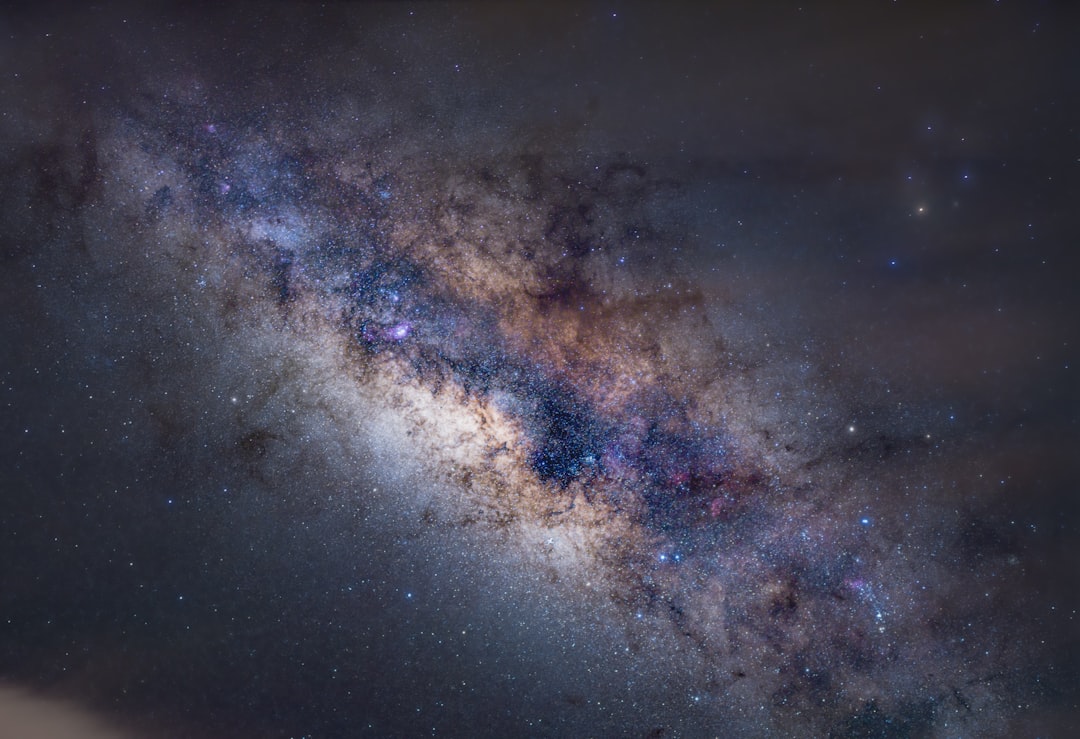
The universe, a canvas of unimaginable scale, is painted with billions of galaxies, each a swirling metropolis of stars. Yet, for all the luminous grandeur we observe, a disquieting silence echoes from the cosmic outskirts. This silence speaks of a profound puzzle, a mystery that gnaws at the very foundations of our understanding of galaxy formation and evolution: the missing dwarf galaxy problem. It is a cosmic riddle where the expected number of smaller stellar systems around larger ones simply does not match the observed reality.
Galaxies, the grand architects of the visible universe, are not solitary entities. They are social beings, often found in clusters and groups, orbiting each other like celestial dancers. Surrounding the colossal cities of stars that are massive galaxies, astronomers expect to find a multitude of smaller, fainter companions – dwarf galaxies. These diminutive stellar systems, containing anywhere from a few thousand to a few billion stars, are thought to be the building blocks, the primordial sand grains, from which larger galaxies coalesced over cosmic time.
Defining the Galactic Family Tree
The prevailing cosmological model, known as the Lambda Cold Dark Matter ($\Lambda$CDM) model, provides a robust framework for understanding the universe’s large-scale structure. This model posits that the universe is dominated by dark matter, an invisible substance that provides the gravitational scaffolding for the formation of all structures, from the smallest galaxies to the largest cosmic webs. Within this framework, the formation of galaxies is envisioned as a hierarchical process: small dark matter halos form first, then merge over billions of years to create larger and larger halos, within which galaxies subsequently form.
Dwarf Galaxies: The Unsung Architects
Dwarf galaxies, therefore, represent the initial, smaller lumps of matter that are predicted by $\Lambda$CDM. They are the seeds from which larger galaxies, like our own Milky Way, are believed to have grown. Their study offers a unique window into the early universe and the fundamental processes of galaxy formation. Imagine them as the first bricks laid in the construction of a colossal edifice; without them, the final structure would not exist.
The missing dwarf galaxy problem in astronomy has sparked significant interest among researchers, as it challenges our understanding of dark matter and galaxy formation. A related article that delves deeper into this intriguing issue can be found at My Cosmic Ventures, where the authors explore recent discoveries and theories that aim to explain the absence of these small galaxies in our observations. This article provides valuable insights into the ongoing debates and potential resolutions surrounding the missing dwarf galaxy problem.
The Discrepancy: Where Are All the Dwarf Galaxies?
When astronomers turn their observational instruments towards the halos of large galaxies, they expect to find a veritable swarm of these smaller galactic siblings. However, the numbers simply do not add up. This is the essence of the missing dwarf galaxy problem. The observations systematically reveal far fewer dwarf galaxies orbiting massive galaxies than the $\Lambda$CDM model predicts. This discrepancy is not a minor ripple; it is a significant gulf between theoretical expectation and empirical reality.
Predictions from Cosmological Simulations
Cosmological simulations, powered by immense supercomputers, are the astronomers’ virtual laboratories. They run millions of realizations of the universe, guided by the laws of physics and the parameters of the $\Lambda$CDM model, to predict how structures should form and evolve. These simulations consistently churn out a much larger population of dark matter halos of all sizes compared to the luminous matter (stars and gas) observed within them. If every dark matter halo is a potential home for a galaxy, then the universe should be teeming with galaxies of all sizes.
Observational Challenges: The Faintness of Dwarf Galaxies
The primary challenge in resolving this discrepancy lies in the inherent faintness of dwarf galaxies. They are the cosmic equivalent of fireflies in a vast, star-studded night sky; their faint glow is easily obscured by the brilliance of their larger neighbors. Detecting these elusive systems requires incredibly sensitive telescopes and sophisticated observation techniques. Much of the visible universe’s light is concentrated in brighter, more massive galaxies, making the faint whispers of dwarf galaxies difficult to discern.
Potential Explanations: Unraveling the Cosmic Thread
The missing dwarf galaxy problem has spurred a vigorous debate within the astronomical community, leading to a variety of proposed solutions. These explanations can broadly be categorized into challenges to the $\Lambda$CDM model itself, or modifications to our understanding of how galaxies form within the predicted framework.
Stellar Feedback: The Internal Struggle of Galaxies
One prominent class of explanations centers on the concept of stellar feedback. This refers to the energetic processes within galaxies that can influence the formation and survival of stars. Massive stars, particularly during their explosive deaths as supernovae, inject vast amounts of energy and heavy elements into their surroundings. This feedback can heat and expel gas from small dark matter halos, thus preventing the formation of stars, and consequently, visible dwarf galaxies.
Supernova Feedback: The Explosive Birth Control
Supernovae are the cataclysmic explosions of stars at the end of their lives. These events release tremendous amounts of energy, which can create powerful shockwaves that push gas out of the shallow gravitational potential wells of small dark matter halos. Imagine a gentle breeze easily dispersing a handful of dandelion seeds; the explosive blast of a supernova is far more potent, capable of scattering the gas required for star formation.
AGN Feedback: The Central Engine’s Influence
Another form of feedback comes from active galactic nuclei (AGN), the supermassive black holes at the centers of many galaxies. As matter falls into these black holes, it can generate intense radiation and powerful jets, which can heat and even eject gas from the host galaxy and its surrounding halo. This “AGN feedback” can effectively sterilize entire regions, preventing the birth of new stars and thus luminous dwarf galaxies.
Baryonic Physics: The Nuances of Ordinary Matter
Beyond dark matter, ordinary matter (baryons) plays a crucial role in galaxy formation. The complex interplay of gas dynamics, cooling processes, and star formation rates within these baryons can significantly influence the number and type of galaxies that form. Subtle inaccuracies in our modeling of these baryonic processes could be at the heart of the discrepancy.
Gas Cooling and Star Formation Efficiency
The efficiency with which gas cools and collapses to form stars is a critical factor. In small halos, the gravitational pull is weak, making it harder for gas to overcome thermal pressure and cool sufficiently to form stars. If our models overestimate this cooling efficiency, we would predict more star formation and thus more visible dwarf galaxies than actually exist.
Reionization: The Cosmic Dawn’s Sterilizing Rays
The epoch of reionization, when the first stars and galaxies began to emit ultraviolet radiation that ionized the surrounding neutral hydrogen gas, is another crucial period. This energetic radiation could have heated the gas in small halos, preventing it from cooling and collapsing to form stars, effectively shutting down dwarf galaxy formation in its infancy. Think of it as a cosmic sterilization event, where early light rendered many potential star-forming nurseries inhospitable.
Advanced Observational Techniques: Peeking Through the Cosmic Veil
Overcoming the observational challenges of detecting faint dwarf galaxies has been a driving force behind the development of increasingly sophisticated astronomical instruments and techniques. These advancements are crucial for gathering the data needed to test the various proposed solutions.
Wide-Field Surveys: Mapping the Cosmic Neighborhood
Large-scale sky surveys, employing wide-field cameras and extensive observing time, have been instrumental in cataloging millions of galaxies. By meticulously surveying vast swathes of the sky, astronomers can identify even the faintest of objects, increasing the chances of discovering previously unseen dwarf galaxies. These surveys act like a giant net, cast across the universe to capture the smallest and most elusive cosmic catches.
Spectroscopic Follow-up: Confirming Galactic Identity
Once potential dwarf galaxy candidates are identified through imaging, spectroscopic observations are crucial for confirming their nature and obtaining vital information, such as their distance and radial velocity. Spectroscopy breaks down the light from an object into its constituent wavelengths, revealing its chemical composition and movement. This is akin to taking a fingerprint and a velocity reading of a suspect to confirm their identity and trajectory.
Deep Imaging and Gravitational Lensing: Magnifying the Faint
Extremely deep imaging with powerful telescopes, such as the Hubble Space Telescope and the James Webb Space Telescope, allows astronomers to peer further back in time and at fainter objects. Gravitational lensing, the bending of light by massive objects, can act as a natural cosmic magnifying glass, allowing us to study dwarf galaxies that would otherwise be too faint to detect. This is like using a telescope to zoom in on a distant object, or using a natural lens to amplify its image.
The ongoing mystery surrounding the missing dwarf galaxies has intrigued astronomers for years, as these small celestial bodies are believed to play a crucial role in our understanding of dark matter and galaxy formation. A recent article delves into this issue, exploring potential explanations for their absence and the implications for our cosmic models. For a deeper insight into this fascinating topic, you can read more in the article available at My Cosmic Ventures.
The Future of Dwarf Galaxy Research: Towards a Complete Cosmic Census
| Metric | Description | Observed Value | Predicted Value (ΛCDM Model) | Discrepancy |
|---|---|---|---|---|
| Number of Satellite Galaxies around Milky Way | Count of known dwarf satellite galaxies orbiting the Milky Way | ~60 | ~500 | Observed is ~10 times fewer than predicted |
| Number of Satellite Galaxies around Andromeda | Count of known dwarf satellite galaxies orbiting Andromeda Galaxy | ~50 | ~500 | Observed is ~10 times fewer than predicted |
| Mass Range of Missing Dwarf Galaxies | Typical dark matter halo mass of predicted but undetected dwarfs | 10^7 to 10^9 solar masses | 10^7 to 10^9 solar masses | Consistent mass range but missing observational counterparts |
| Velocity Dispersion of Known Dwarfs | Typical internal velocity dispersion of observed dwarf galaxies | 5 to 15 km/s | Predicted similar values | No significant discrepancy |
| Star Formation Rate in Dwarf Galaxies | Average star formation rate in observed dwarfs | Very low to negligible | Predicted to be suppressed by reionization and feedback | Consistent with models |
| Dark Matter Halo Abundance | Number of low-mass dark matter halos predicted by simulations | Not directly observable | ~500 halos above 10^7 solar masses within Milky Way halo | Significant overprediction compared to luminous dwarfs |
The missing dwarf galaxy problem remains an active and exciting area of research. The ongoing development of new telescopes and observational strategies promises to shed further light on this fundamental mystery. Resolving this discrepancy will not only refine our understanding of galaxy formation but also provide crucial insights into the nature
FAQs
What is the missing dwarf galaxy problem in astronomy?
The missing dwarf galaxy problem refers to the discrepancy between the large number of small satellite galaxies predicted by cosmological simulations around larger galaxies, like the Milky Way, and the significantly fewer dwarf galaxies actually observed.
Why do simulations predict more dwarf galaxies than we observe?
Simulations based on the cold dark matter model predict that many small dark matter halos should form around larger galaxies. These halos are expected to host dwarf galaxies, but many of these predicted satellites are not detected, leading to the missing dwarf galaxy problem.
What are some possible explanations for the missing dwarf galaxies?
Possible explanations include that many dwarf galaxies are too faint or diffuse to be detected with current telescopes, that star formation in small halos was suppressed by cosmic reionization or feedback processes, or that some dark matter halos do not contain visible galaxies at all.
How do astronomers search for missing dwarf galaxies?
Astronomers use deep sky surveys, such as the Sloan Digital Sky Survey (SDSS) and the Dark Energy Survey (DES), to look for faint, low-luminosity dwarf galaxies. They also use advanced telescopes and techniques to detect stellar streams and other indirect evidence of dwarf galaxies.
What is the significance of solving the missing dwarf galaxy problem?
Resolving this problem helps improve our understanding of galaxy formation, the nature of dark matter, and the evolution of the universe. It also tests the accuracy of cosmological models and simulations used in modern astrophysics.