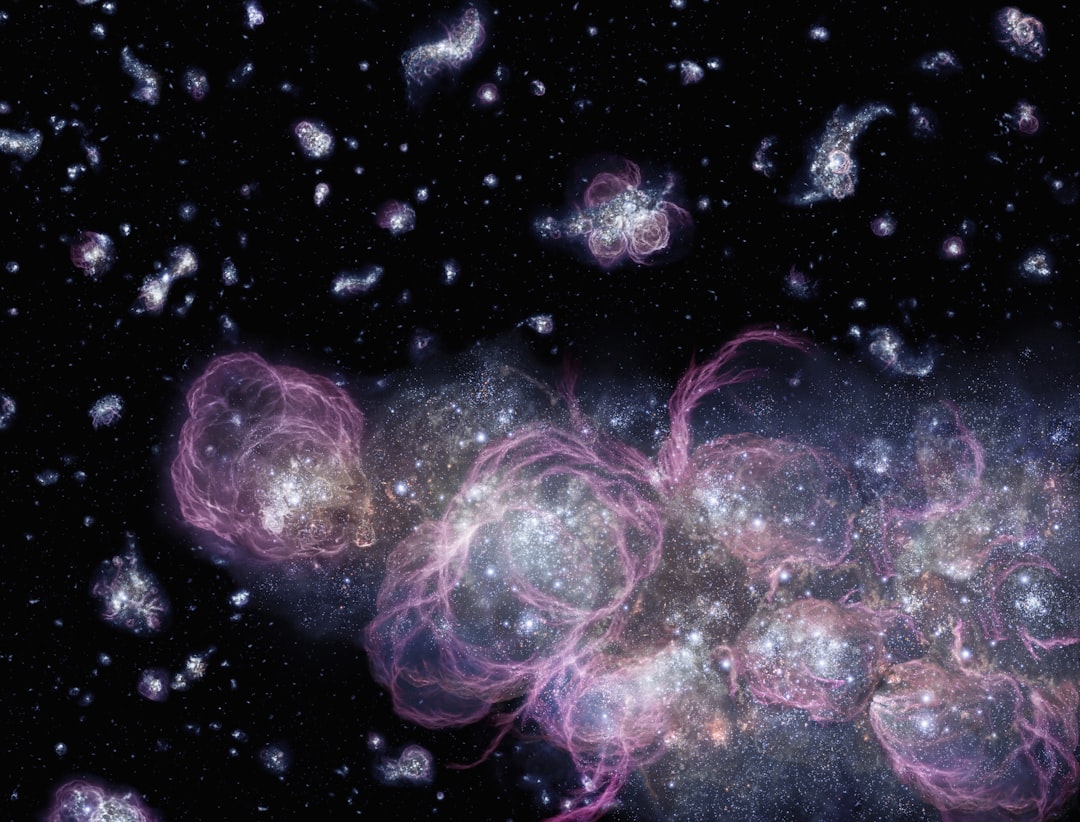
In the realm of cosmology, the W parameter plays a pivotal role in understanding the dynamics of the universe’s expansion. This parameter, often denoted as \( w \), is integral to the equation of state for dark energy, which is believed to constitute a significant portion of the universe’s total energy density. As cosmologists strive to unravel the mysteries of the cosmos, the W parameter serves as a crucial tool in characterizing the behavior of dark energy and its influence on cosmic evolution.
The significance of this parameter extends beyond mere theoretical constructs; it has profound implications for the fate of the universe itself.
In simpler terms, it quantifies how different forms of energy contribute to the universe’s expansion.
For instance, a W value of -1 corresponds to a cosmological constant, while values less than -1 suggest exotic forms of dark energy that could lead to accelerated expansion. Understanding this parameter is essential for cosmologists as they seek to piece together the puzzle of cosmic acceleration and the ultimate fate of the universe.
Key Takeaways
- The W parameter in cosmology is a key factor in understanding the nature of dark energy and its impact on the expansion of the universe.
- Theoretical background of the W parameter involves its role in the equation of state for dark energy and its connection to the cosmological constant.
- Observational constraints on the W parameter come from various cosmological probes such as supernovae, cosmic microwave background radiation, and baryon acoustic oscillations.
- Dark energy and the W parameter are closely linked, with the W parameter determining the behavior of dark energy and its influence on the universe’s expansion.
- The equation of state for dark energy, represented by the W parameter, provides crucial insights into the dynamics of the universe and its future evolution.
Theoretical Background of the W Parameter
The theoretical foundation of the W parameter is rooted in Einstein’s general theory of relativity, which describes how matter and energy influence the curvature of spacetime. In this framework, the universe’s expansion can be modeled using the Friedmann equations, which relate the scale factor of the universe to its energy content. The W parameter emerges from these equations as a critical component in describing how different forms of energy behave under cosmic expansion.
In particular, dark energy, which is thought to drive the accelerated expansion of the universe, is characterized by its equation of state. This equation relates pressure and energy density, and it is here that the W parameter becomes essential. By examining various cosmological models, researchers can derive different values for \( w \), each corresponding to distinct physical scenarios.
For example, a value of \( w = 0 \) indicates a matter-dominated universe, while \( w = -1 \) suggests a universe dominated by a cosmological constant. The exploration of these theoretical frameworks allows scientists to probe deeper into the nature of dark energy and its role in shaping cosmic history.
Observational Constraints on the W Parameter
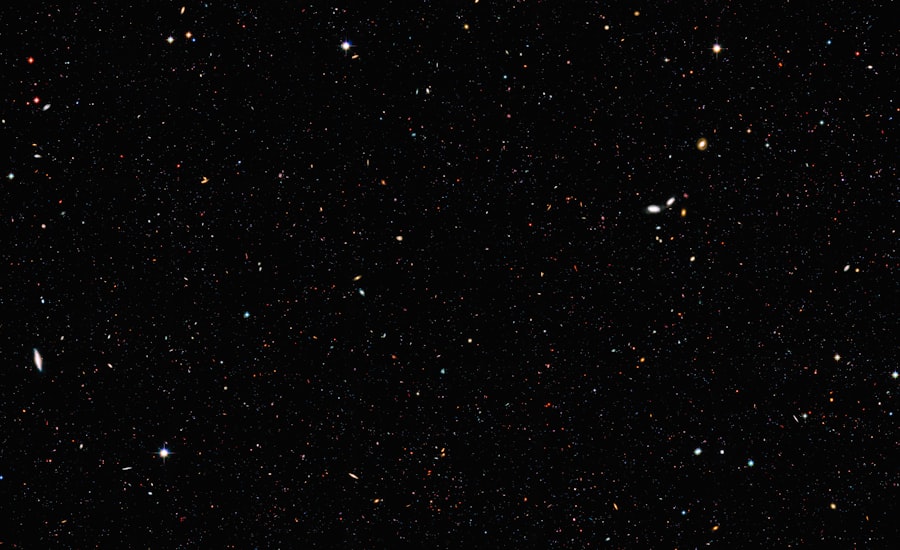
Observational data plays a crucial role in constraining the W parameter and refining our understanding of dark energy. Various astronomical observations, such as Type Ia supernovae, cosmic microwave background radiation, and large-scale structure surveys, provide valuable insights into the expansion history of the universe. By analyzing these data sets, cosmologists can derive constraints on the value of \( w \) and assess its implications for cosmic evolution.
One of the most significant contributions to this field has come from observations of distant supernovae, which serve as standard candles for measuring cosmic distances. These observations have revealed that the universe is not only expanding but doing so at an accelerating rate. By fitting models to this data, researchers have been able to estimate the W parameter with increasing precision.
Additionally, measurements from the cosmic microwave background have provided complementary constraints, allowing for a more comprehensive understanding of dark energy’s role in cosmic dynamics.
Dark Energy and the W Parameter
| Study | Findings |
|---|---|
| Supernova Cosmology Project | Discovered accelerated expansion of the universe |
| WMAP Mission | Estimated dark energy to constitute 68.3% of the universe |
| Planck Mission | Refined W parameter to 0.693 ± 0.012 |
Dark energy is one of the most enigmatic components of modern cosmology, accounting for approximately 68% of the total energy density of the universe. Its existence was first inferred from observations indicating that galaxies are receding from each other at an accelerating pace. The W parameter serves as a critical descriptor for dark energy, encapsulating its effects on cosmic expansion and structure formation.
The nature of dark energy remains one of the most pressing questions in cosmology. While a cosmological constant with \( w = -1 \) is a leading candidate, alternative models propose varying values for \( w \). These include quintessence models with \( w > -1 \) and phantom energy models with \( w < -1 \).
Each scenario presents unique implications for cosmic evolution and structure formation, making it imperative for researchers to explore these possibilities through both theoretical modeling and observational data.
The Equation of State for Dark Energy
The equation of state for dark energy is fundamentally linked to the W parameter, providing a mathematical framework for understanding how dark energy influences cosmic dynamics. This equation relates pressure \( p \) and energy density \( \rho \) through the relationship \( p = w \rho \). The value of \( w \) determines how dark energy behaves under different conditions and influences the rate at which the universe expands.
For instance, if \( w = -1 \), dark energy behaves like a cosmological constant, leading to a uniform acceleration in cosmic expansion. Conversely, if \( w > -1 \), dark energy may exhibit dynamic properties that could change over time, potentially leading to different expansion scenarios. Understanding this equation is crucial for predicting future cosmic behavior and assessing how various forms of dark energy might evolve over time.
Cosmological Implications of the W Parameter
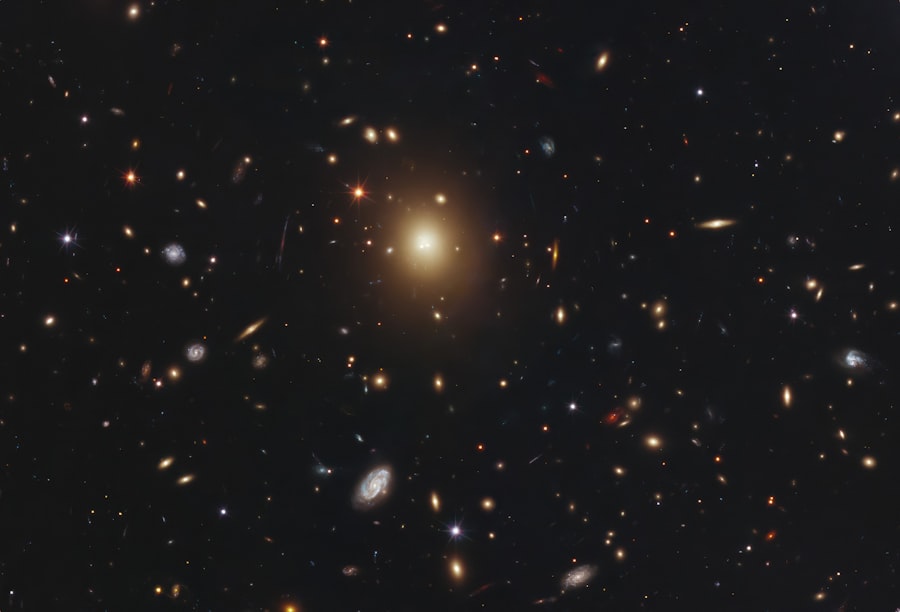
The implications of the W parameter extend far beyond theoretical considerations; they have profound consequences for our understanding of the universe’s fate. Depending on its value, \( w \) can dictate whether the universe will continue expanding indefinitely, eventually collapse in a “big crunch,” or reach a stable state. For example, if \( w < -1 \), it could lead to scenarios where dark energy becomes increasingly dominant over time, resulting in an accelerated expansion that drives galaxies apart at an ever-increasing rate. Moreover, variations in \( w \) can influence structure formation within the universe. A lower value may suppress structure formation due to rapid expansion, while higher values could allow for more clustering of matter. These dynamics are essential for understanding not only the large-scale structure we observe today but also how galaxies and clusters formed in the early universe.
Current Research and Developments in Understanding the W Parameter
As research into cosmology progresses, scientists are continually refining their understanding of the W parameter through innovative observational techniques and theoretical advancements. Current studies focus on gathering more precise measurements from various astronomical sources, including galaxy surveys and gravitational wave observations. These efforts aim to tighten constraints on \( w \) and explore its potential variations over time.
Additionally, advancements in technology have enabled researchers to probe deeper into cosmic history than ever before.
This wealth of information will be instrumental in further constraining the W parameter and enhancing our understanding of dark energy’s role in shaping the universe.
Challenges and Controversies in Determining the W Parameter
Despite significant progress in understanding the W parameter, challenges and controversies persist within the field. One major issue lies in reconciling different observational data sets that yield varying constraints on \( w \). For instance, measurements from supernovae may suggest one value for \( w \), while cosmic microwave background observations indicate another.
This discrepancy raises questions about systematic errors or underlying assumptions in cosmological models. Furthermore, theoretical uncertainties surrounding dark energy complicate efforts to pin down \( w \). The existence of alternative models—such as modified gravity theories or additional fields—adds layers of complexity that can obscure interpretations of observational data.
As researchers continue to grapple with these challenges, ongoing dialogue within the scientific community remains essential for advancing our understanding of this fundamental parameter.
The Role of the W Parameter in Cosmological Models
The W parameter serves as a cornerstone in various cosmological models that seek to explain the observed phenomena in our universe. From standard Lambda Cold Dark Matter (\( \Lambda CDM \)) models to more exotic frameworks involving dynamic dark energy or modified gravity theories, \( w \) plays a crucial role in determining how these models behave under different conditions. In particular, cosmological simulations that incorporate varying values for \( w \) can yield insights into how structures form and evolve over time.
By exploring different scenarios through simulations, researchers can assess how well these models align with observational data and refine their predictions about future cosmic behavior.
Future Prospects for Understanding the W Parameter
Looking ahead, future prospects for understanding the W parameter are promising as new technologies and methodologies emerge within astrophysics and cosmology. The next generation of telescopes and observational instruments will enable scientists to gather more detailed data on distant galaxies and cosmic structures than ever before. This influx of information will be crucial for refining constraints on \( w \) and exploring its potential variations across cosmic time.
Moreover, interdisciplinary collaborations between theorists and observational astronomers will likely yield innovative approaches to tackling unresolved questions surrounding dark energy and its equation of state. As researchers continue to push boundaries in both theoretical modeling and observational techniques, they will be better equipped to unravel the complexities surrounding the W parameter and its implications for our understanding of the universe.
Conclusion and Implications for Cosmology
In conclusion, the W parameter stands as a fundamental aspect of modern cosmology, encapsulating critical insights into dark energy’s role in shaping our universe’s expansion history. Its implications extend far beyond theoretical constructs; they influence our understanding of cosmic fate and structure formation. As researchers continue to refine their measurements and explore new theoretical frameworks, they inch closer to unraveling one of cosmology’s most profound mysteries.
The ongoing quest to understand the W parameter not only enhances our knowledge of dark energy but also deepens our appreciation for the intricate tapestry that constitutes our universe. With each new discovery and advancement in technology, scientists move closer to answering fundamental questions about existence itself—questions that have captivated humanity for centuries. As we stand on the brink of new discoveries in cosmology, one thing remains clear: understanding the W parameter will be key to unlocking some of the deepest secrets hidden within our cosmos.
To gain a deeper understanding of the w parameter in cosmology, which is crucial for characterizing the equation of state of dark energy, you might find it helpful to explore related resources that delve into the intricacies of cosmic expansion and dark energy models. One such resource is an article available on My Cosmic Ventures, which provides insights into the theoretical underpinnings and observational evidence related to the w parameter. For more detailed information, you can visit the article by following this link. This article offers a comprehensive overview that can enhance your grasp of how the w parameter influences our understanding of the universe’s accelerated expansion.
WATCH THIS!🚀 The DESI Shockwave: Dark Energy is NOT Constant🚀🚀
FAQs
What is the w parameter in cosmology?
The w parameter in cosmology is a measure of the equation of state of dark energy, which is the mysterious force driving the accelerated expansion of the universe.
How is the w parameter related to dark energy?
The w parameter is related to dark energy through its equation of state, which describes the relationship between the pressure and energy density of dark energy. A w value of -1 corresponds to a cosmological constant, while w values different from -1 indicate the presence of a dynamic dark energy component.
What does the w parameter tell us about the fate of the universe?
The value of the w parameter can provide insights into the ultimate fate of the universe. A w value of less than -1/3 indicates that the universe will continue to expand forever, while a w value greater than -1/3 suggests that the universe may eventually stop expanding and start contracting.
How is the w parameter determined in cosmological studies?
The w parameter is determined through observations of the cosmic microwave background, large-scale structure of the universe, and supernova measurements. These observations provide constraints on the behavior of dark energy and allow for the estimation of the w parameter.
What are the implications of different w parameter values for cosmology?
Different values of the w parameter have significant implications for the evolution and fate of the universe. Understanding the w parameter is crucial for refining our understanding of the fundamental properties of dark energy and its impact on the large-scale structure of the universe.