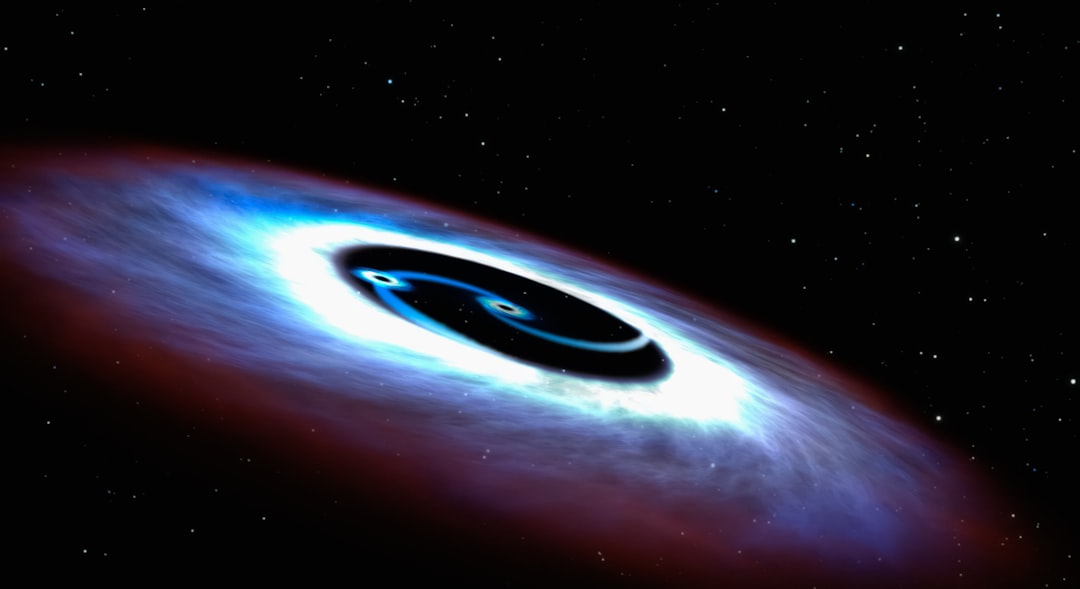
Rogue black holes are enigmatic celestial objects that wander through the cosmos, unbound by the gravitational pull of any galaxy. Unlike their more familiar counterparts, which reside at the centers of galaxies, rogue black holes drift freely in intergalactic space. These black holes can vary significantly in size, ranging from stellar black holes, formed from the remnants of massive stars, to supermassive black holes, which can contain millions or even billions of solar masses.
The existence of rogue black holes challenges traditional notions of how black holes are formed and interact with their environments. While many black holes are thought to form through the collapse of massive stars, rogue black holes may have originated from different processes, such as the merging of smaller black holes or the ejection from their host galaxies due to gravitational interactions.
This unique behavior raises intriguing questions about the dynamics of black holes and their influence on the universe at large.
Key Takeaways
- Rogue black holes are black holes that have been ejected from their original galaxies and are now wandering through space.
- There are several theories on how rogue black holes are formed, including through the merging of smaller black holes or through interactions with other massive objects.
- Detecting rogue black holes in the universe is challenging due to their lack of a visible companion star or accretion disk.
- Rogue black holes can have a significant impact on their surroundings, disrupting nearby stars and potentially influencing the formation of new stars.
- The role of rogue black holes in the evolution of galaxies is still not fully understood, but they may play a role in shaping the structure of galaxies over time.
Theories on the Formation of Rogue Black Holes
Several theories have been proposed to explain the formation of rogue black holes, each offering a different perspective on how these solitary giants come into existence. One prominent theory suggests that rogue black holes can form from the remnants of massive stars that undergo supernova explosions. In certain cases, these stars may be ejected from their host galaxies during violent interactions with other stars or black holes, leading to their isolation in intergalactic space.
This process highlights the chaotic nature of stellar evolution and the complex gravitational interactions that can occur in dense stellar environments. Another theory posits that rogue black holes may result from the merger of smaller black holes. When two black holes collide, they can release an immense amount of energy and momentum, potentially propelling one or both of them away from their original location.
This scenario is particularly relevant in dense star clusters, where gravitational interactions are frequent and can lead to the ejection of black holes at high velocities.
Detecting Rogue Black Holes in the Universe
Detecting rogue black holes presents a significant challenge for astronomers due to their elusive nature and lack of visible light emissions. Unlike stars or galaxies, rogue black holes do not emit light on their own; instead, they can only be inferred through their gravitational effects on nearby matter. One method employed by astronomers involves observing the motion of stars and gas clouds in close proximity to suspected rogue black holes.
By analyzing these movements, scientists can estimate the mass and location of the hidden black hole. Another promising approach for detecting rogue black holes involves gravitational wave astronomy. When two black holes merge, they produce ripples in spacetime known as gravitational waves.
These waves can be detected by observatories such as LIGO and Virgo, providing valuable information about the properties of the merging black holes. As more gravitational wave events are cataloged, researchers hope to identify signatures that indicate the presence of rogue black holes and gain insights into their formation and distribution throughout the universe.
The Impact of Rogue Black Holes on their Surroundings
| Aspect | Impact |
|---|---|
| Gravitational Pull | Disrupts orbits of nearby stars and planets |
| Accretion Disk | Emits high-energy radiation and jets |
| Galactic Evolution | Alters the structure and dynamics of host galaxies |
| Star Formation | Suppresses or triggers the formation of new stars |
Rogue black holes exert a profound influence on their surroundings, shaping the dynamics of nearby stars and gas clouds. Their immense gravitational pull can disrupt the orbits of stars, causing them to be flung into different trajectories or even ejected from their systems entirely. This gravitational interaction can lead to a cascade of effects within star clusters or galactic neighborhoods, altering the overall structure and behavior of these regions.
Moreover, rogue black holes can also affect the interstellar medium by pulling in gas and dust from their surroundings. As matter spirals into a black hole, it forms an accretion disk that heats up and emits radiation across various wavelengths, including X-rays. This process not only contributes to our understanding of black hole physics but also influences star formation rates in nearby regions.
The energy released during accretion can trigger shock waves that compress gas clouds, potentially leading to new star formation or altering existing stellar populations.
The Role of Rogue Black Holes in the Evolution of Galaxies
Rogue black holes may play a significant role in the evolution of galaxies over cosmic timescales. Their presence can influence the distribution and dynamics of stars within galaxies, particularly in regions where gravitational interactions are prevalent. For instance, when a rogue black hole passes through a galaxy, it can perturb the orbits of stars and gas clouds, leading to changes in star formation rates and galactic structure.
Additionally, rogue black holes may contribute to the growth and evolution of supermassive black holes at the centers of galaxies. As these wandering giants encounter other black holes or stellar systems, they may merge with them or capture them through gravitational interactions. This process could lead to an increase in mass for central supermassive black holes, ultimately affecting the overall dynamics and evolution of their host galaxies.
The Search for Rogue Black Holes in the Milky Way
The search for rogue black holes within our own Milky Way galaxy has become a focal point for astronomers seeking to understand these elusive objects better. Various observational campaigns have been launched to identify potential candidates for rogue black holes based on their gravitational effects on nearby stars and gas clouds. By studying regions with high stellar density, such as globular clusters or areas near the galactic center, researchers hope to uncover evidence of these wandering giants.
One promising avenue for detection involves monitoring the motion of stars around suspected rogue black holes using advanced telescopes equipped with high-resolution imaging capabilities. By tracking the orbits of these stars over time, astronomers can infer the presence and mass of an unseen black hole based on its gravitational influence. As technology continues to advance, the prospects for identifying rogue black holes within our galaxy become increasingly promising.
The Connection Between Rogue Black Holes and Gravitational Waves
The study of gravitational waves has opened new avenues for understanding rogue black holes and their interactions with other celestial objects. When two black holes merge, they produce gravitational waves that carry information about their masses, spins, and distances from Earth. These waves provide a unique opportunity to detect events involving rogue black holes that might otherwise go unnoticed through traditional observational methods.
As gravitational wave observatories continue to operate and improve their sensitivity, researchers anticipate discovering more events involving rogue black holes. Each detection adds to our understanding of how these objects form and evolve over time. Furthermore, analyzing gravitational wave signals from mergers involving rogue black holes could shed light on their population distribution and help refine models of cosmic evolution.
How Rogue Black Holes Challenge Our Understanding of the Universe
Rogue black holes challenge existing paradigms in astrophysics and cosmology by raising fundamental questions about the nature of gravity, dark matter, and cosmic evolution. Their existence suggests that our understanding of how galaxies form and evolve may be incomplete, as these wandering giants could significantly influence galactic dynamics in ways not yet fully understood. Moreover, rogue black holes challenge conventional theories regarding the distribution of matter in the universe.
If a substantial population of rogue black holes exists within intergalactic space, it could have implications for our understanding of dark matter and its role in shaping cosmic structures. As researchers continue to investigate these enigmatic objects, they may uncover new insights that reshape our comprehension of fundamental astrophysical processes.
The Potential Threat of Rogue Black Holes to Earth
While rogue black holes are fascinating objects that contribute to our understanding of the universe, they also pose potential threats to Earth and other celestial bodies. If a rogue black hole were to pass through our solar system at close range, its immense gravitational pull could disrupt planetary orbits and lead to catastrophic consequences for life on Earth. However, it is essential to note that such scenarios are exceedingly rare due to the vastness of space and the relatively low density of rogue black holes compared to other celestial objects.
Nevertheless, scientists continue to study these phenomena to assess any potential risks associated with rogue black holes and understand how they might impact our solar system’s stability over long timescales.
The Future of Studying Rogue Black Holes
The future of studying rogue black holes looks promising as advancements in technology and observational techniques continue to evolve. Next-generation telescopes equipped with enhanced imaging capabilities will enable astronomers to probe deeper into intergalactic space and identify potential candidates for rogue black holes more effectively. Additionally, ongoing developments in gravitational wave astronomy will provide unprecedented opportunities for detecting mergers involving rogue black holes.
As more data becomes available from gravitational wave observatories, researchers will be able to refine models related to their formation and distribution while gaining insights into their role within cosmic evolution.
Unanswered Questions About Rogue Black Holes
Despite significant progress in understanding rogue black holes, many unanswered questions remain regarding their nature and behavior. For instance, researchers are still investigating how many rogue black holes exist within our galaxy and beyond and what factors influence their formation and ejection from host galaxies. Furthermore, questions surrounding their impact on star formation rates and galactic evolution persist as scientists seek to unravel the complexities associated with these wandering giants.
As research continues in this field, it is likely that new discoveries will emerge that challenge existing theories and deepen our understanding of these fascinating cosmic phenomena.
Rogue black holes, which are black holes that wander through space without being anchored to a galaxy, have intrigued astronomers for years. To better understand their origins and the mechanisms that lead to their formation, you can explore the article on this topic at Where Do Rogue Black Holes Come From?. This article delves into the various theories and research surrounding these mysterious cosmic entities, shedding light on their potential pathways and the implications for our understanding of the universe.
WATCH THIS! The Invisible Threat: A Rogue Black Hole Headed for Our Solar System?
FAQs
What are rogue black holes?
Rogue black holes, also known as isolated black holes, are black holes that are not bound to any galaxy or star system. They are believed to wander through space on their own.
Where do rogue black holes come from?
Rogue black holes are thought to originate from the remnants of massive stars that have undergone gravitational collapse. These black holes may have been ejected from their original host galaxies due to gravitational interactions with other massive objects.
How are rogue black holes detected?
Rogue black holes are difficult to detect directly because they do not emit light. However, scientists can infer their presence through their gravitational effects on nearby objects, such as stars and gas clouds. They can also be detected through gravitational wave signals.
What are the potential dangers of rogue black holes?
Rogue black holes pose a potential threat to any objects that come too close to them due to their strong gravitational pull. However, the likelihood of a rogue black hole coming close enough to Earth to pose a significant danger is extremely low.
What is the current understanding of the prevalence of rogue black holes in the universe?
The prevalence of rogue black holes in the universe is not well understood, as they are challenging to detect. However, recent studies suggest that there may be a significant population of rogue black holes in the Milky Way galaxy alone. Further research is needed to better understand their prevalence on a larger scale.