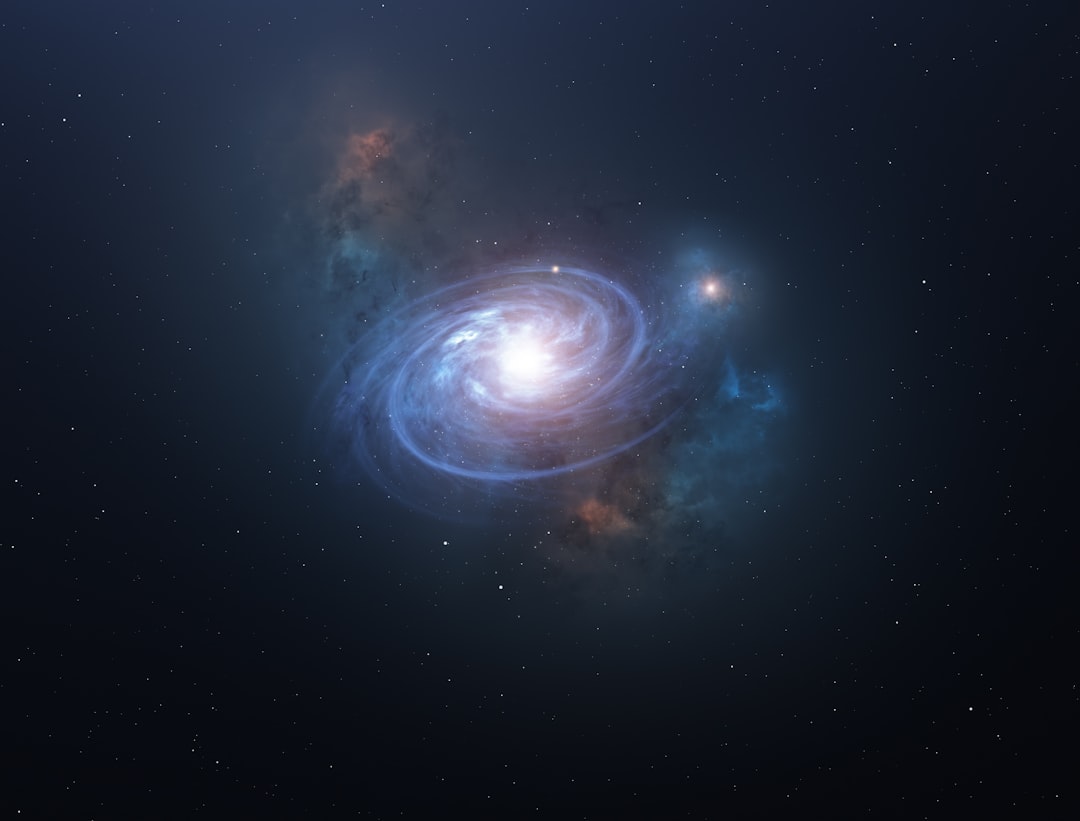
Unraveling the Nemesis Star Theory: Explained
The vast cosmic tapestry, studded with countless stars, has long been a canvas for scientific speculation. Among the most enduring and intriguing of these speculative threads is the Nemesis star theory. This hypothesis posits the existence of a companion star to our Sun, a dark and distant orb whose gravitational influence, it is theorized, could be responsible for a cyclical bombardment of comets from the outer solar system, leading to mass extinction events on Earth. While the evidence remains elusive, the Nemesis star theory offers a compelling narrative for understanding periodic celestial disturbances and the dramatic chapters of life’s history on our planet.
The Nemesis star theory did not emerge from a vacuum. It is a product of meticulous observation and persistent statistical analysis of terrestrial history, particularly the fossil record. Scientists, seeking to explain the apparent periodicity of mass extinction events, found themselves looking beyond Earth for an external trigger.
Early Observations of Extinction Patterns
The concept of periodic extinctions gained traction in the late 20th century. Researchers, notably David Raup and Jack Sepkoski, analyzed the fossil record and identified patterns suggesting that major extinction events were not random occurrences. Their studies indicated a tendency for these cataclysms to happen at regular intervals, roughly every 26 to 30 million years. This observed rhythm, like the ticking of an invisible cosmic clock, demanded an explanation.
The Search for an External Driver
The regularity of these extinctions pointed away from purely terrestrial causes, such as volcanic activity or climate change, which, while significant, did not consistently align with the observed periodicity. The scientific community began to consider external factors that could periodically disrupt the solar system and send an armada of icy bodies hurtling towards the inner planets. Burial of the solar system in galactic dust clouds or passing through dense stellar regions were considered, but these too lacked a consistent temporal echo to match the extinction timeline. This search for a consistent, cyclical trigger led directly to the hypothesis of a solar companion.
The Nemesis star theory, which posits the existence of a companion star to our Sun that could influence the orbit of comets and potentially lead to mass extinction events on Earth, has intrigued astronomers for decades. For a deeper understanding of this hypothesis and its implications for our solar system, you can explore a related article that delves into the evidence and theories surrounding this fascinating concept. Check it out here: My Cosmic Ventures.
The Proposed Mechanism: Galactic Tides and Oort Cloud Perturbations
The Nemesis star theory’s core mechanism revolves around the gravitational ballet between our Sun and its hypothetical companion, and how this dance affects the distant reservoir of comets known as the Oort Cloud.
Introducing the Oort Cloud: A Cosmic Icebox
The Oort Cloud is a theoretical, spherical shell of icy objects thought to surround the solar system at distances of up to 100,000 astronomical units (AU) – that’s nearly a quarter of the way to the nearest star! It is considered the birthplace of long-period comets. These icy bodies, remnants from the formation of the solar system, are primarily held in place by the Sun’s gravity, but are also subject to the subtle tugs of other celestial forces. Think of it as a vast, frozen larder, holding the ingredients for cosmic fireworks.
Gravitational Nudges from a Distant Companion
The Nemesis star theory proposes that the gravitational pull of a distant, unseen companion star, orbiting the Sun at a significant distance, could periodically perturb the Oort Cloud. As Nemesis completes its long orbit – estimated to be between 18 million and 100 million years – its gravitational influence would wax and wane. When Nemesis is at its closest approach to the Sun, its gravitational tugs would be strongest, dislodging comets from their stable orbits within the Oort Cloud.
The Cascade Effect: Triggering Comet Showers
These dislodged comets, once nudged out of their comfort zone, would begin their slow descent towards the inner solar system. The gravity of the planets, particularly Jupiter, would further influence their trajectories. While most would be flung back into deep space or pass harmlessly by, the theory suggests that a statistically significant number would be directed towards Earth. This influx of comets, like a shower of cosmic debris, would then present an increased risk of impact. The frequency of these impacts, according to the theory, would correlate with the orbital period of Nemesis.
The Nature of the Hypothetical Nemesis Star
The characteristics attributed to Nemesis are crucial to the theory’s plausibility, and much of the debate hinges on what kind of star could remain so elusive.
A Dim and Distant Companion
Nemesis is not envisioned as a bright, sun-like star. Instead, it is theorized to be a red dwarf or a brown dwarf. These types of celestial bodies are significantly cooler and dimmer than our Sun, making them inherently difficult to detect, especially at the vast distances required by the theory. A red dwarf is a small, relatively cool star, while a brown dwarf is an object that is more massive than a gas giant but not massive enough to sustain nuclear fusion in its core, placing it in a celestial ‘tween-space’ between planets and stars.
Orbital Characteristics: The Long Dance with the Sun
The proposed orbit of Nemesis is a key element. It is hypothesized to orbit the Sun at a substantial distance, perhaps between 15,000 AU and 100,000 AU. This vast distance means its orbital period would be incredibly long, spanning tens of millions of years. This prolonged orbital cycle is what supposedly aligns with the hypothesized periodicity of mass extinctions on Earth. The twin dance of the Sun and its dark partner, etched across cosmic eons, dictates the tempo of life’s grand cycle.
The Elusive Evidence: Why Haven’t We Found It?
The primary challenge to the Nemesis star theory is the lack of direct observational evidence. Despite extensive sky surveys, no companion star fitting the predicted orbital parameters and characteristics has been definitively identified. This absence of a cosmic fingerprint has led to significant skepticism within the scientific community.
Challenges and Counterarguments to the Nemesis Hypothesis
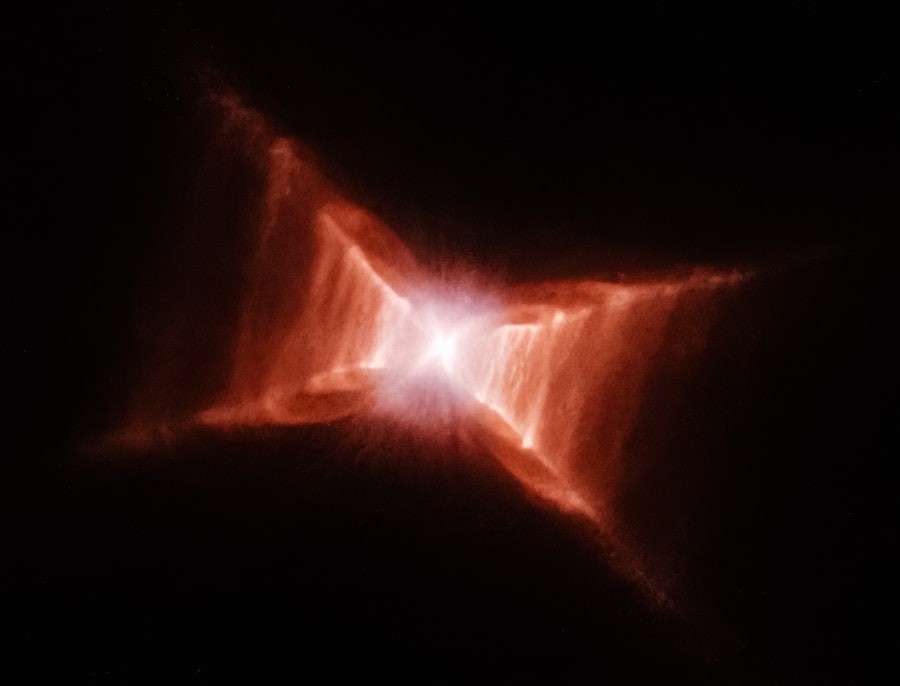
The Nemesis star theory, while elegant in its scope, faces substantial scientific hurdles and has generated considerable debate and alternative explanations.
The Statistical Debate: Is the Periodicity Real?
The very foundation of the Nemesis theory – the claimed periodicity of mass extinctions – has been subject to rigorous statistical scrutiny. Critics argue that the apparent regularity might be an artifact of incomplete fossil records or a result of applying statistical methods to data that are inherently non-uniform. The “cosmic clock” might be, in reality, a more erratic drumbeat.
Alternative Explanations for Extinction Events
Numerous other natural phenomena have been proposed as drivers of mass extinctions, independent of a hypothetical companion star. These include:
- Galactic plane crossings: The idea that as our solar system moves through the denser regions of the Milky Way galaxy, greater gravitational scattering could occur.
- Supernova explosions: The explosive death of nearby stars can release vast amounts of radiation and particles that could impact Earth.
- Large-scale volcanic activity: Massive volcanic eruptions, such as flood basalt events, can drastically alter Earth’s climate and atmosphere.
- Stellar encounters: The possibility of passing stars gravitationally perturbing the Oort Cloud, though less likely to be periodic.
These alternative theories, each with its own supporting evidence, offer explanations that do not require the existence of an unseen celestial partner.
The Difficulty of Detecting Dim Objects
As mentioned, Nemesis is theorized to be a dim object. Detecting such faint bodies at vast distances is a monumental challenge, even with the most advanced astronomical instruments. The sky is a vast ocean, and finding a single, faint shipwreck within it requires immense patience and sophisticated sonar. The ongoing development of more sensitive telescopes and observational techniques continues to push the boundaries of what we can see.
The nemesis star theory, which suggests the existence of a companion star to our Sun that could periodically disturb the Oort cloud and send comets toward Earth, has intrigued astronomers for decades. For those interested in a deeper exploration of this fascinating concept, you can read a related article that delves into the implications and evidence surrounding this theory. Understanding the potential impact of such a celestial body on our planet’s history can provide valuable insights into the dynamics of our solar system. Check out the article here for more information.
The Ongoing Scientific Quest and Future Prospects
| Aspect | Description | Details / Metrics |
|---|---|---|
| Theory Name | Nemesis Star Theory | Hypothetical companion star to the Sun |
| Purpose | Explain periodic mass extinctions on Earth | Suggests Nemesis disturbs Oort cloud comets |
| Orbital Period | Estimated orbit around the Sun | Approximately 26 million years |
| Type of Star | Hypothetical classification | Red dwarf or brown dwarf |
| Distance from Sun | Estimated average distance | About 1.5 light years (approx. 100,000 AU) |
| Evidence | Supporting observations | Periodic extinction patterns; no direct observation yet |
| Criticism | Challenges to the theory | Lack of direct detection; alternative explanations for extinctions |
| Current Status | Scientific consensus | Considered speculative; ongoing searches with infrared surveys |
Despite the challenges, the Nemesis star theory continues to inspire research and fuel astronomical observation. The quest for a definitive answer remains a vibrant area of scientific inquiry.
Current and Future Observational Efforts
Astronomers are continuously surveying the night sky with increasingly powerful telescopes, such as the Gaia spacecraft and various ground-based observatories. These missions are designed to detect faint objects and precisely map the positions and movements of stars, including those in the outer reaches of our solar system’s neighborhood. The hope is that by meticulously cataloging stellar populations and their orbits, an object consistent with Nemesis might eventually be found.
Refinements and Modified Hypotheses
The Nemesis star theory is not a static concept. Scientists continue to refine the parameters of the hypothesized orbit and the characteristics of the potential companion star. Some researchers have explored variations, such as a binary star system where the Sun is part of a larger stellar pairing, which could also influence the Oort Cloud. The theory evolves, adapting to new data and theoretical developments.
The Enduring Appeal of a Cosmic Mystery
The Nemesis star theory, even if ultimately proven incorrect, holds an enduring fascination. It taps into our innate curiosity about the unknown and our desire to find order in complex natural phenomena. Whether a dark companion orbits our Sun or not, the investigation it has spurred has advanced our understanding of stellar dynamics, the Oort Cloud, and the profound interactions that shape our solar system. The search for Nemesis is, in essence, a journey into the vast, silent workings of the cosmos, a reminder that even in our familiar celestial neighborhood, profound mysteries may still lie in wait.
FAQs
What is the Nemesis star theory?
The Nemesis star theory proposes the existence of a hypothetical companion star to our Sun, often described as a red or brown dwarf. This companion is believed to have a long, elliptical orbit that periodically disturbs the Oort cloud, sending comets toward the inner solar system and potentially causing mass extinction events on Earth.
Why was the Nemesis star theory proposed?
The theory was proposed to explain a perceived pattern of mass extinctions on Earth occurring roughly every 26 million years. Scientists hypothesized that a distant companion star could gravitationally disturb cometary bodies in the Oort cloud, increasing the likelihood of comet impacts on Earth and triggering these extinction events.
Has the Nemesis star been observed?
No direct observation of the Nemesis star has been made. Despite extensive searches using infrared and other astronomical surveys, no evidence has been found to confirm the existence of such a companion star to the Sun.
What evidence challenges the Nemesis star theory?
Recent studies and data from space telescopes have not detected any companion star within the predicted parameters. Additionally, the periodicity of mass extinctions is debated, with some scientists arguing that the extinction record does not show a consistent 26-million-year cycle, weakening the basis for the theory.
Is the Nemesis star theory widely accepted in the scientific community?
The Nemesis star theory is considered speculative and remains controversial. While it sparked interest in understanding periodic mass extinctions and solar system dynamics, most astronomers regard it as unlikely due to the lack of observational evidence and alternative explanations for extinction events.