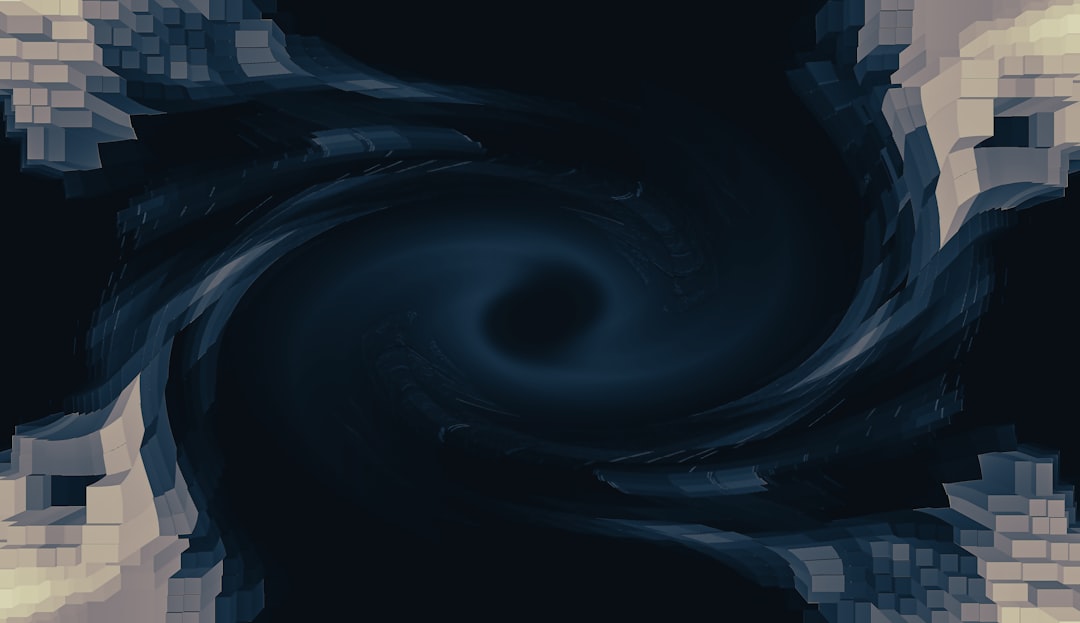
Black holes have long captivated the imagination of scientists and the general public alike. These enigmatic cosmic entities, formed from the remnants of massive stars that have undergone gravitational collapse, possess gravitational fields so intense that nothing, not even light, can escape their grasp. The concept of a black hole challenges the very fabric of our understanding of physics, pushing the boundaries of what is known about the universe.
As researchers delve deeper into the mysteries surrounding these celestial phenomena, they uncover layers of complexity that reveal not only the nature of black holes but also their profound implications for the cosmos. The fascination with black holes extends beyond their scientific significance; they have become a staple of popular culture, appearing in literature, films, and art. This blend of scientific inquiry and cultural representation highlights the dual nature of black holes as both real astronomical objects and symbols of the unknown.
As humanity continues to explore the universe, black holes serve as a reminder of the limits of current knowledge and the potential for future discoveries that could reshape our understanding of reality itself.
Key Takeaways
- Black holes are regions in space with gravitational pull so strong that nothing, not even light, can escape from them.
- The event horizon marks the boundary around a black hole beyond which information cannot return, posing significant observational challenges.
- Recent technological advancements, such as improved telescopes and imaging techniques, have enabled unprecedented observations of black holes.
- The information paradox at the event horizon highlights conflicts between quantum mechanics and general relativity, sparking ongoing scientific debate.
- Understanding black holes is crucial for insights into the universe’s evolution and guides future research directions in astrophysics.
Theoretical Understanding of Black Holes
The theoretical framework surrounding black holes is rooted in Einstein’s General Theory of Relativity, which describes gravity as a curvature of spacetime caused by mass. According to this theory, when a massive star exhausts its nuclear fuel, it can no longer support itself against gravitational collapse. The core implodes, leading to the formation of a singularity—a point of infinite density—surrounded by an event horizon, which marks the boundary beyond which nothing can escape.
This theoretical model has been supported by various astronomical observations, including the detection of gravitational waves from colliding black holes.
The interplay between these two fundamental theories has led to intriguing questions about the nature of reality at extreme scales.
For instance, the concept of Hawking radiation, proposed by physicist Stephen Hawking, suggests that black holes can emit radiation due to quantum effects near the event horizon. This phenomenon implies that black holes are not entirely black; they can lose mass and eventually evaporate over time. Such insights challenge traditional notions of conservation and energy, prompting further exploration into the fundamental laws governing the universe.
The Event Horizon: What We Know

The event horizon is perhaps one of the most intriguing aspects of black holes. It serves as a one-way boundary, beyond which no information or matter can return to the outside universe. This boundary is not a physical surface but rather a mathematical construct that defines the limits of a black hole’s influence.
Once an object crosses this threshold, it is inexorably drawn toward the singularity at the center, where the laws of physics as currently understood cease to function predictably. Understanding the event horizon has significant implications for astrophysics and cosmology. It raises questions about causality and the nature of time itself.
For instance, observers outside a black hole perceive time differently than those who venture too close to its edge. This discrepancy leads to fascinating discussions about how time behaves in extreme gravitational fields and what it means for our understanding of reality. As researchers continue to study these phenomena, they seek to unravel the mysteries surrounding the event horizon and its role in shaping our universe.
Challenges in Studying the Black Hole’s Edge
| Challenge | Description | Impact on Research | Possible Solutions |
|---|---|---|---|
| Extreme Gravitational Forces | Strong gravity near the event horizon distorts space-time and light paths. | Difficulty in obtaining clear observational data and interpreting signals. | Use of advanced simulations and gravitational lensing models. |
| Event Horizon Invisibility | The event horizon itself emits no light, making direct observation impossible. | Researchers must rely on indirect evidence and emissions from surrounding matter. | Observing accretion disks and relativistic jets as proxies. |
| High Energy Radiation | Intense X-rays and gamma rays near the black hole can interfere with instruments. | Instrument damage and noise in data collection. | Development of radiation-hardened sensors and shielding techniques. |
| Distance and Scale | Black holes are extremely far away, making detailed imaging challenging. | Limits resolution and sensitivity of telescopes. | Use of very long baseline interferometry (VLBI) and space-based observatories. |
| Time Dilation Effects | Strong gravitational fields cause time to slow near the event horizon. | Complicates synchronization of observations and interpretation of temporal data. | Incorporation of relativistic corrections in data analysis. |
Studying the edge of a black hole presents numerous challenges for scientists. The extreme gravitational forces at play create an environment that is difficult to observe directly. Traditional telescopes and instruments are often rendered ineffective when attempting to capture data from such intense regions.
Instead, researchers rely on indirect methods, such as observing the effects of a black hole’s gravity on nearby stars and gas clouds. This approach requires sophisticated modeling and simulations to interpret the data accurately. Moreover, the event horizon itself poses a unique challenge: it is inherently elusive.
As light cannot escape from within this boundary, any information about what lies beyond remains forever hidden from view. This limitation raises philosophical questions about knowledge and observation in science. How can one study something that cannot be seen?
Researchers must navigate these complexities while developing innovative techniques to probe the mysteries surrounding black holes and their edges.
Recent Breakthroughs in Black Hole Research
Recent advancements in technology and observational techniques have led to significant breakthroughs in black hole research. One notable achievement was the first-ever image of a black hole’s event horizon captured by the Event Horizon Telescope (EHT) in 2019. This groundbreaking image provided direct visual evidence of a supermassive black hole located at the center of the galaxy M87, marking a monumental milestone in astrophysics.
The EHT’s ability to combine data from multiple radio telescopes around the world allowed scientists to achieve unprecedented resolution and clarity.
The Laser Interferometer Gravitational-Wave Observatory (LIGO) has detected several instances of these waves, providing valuable insights into the properties and behaviors of black holes.
Each detection not only confirms theoretical predictions but also opens new avenues for exploration, allowing scientists to probe deeper into the nature of these enigmatic objects.
The Role of Technology in Observing Black Holes
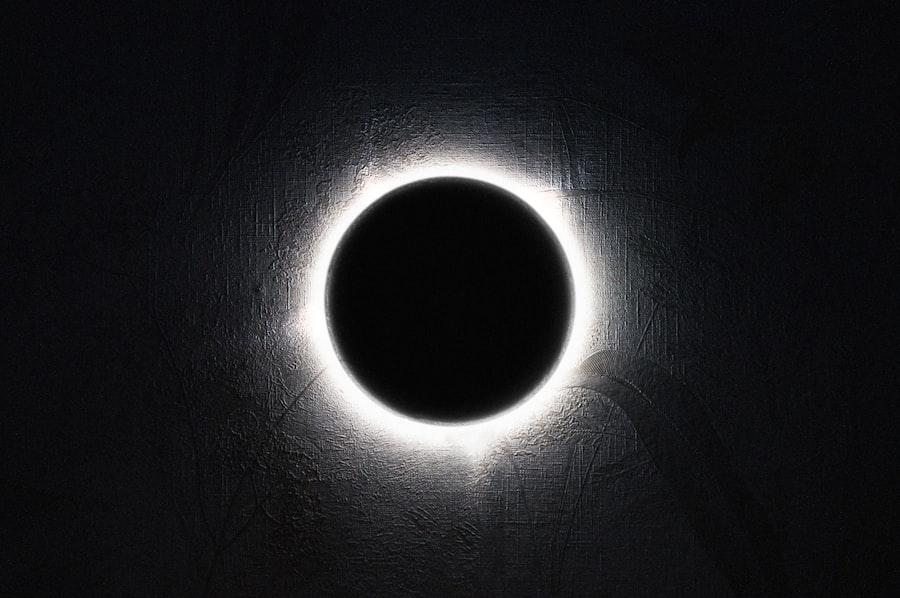
The role of technology in observing black holes cannot be overstated. Advances in instrumentation and computational power have revolutionized how scientists study these cosmic phenomena. High-resolution telescopes equipped with adaptive optics enable astronomers to observe distant galaxies with remarkable clarity, revealing details about their central black holes and surrounding environments.
Additionally, space-based observatories like the Hubble Space Telescope provide invaluable data free from atmospheric interference. Computational simulations also play a crucial role in understanding black holes. Researchers use sophisticated algorithms to model complex interactions between matter and gravity near a black hole’s event horizon.
These simulations help predict observable phenomena and guide observational campaigns, allowing scientists to test their theories against real-world data. As technology continues to evolve, it promises to unlock even more secrets about black holes and their impact on the universe.
The Debate on Information Paradox at the Edge of Black Holes
One of the most contentious issues in theoretical physics is the information paradox associated with black holes. This paradox arises from the apparent conflict between quantum mechanics and general relativity regarding what happens to information when it falls into a black hole. According to quantum theory, information cannot be destroyed; however, if something crosses the event horizon, it seems to vanish from existence entirely.
This dilemma has sparked intense debate among physicists, leading to various proposed solutions. Some theorists suggest that information may be preserved in some form at or near the event horizon, while others argue for radical revisions to our understanding of spacetime itself. The implications of resolving this paradox extend beyond black holes; they touch upon fundamental questions about reality, causality, and the nature of information in the universe.
Black Holes and Quantum Mechanics
The intersection of black holes and quantum mechanics presents a rich field for exploration. Quantum mechanics governs the behavior of particles at microscopic scales, while general relativity describes gravity at macroscopic scales. Reconciling these two frameworks has proven challenging but essential for understanding phenomena like black holes.
One intriguing aspect is Hawking radiation, which suggests that black holes can emit particles due to quantum fluctuations near their event horizons. This process implies that black holes are not entirely isolated systems; they interact with their surroundings in ways that challenge classical notions of thermodynamics and entropy. As researchers delve deeper into this relationship between black holes and quantum mechanics, they hope to uncover new insights that could lead to a unified theory encompassing both realms.
The Connection Between Black Holes and the Universe’s Evolution
Black holes play a pivotal role in shaping the evolution of galaxies and the universe as a whole. Supermassive black holes are often found at the centers of galaxies, influencing their formation and growth through gravitational interactions with surrounding matter. These interactions can trigger star formation or inhibit it by expelling gas from galaxies through powerful jets emitted by accreting material.
Furthermore, studies suggest that black holes may be linked to cosmic events such as galaxy mergers and large-scale structure formation. Understanding how these massive objects interact with their environments provides valuable insights into the history and evolution of the universe itself. As researchers continue to investigate these connections, they uncover a more intricate picture of how black holes influence cosmic dynamics over vast timescales.
Implications of Understanding the Black Hole’s Edge
Gaining a deeper understanding of black holes and their edges carries profound implications for both theoretical physics and our comprehension of reality itself. Insights into phenomena like Hawking radiation could reshape fundamental principles governing energy conservation and information transfer in quantum systems. Moreover, resolving debates surrounding the information paradox may lead to breakthroughs in unifying general relativity with quantum mechanics—an endeavor that has eluded physicists for decades.
Additionally, studying black holes enhances our knowledge about extreme environments in space-time where conventional physics breaks down. Such research could inform future explorations into other exotic phenomena like neutron stars or even hypothetical constructs such as wormholes or time travel mechanisms—concepts that have long fascinated scientists and science fiction enthusiasts alike.
Future Directions in Black Hole Research
The future of black hole research is poised for exciting developments as technology advances and new observational techniques emerge. Upcoming missions like NASA’s James Webb Space Telescope promise to provide unprecedented views into distant galaxies harboring supermassive black holes while enhancing our understanding of their formation processes. Moreover, ongoing collaborations among international research teams aim to refine models predicting gravitational wave emissions from various cosmic events involving black holes—potentially leading to new discoveries about their properties and behaviors.
As scientists continue unraveling these mysteries surrounding black holes—from their formation mechanisms down through their intricate relationships with quantum mechanics—the quest for knowledge will undoubtedly yield transformative insights into not only these enigmatic objects but also our broader understanding of existence itself within this vast cosmos we inhabit.
The mystery surrounding the edge of black holes continues to captivate scientists and enthusiasts alike, as researchers delve deeper into the enigmatic nature of these cosmic phenomena. A related article that explores the latest findings and theories on black holes can be found at this link. This article provides insights into the gravitational forces at play and the implications for our understanding of the universe.
WATCH THIS! The Paradox That Broke Physics: Quantum vs. Black Holes
FAQs
What is the “edge” of a black hole?
The “edge” of a black hole is commonly referred to as the event horizon. It is the boundary beyond which nothing, not even light, can escape the black hole’s gravitational pull.
Can we see the edge of a black hole?
We cannot see the event horizon directly because no light escapes from it. However, we can observe the effects of the black hole on nearby matter and radiation, such as the glowing accretion disk around it.
What makes the edge of a black hole mysterious?
The mystery arises because the event horizon represents a point where classical physics breaks down, and quantum effects become significant. Understanding what happens at or near the edge challenges current theories of gravity and quantum mechanics.
Is the event horizon a physical surface?
No, the event horizon is not a physical surface but a mathematical boundary in spacetime. It marks the limit where escape velocity equals the speed of light.
What happens to matter that crosses the black hole’s edge?
Once matter crosses the event horizon, it inevitably moves toward the singularity at the black hole’s center, where densities become infinite according to classical theory. The exact fate of matter inside remains unknown due to the limits of current physics.
How do scientists study the edge of black holes?
Scientists use observations from telescopes, such as the Event Horizon Telescope, which captured the first image of a black hole’s shadow, and simulations based on general relativity to study the properties of the event horizon.
Does the edge of a black hole emit radiation?
The event horizon itself does not emit radiation, but black holes can emit Hawking radiation due to quantum effects near the horizon, causing them to slowly lose mass over time.
Are all black hole edges the same?
The properties of the event horizon depend on the black hole’s mass, charge, and spin. Different types of black holes (e.g., Schwarzschild, Kerr) have different horizon structures.
Why is understanding the black hole edge important?
Studying the event horizon helps physicists test theories of gravity, quantum mechanics, and the nature of spacetime, potentially leading to new insights into fundamental physics.