
The cosmos, with its vast expanse and myriad celestial bodies, has long fascinated humanity. Among the most intriguing subjects of study are early galaxies, which emerged in the universe’s infancy, shortly after the Big Bang. These primordial structures are not merely remnants of a bygone era; they are vital keys to understanding the formation and evolution of the universe itself.
Early galaxies provide a glimpse into the conditions that prevailed in the early universe, offering insights into how matter coalesced to form stars, planets, and ultimately, the complex cosmic web that we observe today. The study of early galaxies is a rapidly evolving field, driven by advancements in observational technology and theoretical models. As astronomers peer deeper into the cosmos with powerful telescopes, they uncover evidence of galaxies that formed just a few hundred million years after the Big Bang.
These discoveries challenge existing paradigms and prompt scientists to reconsider their understanding of galaxy formation and evolution. The exploration of early galaxies not only enriches our knowledge of cosmic history but also raises profound questions about the nature of dark matter, the role of supermassive black holes, and the overall dynamics of the universe.
Key Takeaways
- Early galaxies formed just a few hundred million years after the Big Bang, making them crucial for understanding the universe’s evolution.
- The premature maturity of early galaxies challenges our current understanding of galaxy formation and evolution.
- Understanding the role of dark matter in early galaxies is essential for unraveling the mystery of their premature maturity.
- Supermassive black holes have a significant influence on the evolution of early galaxies, shaping their structure and star formation.
- Studying early galaxies has implications for our understanding of the universe’s history and future, leading to new research directions and discoveries.
The Premature Maturity of Early Galaxies
One of the most striking features of early galaxies is their apparent premature maturity. Observations have revealed that some of these ancient structures exhibit characteristics typically associated with much older galaxies. For instance, certain early galaxies show signs of having formed stars at an accelerated rate, leading to a more developed stellar population than would be expected for their age.
This phenomenon raises intriguing questions about the processes that governed their formation and growth. The concept of premature maturity suggests that early galaxies may have undergone rapid evolutionary processes that allowed them to reach a level of complexity sooner than anticipated. This challenges traditional models of galaxy formation, which often depict a gradual buildup of mass and structure over billions of years.
Instead, it appears that some early galaxies were able to harness the available gas and dust in their surroundings more efficiently, leading to an accelerated star formation rate. Understanding the mechanisms behind this rapid maturation is crucial for piecing together the timeline of cosmic evolution.
The Formation of Early Galaxies
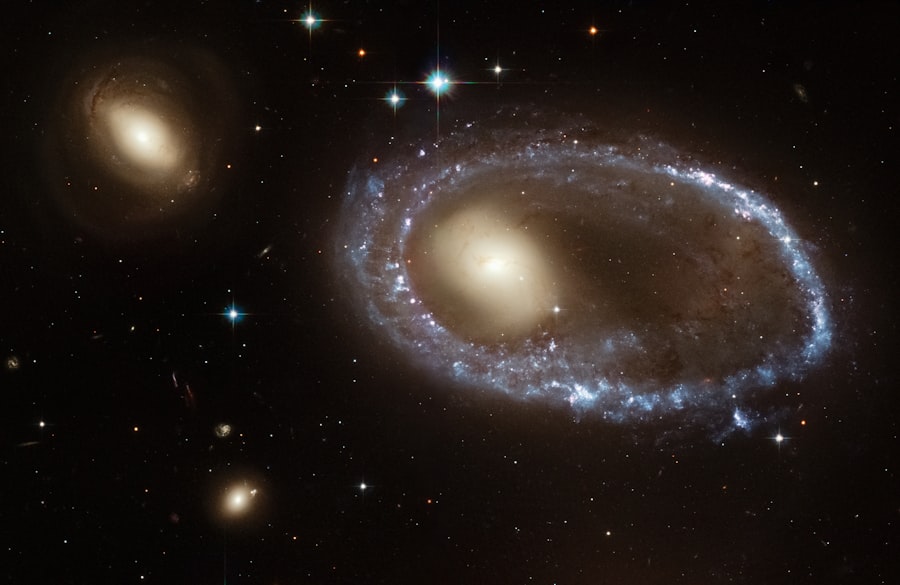
The formation of early galaxies is a complex process that involves various physical mechanisms and conditions present in the early universe. Initially, small fluctuations in density within the primordial gas led to regions where matter began to clump together under the influence of gravity. Over time, these clumps grew larger, eventually forming the first stars and galaxies.
The interplay between dark matter and baryonic matter played a pivotal role in this process, as dark matter provided the gravitational scaffolding necessary for galaxy formation. As these early structures began to form, they experienced rapid star formation due to the high density of gas available in their vicinity. This period, often referred to as the “cosmic noon,” saw an explosion of star birth that contributed to the development of complex galactic structures.
The energy released from these newly formed stars also influenced their surroundings, driving outflows of gas and regulating further star formation. The intricate dance between star formation, gas dynamics, and gravitational interactions shaped the early galaxies into diverse forms, setting the stage for their evolution over billions of years.
Understanding the Evolution of Early Galaxies
| Galaxy Name | Redshift | Distance (million light years) | Age (billion years) |
|---|---|---|---|
| GN-z11 | 11.09 | 32,000 | 13.4 |
| UDFj-39546284 | 10.3 | 13,200 | 13.2 |
| MACS0647-JD | 9.11 | 13,260 | 13.3 |
The evolution of early galaxies is a multifaceted process influenced by various factors, including star formation rates, interactions with neighboring galaxies, and environmental conditions. As these galaxies aged, they underwent significant transformations driven by internal and external forces. For instance, mergers between galaxies could lead to bursts of star formation or trigger active galactic nuclei (AGN) activity, fundamentally altering their structure and dynamics.
Moreover, feedback mechanisms from supernovae and active black holes played a crucial role in regulating star formation within these galaxies. The energy released during supernova explosions could heat surrounding gas, preventing it from collapsing into new stars. Similarly, AGN activity could expel gas from the galaxy or compress it into regions conducive to star formation.
Understanding these evolutionary pathways is essential for constructing a comprehensive picture of how early galaxies transitioned into the more mature systems observed today.
Observing Early Galaxies
Observing early galaxies presents unique challenges due to their immense distances and faintness. However, advancements in telescope technology have enabled astronomers to capture light from these distant objects, providing invaluable data about their properties and behaviors. Instruments such as the Hubble Space Telescope and more recently, the James Webb Space Telescope (JWST), have revolutionized our ability to study early galaxies by allowing scientists to peer back in time to when these structures were forming.
Through deep-field imaging and spectroscopy, astronomers can analyze the light emitted by early galaxies to determine their composition, age, and star formation rates. These observations have revealed a wealth of information about the conditions in which these galaxies formed and evolved. By studying their spectral signatures, researchers can infer details about their stellar populations and chemical enrichment processes, shedding light on the broader narrative of cosmic evolution.
The Role of Dark Matter in Early Galaxies
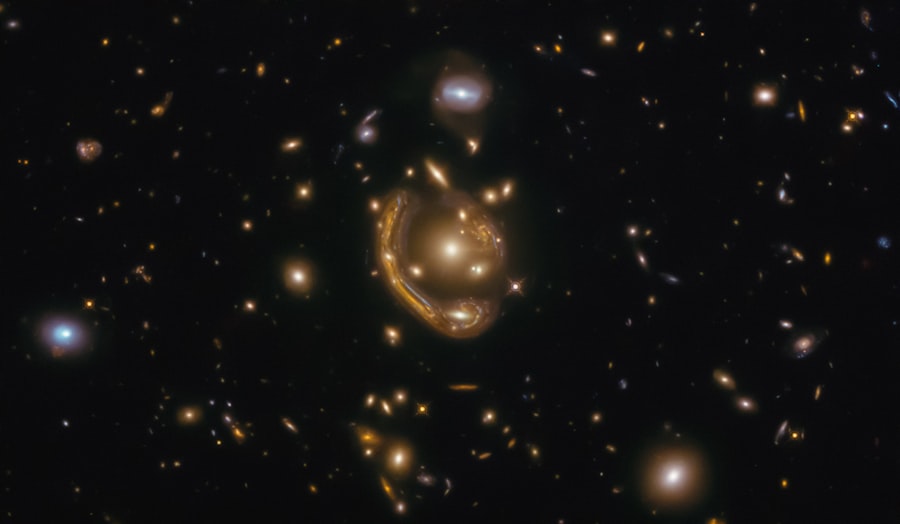
Dark matter is a fundamental component of the universe that plays a crucial role in galaxy formation and evolution. Although it cannot be observed directly, its presence is inferred through its gravitational effects on visible matter. In the context of early galaxies, dark matter provided the necessary gravitational framework for baryonic matter to coalesce into stars and galaxies.
The distribution and density of dark matter halos around these early structures significantly influenced their growth trajectories. The interplay between dark matter and baryonic matter is complex; while dark matter facilitates galaxy formation by providing gravitational wells, it also affects how gas cools and condenses into stars. Understanding this relationship is vital for constructing accurate models of galaxy formation.
Recent simulations have suggested that variations in dark matter density could lead to differences in star formation efficiency among early galaxies, further complicating our understanding of their evolution.
The Influence of Supermassive Black Holes on Early Galaxies
Supermassive black holes (SMBHs) are thought to reside at the centers of most galaxies, including those formed in the early universe. Their origins remain a topic of intense research; however, it is widely accepted that they grew rapidly during the formative years of their host galaxies. The presence of SMBHs can significantly influence their surrounding environments through feedback mechanisms that regulate star formation and gas dynamics.
As SMBHs accrete material from their surroundings, they release enormous amounts of energy in the form of radiation and powerful jets. This energy can heat or expel gas from the galaxy, impacting star formation rates and altering the galaxy’s evolutionary path. Understanding how SMBHs interacted with their host galaxies during their formative years is crucial for unraveling the complexities of early galaxy evolution and determining how these massive objects co-evolved with their environments.
Unraveling the Mystery of Premature Maturity
The phenomenon of premature maturity in early galaxies poses intriguing questions about cosmic evolution. Researchers are actively investigating potential explanations for why some early galaxies appear more developed than expected for their age. One possibility is that certain environmental conditions or initial mass distributions allowed these galaxies to form stars more efficiently than others.
Another avenue of exploration involves examining the role of feedback processes from star formation and black hole activity. These feedback mechanisms could create conditions conducive to rapid star formation or inhibit it altogether, leading to diverse evolutionary outcomes among early galaxies. By studying a larger sample size and employing advanced simulations, scientists hope to unravel this mystery and gain deeper insights into the factors driving galaxy evolution in the early universe.
Implications for our Understanding of the Universe
The study of early galaxies has profound implications for our understanding of cosmic history and structure formation. Insights gained from these ancient structures challenge existing models and prompt scientists to reconsider fundamental aspects of galaxy evolution. For instance, if some early galaxies were able to form stars at an accelerated rate due to unique conditions or processes, this could reshape our understanding of how galaxies evolve over time.
Moreover, unraveling the mysteries surrounding dark matter and supermassive black holes in early galaxies could provide critical insights into the nature of these enigmatic components of the universe. As researchers continue to explore these topics, they may uncover new connections between galaxy formation processes and broader cosmological phenomena, ultimately enhancing our comprehension of the universe’s evolution.
Future Research Directions
As technology continues to advance, future research on early galaxies promises to yield even more exciting discoveries. Upcoming missions such as NASA’s James Webb Space Telescope will enable astronomers to probe deeper into cosmic history than ever before. By observing earlier epochs in greater detail, researchers hope to uncover new information about galaxy formation processes and refine existing models.
Collaborations between astronomers, physicists, and cosmologists will facilitate a more comprehensive understanding of how early galaxies fit into the broader narrative of cosmic evolution.
Conclusion and Implications
In conclusion, early galaxies represent a fascinating frontier in astrophysical research that holds significant implications for our understanding of the universe’s history and structure formation processes. Their premature maturity challenges existing paradigms and invites further exploration into the mechanisms driving galaxy evolution. As researchers continue to unravel these mysteries through advanced observational techniques and theoretical models, they will undoubtedly enhance our comprehension of not only early galaxies but also the fundamental nature of our universe itself.
The ongoing study of early galaxies serves as a reminder that there is still much to learn about our cosmic origins. Each discovery brings scientists closer to answering profound questions about how we came to be and what lies beyond our current understanding. As we look toward future research directions, it is clear that early galaxies will remain at the forefront of astronomical inquiry for years to come.
Recent astronomical observations have puzzled scientists by revealing that early galaxies appear to be more mature than previously expected. This intriguing phenomenon challenges existing models of galaxy formation and evolution, suggesting that galaxies in the early universe may have developed more rapidly than current theories can explain. For a deeper understanding of this topic, you can explore a related article on early galaxy maturity on My Cosmic Ventures. This article delves into the potential reasons behind the unexpected maturity of these early galaxies and discusses the implications for our understanding of the universe’s history.
WATCH THIS! Did JWST DISPROVE The BIG BANG?!?!
FAQs
What are early galaxies?
Early galaxies refer to the galaxies that formed in the early universe, shortly after the Big Bang. These galaxies are typically very distant and are observed as they were billions of years ago.
Why are early galaxies considered mature?
Early galaxies are considered mature because they exhibit characteristics typically associated with more evolved galaxies, such as well-formed spiral arms, a central bulge, and a well-defined structure. This challenges the traditional understanding of galaxy formation and evolution.
What factors contribute to the maturity of early galaxies?
Several factors may contribute to the maturity of early galaxies, including the presence of large amounts of dust and gas, rapid star formation, and the presence of supermassive black holes at their centers. These factors may have accelerated the evolution of these galaxies.
How do astronomers study early galaxies?
Astronomers study early galaxies using powerful telescopes, such as the Hubble Space Telescope and the James Webb Space Telescope, to observe the light emitted by these distant objects. They also use techniques such as spectroscopy to analyze the chemical composition and movement of stars within these galaxies.
What can the study of early galaxies tell us about the universe’s evolution?
Studying early galaxies can provide valuable insights into the early stages of galaxy formation and the processes that shaped the universe in its infancy. By understanding the characteristics and behavior of early galaxies, astronomers can refine their models of cosmic evolution.