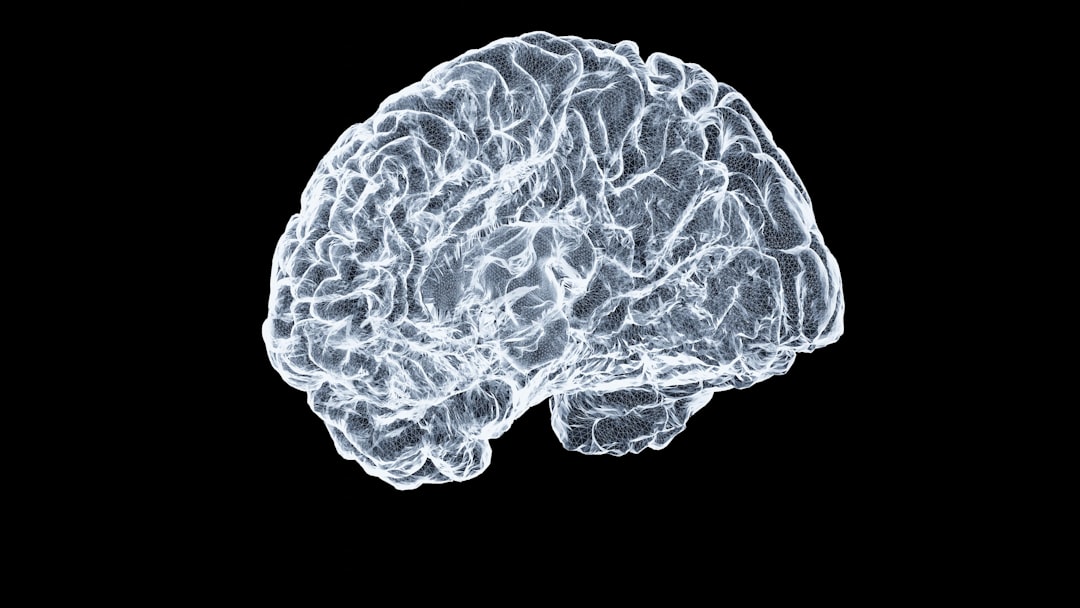
In the cosmos, entropy and the universe’s ultimate fate have been subjects of scientific and philosophical inquiry. Boltzmann Brains represent a thought experiment derived from statistical mechanics that challenges conventional understanding of consciousness and reality. As the universe progresses toward heat death—a state of uniform energy distribution with no thermodynamic free energy—fundamental questions about existence and observation become increasingly relevant.
The heat death hypothesis describes a future where stars exhaust their fuel, galaxies separate, and matter reaches maximum entropy. In this scenario, the universe becomes a cold, dark region without life or activity. The Boltzmann Brain concept suggests that random quantum fluctuations in this high-entropy state could temporarily form self-aware entities that briefly exist before returning to disorder.
This theoretical possibility presents a paradox concerning reality, consciousness, and humanity’s cosmic significance.
Key Takeaways
- Boltzmann Brains are hypothetical self-aware entities arising from random fluctuations in a high-entropy universe approaching heat death.
- The Boltzmann Brain hypothesis challenges our understanding of entropy and the universe’s long-term fate by suggesting isolated consciousness can spontaneously form.
- Critics argue the hypothesis faces logical and probabilistic issues, questioning the likelihood and implications of such brains dominating observations.
- Exploring Boltzmann Brains impacts cosmology and philosophy by raising questions about reality, observation, and the nature of consciousness.
- Proposed solutions to the heat death and Boltzmann Brain problem include new cosmological models and theories aiming to avoid a high-entropy, fluctuation-dominated future.
Understanding the Boltzmann Brain Hypothesis
The Boltzmann Brain hypothesis stems from the work of physicist Ludwig Boltzmann, who contributed significantly to our understanding of thermodynamics and statistical mechanics. At its core, this hypothesis suggests that in an infinite universe governed by random fluctuations, it is statistically more likely for a single brain to spontaneously form from a collection of particles than for a complex, organized structure like a human being to evolve through natural processes. You might find it mind-boggling to consider that, in such a scenario, these brains could have fleeting experiences and memories that feel entirely real, despite being mere illusions.
This thought experiment raises critical questions about the nature of existence. If Boltzmann Brains are more probable than evolved beings like you, what does that imply about your own consciousness? Are you merely a product of random fluctuations in a vast sea of entropy?
The implications are staggering, as they challenge our understanding of reality and suggest that your experiences could be nothing more than a statistical anomaly in an indifferent universe. This leads to a deeper inquiry into what it means to be conscious and how we can trust our perceptions of reality.
The Problem of Entropy and the Heat Death of the Universe
Entropy, often described as a measure of disorder, plays a pivotal role in understanding the fate of the universe. As time progresses, systems tend to evolve toward states of higher entropy, leading to an inevitable increase in disorder.
The second law of thermodynamics states that in an isolated system, entropy will never decrease; it can only remain constant or increase. This fundamental law suggests that the universe is on a one-way path toward greater disorder. As the universe ages, stars will exhaust their nuclear fuel, galaxies will drift apart, and black holes will eventually evaporate through Hawking radiation.
In this scenario, known as heat death, all matter will reach thermal equilibrium, resulting in a state where no usable energy remains. You might ponder the implications of such an outcome: a lifeless universe where no events occur, and no consciousness exists to observe or reflect upon its vastness. This stark vision of the future raises profound questions about meaning and existence in a cosmos that seems destined for oblivion.
Criticisms and Challenges to the Boltzmann Brain Hypothesis
While the Boltzmann Brain hypothesis presents an intriguing perspective on consciousness and existence, it is not without its criticisms. One significant challenge lies in its implications for our understanding of evolution and natural selection. If Boltzmann Brains are statistically more likely than evolved beings, you may wonder how this aligns with our observations of life on Earth.
Critics argue that if we were indeed more likely to be Boltzmann Brains than products of evolution, we would expect to see evidence supporting this claim in our experiences and observations. Moreover, some philosophers and scientists contend that the Boltzmann Brain hypothesis undermines the very foundation of scientific inquiry. If we accept that our experiences could be mere fluctuations in a high-entropy universe, it raises questions about the reliability of our observations and theories.
You might find it unsettling to consider that if we are more likely to be random brains than evolved beings, then our scientific understanding could be fundamentally flawed. This skepticism challenges not only our grasp of reality but also our ability to engage meaningfully with the cosmos.
Potential Implications for Cosmology and Philosophy
| Metric | Description | Estimated Value | Unit |
|---|---|---|---|
| Boltzmann Brain Formation Probability | Probability of spontaneous formation of a self-aware entity due to random fluctuations | Extremely low (~10^-10^10^56) | Dimensionless |
| Time Scale for Heat Death | Estimated time until the universe reaches maximum entropy and no thermodynamic free energy remains | ~10^100 | Years |
| Entropy at Heat Death | Maximum entropy state of the universe | ~10^104 | Boltzmann constant units (k_B) |
| Cosmological Constant (Λ) | Energy density of empty space driving accelerated expansion | ~1.1 × 10^-52 | m^-2 |
| Temperature at Heat Death | Temperature of the universe when it reaches thermal equilibrium | ~10^-30 | Kelvin |
| Number of Boltzmann Brains Expected | Estimated number of Boltzmann brains formed over infinite time in a de Sitter universe | Potentially infinite | Count |
The implications of the Boltzmann Brain hypothesis extend far beyond theoretical physics; they touch upon profound philosophical questions about existence, consciousness, and reality itself. If you accept that Boltzmann Brains could arise spontaneously in a high-entropy universe, it forces you to reconsider what it means to be conscious. Are your thoughts and experiences genuine reflections of reality, or are they simply products of random fluctuations?
This inquiry leads to existential dilemmas about identity and purpose in a universe that may ultimately be indifferent to your existence. Furthermore, this hypothesis challenges traditional cosmological models that rely on the assumption that observers like you are typical representatives of intelligent life. If Boltzmann Brains are more probable than evolved beings, it raises questions about the validity of our observations regarding cosmic phenomena.
You might find yourself grappling with the unsettling notion that your understanding of the universe could be based on an illusion rather than an accurate representation of reality. This philosophical conundrum invites deeper exploration into the nature of knowledge and belief in an ever-expanding cosmos.
Proposed Solutions and Theories to Address the Heat Death
In light of the challenges posed by both entropy and the Boltzmann Brain hypothesis, scientists have proposed various solutions and theories aimed at addressing the heat death scenario. One such approach involves exploring alternative cosmological models that incorporate mechanisms for avoiding heat death altogether. For instance, some theories suggest that our universe may undergo cycles of expansion and contraction—known as oscillating models—allowing for periodic rejuvenation rather than a final state of entropy.
Another avenue of exploration involves considering the role of dark energy in shaping the fate of the universe. You may find it intriguing that dark energy is believed to drive the accelerated expansion of the cosmos. Some researchers propose that this expansion could lead to new forms of structure formation or even create conditions conducive to life in distant regions of space-time.
By investigating these possibilities, scientists hope to uncover pathways that could mitigate or even circumvent the grim predictions associated with heat death.
The Search for Evidence and Observations in Support of or Against Boltzmann Brains
As you delve deeper into the realm of Boltzmann Brains and their implications for cosmology, you may wonder about the search for empirical evidence supporting or refuting this hypothesis. While direct observation of Boltzmann Brains is inherently challenging due to their transient nature, researchers have sought indirect evidence through various means. For instance, studies examining cosmic microwave background radiation or large-scale structures in the universe may provide insights into whether our observations align with predictions made by Boltzmann Brain scenarios.
Additionally, advancements in theoretical physics may yield new frameworks for understanding consciousness and existence within a cosmological context. You might find it exciting that ongoing research into quantum mechanics and information theory could shed light on fundamental questions surrounding reality itself. As scientists continue to explore these frontiers, they may uncover evidence that either supports or challenges the validity of Boltzmann Brains as plausible entities within our universe.
Conclusion and Future Directions in Understanding Boltzmann Brains and the Heat Death
In conclusion, the exploration of Boltzmann Brains and their relationship with the heat death of the universe presents a captivating intersection between physics and philosophy. As you reflect on these concepts, you may find yourself grappling with profound questions about existence, consciousness, and reality itself. The implications extend beyond theoretical musings; they challenge your understanding of what it means to be alive in an ever-expanding cosmos.
Looking ahead, future research will undoubtedly continue to unravel these mysteries as scientists seek to deepen their understanding of entropy, cosmology, and consciousness. Whether through empirical observations or theoretical advancements, you can anticipate exciting developments that may reshape our perspectives on existence itself. As we navigate this complex landscape together, one thing remains clear: the quest for knowledge about Boltzmann Brains and heat death will continue to inspire curiosity and wonder about our place in the universe.
The concept of Boltzmann brains arises from discussions about the implications of heat death in the universe, where random fluctuations could lead to the spontaneous formation of self-aware entities. For a deeper exploration of the universe’s fate and the philosophical implications of such phenomena, you can read more in this related article on cosmic ventures: Understanding the Heat Death of the Universe.
WATCH THIS! 🚨 You Can’t Cheat Death (Quantum Immortality Debunked)
FAQs
What is a Boltzmann Brain?
A Boltzmann Brain is a hypothetical self-aware entity that arises due to random fluctuations out of a state of chaos or thermal equilibrium, as proposed in certain interpretations of cosmology and statistical mechanics.
What does “heat death” of the universe mean?
Heat death refers to a theoretical scenario in the far future where the universe has reached a state of maximum entropy, with no usable energy left to sustain processes that increase complexity or life.
How are Boltzmann Brains related to the heat death of the universe?
In a universe approaching heat death, random fluctuations could, in theory, spontaneously create Boltzmann Brains. These brains would briefly exist with false memories and perceptions before dissolving back into chaos.
Why is the concept of Boltzmann Brains significant in cosmology?
The concept challenges our understanding of typical observers in the universe and raises questions about the nature of reality, probability, and the validity of cosmological models predicting infinite time or entropy.
Are Boltzmann Brains considered a real possibility or just a theoretical idea?
Boltzmann Brains are primarily a theoretical construct used to explore implications of thermodynamics and cosmology. There is no empirical evidence for their existence, and many physicists consider them a paradox or problem to be resolved in cosmological theories.
What implications do Boltzmann Brains have for the future of the universe?
If Boltzmann Brains dominate as observers in the far future, it could imply that our current understanding of the universe’s evolution is incomplete or that certain cosmological models need revision to avoid paradoxes.
How do scientists address the Boltzmann Brain problem?
Scientists explore alternative cosmological models, such as those involving a finite lifetime of the universe or mechanisms preventing infinite entropy, to avoid scenarios where Boltzmann Brains outnumber ordinary observers.
Is the heat death scenario inevitable according to current scientific understanding?
While heat death is a widely accepted possible fate of the universe based on the second law of thermodynamics, other scenarios like the Big Rip or cyclic models are also considered, and ongoing research continues to refine these predictions.