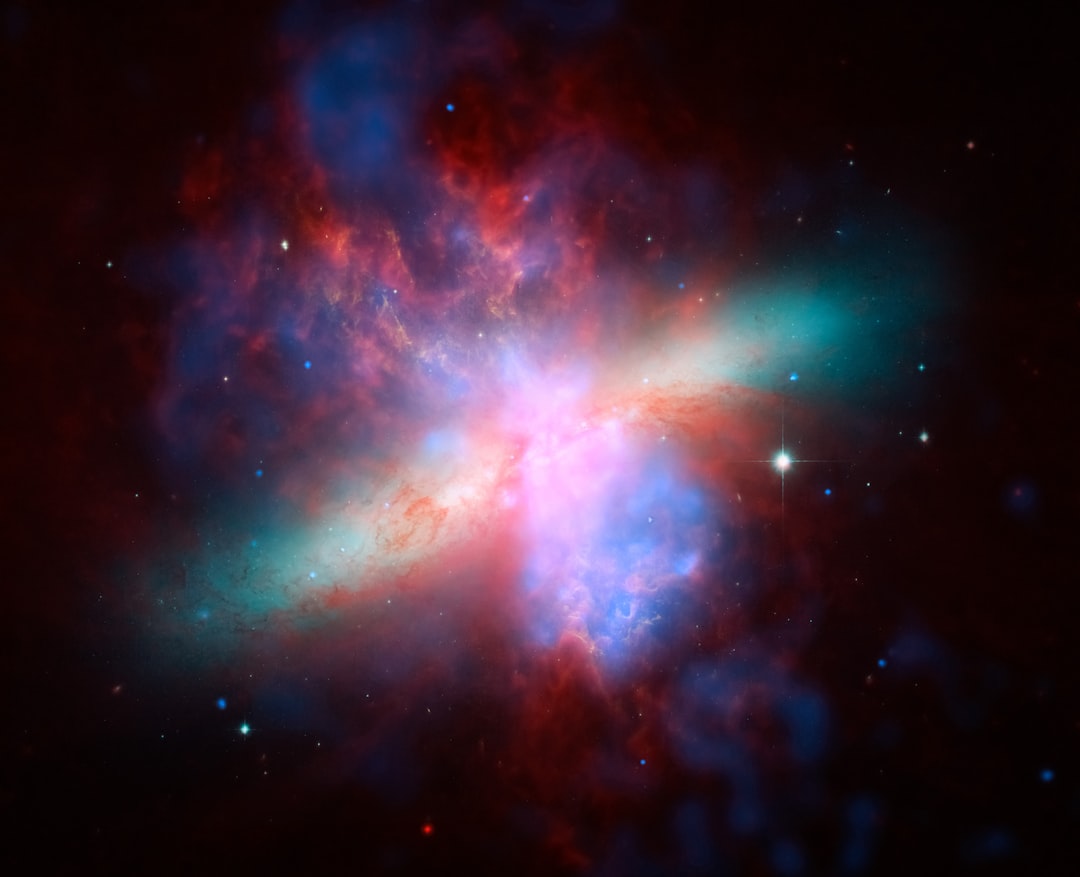
Cosmology, the scientific study of the universe’s origin, evolution, and eventual fate, has captivated human curiosity for centuries. As a branch of astronomy, it seeks to unravel the mysteries of the cosmos, exploring fundamental questions about the nature of existence and the laws governing celestial bodies. Researchers in this field employ a variety of methodologies, from observational data gathered through powerful telescopes to theoretical models that attempt to explain complex phenomena.
The pursuit of knowledge in cosmology not only enhances humanity’s understanding of the universe but also challenges existing paradigms and inspires new ways of thinking about reality. In recent decades, cosmology has experienced a renaissance, driven by advancements in technology and a growing interdisciplinary approach that incorporates physics, mathematics, and even philosophy. This evolution has led to groundbreaking discoveries, such as the detection of cosmic microwave background radiation and the accelerated expansion of the universe.
As researchers delve deeper into the cosmos, they confront profound questions about the nature of time, space, and matter, pushing the boundaries of human knowledge and igniting a sense of wonder about the universe’s vastness and complexity.
Key Takeaways
- Cosmology research explores the origins, evolution, and eventual fate of the universe.
- The Big Bang theory suggests that the universe began as a hot, dense point and has been expanding ever since.
- Dark matter and dark energy make up the majority of the universe, but their nature remains a mystery.
- Technology, such as telescopes and particle accelerators, has been crucial in advancing our understanding of the cosmos.
- The search for exoplanets and the possibility of extraterrestrial life has captured the imagination of scientists and the public alike.
The Big Bang Theory and Its Implications
The Big Bang Theory stands as one of the most significant achievements in cosmology, providing a comprehensive framework for understanding the universe’s beginnings. According to this theory, approximately 13.8 billion years ago, the universe emerged from an extremely hot and dense state, expanding rapidly in a process that continues to this day. This model not only explains the observable phenomena in the universe but also offers insights into its structure and composition.
The implications of the Big Bang Theory extend far beyond mere historical narrative; they challenge humanity’s perception of time and existence itself. One of the most profound implications of the Big Bang Theory is the concept of cosmic inflation, which posits that the universe underwent an exponential expansion in its earliest moments. This rapid growth explains the uniformity observed in the cosmic microwave background radiation and addresses several puzzles that earlier models could not resolve.
Furthermore, the theory suggests that the universe is not static but dynamic, constantly evolving over time. As researchers continue to explore its ramifications, they grapple with questions about what preceded the Big Bang and whether our universe is just one of many in a broader multiverse.
Dark Matter and Dark Energy: What We Know and What We Don’t
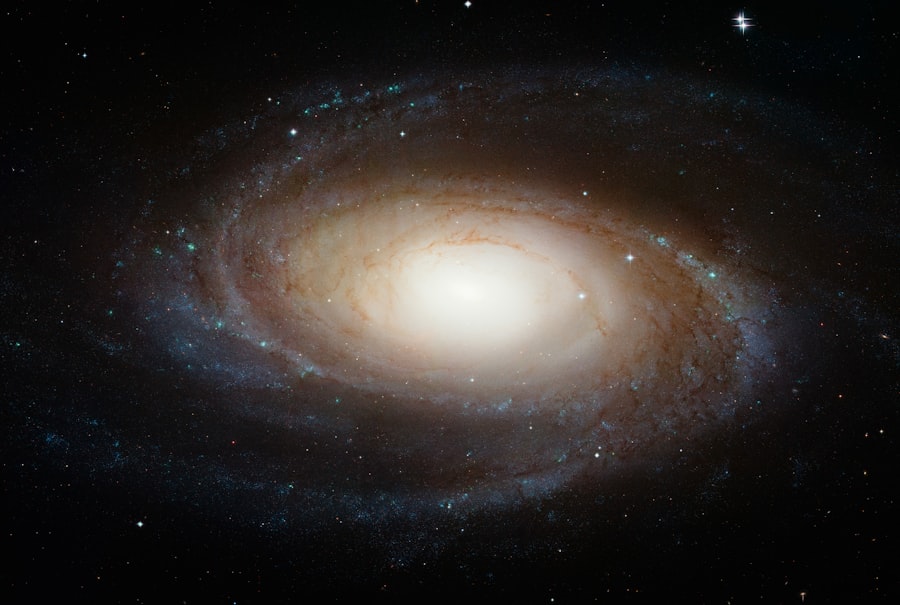
Dark matter and dark energy represent two of the most enigmatic components of the universe, accounting for approximately 95% of its total mass-energy content. Despite their prevalence, these phenomena remain largely mysterious, eluding direct detection and challenging scientists to rethink fundamental concepts in physics. Dark matter is believed to be responsible for the gravitational effects observed in galaxies and galaxy clusters, while dark energy is thought to drive the accelerated expansion of the universe.
Together, they form a critical part of contemporary cosmological models. The quest to understand dark matter has led researchers to propose various candidates, including weakly interacting massive particles (WIMPs) and axions. Despite extensive efforts to detect these particles through experiments on Earth and in space, conclusive evidence remains elusive.
Similarly, dark energy poses significant challenges; its nature is still debated among scientists. Some theories suggest it could be a cosmological constant, while others propose dynamic fields that evolve over time. As researchers continue to investigate these phenomena, they confront fundamental questions about the universe’s fate and its ultimate destiny.
The Role of Technology in Advancing Cosmology Research
| Technology | Advancement |
|---|---|
| Telescopes | Improved resolution and sensitivity for observing distant celestial objects |
| Computational Modeling | Simulating complex cosmological phenomena and analyzing large datasets |
| Data Analysis Software | Facilitating the processing and interpretation of astronomical data |
| Spectroscopy Instruments | Studying the composition and properties of celestial objects through their spectra |
| Space Missions | Collecting data from space-based observatories and telescopes |
Technological advancements have played a pivotal role in propelling cosmology research forward, enabling scientists to gather unprecedented amounts of data about the universe. The development of powerful telescopes, such as the Hubble Space Telescope and its successors, has revolutionized observational astronomy. These instruments allow researchers to peer deep into space, capturing images of distant galaxies and cosmic events that were once beyond reach.
The data collected from these observations have provided invaluable insights into the structure and evolution of the universe. Moreover, advancements in computational power have transformed theoretical modeling in cosmology. Researchers can now simulate complex cosmic phenomena with remarkable accuracy, testing hypotheses against observational data.
Machine learning algorithms are increasingly being employed to analyze vast datasets, identifying patterns that may reveal new insights into dark matter, dark energy, and other cosmic mysteries. As technology continues to evolve, it promises to unlock even more secrets of the universe, pushing the boundaries of human understanding further than ever before.
The Search for Exoplanets and the Possibility of Extraterrestrial Life
The search for exoplanets—planets outside our solar system—has emerged as a focal point in contemporary cosmology research. With thousands of exoplanets discovered to date, scientists are increasingly interested in identifying those that may harbor conditions suitable for life. This quest not only expands our understanding of planetary systems but also raises profound questions about humanity’s place in the cosmos.
The discovery of potentially habitable exoplanets ignites imaginations and fuels speculation about extraterrestrial life. Astrobiology, an interdisciplinary field that combines elements of biology, chemistry, and planetary science, plays a crucial role in this search. Researchers study extreme environments on Earth to understand how life might exist elsewhere in the universe.
The development of missions like NASA’s Kepler Space Telescope and the Transiting Exoplanet Survey Satellite (TESS) has significantly advanced our ability to detect exoplanets and analyze their atmospheres for biosignatures—chemical indicators of life. As technology continues to improve, the possibility of discovering extraterrestrial life becomes increasingly tangible.
The Multiverse Theory and Its Impact on Cosmology
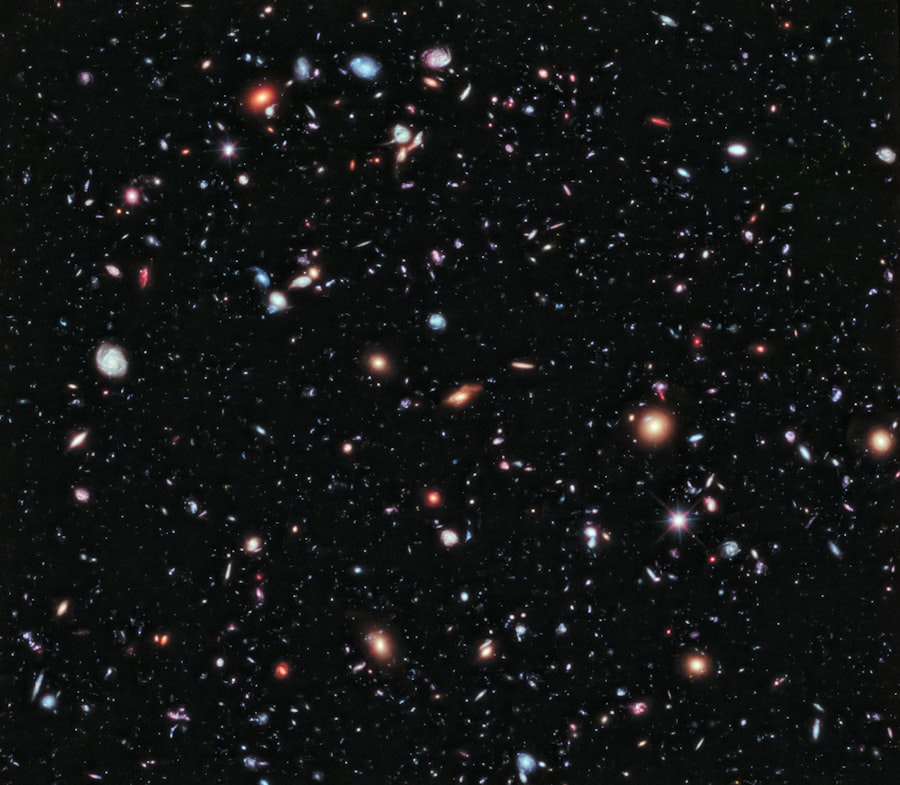
The multiverse theory posits that our universe is just one of many universes that exist simultaneously, each with its own distinct properties and laws of physics. This concept challenges traditional notions of reality and has profound implications for cosmology as a whole. While still largely theoretical, multiverse ideas have gained traction among some physicists as they seek to explain certain anomalies observed in our universe that cannot be easily accounted for by existing models.
One significant aspect of multiverse theory is its potential to address fine-tuning problems—questions about why certain physical constants appear to be perfectly calibrated for life as we know it. If multiple universes exist with varying properties, it becomes less surprising that at least one would support life. However, this theory also raises philosophical questions about determinism and randomness in creation.
Black Holes: Understanding the Unseen Forces of the Universe
Black holes represent one of the most fascinating yet perplexing phenomena in cosmology. Formed from the remnants of massive stars that have undergone gravitational collapse, black holes possess gravitational fields so strong that nothing—not even light—can escape their grasp. Their existence challenges our understanding of physics and raises questions about the nature of space and time itself.
Recent advancements in observational techniques have allowed scientists to study black holes more closely than ever before. The Event Horizon Telescope (EHT) made headlines in 2019 when it captured the first-ever image of a black hole’s event horizon—the boundary beyond which nothing can escape. This groundbreaking achievement provided empirical evidence supporting theories about black holes while also opening new avenues for research into their properties and behaviors.
Scientists are now investigating how black holes influence galaxy formation and evolution, as well as their role in shaping cosmic structures on a grand scale.
The Future of Space Telescopes and Their Contribution to Cosmology Research
The future of space telescopes holds immense promise for advancing cosmology research further than ever before. Upcoming missions like NASA’s James Webb Space Telescope (JWST) are set to revolutionize our understanding of the universe by providing unprecedented views into its earliest epochs. With advanced infrared capabilities, JWST will allow researchers to study distant galaxies formed shortly after the Big Bang, shedding light on cosmic evolution during critical periods.
These telescopes will not only enhance observational capabilities but also facilitate collaboration across disciplines as scientists from various fields come together to analyze data and draw conclusions about fundamental questions regarding existence itself.
Theoretical Physics and Its Influence on Cosmology
Theoretical physics plays an integral role in shaping cosmological research by providing frameworks through which complex phenomena can be understood. Concepts such as general relativity have fundamentally altered our understanding of gravity and its effects on cosmic structures. The interplay between theoretical physics and cosmology is evident in efforts to unify quantum mechanics with general relativity—a challenge that remains one of modern physics’ greatest pursuits.
As researchers explore theories like string theory or loop quantum gravity, they seek to develop models that can explain both microscopic and macroscopic phenomena within a single framework. These theoretical advancements not only deepen our understanding of fundamental forces but also inform observational strategies aimed at testing these ideas against empirical data from experiments or astronomical observations.
The Intersection of Cosmology and Philosophy
The study of cosmology inevitably intersects with philosophical inquiries about existence itself—questions regarding purpose, meaning, and humanity’s place within an expansive universe. As researchers uncover new insights into cosmic origins or contemplate concepts like time travel or parallel universes, they engage with age-old philosophical debates that have persisted throughout human history. Philosophers ponder implications arising from discoveries made within cosmology; for instance, if multiple universes exist or if time is an illusion—what does this mean for notions such as free will?
Such inquiries challenge individuals’ perceptions while prompting deeper reflections on reality itself—an intersection where science meets philosophy creates fertile ground for exploration.
The Ethical and Societal Implications of Cosmology Research
As cosmology research advances rapidly, it brings forth ethical considerations that society must grapple with regarding its implications for humanity’s future. Questions arise about resource allocation—how should funding be prioritized between space exploration initiatives versus pressing issues on Earth? Additionally, discussions surrounding potential contact with extraterrestrial civilizations raise ethical dilemmas regarding communication protocols or potential consequences.
Moreover, as knowledge expands regarding our universe’s fragility—such as climate change or asteroid threats—cosmological insights can inform societal responses toward preserving life on Earth while fostering a sense of stewardship over our planet within an interconnected cosmos. Ultimately, engaging with these ethical dimensions ensures that scientific progress aligns with broader societal values while promoting responsible exploration beyond our home planet. In conclusion, cosmology research represents an ever-evolving field that continues to captivate minds across disciplines while challenging humanity’s understanding of existence itself.
From unraveling mysteries surrounding dark matter to contemplating philosophical implications arising from multiverse theories—each discovery contributes uniquely toward shaping perspectives on reality within an expansive cosmos filled with wonder yet fraught with complexity. As technology advances further into uncharted territories—so too does humanity’s quest for knowledge about its place among stars—a journey marked by curiosity intertwined with responsibility toward future generations navigating this vast universe together.
The future of cosmology research is poised for groundbreaking advancements as scientists continue to explore the vast mysteries of the universe. A related article that delves into the potential directions and innovations in this field can be found on My Cosmic Ventures. This article discusses the latest technological developments and theoretical frameworks that are shaping the next era of cosmological studies. For more insights, you can read the full article by visiting My Cosmic Ventures.
WATCH THIS! Did JWST DISPROVE The BIG BANG?!?!
FAQs
What is cosmology research?
Cosmology research is the study of the origin, evolution, and eventual fate of the universe. It involves the study of the large-scale structure and dynamics of the universe, as well as the fundamental forces and particles that govern its behavior.
What are some current areas of focus in cosmology research?
Some current areas of focus in cosmology research include the study of dark matter and dark energy, the cosmic microwave background radiation, the formation and evolution of galaxies and large-scale structure, and the search for gravitational waves.
What are some future directions for cosmology research?
Future directions for cosmology research may include the development of new observational techniques and instruments, such as next-generation telescopes and space-based observatories, as well as the refinement of theoretical models and simulations to better understand the fundamental properties of the universe.
How does cosmology research contribute to our understanding of the universe?
Cosmology research contributes to our understanding of the universe by providing insights into its origins, evolution, and fundamental properties. It helps us to answer fundamental questions about the nature of space, time, matter, and energy, and to test and refine our understanding of the laws of physics on the largest scales.
What are some potential implications of cosmology research for society?
Potential implications of cosmology research for society include technological advancements in areas such as astronomy, astrophysics, and space exploration, as well as a deeper understanding of the universe and our place within it. Additionally, cosmology research may inspire curiosity and wonder about the nature of the cosmos, and foster a sense of interconnectedness and awe.