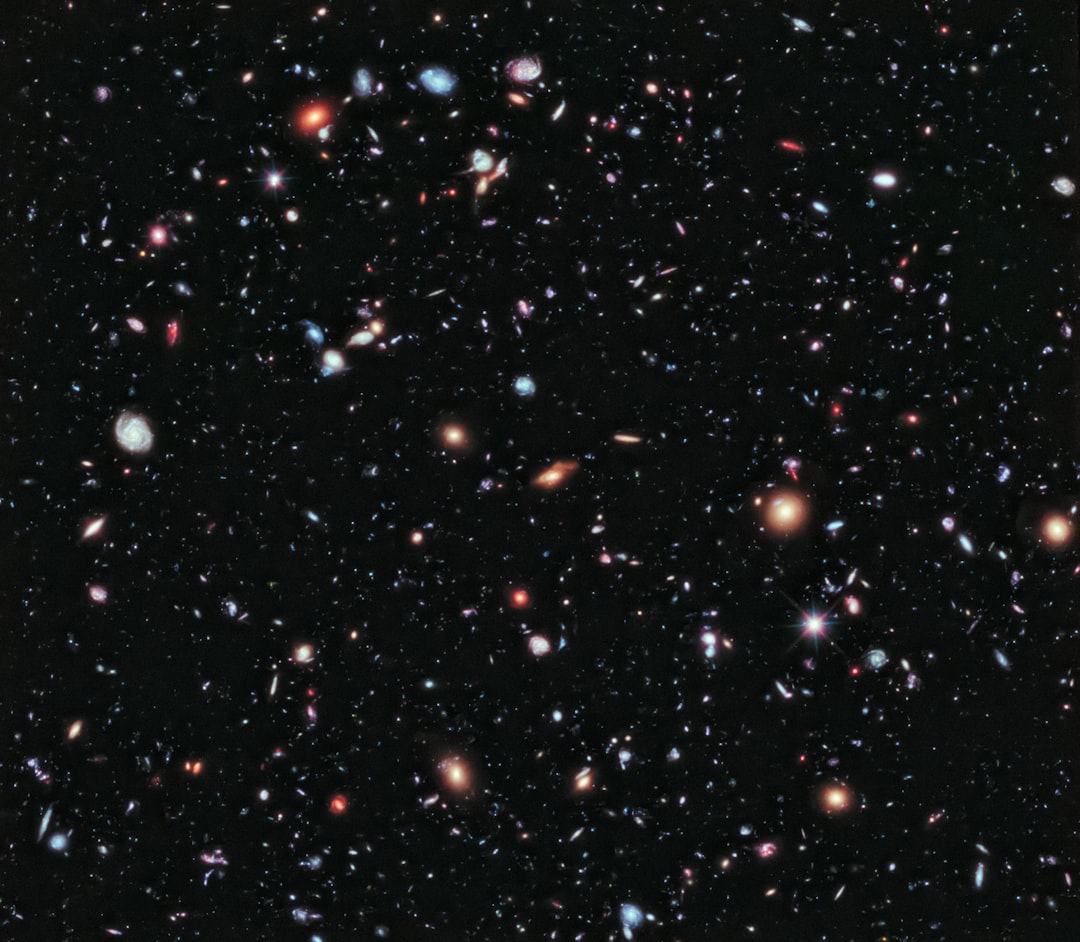
Cosmology, the study of the universe’s origin, evolution, and large-scale structure, has always been a field rife with speculation and grand hypotheses. For millennia, humanity has looked to the stars, attempting to decipher the cosmic tapestry and understand its underlying principles. While modern cosmology benefits from powerful telescopes and sophisticated theoretical frameworks, the journey to this understanding has been paved with numerous earlier hypotheses, each representing a significant step in the intellectual progression of scientific thought. This exploration delves into some of these historical cosmological models, examining their foundational assumptions, the evidence they sought to explain, and their eventual fate in the face of new observations and conceptual advancements.
For much of recorded history, the prevailing cosmological model placed Earth at the absolute center of the universe. This geocentric view, often attributed to ancient Greek philosophers, resonated with human perception and philosophical inclinations. You can learn more about the block universe theory in this insightful video.
Early Greek Conceptions
The earliest proponents of a geocentric cosmos, such as Anaximander and Aristotle, posited a universe where Earth was a stationary, immovable body. Anaximander envisioned the Earth as a cylinder, while Aristotle’s model was more sophisticated, proposing a series of concentric, crystalline spheres.
Aristotle’s Crystalline Spheres
Aristotle’s model, highly influential for over a millennium, depicted the Earth as the unmoving center. Surrounding it were transparent, nested spheres, each carrying a celestial body – the moon, sun, planets, and finally, the fixed stars on the outermost sphere. These spheres rotated, causing the observed motions of the heavenly bodies. The concept of a “prime mover” beyond the outermost sphere provided the ultimate impetus for this cosmic machinery. This model was philosophically appealing, suggesting a hierarchy and order in the cosmos, with humanity occupying a central, privileged position.
Ptolemy’s Epicycles and Deferents
While Aristotle provided the foundational framework, it was Claudius Ptolemy in the 2nd century CE who refined the geocentric model to an unprecedented degree of mathematical precision. His monumental work, the Almagest, served as the definitive astronomical text for over 1,400 years.
Explaining Retrograde Motion
One of the most perplexing astronomical phenomena for ancient observers was the retrograde motion of planets – their occasional backward movement in the night sky. Ptolemy addressed this by introducing the concepts of epicycles and deferents. A planet was imagined to travel in a small circle (the epicycle), whose center, in turn, moved along a larger circle (the deferent) around the Earth. By carefully adjusting the sizes and speeds of these epicycles and deferents, Ptolemy’s model could accurately predict the positions of planets and their seemingly erratic paths. This intricate Rube Goldberg-like contraption of circles within circles, while mathematically effective, suggested a growing complexity in sustaining the geocentric paradigm.
The Equant Controversy
Further refinements to Ptolemy’s model included the “equant,” a point near the center of the deferent from which the epicycle’s center appeared to move uniformly. While it improved the model’s accuracy, the equant violated the Platonic ideal of uniform circular motion, a concept central to Greek astronomical thought, causing some philosophical discomfort among later astronomers. Despite its complexities and occasional philosophical deviations, Ptolemy’s geocentric model represented the pinnacle of observational astronomy for its era, demonstrating the power of mathematical modeling to interpret observed phenomena.
In exploring the intriguing concepts of past hypothesis in cosmology, one can gain further insights by reading the article titled “The Role of Time in Cosmological Models” available on My Cosmic Ventures. This article delves into the implications of time’s directionality and how it relates to our understanding of the universe’s origins and evolution. For more information, you can access the article here: The Role of Time in Cosmological Models.
The Heliocentric Revolution: Sun at the Center
The geocentric model, despite its longevity, eventually buckled under the weight of accumulating observational discrepancies and the emergence of a simpler, more elegant alternative: heliocentrism.
Nicolaus Copernicus and the Revolution
The seminal shift began with Nicolaus Copernicus in the 16th century. Driven by a desire for a more harmonious and less convoluted system, Copernicus proposed a heliocentric model, placing the Sun, rather than the Earth, at the center of the universe.
Simplicity and Elegance
Copernicus’s De revolutionibus orbium coelestium (On the Revolutions of the Heavenly Spheres), published posthumously in 1543, offered a radical departure. In his model, the Earth, along with the other planets, orbited the Sun. The Earth’s rotation on its axis explained the apparent daily motion of the stars, and its annual orbit around the Sun easily accounted for the retrograde motion of planets as an optical illusion caused by Earth’s own movement. This elegant simplification, while initially met with resistance, offered a profound reduction in the arbitrary complexity of the Ptolemaic system. The universe, in Copernicus’s vision, was less of a jury-rigged contraption and more a harmonious, naturally occurring mechanism.
Tycho Brahe’s Hybrid Model
Before the heliocentric view gained widespread acceptance, Tycho Brahe, a Danish nobleman and astronomer, proposed a geo-heliocentric model in the late 16th century.
The Tychonic System
Brahe’s meticulous and unprecedentedly accurate measurements of planetary positions provided invaluable data. However, he remained unconvinced by the heliocentric model, primarily due to the absence of observable stellar parallax – the apparent shift in a star’s position due to Earth’s orbit around the Sun. To reconcile his precise observations with his belief in a stationary Earth, Brahe proposed a hybrid model: the Sun and Moon orbited the Earth, while all other planets orbited the Sun. This system, while ingenious, was ultimately a transitional phase, demonstrating the struggle to reconcile new data with entrenched cosmological paradigms.
The Infinite Universe: Beyond Spheres

As telescopic observations began to reveal the vastness of space, the concept of a finite universe encased in a sphere of fixed stars gradually gave way to the idea of an infinite cosmos.
Giordano Bruno and Cosmic Pluralism
Giordano Bruno, an Italian philosopher burned at the stake in 1600, was a powerful advocate for an infinite universe populate by countless stars, each potentially orbited by its own planets and forms of life.
Infinite Worlds and the Absence of Center
Bruno’s vision transcended the traditional confines of finite spheres. He argued for an infinite universe where stars were distant suns, suggesting a multitude of worlds beyond our own. His ideas, while revolutionary, were largely philosophical and lacked empirical evidence, earning him the ire of religious authorities. However, his daring intellectual leap planted the seeds for later mechanistic and infinite models of the universe.
Isaac Newton’s Gravitational Universe
The scientific bedrock for understanding larger-scale cosmic structure arrived with Isaac Newton’s publication of Principia Mathematica in 1687.
Universal Gravitation and its Implications
Newton’s law of universal gravitation, postulating an attractive force between any two objects with mass, provided a unified explanation for both terrestrial and celestial mechanics. This single law explained the orbits of planets around the Sun, the moon around the Earth, and the fall of an apple. In a universe governed by universal gravitation, the stability of a finite, clustered cosmos posed a problem: why didn’t everything collapse into a single point under mutual gravitational attraction? Newton himself speculated that only an infinite, uniformly distributed universe could maintain stability, balancing gravitational forces in all directions.
Early Models of Galactic Structure: Our Place in the Milky Way

As observational capabilities improved, astronomers began to ponder the structure of the Milky Way, the hazy band of light visible in the night sky.
William Herschel’s Star Gauging
In the late 18th and early 19th centuries, William Herschel, a German-born British astronomer, undertook systematic “star gauging” to map the distribution of stars.
The Flattened Disk Hypothesis
Herschel, meticulously counting stars in different directions, hypothesized that the Milky Way was a flattened, disc-shaped system, with the Sun located near its center. His model, while a pioneering attempt to understand galactic structure, was limited by his assumption that all stars had roughly the same intrinsic brightness. This assumption led him to overestimate the proximity of the “edge” of the galaxy, as he could not perceive the dimming effect of interstellar dust that obscured more distant stars. Nevertheless, Herschel’s work marked a crucial step in recognizing our galaxy as a distinct, structured entity.
Kapteyn’s Universe
Jacobus Kapteyn, a Dutch astronomer in the early 20th century, continued to refine the understanding of the Milky Way’s structure.
The Grated Disc Model
Kapteyn’s model, using photographic techniques and statistical analysis, provided a more detailed picture of the Milky Way. His “grated disc” model suggested a lens-shaped galaxy, again with the Sun near its center. Kapteyn’s work was a significant improvement over Herschel’s, but it too suffered from the unaddressed problem of interstellar extinction, preventing a true appreciation of the galaxy’s immense scale and our Sun’s off-center position within it. He was moving the goalposts closer to reality, but still within a confined field of vision.
In exploring the intriguing concept of the past hypothesis in cosmology, one can gain deeper insights by examining related discussions on the nature of time and entropy. A particularly enlightening article can be found at My Cosmic Ventures, where the interplay between thermodynamic principles and the origins of the universe is analyzed. This resource offers a comprehensive overview that complements the understanding of how the past hypothesis shapes our perception of cosmic evolution.
The Expanding Universe and Beyond: Initial Thoughts
| Metric | Description | Value / Estimate | Relevance to Past Hypothesis Cosmology |
|---|---|---|---|
| Initial Low Entropy State | Entropy level at the beginning of the universe | Extremely low (near zero) | Foundation of the Past Hypothesis, explaining the arrow of time |
| Cosmic Microwave Background (CMB) Temperature | Temperature of the universe ~380,000 years after Big Bang | ~3000 K | Evidence of early universe conditions consistent with low entropy start |
| Entropy Increase Rate | Rate at which entropy has increased since the Big Bang | Estimated exponential growth over 13.8 billion years | Supports the thermodynamic arrow of time from Past Hypothesis |
| Time Symmetry Breaking | Degree to which physical laws show time asymmetry | Significant at macroscopic scales | Explains why past and future are not symmetric despite time-symmetric laws |
| Boltzmann Brain Probability | Likelihood of spontaneous self-aware entities forming by chance | Extremely low under Past Hypothesis assumptions | Addresses paradoxes in cosmology related to entropy and observation |
The 20th century witnessed a paradigm shift with the discovery of the expanding universe, laying the groundwork for modern cosmology. Before the definitive evidence, several influential ideas contributed to this understanding.
Einstein’s Static Universe
Albert Einstein’s theory of general relativity, published in 1915, provided a new framework for understanding gravity and the structure of the universe. However, ironically, Einstein initially resisted the idea of an expanding cosmos.
The Cosmological Constant
When applying his equations to the universe as a whole, Einstein found that they predicted either an expanding or contracting universe, not the static, stable universe generally accepted at the time. To force a static solution, he introduced a term known as the “cosmological constant” (Lambda) into his equations, effectively acting as a repulsive force counteracting gravity. This act, which he later called his “biggest blunder,” demonstrates the powerful influence of prevailing cosmological assumptions on even the most brilliant minds.
Willem de Sitter’s Empty Universe
Willem de Sitter, a Dutch astronomer and mathematician, explored solutions to Einstein’s field equations that did not include matter.
An Expanding, Empty Cosmos
De Sitter’s model, published in 1917, described an empty universe that was inherently expanding. While not a realistic model of our matter-filled universe, it demonstrated that general relativity allowed for dynamically evolving universes, even in the absence of matter. This solution served as an important theoretical precursor to the observational discovery of cosmic expansion. Imagine a balloon inflating, even if it is completely empty – the fabric of space itself is stretching.
Friedmann’s Dynamic Solutions
Alexander Friedmann, a Russian physicist and mathematician, further developed solutions to Einstein’s equations, demonstrating that the universe could be either expanding or contracting.
Universe with Matter and Evolution
Friedmann, in papers published in the early 1920s, showed that the cosmological constant was not necessary for a stable universe, and that a universe containing matter could naturally expand or contract, depending on its initial conditions and density. His solutions provided the theoretical framework that would perfectly align with Edwin Hubble’s later observational discoveries, solidifying the concept of an evolving, dynamic universe.
These historical hypotheses, from the intricate epicycles of Ptolemy to the conceptual leaps of Bruno and the mathematical elegance of Friedmann, represent the iterative and often challenging process of scientific discovery. Each model, while eventually superseded, contributed vital pieces to the cosmic puzzle, shaping our understanding of the universe and our place within it. They stand as testaments to humanity’s enduring quest to unravel the universe’s profound mysteries, demonstrating how even “wrong” ideas can pave the way for deeper, more accurate insights.
FAQs
What is the past hypothesis in cosmology?
The past hypothesis in cosmology is the assumption that the universe began in a state of very low entropy. This hypothesis is used to explain the observed arrow of time and the second law of thermodynamics, which states that entropy tends to increase over time.
Why is the past hypothesis important for understanding time’s arrow?
The past hypothesis provides a boundary condition that sets the initial state of the universe as highly ordered and low in entropy. This initial condition helps explain why entropy increases toward the future, giving rise to the observed directionality or “arrow” of time.
How does the past hypothesis relate to the second law of thermodynamics?
The second law of thermodynamics states that entropy in a closed system tends to increase. The past hypothesis posits that the universe started in a special low-entropy state, which allows entropy to increase over time, consistent with the second law.
Is the past hypothesis universally accepted in cosmology?
While the past hypothesis is widely used to explain the arrow of time, it remains a subject of philosophical and scientific debate. Some researchers seek deeper explanations for why the universe began in a low-entropy state, while others explore alternative models.
Does the past hypothesis imply a specific cosmological model?
The past hypothesis itself is a boundary condition rather than a full cosmological model. It can be applied within various cosmological frameworks, including the Big Bang theory, to explain the initial low-entropy state of the universe.
Can the past hypothesis be tested or observed directly?
The past hypothesis is not directly testable because it concerns the initial conditions of the universe, which are not accessible to observation. However, its implications for entropy and the arrow of time can be studied through cosmological observations and theoretical models.
How does the past hypothesis affect our understanding of the universe’s origin?
By positing a low-entropy initial state, the past hypothesis shapes our understanding of the universe’s origin as a highly ordered beginning. This perspective influences theories about the Big Bang and the conditions that led to the universe’s current state.
Are there alternative explanations to the past hypothesis for the arrow of time?
Yes, some alternative explanations include time-symmetric cosmological models, multiverse theories, and proposals involving quantum gravity. These alternatives attempt to explain the arrow of time without relying solely on a special low-entropy initial condition.