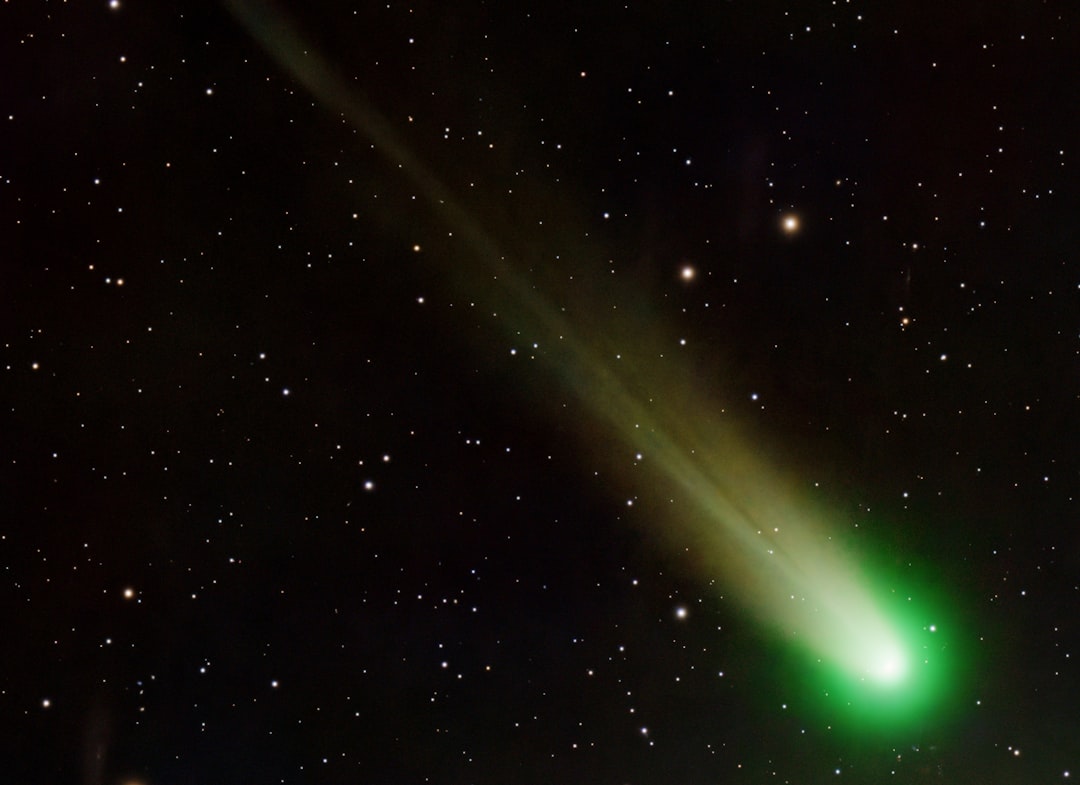
Space exploration began in the mid-20th century during the Cold War competition between the United States and the Soviet Union. The Soviet Union launched Sputnik 1 in 1957, marking the first artificial satellite to orbit Earth and initiating the space race between the two superpowers. This period of technological competition led to rapid advances in rocket technology and space science.
In 1961, Soviet cosmonaut Yuri Gagarin became the first human to orbit Earth, completing one orbit aboard Vostok 1. The United States developed the Apollo program in response to Soviet achievements in space. Apollo 11 achieved the first crewed lunar landing on July 20, 1969, when astronauts Neil Armstrong and Buzz Aldrin landed on the Moon’s surface while Michael Collins remained in lunar orbit.
Armstrong became the first person to walk on the Moon, followed by Aldrin approximately 20 minutes later. The Apollo program continued with five additional successful lunar landings between 1969 and 1972, during which astronauts conducted scientific experiments, collected lunar samples, and gathered geological data that advanced understanding of the Moon’s composition and formation.
Key Takeaways
- Space exploration has evolved through significant historical milestones, driven by technological advancements and scientific curiosity.
- Overcoming challenges like harsh environments and vast distances is crucial for successful space missions.
- Space exploration contributes to scientific research, enhancing our understanding of the universe and Earth.
- It impacts daily life through technological innovations and influences national security and economic development.
- Ethical, cultural, and social considerations shape the future direction and global cooperation in space exploration.
The Role of Technology in Space Exploration
Technology has been the backbone of space exploration, enabling humanity to reach beyond its terrestrial confines. From the early days of rocketry to today’s sophisticated spacecraft, advancements in technology have continually transformed what is possible in space. The development of powerful launch vehicles, such as the Saturn V used during the Apollo missions, showcased engineering feats that allowed heavy payloads to escape Earth’s gravitational pull.
These technological innovations laid the groundwork for subsequent missions and have been instrumental in expanding our capabilities in space. In recent years, technology has evolved at an unprecedented pace, leading to the advent of reusable rockets and advanced robotics. Companies like SpaceX have revolutionized space travel with their Falcon 9 rocket, which can return to Earth and be reused multiple times.
This not only reduces costs but also increases access to space for scientific research and commercial endeavors. Additionally, advancements in artificial intelligence and machine learning have enhanced our ability to analyze vast amounts of data collected from space missions, allowing scientists to make more informed decisions and discoveries.
The Challenges of Space Exploration

Despite its many triumphs, space exploration is fraught with challenges that test the limits of human ingenuity and resilience. One of the most significant hurdles is the harsh environment of space itself. Astronauts face extreme temperatures, radiation exposure, and microgravity conditions that can have profound effects on the human body.
The psychological challenges of isolation and confinement during long-duration missions also pose risks to crew well-being and mission success. Moreover, the financial costs associated with space exploration are substantial. Funding for missions often competes with other pressing national priorities, leading to debates about resource allocation.
Additionally, technical failures can result in catastrophic consequences, as seen in tragedies like the Challenger and Columbia disasters. These incidents serve as stark reminders of the inherent risks involved in pushing the boundaries of human exploration and underscore the need for rigorous safety protocols and contingency planning.
The Importance of Space Exploration for Scientific Research
Space exploration plays a crucial role in advancing scientific research across multiple disciplines. By venturing beyond Earth, scientists gain access to unique environments that offer insights into fundamental questions about our universe. For instance, missions to Mars have provided invaluable data about planetary geology and climate, helping researchers understand not only Mars’ history but also Earth’s own evolution.
The study of celestial bodies allows scientists to test theories about planetary formation and the potential for life beyond our planet. Furthermore, space telescopes like Hubble have revolutionized our understanding of the cosmos by capturing images of distant galaxies and phenomena that were previously beyond reach. These observations have led to groundbreaking discoveries about dark matter, black holes, and the expansion of the universe.
The knowledge gained from space exploration not only enriches scientific understanding but also inspires future generations to pursue careers in science, technology, engineering, and mathematics (STEM).
The Impact of Space Exploration on Everyday Life
| Mystery | Description | Key Data / Metrics | Current Status |
|---|---|---|---|
| Dark Matter | Invisible matter that does not emit light but exerts gravitational effects on galaxies. | Estimated to make up ~27% of the universe’s mass-energy content. | Indirectly detected through gravitational effects; composition unknown. |
| Dark Energy | Unknown force causing the accelerated expansion of the universe. | Accounts for ~68% of the universe’s total energy density. | Observed via supernovae and cosmic microwave background; nature remains a mystery. |
| Fast Radio Bursts (FRBs) | Brief, intense bursts of radio waves from distant galaxies. | Last milliseconds; energy output equivalent to the Sun’s annual output. | Origins uncertain; some linked to magnetars, others unexplained. |
| Missing Baryonic Matter | Ordinary matter predicted by models but not yet fully observed. | About 30-40% of baryonic matter is “missing” in observations. | Partially detected in warm-hot intergalactic medium; research ongoing. |
| Life Beyond Earth | Existence of extraterrestrial life forms. | No confirmed detections; thousands of exoplanets discovered in habitable zones. | Search ongoing via missions like Mars rovers and SETI. |
| Origin of Cosmic Rays | High-energy particles from space impacting Earth. | Energy ranges from 10^9 to 10^20 electronvolts. | Sources include supernovae and active galactic nuclei; some origins unknown. |
The impact of space exploration extends far beyond scientific discovery; it has also transformed everyday life in numerous ways. Many technologies developed for space missions have found their way into consumer products, enhancing daily living. For example, advancements in materials science have led to the creation of lightweight yet durable materials used in everything from sports equipment to medical devices.
Satellite technology has revolutionized communication, navigation, and weather forecasting, making information more accessible than ever before. Moreover, space exploration has fostered international collaboration and cooperation. Countries that once viewed each other as rivals now work together on joint missions and share data for mutual benefit.
This spirit of collaboration has not only advanced scientific knowledge but has also contributed to global peace efforts by promoting dialogue and understanding among nations.
The Future of Space Exploration

As humanity looks to the future, the possibilities for space exploration seem boundless. Plans for returning humans to the Moon through NASA’s Artemis program aim to establish a sustainable presence on our lunar neighbor by the end of this decade. This initiative seeks not only to explore but also to prepare for future missions to Mars and beyond.
The Moon serves as a testing ground for technologies and strategies that will be essential for long-duration space travel. In addition to government-led initiatives, private companies are increasingly playing a pivotal role in shaping the future of space exploration. With ambitious plans for Mars colonization and asteroid mining, these enterprises are pushing the envelope of what is achievable in space.
As competition grows among various stakeholders, innovation is likely to accelerate, leading to new breakthroughs that could redefine humanity’s relationship with space.
The Search for Extraterrestrial Life
One of the most tantalizing questions driving space exploration is whether life exists beyond Earth. The search for extraterrestrial life has become a focal point for many missions aimed at exploring planets and moons within our solar system and beyond. Mars has long been a prime candidate due to evidence suggesting it once had liquid water on its surface—a key ingredient for life as we know it.
Beyond Mars, moons such as Europa and Enceladus are also under scrutiny due to their subsurface oceans that may harbor conditions suitable for life. The discovery of exoplanets within habitable zones around distant stars has further fueled interest in this quest.
As telescopes become more sophisticated, scientists are hopeful that they will soon detect biosignatures—chemical indicators of life—on these distant worlds.
Space Exploration and National Security
Space exploration is not solely about scientific discovery; it also intersects with national security interests. As nations increasingly recognize the strategic importance of space, military applications have become a significant aspect of space policy. Satellites play a crucial role in communication, reconnaissance, and navigation for military operations.
The ability to monitor activities on Earth from space provides nations with critical intelligence that can inform defense strategies. Moreover, as more countries develop their own space capabilities, concerns about space security have emerged. The potential for conflicts over resources or territorial claims in space necessitates international cooperation and agreements to ensure peaceful exploration and utilization of outer space.
As humanity ventures further into this new frontier, establishing norms and regulations will be essential to prevent conflicts and promote collaboration among nations.
The Economics of Space Exploration
The economics of space exploration is a complex landscape shaped by both public investment and private enterprise. Government agencies like NASA allocate significant budgets toward research and development, infrastructure, and mission execution. However, as budgets face scrutiny amid competing priorities, there is a growing recognition that partnerships with private companies can help alleviate financial burdens while fostering innovation.
The rise of commercial spaceflight has opened new avenues for economic growth within the aerospace sector. Companies are exploring opportunities ranging from satellite deployment to space tourism, creating jobs and stimulating local economies. As competition increases among private entities, costs associated with launching payloads into orbit are expected to decrease further, making access to space more affordable for a wider range of stakeholders.
The Ethical Considerations of Space Exploration
As humanity continues its journey into space, ethical considerations must be at the forefront of discussions surrounding exploration efforts. Questions arise regarding our responsibility toward celestial bodies and potential extraterrestrial ecosystems. The principle of planetary protection emphasizes the need to avoid contaminating other worlds with Earth-based organisms that could disrupt native environments or obscure scientific findings.
Additionally, ethical dilemmas arise when considering resource extraction from asteroids or other celestial bodies. As interest grows in mining operations beyond Earth, discussions about ownership rights and environmental stewardship become increasingly relevant. Establishing ethical frameworks will be crucial as humanity navigates these uncharted territories while ensuring that exploration efforts are conducted responsibly.
The Cultural and Social Impact of Space Exploration
The cultural and social impact of space exploration is profound, shaping collective consciousness and inspiring generations across the globe. The images captured by spacecraft exploring distant planets evoke wonder and curiosity about our place in the universe. Movies, literature, and art often draw upon themes related to space travel, reflecting humanity’s fascination with the cosmos.
Moreover, space exploration fosters a sense of unity among people from diverse backgrounds as they share in the excitement of discovery. Events like lunar landings or Mars rover deployments become global celebrations that transcend borders and cultures. This shared experience cultivates a sense of belonging to something greater than oneself—a reminder that humanity’s quest for knowledge knows no bounds.
In conclusion, space exploration represents one of humanity’s most ambitious endeavors—a journey driven by curiosity, innovation, and collaboration. As we reflect on its history and contemplate its future, it becomes clear that this pursuit will continue to shape our understanding of ourselves and our universe for generations to come.
One intriguing aspect is the search for extraterrestrial life, which has led to various missions and studies aimed at understanding the conditions necessary for life beyond Earth. For a deeper dive into the enigmatic challenges and discoveries in space exploration, you can read more in this related article on cosmic ventures: My Cosmic Ventures.
FAQs
What are some of the biggest mysteries in space exploration?
Some of the biggest mysteries include the nature of dark matter and dark energy, the origin of fast radio bursts, the possibility of life on other planets, the behavior of black holes, and the unexplained phenomena observed in deep space.
Why is dark matter considered a mystery in space exploration?
Dark matter is considered a mystery because it does not emit, absorb, or reflect light, making it invisible and detectable only through its gravitational effects on visible matter. Scientists are still trying to understand what it is made of and how it influences the structure of the universe.
What are fast radio bursts and why are they mysterious?
Fast radio bursts (FRBs) are intense bursts of radio waves that last only a few milliseconds. Their origin is unknown, and they have been detected coming from distant galaxies, making them one of the most intriguing phenomena in astrophysics.
Is there evidence of life beyond Earth?
As of now, there is no direct evidence of life beyond Earth. However, missions to Mars, the study of icy moons like Europa and Enceladus, and the search for exoplanets in habitable zones continue to explore the possibility of extraterrestrial life.
What makes black holes mysterious?
Black holes are mysterious because they have gravitational fields so strong that nothing, not even light, can escape them. Their interiors and the nature of singularities remain largely theoretical, and scientists are still studying how they affect space and time.
How do space exploration missions help solve these mysteries?
Space exploration missions provide valuable data through telescopes, probes, and rovers that observe and analyze cosmic phenomena. This information helps scientists test theories, discover new objects, and better understand the universe’s fundamental properties.
Are there unexplained phenomena observed in space?
Yes, there are several unexplained phenomena such as unidentified flying objects (UFOs), unusual cosmic rays, and anomalies in spacecraft trajectories. These phenomena are subjects of ongoing research and debate within the scientific community.
What role do telescopes play in uncovering space mysteries?
Telescopes, both ground-based and space-based, allow astronomers to observe distant objects and events across various wavelengths. They help detect signals, map cosmic structures, and gather data essential for understanding the universe’s mysteries.
Can space exploration mysteries be solved in the near future?
While some mysteries may be partially solved with upcoming missions and technological advances, many questions about the universe are complex and may take decades or longer to fully understand. Continuous exploration and research are key to making progress.
How does studying space exploration mysteries benefit humanity?
Studying these mysteries expands our knowledge of the universe, drives technological innovation, inspires curiosity, and may eventually lead to discoveries that impact life on Earth, such as new resources, understanding climate change, or finding extraterrestrial life.