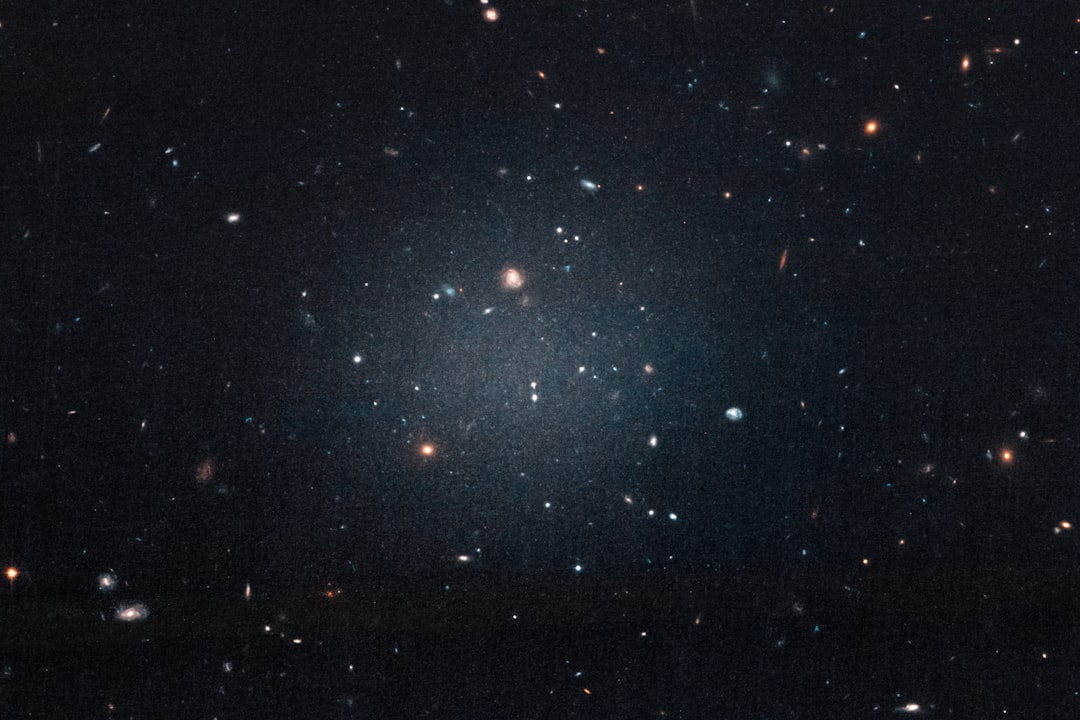
As you delve into the mysteries of the universe, one of the most intriguing concepts that emerges is dark matter. This elusive substance, which makes up about 27% of the universe, remains invisible and undetectable through conventional means. Unlike ordinary matter, which consists of atoms and can be observed through light and other electromagnetic radiation, dark matter does not emit, absorb, or reflect any form of electromagnetic energy.
This characteristic makes it incredibly challenging to study, yet its presence is inferred from gravitational effects on visible matter, such as galaxies and galaxy clusters. The quest to understand dark matter is not just a scientific endeavor; it is a journey into the very fabric of reality itself. The significance of dark matter extends beyond mere curiosity; it plays a crucial role in the formation and structure of the universe.
Without dark matter, galaxies would not have formed as they did, and the cosmos would look vastly different. As you explore this topic, you will uncover the profound implications that dark matter has on our understanding of physics, cosmology, and the fundamental laws that govern the universe. The search for dark matter is not only about identifying what it is but also about unraveling the mysteries of existence itself.
Key Takeaways
- Dark matter is a mysterious substance that makes up about 27% of the universe.
- Scientists are actively searching for dark matter using a variety of experimental and observational methods.
- Nobel laureates have played a significant role in advancing our understanding of dark matter.
- Their contributions include groundbreaking research, innovative theories, and influential experiments.
- Dark matter presents challenges in terms of detection, understanding its nature, and its impact on the universe.
The Search for Dark Matter
The search for dark matter has been a long and arduous journey for scientists and researchers alike. It began in the early 20th century when astronomers noticed discrepancies in the motion of galaxies that could not be explained by the visible mass alone. The pioneering work of Fritz Zwicky in the 1930s laid the groundwork for this exploration when he proposed the existence of “missing mass” in galaxy clusters.
His observations suggested that there was more mass present than what could be accounted for by visible stars and gas. This idea sparked a series of investigations that would span decades. As you consider the ongoing efforts to detect dark matter, you will find that various approaches have been employed.
From particle physics experiments conducted deep underground to astronomical observations using powerful telescopes, researchers are leaving no stone unturned. The development of sophisticated detectors designed to capture potential dark matter particles is at the forefront of this search. These experiments aim to identify weakly interacting massive particles (WIMPs) or other candidates that could explain the nature of dark matter.
Each new discovery brings scientists one step closer to understanding this enigmatic component of our universe.
The Role of Nobel Laureate in Dark Matter Research

In the realm of scientific discovery, Nobel Laureates often stand out as beacons of innovation and insight. Their contributions to dark matter research have been pivotal in shaping our understanding of this mysterious substance. These distinguished individuals have dedicated their lives to unraveling the complexities of dark matter, employing a combination of theoretical frameworks and experimental techniques.
Their work not only advances scientific knowledge but also inspires future generations of researchers to continue exploring the unknown. As you examine the role of Nobel Laureates in this field, you will notice that their influence extends beyond their individual research contributions. They often serve as mentors and leaders within the scientific community, guiding collaborative efforts and fostering interdisciplinary approaches to tackle the challenges posed by dark matter studies.
Their recognition by the Nobel Committee highlights the importance of their work and underscores the significance of dark matter research in the broader context of physics and cosmology.
Nobel Laureate’s Contributions to Dark Matter Studies
| Nobel Laureate | Contribution to Dark Matter Studies |
|---|---|
| James Peebles | Pioneering work in physical cosmology, including the study of dark matter and its implications for the universe. |
| George F. Smoot | Contributions to the Big Bang theory and the study of cosmic microwave background radiation, which provides insights into dark matter. |
| Saul Perlmutter | Discovery of the accelerating expansion of the universe, which has implications for the nature of dark matter. |
The contributions of Nobel Laureates to dark matter studies are diverse and multifaceted. For instance, some have focused on theoretical models that propose various candidates for dark matter particles, while others have developed innovative experimental techniques to detect these elusive entities. Their groundbreaking research has provided critical insights into the properties and behaviors of dark matter, helping to refine our understanding of its role in cosmic evolution.
One notable example is the work surrounding supersymmetry, a theoretical framework that suggests a relationship between fundamental particles. This theory posits that every particle has a superpartner, some of which could potentially account for dark matter. Nobel Laureates who have explored these ideas have opened new avenues for research, prompting further investigation into how these particles might interact with ordinary matter.
Their contributions not only advance theoretical physics but also lay the groundwork for future experimental endeavors aimed at uncovering the nature of dark matter.
The Nature of Dark Matter
Understanding the nature of dark matter is one of the most pressing questions in modern astrophysics. While its existence is widely accepted due to its gravitational effects, its composition remains a mystery. Various hypotheses have been proposed regarding what dark matter might be made of, ranging from weakly interacting massive particles (WIMPs) to axions and sterile neutrinos.
Each candidate presents unique challenges and opportunities for detection, making this an exciting yet complex area of research. As you explore these possibilities, you will encounter debates among scientists regarding which models are most plausible. Some researchers advocate for WIMPs as the leading candidate due to their theoretical underpinnings in particle physics, while others argue for alternative explanations that could better fit observational data.
The ongoing discussions highlight the dynamic nature of scientific inquiry, where new evidence can shift paradigms and lead to breakthroughs in understanding.
The Challenges of Studying Dark Matter
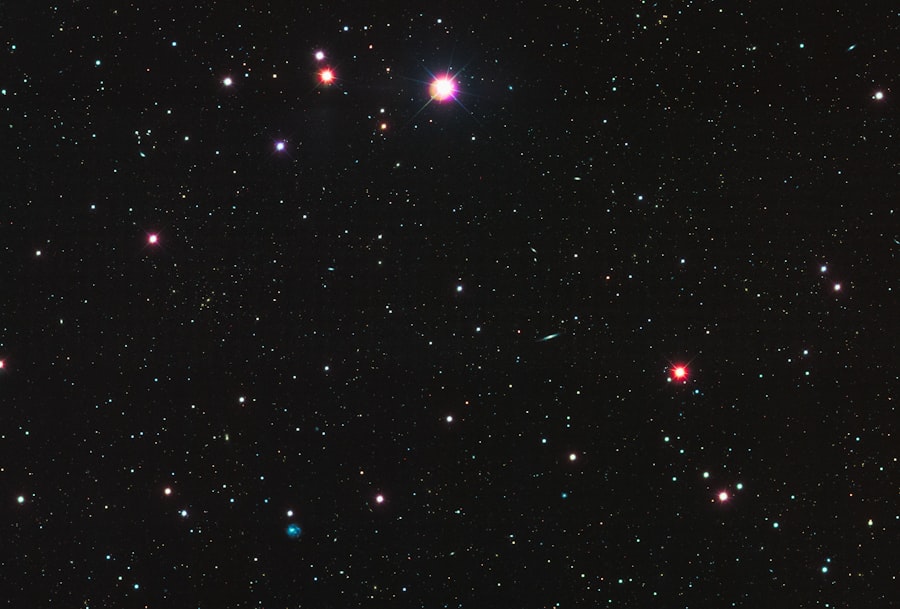
Studying dark matter presents numerous challenges that researchers must navigate. One significant hurdle is its invisibility; since dark matter does not interact with light or other forms of electromagnetic radiation, traditional observational techniques are ineffective. This necessitates innovative approaches to detect its presence indirectly through gravitational effects on visible matter.
As you consider these challenges, it becomes clear that creativity and perseverance are essential traits for scientists working in this field. Another challenge lies in the vastness of space and time involved in cosmic phenomena. Dark matter influences structures on scales ranging from individual galaxies to large-scale cosmic formations over billions of years.
This complexity requires researchers to employ advanced simulations and models to understand how dark matter interacts with ordinary matter throughout cosmic history. The interplay between theory and observation is crucial in piecing together the puzzle of dark matter’s role in shaping the universe.
The Impact of Dark Matter on the Universe
The impact of dark matter on the universe cannot be overstated; it fundamentally alters our understanding of cosmic structure and evolution. Without dark matter’s gravitational influence, galaxies would not have formed as they did, leading to a vastly different cosmic landscape. As you reflect on this impact, consider how dark matter acts as a scaffolding for visible structures, guiding their formation and stability over time.
Moreover, dark matter plays a critical role in cosmological models that describe the expansion and fate of the universe. Its presence affects calculations related to cosmic microwave background radiation and large-scale structure formation. Understanding how dark matter interacts with other components of the universe—such as dark energy—can provide insights into fundamental questions about the nature of reality itself.
The implications extend beyond astrophysics; they touch upon philosophical inquiries about existence and our place within the cosmos.
Dark Matter Experiments and Observations
The pursuit of understanding dark matter has led to a plethora of experiments and observational campaigns designed to uncover its secrets. Ground-based detectors like those found in deep underground laboratories aim to capture potential interactions between dark matter particles and ordinary matter. These experiments often involve sophisticated technologies capable of detecting minuscule energy deposits from rare interactions, pushing the boundaries of sensitivity in particle detection.
In addition to terrestrial experiments, astronomical observations play a vital role in studying dark matter’s effects on cosmic structures. Telescopes equipped with advanced imaging capabilities allow scientists to map gravitational lensing effects caused by dark matter’s presence around massive objects like galaxy clusters. These observations provide indirect evidence for dark matter’s existence while also offering insights into its distribution across vast cosmic scales.
The Future of Dark Matter Research
Looking ahead, the future of dark matter research holds immense promise as new technologies and methodologies continue to emerge. Upcoming experiments are poised to enhance our ability to detect potential dark matter candidates with unprecedented precision. For instance, next-generation particle accelerators may provide insights into supersymmetry or other theories that could explain dark matter’s nature.
Moreover, advancements in computational modeling will enable researchers to simulate cosmic structures with greater accuracy than ever before. These simulations can help refine our understanding of how dark matter interacts with ordinary matter over time, shedding light on its role in shaping galaxies and large-scale structures in the universe. As you contemplate these future directions, it becomes evident that collaboration across disciplines will be essential in tackling one of science’s most profound mysteries.
Nobel Laureate’s Insights on Dark Matter
Nobel Laureates often provide invaluable insights into complex topics like dark matter through their research and public engagement efforts. Their perspectives can illuminate key questions surrounding this elusive substance while also inspiring broader interest in scientific inquiry among audiences worldwide. By sharing their findings through lectures, publications, and media appearances, they contribute significantly to public understanding of fundamental scientific concepts.
As you consider their insights, you may find that many Nobel Laureates emphasize the importance of interdisciplinary collaboration in advancing our knowledge about dark matter. They often advocate for partnerships between physicists, astronomers, and cosmologists to foster innovative approaches that can address existing challenges within this field effectively. Their commitment to education and outreach serves as a reminder that science thrives when knowledge is shared across boundaries.
Conclusions and Implications of Dark Matter Research
In conclusion, your exploration into dark matter reveals a rich tapestry woven from scientific inquiry, theoretical frameworks, and experimental endeavors aimed at uncovering one of the universe’s greatest mysteries. The contributions made by Nobel Laureates highlight not only individual achievements but also collective efforts within the scientific community to advance our understanding of this enigmatic substance. The implications of dark matter research extend far beyond academic curiosity; they challenge our perceptions about reality itself while prompting philosophical reflections on existence and our place within an ever-expanding cosmos.
As you reflect on these themes, consider how continued exploration into dark matter may ultimately reshape our understanding not just of physics but also of what it means to be human in a universe filled with unknowns waiting to be discovered.
In recent years, the study of dark matter has captivated the scientific community, especially following the groundbreaking work of Nobel Laureates who have significantly advanced our understanding of this mysterious component of the universe. For those interested in delving deeper into the intricacies of dark matter and its implications on cosmology, a related article can be found on My Cosmic Ventures. This article explores the latest research and theories surrounding dark matter, providing valuable insights into its role in the cosmos. You can read more about it by visiting