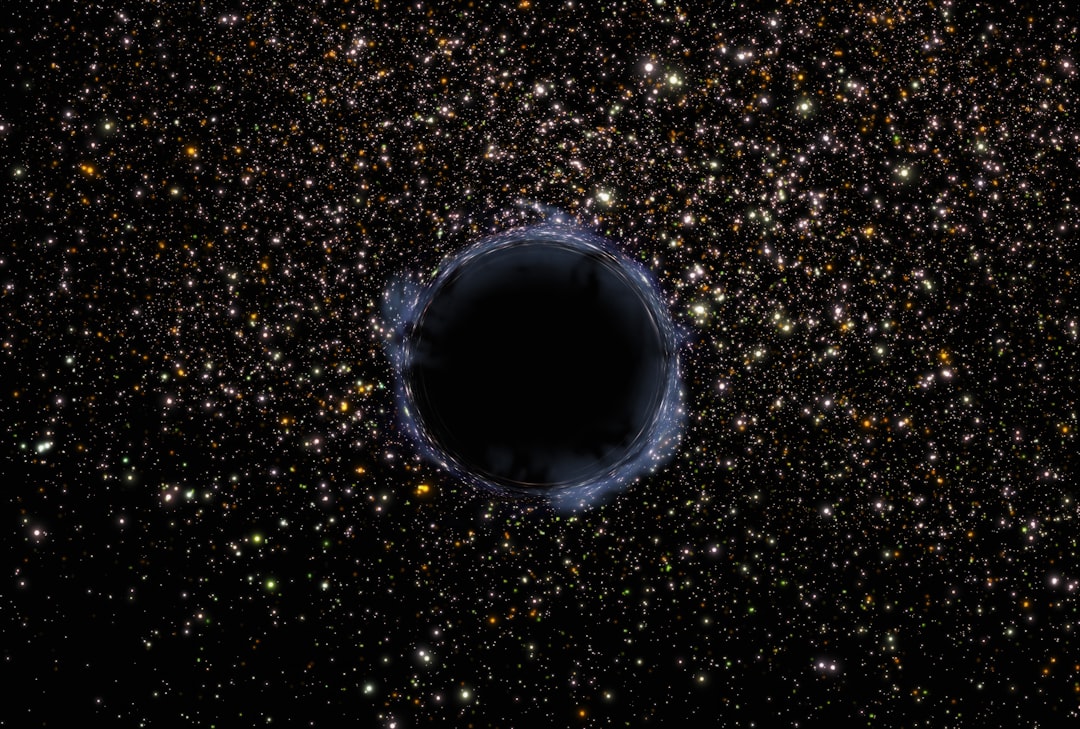
As you delve into the mysteries of the universe, one concept that stands out is dark matter. This elusive substance, which does not emit, absorb, or reflect light, remains invisible to traditional observational methods. Yet, it is believed to constitute about 27% of the universe’s total mass-energy content.
The theory of dark matter has emerged as a crucial framework for understanding the structure and evolution of the cosmos. It challenges your perception of reality, suggesting that what you can see is only a fraction of what exists. The significance of dark matter extends beyond mere curiosity; it plays a pivotal role in explaining various astronomical phenomena.
From the rotation curves of galaxies to the cosmic microwave background radiation, dark matter provides a cohesive narrative that ties together disparate observations. As you explore this theory, you will uncover the intricate web of evidence and speculation that surrounds dark matter, revealing how it shapes your understanding of the universe.
Key Takeaways
- Dark matter theory proposes the existence of a mysterious form of matter that does not emit or interact with electromagnetic radiation, making it invisible to traditional telescopes.
- The historical background of dark matter theory dates back to the 1930s, when Swiss astronomer Fritz Zwicky first observed discrepancies in the mass of galaxy clusters, leading to the hypothesis of “missing mass.”
- Scientists have been searching for dark matter using a variety of methods, including direct and indirect detection experiments, as well as astronomical observations and simulations.
- Theoretical models of dark matter include cold dark matter (CDM), warm dark matter (WDM), and self-interacting dark matter (SIDM), each with different implications for the structure and evolution of the universe.
- Observational evidence for dark matter includes the rotation curves of galaxies, the gravitational lensing of distant objects, and the cosmic microwave background, all of which point to the presence of unseen mass in the universe.
Historical Background of Dark Matter Theory
The journey into dark matter theory began in the early 20th century when astronomers first noticed discrepancies in the motion of galaxies. You might find it fascinating that in 1933, Swiss astronomer Fritz Zwicky observed that galaxies within the Coma Cluster were moving at such high speeds that they should have flown apart if only visible matter were present. This led him to propose the existence of “dark matter,” a term that would later become synonymous with the unseen mass influencing cosmic structures.
As you trace the evolution of this theory, you will encounter key figures and milestones that shaped its development. In the 1970s, Vera Rubin’s work on galaxy rotation curves provided compelling evidence for dark matter’s existence. She discovered that stars at the edges of galaxies were orbiting at speeds that defied Newtonian physics, suggesting an unseen mass exerting gravitational influence.
This pivotal moment solidified dark matter’s place in astrophysics and set the stage for further exploration into its nature and implications.
The Search for Dark Matter

Your quest to understand dark matter involves a multifaceted search that spans both theoretical and experimental realms. Scientists have employed various methods to detect this elusive substance, ranging from astronomical observations to particle physics experiments. One of the primary avenues of investigation is through gravitational lensing, where light from distant objects is bent around massive structures, revealing the presence of unseen mass.
As you explore this phenomenon, you will appreciate how it serves as a cosmic magnifying glass, allowing researchers to infer the distribution of dark matter in galaxy clusters. In addition to gravitational lensing, direct detection experiments are underway in underground laboratories around the world. These experiments aim to capture interactions between dark matter particles and ordinary matter.
You may find it intriguing that these efforts involve sophisticated technologies designed to minimize background noise and enhance sensitivity. Despite significant investments and advancements, the search for dark matter particles has yet to yield definitive results, leaving scientists both hopeful and frustrated.
Theoretical Models of Dark Matter
| Theoretical Models of Dark Matter | Description |
|---|---|
| Cold Dark Matter (CDM) | A type of dark matter that moves slowly compared to the speed of light and forms large-scale structures like galaxies and clusters. |
| Warm Dark Matter (WDM) | A type of dark matter that moves faster than CDM, smoothing out small-scale structures and potentially addressing some discrepancies with observations. |
| Self-Interacting Dark Matter (SIDM) | A model where dark matter particles can interact with each other through forces other than gravity, potentially explaining certain astrophysical observations. |
| Axion | A hypothetical elementary particle that could solve the strong CP problem in quantum chromodynamics and also serve as a candidate for dark matter. |
As you navigate through the theoretical landscape of dark matter, you will encounter a variety of models that attempt to explain its properties and behavior. One of the most widely accepted frameworks is the cold dark matter (CDM) model, which posits that dark matter consists of slow-moving particles that clump together under gravity. This model successfully explains large-scale structures in the universe and aligns with observations of cosmic microwave background radiation.
However, alternative theories have emerged as well, challenging the CDM paradigm. For instance, warm dark matter (WDM) suggests that dark matter particles have a higher velocity than their cold counterparts, potentially addressing certain discrepancies in galaxy formation models. You may also come across modified gravity theories, such as MOND (Modified Newtonian Dynamics), which propose alterations to our understanding of gravity itself rather than invoking unseen mass.
Each model presents unique implications for your understanding of cosmic evolution and structure formation.
Observational Evidence for Dark Matter
The evidence supporting dark matter’s existence is compelling and multifaceted. As you explore various observational phenomena, you will find that they collectively paint a picture of a universe dominated by this mysterious substance. One of the most striking pieces of evidence comes from galaxy rotation curves, where stars orbiting at high velocities indicate a significant amount of unseen mass within galaxies.
This observation contradicts the predictions made by Newtonian dynamics based solely on visible matter. Another critical piece of evidence lies in the cosmic microwave background radiation (CMB). The CMB provides a snapshot of the early universe, revealing fluctuations in temperature that correspond to density variations.
You will discover that these fluctuations align with predictions made by models incorporating dark matter, further reinforcing its role in shaping cosmic structures. Additionally, studies of galaxy clusters and their gravitational lensing effects offer further validation for dark matter’s existence, as they reveal mass distributions that cannot be accounted for by visible matter alone.
Challenges and Controversies in Dark Matter Theory
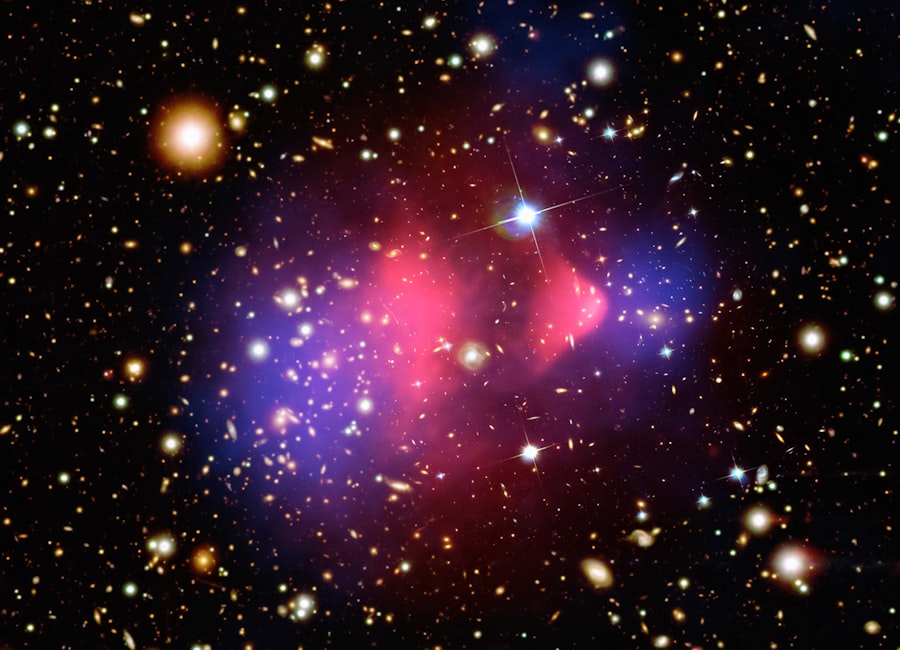
Despite its widespread acceptance, dark matter theory is not without challenges and controversies. As you delve deeper into this field, you will encounter debates surrounding its nature and properties. One significant challenge lies in the lack of direct detection; despite extensive efforts, no conclusive evidence has been found for dark matter particles.
This absence raises questions about whether our current understanding is fundamentally flawed or if we simply need more advanced technologies. Moreover, alternative theories continue to gain traction among some researchers. Modified gravity theories challenge the necessity of dark matter altogether, proposing that our understanding of gravity may need revision rather than invoking unseen mass.
You may find it intriguing how these debates reflect broader philosophical questions about scientific paradigms and the nature of evidence itself. As you engage with these controversies, you will gain insight into the dynamic nature of scientific inquiry and the ongoing quest for knowledge.
The Role of Dark Matter in the Universe
Dark matter plays a crucial role in shaping the universe as you know it today. Its gravitational influence governs the formation and evolution of galaxies, clusters, and large-scale structures. Without dark matter, your understanding of cosmic history would be fundamentally altered; galaxies would not have formed as they did, and the universe would appear vastly different.
As you consider its role in cosmic evolution, you will appreciate how dark matter acts as a scaffolding for visible structures.
Furthermore, dark matter’s interactions with ordinary matter influence star formation rates and galaxy dynamics.
By studying these relationships, you can gain a deeper understanding of how dark matter shapes not only individual galaxies but also the overall architecture of the universe.
Dark Matter and Cosmology
In cosmology, dark matter serves as a cornerstone for understanding the universe’s large-scale structure and evolution. As you explore this field, you will encounter models that incorporate dark matter to explain phenomena such as cosmic inflation and structure formation. The Lambda Cold Dark Matter (ΛCDM) model has become a standard framework for cosmological studies, providing a comprehensive explanation for observations ranging from galaxy distributions to the CMB.
You may find it fascinating how cosmological simulations utilize dark matter to recreate the universe’s evolution over billions of years. These simulations allow researchers to test various scenarios and refine their understanding of cosmic processes. By examining how dark matter interacts with baryonic (ordinary) matter during different epochs, you can gain insights into critical events such as reionization and galaxy mergers.
Experimental Approaches to Studying Dark Matter
Your exploration of dark matter research involves various experimental approaches aimed at uncovering its nature and properties. Direct detection experiments are at the forefront of this endeavor, utilizing sensitive detectors placed deep underground to shield against cosmic rays and other background noise. These experiments aim to capture rare interactions between dark matter particles and atomic nuclei, providing potential evidence for their existence.
In addition to direct detection efforts, collider experiments at facilities like CERN seek to create conditions conducive to producing dark matter particles through high-energy collisions. You may find it intriguing how these experiments not only test theoretical predictions but also push the boundaries of particle physics itself. By exploring both direct detection and collider approaches, you can appreciate the collaborative nature of modern science as researchers from diverse fields work together to unravel one of the universe’s greatest mysteries.
Future Directions in Dark Matter Research
As you look ahead to future directions in dark matter research, several exciting avenues emerge on the horizon. Advances in technology are poised to enhance detection capabilities significantly, allowing scientists to probe deeper into the nature of dark matter particles. Next-generation direct detection experiments aim to achieve unprecedented sensitivity levels, increasing the likelihood of capturing elusive interactions.
Moreover, upcoming astronomical surveys promise to provide new insights into dark matter’s distribution across vast cosmic scales. Projects like the Vera Rubin Observatory will map millions of galaxies and their gravitational effects on light from distant objects, offering fresh data to refine existing models or challenge current paradigms. As you consider these future directions, you will recognize that the quest for understanding dark matter is far from over; it is an evolving journey filled with potential discoveries that could reshape your comprehension of the universe.
Implications of Dark Matter Theory for Physics and Astronomy
The implications of dark matter theory extend far beyond astrophysics; they resonate throughout physics and our understanding of fundamental forces. As you engage with this theory, you will discover how it challenges existing frameworks and prompts scientists to reconsider established principles. The existence of dark matter necessitates new physics beyond the Standard Model, potentially leading to groundbreaking discoveries about particle interactions and fundamental forces.
Furthermore, dark matter research has profound implications for cosmology and our understanding of the universe’s fate. The interplay between dark energy and dark matter shapes models predicting cosmic expansion and ultimate destiny scenarios such as heat death or big rip scenarios. As you contemplate these implications, you will appreciate how dark matter theory serves as a catalyst for scientific inquiry across disciplines, inspiring researchers to explore uncharted territories in their quest for knowledge about our universe’s fundamental nature.
As you continue to explore this captivating field, remember that each discovery brings us closer to unraveling one of science’s most profound mysteries—the nature of dark matter and its role in shaping our universe.
In recent years, the Dark Matter theory has captivated the scientific community, sparking numerous studies and discussions about the unseen forces that shape our universe. A fascinating article that delves into this enigmatic subject can be found on My Cosmic Ventures. This piece explores the latest advancements in Dark Matter research, shedding light on the mysterious particles that are believed to make up a significant portion of the universe’s mass. For a deeper understanding of these cosmic phenomena, you can read the full article by visiting My Cosmic Ventures.
FAQs
What is Dark Matter theory?
Dark Matter theory is a scientific theory that proposes the existence of a type of matter that does not emit or interact with electromagnetic radiation, making it invisible and undetectable by current observational methods.
What evidence supports the Dark Matter theory?
The evidence supporting the Dark Matter theory includes gravitational effects on the motion of galaxies and galaxy clusters, as well as the large-scale structure of the universe. These effects cannot be explained by the visible matter alone, leading scientists to propose the existence of dark matter.
What is the composition of Dark Matter?
The composition of dark matter is currently unknown. It is hypothesized to be made up of particles that do not interact with electromagnetic forces, such as weakly interacting massive particles (WIMPs) or axions. However, these particles have not been directly detected yet.
How does Dark Matter theory relate to the Big Bang theory?
Dark Matter theory is closely related to the Big Bang theory, as it is believed that dark matter played a crucial role in the formation and evolution of the universe. The presence of dark matter is thought to have influenced the distribution of matter and the formation of galaxies and galaxy clusters in the early universe.
What are the implications of the Dark Matter theory?
The implications of the Dark Matter theory are significant for our understanding of the universe and its evolution. If dark matter exists, it would have a major impact on our understanding of the fundamental forces and particles that govern the universe, as well as the formation and structure of galaxies and galaxy clusters.