
The Black Hole Information Paradox represents a fundamental conflict in theoretical physics concerning the preservation of quantum information when matter falls into black holes. Quantum mechanics requires that information be conserved in all physical processes, meaning the quantum state of any system must remain recoverable in principle. However, classical general relativity suggests that information crossing a black hole’s event horizon becomes permanently inaccessible and is ultimately destroyed when the black hole evaporates.
This contradiction arises from the incompatibility between quantum mechanical principles and Einstein’s general theory of relativity in extreme gravitational environments. The paradox emerged following Stephen Hawking’s 1974 discovery that black holes emit thermal radiation due to quantum effects near the event horizon. Hawking radiation appears to carry no information about the matter that formed the black hole, suggesting that information is lost when black holes completely evaporate.
This violates the unitarity principle of quantum mechanics, which demands that physical processes preserve information. The paradox has generated extensive research into quantum gravity theories, holographic principles, and modifications to our understanding of spacetime geometry. Proposed solutions include the holographic principle, which suggests information is encoded on the black hole’s surface rather than its interior, and the firewall hypothesis, which proposes that infalling observers encounter a destructive energy barrier at the event horizon.
These investigations continue to drive theoretical developments at the intersection of quantum mechanics and general relativity.
Key Takeaways
- Hawking radiation reveals that black holes emit radiation, challenging previous notions that nothing escapes them.
- The black hole information paradox questions how information can be preserved if black holes evaporate via Hawking radiation.
- Hawking radiation offers a potential resolution to the paradox by suggesting information may be encoded in the emitted radiation.
- Experimental verification of Hawking radiation remains difficult, but ongoing research aims to detect its signatures.
- Understanding Hawking radiation has significant implications for quantum mechanics, gravity, and the future study of black holes.
The Discovery of Hawking Radiation
In 1974, Stephen Hawking made a revolutionary discovery that would forever change the landscape of theoretical physics: he proposed that black holes are not entirely black but emit radiation due to quantum effects near their event horizons. This phenomenon, now known as Hawking radiation, arises from the peculiar behavior of virtual particles that constantly pop in and out of existence in empty space. When a particle-antiparticle pair forms near the event horizon, one particle may fall into the black hole while the other escapes into space.
The escaping particle manifests as radiation, leading to the conclusion that black holes can lose mass over time and eventually evaporate. Hawking’s revelation was groundbreaking because it suggested that black holes could emit energy and potentially allow for the escape of information. This idea challenged the long-held belief that nothing could escape a black hole’s gravitational pull.
The implications of Hawking radiation were profound, as they opened up new avenues for understanding black holes and their role in the universe. By introducing this concept, Hawking not only provided a mechanism for black hole evaporation but also reignited interest in the fundamental nature of information and its preservation in the cosmos.
Understanding the Black Hole Information Paradox
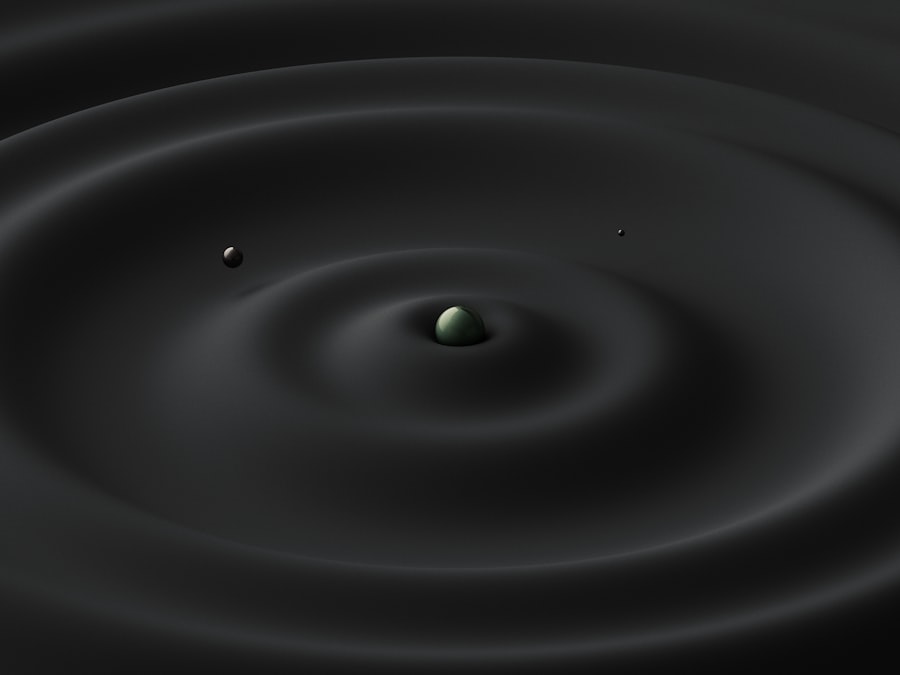
The Black Hole Information Paradox arises from a fundamental conflict between quantum mechanics and general relativity. Quantum mechanics posits that information is preserved, meaning that no physical information can be lost or destroyed. In contrast, general relativity suggests that once matter crosses a black hole’s event horizon, it is irretrievably lost to the outside universe.
This contradiction raises critical questions about the nature of reality and challenges physicists to reconcile these two frameworks. To grasp the significance of this paradox, one must consider the implications for our understanding of time, space, and causality. If information can indeed be lost within a black hole, it would undermine the very foundations of quantum theory, which relies on the principle of unitarity—an essential tenet that ensures information is conserved in quantum processes.
As scientists grapple with these profound questions, they are compelled to explore new theories and models that could provide insights into the nature of black holes and their enigmatic behavior.
Hawking Radiation and its Significance
Hawking radiation is significant not only for its implications regarding black holes but also for its potential to reshape our understanding of fundamental physics.
This process raises intriguing questions about what happens to the information contained within a black hole as it shrinks and ultimately disappears.
If black holes can evaporate completely, does this mean that any information they contained is lost forever? Or is there a mechanism by which this information can be recovered? The significance of Hawking radiation extends beyond theoretical considerations; it also has practical implications for astrophysics and cosmology.
By providing a framework for understanding how black holes interact with their surroundings, Hawking’s discovery has opened new avenues for research into the life cycles of these cosmic giants. Furthermore, it has prompted scientists to investigate how black holes might influence galaxy formation and evolution, as well as their role in the broader structure of the universe. As researchers continue to explore these questions, Hawking radiation remains a pivotal concept in unraveling the mysteries surrounding black holes.
Resolving the Paradox with Hawking Radiation
| Metric | Description | Value / Range | Unit |
|---|---|---|---|
| Black Hole Mass | Mass of the black hole under consideration | 5 – 10 | Solar Masses |
| Hawking Temperature | Temperature of black hole radiation due to quantum effects | 10^-8 to 10^-7 | Kelvin |
| Evaporation Time | Time taken for a black hole to evaporate completely via Hawking radiation | 10^67 to 10^100 | Years |
| Entropy (Bekenstein-Hawking) | Entropy proportional to the area of the event horizon | 10^77 (for solar mass black hole) | Dimensionless (in natural units) |
| Information Loss Paradox | Debate on whether information is lost or preserved during black hole evaporation | Unresolved | N/A |
| Hawking Radiation Spectrum | Blackbody radiation spectrum emitted by black holes | Thermal spectrum | N/A |
| Page Time | Time when half of the black hole’s entropy has been radiated away | Approximately half of evaporation time | Years |
The potential resolution of the Black Hole Information Paradox through Hawking radiation has sparked considerable debate among physicists. Some theorists propose that information may not be lost but rather encoded in the radiation emitted by black holes as they evaporate. This idea suggests that while information may appear to be lost when matter crosses the event horizon, it could still be preserved in some form within the emitted radiation.
This perspective aligns with quantum mechanics’ assertion that information is conserved, offering a possible reconciliation between conflicting theories. However, this resolution is not without its challenges. The precise mechanism by which information could be encoded in Hawking radiation remains unclear, leading to ongoing discussions about how such a process might occur.
Some researchers have suggested that entanglement plays a crucial role in this encoding process, while others have explored alternative models that incorporate concepts from string theory or loop quantum gravity. As scientists continue to investigate these possibilities, they are confronted with complex questions about how information might be retrieved from a black hole’s radiation and what implications this has for our understanding of reality.
Theoretical Implications of Hawking Radiation
The theoretical implications of Hawking radiation extend far beyond its role in addressing the Black Hole Information Paradox. By suggesting that black holes can emit radiation and lose mass over time, Hawking’s discovery challenges traditional notions about these enigmatic objects. It implies that black holes are not static entities but dynamic systems that interact with their environment in complex ways.
This perspective encourages researchers to reconsider how black holes influence their surroundings and how they fit into the broader framework of cosmology. Moreover, Hawking radiation has prompted scientists to explore new theories related to quantum gravity and spacetime itself. The interplay between quantum mechanics and general relativity remains one of the most significant challenges in modern physics, and Hawking’s work has provided valuable insights into this ongoing quest for unification.
By examining how black holes emit radiation and potentially encode information, researchers are gaining a deeper understanding of fundamental concepts such as entropy, thermodynamics, and the nature of spacetime itself.
Experimental Evidence for Hawking Radiation
Despite its theoretical significance, experimental evidence for Hawking radiation remains elusive. Detecting this phenomenon directly poses significant challenges due to its incredibly weak nature compared to other astrophysical processes. The radiation emitted by black holes is expected to be faint and difficult to distinguish from background noise in space.
As a result, researchers have turned to indirect methods and analog experiments to explore the properties of Hawking radiation. One promising avenue involves creating analog systems in laboratory settings that mimic the conditions near a black hole’s event horizon. These experiments aim to observe similar effects to those predicted by Hawking’s theory, providing valuable insights into the underlying mechanisms at play.
While no definitive experimental evidence has yet been obtained, ongoing research continues to push the boundaries of our understanding and may eventually lead to breakthroughs in detecting Hawking radiation or its analogs.
Challenges and Criticisms of the Hawking Radiation Theory
While Hawking radiation has garnered significant attention and support within the scientific community, it is not without its challenges and criticisms. One major point of contention revolves around the question of whether information is truly preserved during black hole evaporation or if it is irretrievably lost. Critics argue that if information is lost, it would violate fundamental principles of quantum mechanics, leading to inconsistencies within established theories.
Additionally, some physicists have raised concerns about the assumptions underlying Hawking’s original calculations. For instance, certain models rely on idealized conditions that may not accurately reflect real-world scenarios involving rotating or charged black holes. These complexities introduce uncertainties into predictions regarding Hawking radiation and its implications for information preservation.
As researchers continue to grapple with these challenges, ongoing debates surrounding Hawking radiation highlight the need for further exploration and refinement of existing theories.
Applications of Hawking Radiation in Astrophysics
The concept of Hawking radiation has far-reaching applications within astrophysics, influencing various areas of research related to black holes and cosmic phenomena. One significant application lies in understanding the life cycles of black holes and their role in galaxy formation and evolution. By studying how black holes emit radiation and lose mass over time, scientists can gain insights into how these massive objects interact with their surroundings and influence star formation processes.
Furthermore, Hawking radiation has implications for understanding dark matter and dark energy—two enigmatic components that constitute much of the universe’s mass-energy content. Some researchers have proposed that primordial black holes formed shortly after the Big Bang could contribute to dark matter through their evaporation via Hawking radiation. This perspective opens new avenues for exploring potential connections between black holes and other fundamental aspects of cosmology.
Future Research Directions in Understanding Black Holes and Hawking Radiation
As scientists continue to investigate the mysteries surrounding black holes and Hawking radiation, several promising research directions are emerging. One area of focus involves developing more sophisticated models that incorporate insights from both quantum mechanics and general relativity. By refining existing theories and exploring new frameworks such as string theory or loop quantum gravity, researchers hope to gain deeper insights into how these two pillars of physics can coexist harmoniously.
Additionally, advancements in observational technology may pave the way for detecting indirect evidence of Hawking radiation or its analogs in laboratory settings. As experimental techniques improve, researchers may uncover new phenomena related to black hole evaporation or information preservation that could shed light on longstanding questions within theoretical physics.
The Role of Hawking Radiation in Unraveling the Black Hole Information Paradox
In conclusion, Hawking radiation plays a pivotal role in addressing one of modern physics’ most profound enigmas: the Black Hole Information Paradox. By proposing that black holes can emit radiation and potentially encode information within it, Stephen Hawking’s groundbreaking discovery has opened new avenues for understanding these enigmatic cosmic entities. While challenges remain in reconciling conflicting theories and obtaining experimental evidence, ongoing research continues to push boundaries and inspire new ideas.
As scientists strive to unravel the complexities surrounding black holes and their interactions with quantum mechanics, Hawking radiation serves as a guiding light illuminating pathways toward deeper insights into reality itself. The journey toward resolving this paradox not only enhances our understanding of black holes but also enriches our comprehension of fundamental principles governing the universe—ultimately bringing us closer to unifying our understanding of physics at its most profound level.
The black hole information paradox has long puzzled physicists, particularly in relation to the implications of Hawking radiation. This phenomenon, proposed by Stephen Hawking, suggests that black holes can emit radiation and potentially lose mass over time, leading to questions about the fate of information that falls into them. For a deeper exploration of these concepts, you can read more in the article on Hawking Radiation and Its Implications.
FAQs
What is the black hole information paradox?
The black hole information paradox is a puzzle resulting from the conflict between quantum mechanics and general relativity. It questions whether information that falls into a black hole is permanently lost, which would violate the principle of quantum theory that information must be conserved.
What is Hawking radiation?
Hawking radiation is theoretical radiation predicted by physicist Stephen Hawking in 1974. It suggests that black holes can emit radiation due to quantum effects near the event horizon, causing them to lose mass and eventually evaporate over time.
How does Hawking radiation relate to the information paradox?
Hawking radiation appears to be purely thermal and random, implying that it carries no information about the matter that fell into the black hole. This leads to the paradox because if the black hole evaporates completely, the information about the initial state seems to be lost, contradicting quantum mechanics.
Why is information loss a problem in physics?
Information loss challenges the fundamental principle of unitarity in quantum mechanics, which states that the evolution of a closed system is reversible and information is preserved. Losing information would mean that the future state of a system cannot be predicted from its past, undermining the laws of physics.
Have there been any proposed solutions to the paradox?
Several solutions have been proposed, including the idea that information is encoded in Hawking radiation in subtle correlations, the holographic principle suggesting information is stored on the event horizon, and the concept of black hole complementarity. However, no consensus has been reached.
What is the holographic principle?
The holographic principle is a theoretical idea that all the information contained within a volume of space can be represented as encoded data on the boundary of that space, such as the event horizon of a black hole. This principle offers a potential way to resolve the information paradox.
Does Hawking radiation mean black holes can disappear?
Yes, according to Hawking’s theory, black holes emit radiation and lose mass over time. If they do not gain mass from other sources, they can eventually evaporate completely, leaving behind no black hole.
Is the black hole information paradox experimentally verified?
Currently, the black hole information paradox remains a theoretical problem. Direct experimental verification is challenging due to the difficulty of observing black holes and Hawking radiation in practice.
Why is the black hole information paradox important?
The paradox is important because it highlights a fundamental conflict between quantum mechanics and general relativity. Resolving it is crucial for developing a consistent theory of quantum gravity and understanding the true nature of black holes and the universe.