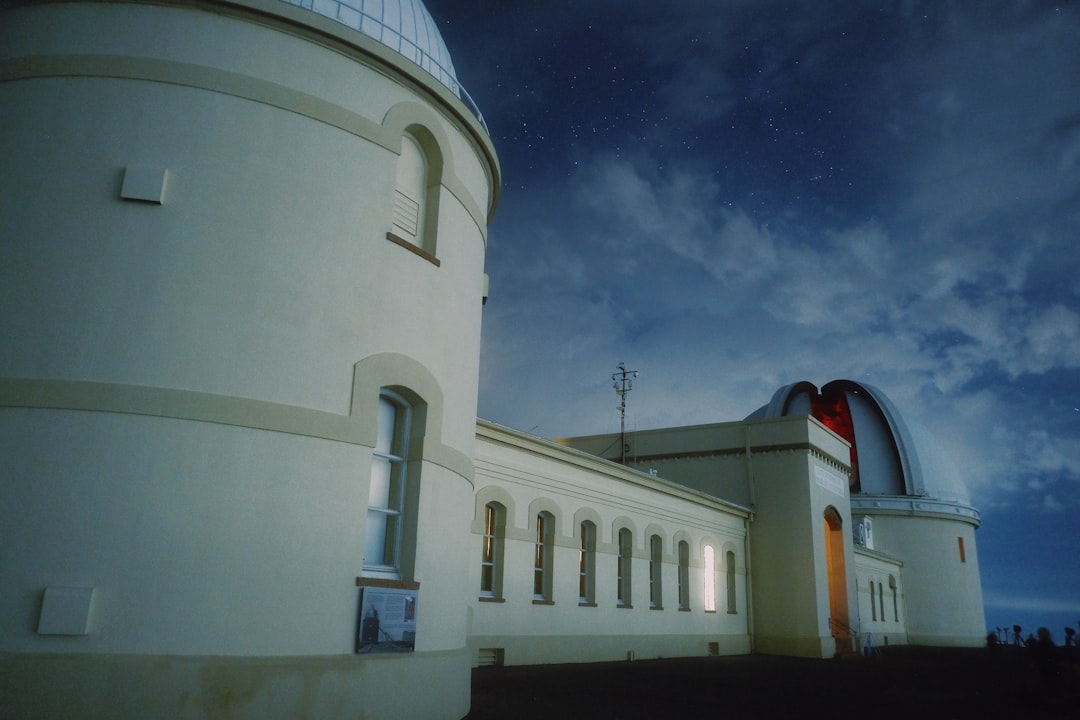
The Keck Observatory’s High-Resolution Spectrograph (HIRES) is a significant astronomical instrument located atop Mauna Kea in Hawaii. The Keck Observatory houses two of the world’s largest optical telescopes, and HIRES serves as one of its primary instruments for celestial observation. HIRES functions by dispersing light into its component wavelengths, enabling astronomers to analyze spectral lines that reveal information about the composition, temperature, density, and motion of astronomical objects.
The spectrograph achieves high-resolution spectroscopy, which has proven instrumental in detecting exoplanets, analyzing stellar atmospheres, and determining the chemical composition of distant galaxies. The instrument’s precision capabilities have advanced modern astronomical research by enabling the detection and study of celestial phenomena that were previously unobservable. HIRES continues to play a central role in contemporary astronomy, contributing to ongoing discoveries about the universe’s structure and composition.
The holographic principle is a fascinating concept in theoretical physics that suggests our universe can be described as a two-dimensional information structure.
Key Takeaways
- Keck’s High-Resolution Spectrograph is a cutting-edge instrument crucial for detailed astronomical observations.
- Spectroscopy enables astronomers to analyze light from celestial objects, revealing their composition, motion, and other properties.
- Advanced technology and innovative design make Keck’s spectrograph highly sensitive and precise for studying distant cosmic phenomena.
- This instrument has significantly contributed to major discoveries, enhancing our understanding of the universe’s structure and evolution.
- Ongoing collaborations and future developments promise to expand the spectrograph’s impact on astrophysics and cosmic exploration.
Understanding Spectroscopy and its Importance in Astronomy
To appreciate the significance of Keck’s High-Resolution Spectrograph, it is essential to understand the fundamental principles of spectroscopy. At its core, spectroscopy is the study of how light interacts with matter. When light from a celestial object passes through a prism or diffraction grating, it is separated into its various wavelengths, creating a spectrum.
Each element emits or absorbs light at specific wavelengths, resulting in unique spectral lines that act as fingerprints for identifying substances in the universe. By analyzing these lines, astronomers can glean vital information about an object’s physical properties. The importance of spectroscopy in astronomy cannot be overstated.
It serves as a bridge between observation and understanding, allowing you to decode the secrets held within the light emitted by stars and galaxies. For instance, by examining the spectral lines of a star, you can determine its temperature, chemical composition, and even its velocity relative to Earth. This information is crucial for constructing models of stellar evolution and understanding the lifecycle of stars.
Moreover, spectroscopy has played a pivotal role in the discovery of exoplanets by detecting the subtle changes in a star’s spectrum caused by orbiting planets. As you explore this field further, you will see how spectroscopy has become an indispensable tool for astronomers seeking to unravel the mysteries of the universe.
The Development and Technology Behind Keck’s High-Res Spectrograph
The development of Keck’s High-Resolution Spectrograph is a testament to human ingenuity and collaboration in the pursuit of knowledge. Designed in the early 1990s, HIRES was built to meet the growing demand for high-precision spectroscopic data in astronomy. The instrument employs advanced optical technology and state-of-the-art detectors to achieve its remarkable performance.
With a resolution exceeding 50,000, HIRES can distinguish between spectral lines that are incredibly close together, enabling astronomers to make precise measurements that were previously unattainable. One of the key technological innovations behind HIRES is its use of a echelle grating, which allows for high dispersion and efficient light collection. This design enables the spectrograph to capture a wide range of wavelengths simultaneously while maintaining exceptional resolution.
Additionally, HIRES is equipped with a variety of detectors that enhance its sensitivity and dynamic range, making it capable of observing faint objects in the universe. As you learn more about the engineering behind this instrument, you will appreciate how these advancements have transformed our ability to explore the cosmos and gather data that can lead to groundbreaking discoveries.
How Keck’s High-Res Spectrograph is Unlocking the Mysteries of the Universe
Keck’s High-Resolution Spectrograph has become a key player in unlocking some of the universe’s most profound mysteries. By providing astronomers with detailed spectral data, HIRES has enabled researchers to probe the fundamental questions surrounding the formation and evolution of celestial bodies. For instance, it has been instrumental in studying distant galaxies and their star formation rates, shedding light on how galaxies evolve over billions of years.
The insights gained from these observations have profound implications for our understanding of cosmic history. Moreover, HIRES has played a crucial role in the search for exoplanets—planets orbiting stars outside our solar system. By analyzing the spectral shifts caused by an exoplanet’s gravitational pull on its host star, astronomers can infer the presence of these distant worlds.
This technique has led to numerous discoveries of exoplanets across various sizes and compositions, expanding our knowledge of planetary systems and their potential for hosting life. As you explore these advancements further, you will see how HIRES continues to push the boundaries of our understanding and inspire new questions about our place in the universe.
The Impact of Keck’s High-Res Spectrograph on Astronomical Research
| Parameter | Value | Unit | Description |
|---|---|---|---|
| Spectral Resolution | 85,000 | R | High resolving power of the spectrograph |
| Wavelength Range | 380 – 800 | nm | Operational wavelength coverage |
| Detector Type | CCD | – | Charge-coupled device for photon detection |
| Instrument Location | Keck I Telescope | – | One of the twin Keck telescopes in Hawaii |
| Radial Velocity Precision | 1 | m/s | Precision in measuring stellar radial velocities |
| Slit Width | 0.86 | arcseconds | Width of the entrance slit for light |
| Instrument Type | Echelle Spectrograph | – | Type of spectrograph used for high resolution |
The impact of Keck’s High-Resolution Spectrograph on astronomical research is profound and far-reaching. Since its inception, HIRES has contributed to thousands of scientific papers and discoveries across various fields within astronomy. Its ability to provide high-quality spectroscopic data has made it an invaluable resource for researchers worldwide.
Whether studying stellar atmospheres or investigating the chemical composition of distant galaxies, HIRES has become synonymous with cutting-edge astronomical research. Furthermore, HIRES has fostered collaboration among scientists from different institutions and disciplines. By providing access to high-resolution spectra, researchers can share data and insights that lead to new discoveries and advancements in our understanding of the universe.
This collaborative spirit has not only enriched individual research projects but has also contributed to a broader scientific community dedicated to unraveling cosmic mysteries. As you consider the impact of HIRES on astronomical research, you will recognize its role as a catalyst for innovation and discovery in an ever-evolving field.
Discoveries Made Possible by Keck’s High-Res Spectrograph
The discoveries made possible by Keck’s High-Resolution Spectrograph are numerous and varied, showcasing its versatility as an astronomical tool. One notable achievement is its contribution to our understanding of stellar populations in distant galaxies. By analyzing spectral data from these galaxies, astronomers have been able to identify different types of stars and their respective ages, providing insights into galaxy formation and evolution over cosmic time scales.
In addition to stellar studies, HIRES has played a pivotal role in identifying exoplanets through radial velocity measurements. This technique involves detecting tiny shifts in a star’s spectrum caused by an orbiting planet’s gravitational influence. The discoveries made using HIRES have expanded our knowledge of planetary systems beyond our own and have raised intriguing questions about the potential for life elsewhere in the universe.
As you explore these groundbreaking findings further, you will appreciate how HIRES continues to shape our understanding of celestial phenomena and inspire future research endeavors.
The Future of Astronomy with Keck’s High-Res Spectrograph
As you look toward the future of astronomy, it becomes clear that Keck’s High-Resolution Spectrograph will continue to play a vital role in advancing our understanding of the universe. With ongoing technological improvements and upgrades planned for HIRES, astronomers can expect even greater capabilities in terms of sensitivity and resolution. These enhancements will enable researchers to probe deeper into cosmic mysteries and gather data from fainter objects than ever before.
Moreover, as new astronomical challenges arise—such as understanding dark matter and dark energy—HIRES will be instrumental in providing critical data needed to address these fundamental questions. The continued collaboration among scientists utilizing HIRES will foster innovative approaches to tackling complex problems in astrophysics. As you contemplate the future possibilities with HIRES, you will recognize its potential to unlock new realms of knowledge and inspire generations of astronomers.
Collaborations and Partnerships in Utilizing Keck’s High-Res Spectrograph
Collaboration is at the heart of scientific progress, and Keck’s High-Resolution Spectrograph exemplifies this spirit through its partnerships with various institutions and researchers worldwide. The observatory actively encourages collaboration among scientists from different backgrounds and disciplines, fostering an environment where ideas can flourish and innovative research can thrive. By sharing access to HIRES data and resources, astronomers can work together on projects that push the boundaries of knowledge.
These collaborations have led to significant advancements in various fields within astronomy—from studying stellar evolution to investigating galaxy formation processes. The synergy created through partnerships enhances research outcomes and promotes a sense of community among scientists dedicated to exploring the cosmos. As you consider these collaborative efforts further, you will appreciate how they contribute not only to individual discoveries but also to a collective understanding of our universe.
Challenges and Limitations of Keck’s High-Res Spectrograph
Despite its remarkable capabilities, Keck’s High-Resolution Spectrograph faces challenges and limitations inherent in astronomical research. One significant challenge is atmospheric interference; even at high altitudes like Mauna Kea, Earth’s atmosphere can distort incoming light from celestial objects. This atmospheric turbulence can affect spectral measurements and limit the precision of observations made with HIRES.
Additionally, while HIRES excels at capturing high-resolution spectra, it may not be suitable for all types of astronomical observations. For instance, certain transient events or rapidly changing phenomena may require different observational techniques or instruments better suited for those specific scenarios. As you explore these challenges further, you will gain insight into how astronomers continually adapt their methods and technologies to overcome obstacles in their quest for knowledge.
The Role of Keck’s High-Res Spectrograph in Advancing Astrophysics
Keck’s High-Resolution Spectrograph plays a pivotal role in advancing astrophysics by providing critical data that informs our understanding of fundamental processes governing celestial bodies. Through its high-resolution spectra, HIRES enables researchers to investigate various phenomena—from stellar nucleosynthesis to galaxy dynamics—contributing significantly to theoretical models that describe these processes. Moreover, HIRES facilitates interdisciplinary research by bridging gaps between different fields within astrophysics.
For example, studies on chemical abundances derived from spectral data can inform theories related to cosmic evolution and star formation rates. As you consider these contributions further, you will recognize how HIRES serves as a cornerstone for advancing knowledge across multiple domains within astrophysics.
The Endless Possibilities of Keck’s High-Res Spectrograph in Unveiling the Universe’s Secrets
In conclusion, Keck’s High-Resolution Spectrograph stands as a testament to human curiosity and ingenuity in exploring the cosmos. Its advanced technology and unparalleled capabilities have unlocked countless mysteries about our universe—from stellar evolution to exoplanet discovery—while fostering collaboration among scientists worldwide. As you reflect on its impact on astronomical research and future possibilities ahead, it becomes evident that HIRES will continue to play an essential role in shaping our understanding of celestial phenomena.
The endless possibilities offered by Keck’s High-Resolution Spectrograph inspire not only current researchers but also future generations eager to explore the cosmos’ secrets. With ongoing advancements in technology and collaborative efforts among scientists worldwide, there is no telling what new discoveries await us on this journey through space and time. As you embark on your own exploration of astronomy, let HIRES serve as a reminder that curiosity knows no bounds—and that each new discovery brings us one step closer to unraveling the mysteries that lie beyond our world.
For more insights into the latest advancements in astronomical research and technology, you can read a related article on this topic at mycosmicventures.
com/’>My Cosmic Ventures.
⚡WATCH NOW: Discover why physicists think the laws of physics might be changing!
FAQs
What is the Keck Observatory high resolution spectrograph?
The Keck Observatory high resolution spectrograph is a scientific instrument designed to analyze the light from astronomical objects with very high spectral resolution. It is used to study the composition, velocity, and other properties of stars, planets, and galaxies.
Where is the Keck Observatory located?
The Keck Observatory is located on the summit of Mauna Kea in Hawaii, USA. It houses two of the largest optical and infrared telescopes in the world.
What is the purpose of a high resolution spectrograph at the Keck Observatory?
The high resolution spectrograph is used to separate incoming light into its component wavelengths with great precision. This allows astronomers to detect fine details in the spectra, such as chemical signatures, Doppler shifts, and magnetic fields.
What kind of research is conducted using the Keck high resolution spectrograph?
Research includes studying the atmospheres of exoplanets, measuring the chemical composition of stars, investigating the dynamics of galaxies, and searching for signs of dark matter or other astrophysical phenomena.
How does a high resolution spectrograph work?
A high resolution spectrograph disperses light through a prism or diffraction grating to separate it into a spectrum. The instrument then records this spectrum with a detector, allowing detailed analysis of the light’s intensity at different wavelengths.
What makes the Keck Observatory’s spectrograph unique?
The Keck Observatory’s spectrograph benefits from the large aperture of the Keck telescopes, advanced optical design, and state-of-the-art detectors, enabling extremely high spectral resolution and sensitivity.
Can the Keck high resolution spectrograph observe in different wavelengths?
Yes, the spectrograph can operate primarily in optical and near-infrared wavelengths, allowing it to study a wide range of astronomical phenomena.
Who uses the Keck Observatory high resolution spectrograph?
Astronomers and researchers from around the world use the instrument for various scientific projects, often through competitive proposal processes to gain observing time.
How does the high resolution spectrograph contribute to exoplanet studies?
It helps detect tiny shifts in starlight caused by orbiting planets (radial velocity method) and analyze exoplanet atmospheres by studying the absorption features in their spectra.
Is the data from the Keck high resolution spectrograph publicly available?
Data access policies vary, but typically, after a proprietary period, observational data may be made available to the broader scientific community through archives.