Space signals are electromagnetic emissions detected from various celestial sources throughout the universe. These signals originate from stars, galaxies, pulsars, quasars, and other astronomical objects, providing scientists with data about cosmic phenomena occurring billions of light-years away. Radio astronomy, which began in the 1930s, has enabled researchers to collect and analyze these transmissions using increasingly sophisticated detection equipment.
The scientific importance of space signals lies in their ability to provide information about the physical properties, composition, and behavior of distant celestial objects. Through spectral analysis and signal processing techniques, astronomers can determine the temperature, chemical composition, magnetic field strength, and rotational characteristics of stars and other cosmic bodies. These measurements contribute to our understanding of stellar evolution, galactic structure, and fundamental physics under extreme conditions not reproducible on Earth.
Modern space signal research encompasses multiple disciplines, including radio astronomy, signal processing, and data analysis. Advanced radio telescopes and interferometer arrays now detect signals across a broad electromagnetic spectrum, from radio waves to gamma rays. This technological progress has led to the discovery of phenomena such as pulsars, cosmic microwave background radiation, and fast radio bursts, each providing new insights into the structure and evolution of the universe.
Key Takeaways
- Space signals provide critical data that enhance our understanding of the universe and support space exploration efforts.
- Advanced technologies and collaborative efforts are essential for analyzing complex space signals effectively.
- Unexpected patterns in space signals can lead to new scientific discoveries and insights into cosmic phenomena.
- Studying space signals plays a key role in the search for extraterrestrial life and understanding its potential existence.
- The future of space signal analysis promises continued innovation and deeper exploration of the cosmos.
The Process of Analyzing Space Signals
The analysis of space signals is a meticulous process that requires a combination of advanced technology and keen scientific insight. Initially, signals are captured using sophisticated instruments such as radio telescopes, which are designed to detect electromagnetic waves emitted by celestial objects. These telescopes can be located on Earth or in space, each offering unique advantages in terms of signal clarity and range.
Once captured, the raw data undergoes a series of processing steps to filter out noise and enhance the quality of the signal. After filtering, scientists employ various analytical techniques to interpret the data. This may involve Fourier transforms to convert time-domain signals into frequency-domain representations, allowing researchers to identify specific frequencies associated with different celestial phenomena.
Machine learning algorithms are increasingly being utilized to sift through vast datasets, identifying patterns that may not be immediately apparent to human analysts. This combination of traditional methods and cutting-edge technology enables scientists to extract meaningful information from the cacophony of cosmic noise.
Uncovering Unexpected Patterns in Space Signals
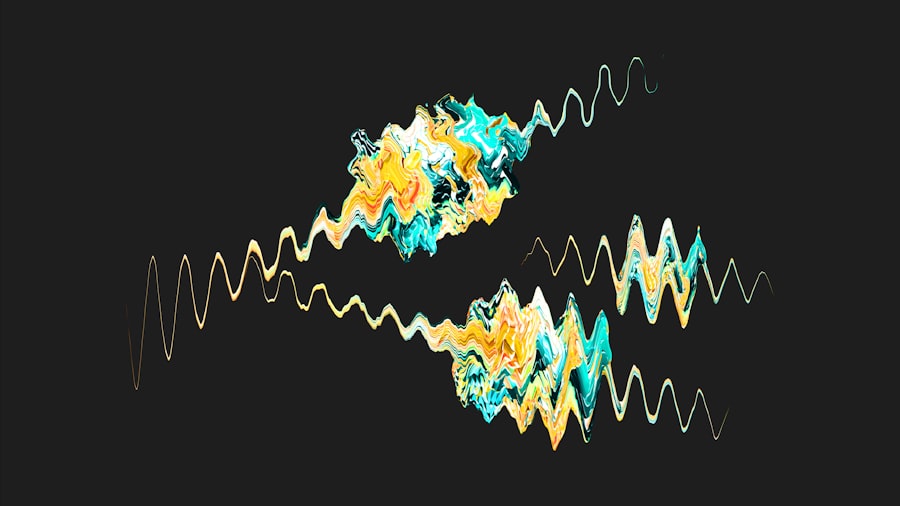
As researchers delve into the analysis of space signals, they often encounter unexpected patterns that challenge preconceived notions about the universe. These anomalies can take many forms, from unusual bursts of radio waves to periodic signals that suggest a structured source. One notable example is the discovery of fast radio bursts (FRBs), which are brief but intense flashes of radio frequency emissions originating from distant galaxies.
Initially thought to be random occurrences, further analysis revealed that some FRBs exhibit periodicity, hinting at an underlying mechanism that remains elusive. The identification of such patterns not only piques scientific curiosity but also prompts deeper investigations into their origins. Each unexpected finding serves as a catalyst for new hypotheses and research avenues.
For instance, the periodic nature of certain signals has led scientists to consider possibilities ranging from astrophysical phenomena like neutron stars to more speculative ideas involving extraterrestrial technology. The ongoing quest to understand these patterns underscores the dynamic nature of space signal analysis and its capacity to reshape our understanding of cosmic events.
The Impact of Space Signals on Scientific Understanding
The impact of space signals on scientific understanding cannot be overstated. They serve as vital tools for probing the mysteries of the universe, offering insights into everything from stellar formation to the behavior of black holes. For instance, gravitational waves—ripples in spacetime caused by massive cosmic events—were first detected through sophisticated signal analysis techniques.
This groundbreaking discovery not only confirmed predictions made by Einstein’s theory of general relativity but also opened a new era in astrophysics, allowing scientists to observe phenomena that were previously invisible. Moreover, space signals have profound implications for cosmology, the study of the universe’s origin and evolution. By analyzing cosmic microwave background radiation—an afterglow from the Big Bang—scientists have gained invaluable information about the early universe’s conditions.
Such findings have led to refinements in models of cosmic inflation and dark matter, fundamentally altering our understanding of how the universe has evolved over billions of years. The continuous flow of data from space signals ensures that scientific understanding remains dynamic and ever-evolving.
New Technologies for Analyzing Space Signals
| Metric | Description | Typical Value | Unit | Importance |
|---|---|---|---|---|
| Signal-to-Noise Ratio (SNR) | Ratio of signal power to noise power | 10 – 40 | dB | High |
| Bit Error Rate (BER) | Rate of erroneous bits in received data | 10-6 to 10-9 | Unitless | High |
| Carrier Frequency | Frequency of the transmitted signal | 2.2 – 8.4 | GHz | Medium |
| Bandwidth | Range of frequencies occupied by the signal | 1 – 20 | MHz | Medium |
| Signal Delay | Time taken for signal to travel from source to receiver | 1 – 20 | Seconds | High |
| Polarization | Orientation of the electromagnetic wave | Linear / Circular | Type | Medium |
| Received Signal Strength Indicator (RSSI) | Power level of received signal | -120 to -30 | dBm | High |
| Frequency Drift | Change in carrier frequency over time | ±1 to ±10 | Hz/s | Medium |
| Modulation Type | Method used to encode information on carrier | BPSK, QPSK, QAM | Type | High |
| Signal Integrity | Measure of signal distortion and errors | 95 – 99.9 | % | High |
The field of space signal analysis is rapidly evolving, driven by advancements in technology that enhance detection capabilities and data processing efficiency. One significant development is the use of artificial intelligence (AI) and machine learning algorithms, which can analyze vast datasets far more quickly than traditional methods. These technologies enable researchers to identify patterns and anomalies in space signals with unprecedented speed and accuracy, facilitating discoveries that might otherwise remain hidden.
For example, next-generation radio telescopes like the Square Kilometre Array (SKA) promise to revolutionize our ability to capture faint signals from distant galaxies. By combining multiple antennas across vast distances, these telescopes will create a powerful observational network capable of probing deeper into the cosmos than ever before.
As these technologies continue to develop, they will undoubtedly unlock new frontiers in our understanding of space signals.
The Role of Space Signals in Space Exploration
Space signals play a crucial role in space exploration, serving as both navigational aids and sources of scientific data. For spacecraft venturing beyond Earth’s atmosphere, signals are essential for communication with mission control and for relaying information about their surroundings. This communication is vital for ensuring mission success and safety, particularly during complex maneuvers such as landings on other celestial bodies.
Moreover, space signals provide valuable insights into the environments encountered by exploratory missions. For instance, data collected from Mars rovers has revealed information about the planet’s geology and atmosphere through spectral analysis of radio signals reflected off its surface. Such findings contribute to our understanding of Mars’ history and its potential for harboring life.
As exploration missions continue to expand into deeper space, the importance of analyzing space signals will only grow, guiding humanity’s quest for knowledge beyond our home planet.
The Connection Between Space Signals and Extraterrestrial Life
One of the most tantalizing aspects of space signal analysis is its potential connection to extraterrestrial life. The search for intelligent life beyond Earth has long been a focus of scientific inquiry, with researchers employing various methods to detect signals that may indicate technological activity from other civilizations. Projects like SETI (Search for Extraterrestrial Intelligence) utilize powerful radio telescopes to scan the skies for unusual patterns or frequencies that could suggest artificial origins.
The discovery of unexplained signals or anomalies has fueled speculation about their possible extraterrestrial origins. While many such signals have been attributed to natural phenomena or terrestrial interference, each unexplained case reignites interest in the possibility that we are not alone in the universe. The ongoing analysis of space signals continues to inspire hope that one day humanity may receive a definitive message from an intelligent civilization, fundamentally altering our understanding of our place in the cosmos.
The Future of Space Signal Analysis
The future of space signal analysis is poised for remarkable advancements as technology continues to evolve at an unprecedented pace. With improvements in computational power and data storage capabilities, researchers will be able to analyze larger datasets more efficiently than ever before. This will enable them to explore previously uncharted territories within cosmic signal analysis, potentially leading to groundbreaking discoveries.
Furthermore, international collaborations among scientists and institutions will play a pivotal role in shaping the future landscape of space signal research. By pooling resources and expertise from around the globe, researchers can tackle complex questions that require diverse perspectives and methodologies.
Collaborative Efforts in Space Signal Analysis
Collaboration is essential in the field of space signal analysis, as it brings together experts from various disciplines to tackle complex challenges. Astronomers, physicists, engineers, and computer scientists often work hand-in-hand to develop innovative solutions for detecting and interpreting space signals. This interdisciplinary approach fosters creativity and accelerates progress by combining different skill sets and perspectives.
International partnerships also play a crucial role in advancing research efforts. Collaborative projects like the Event Horizon Telescope (EHT), which successfully captured an image of a black hole’s event horizon, exemplify how shared resources and expertise can lead to monumental achievements in science. By fostering an environment where knowledge is freely exchanged and ideas are nurtured, collaborative efforts in space signal analysis will continue to push the boundaries of what is possible.
The Importance of Space Signals in Understanding the Universe
Space signals are indispensable for understanding the universe’s fundamental workings. They provide critical information about celestial phenomena that cannot be observed through conventional means alone. For instance, gravitational waves have opened new avenues for studying cosmic events such as black hole mergers and neutron star collisions—events that were previously undetectable through traditional electromagnetic observations.
Moreover, space signals contribute significantly to our understanding of cosmology and astrophysics by offering insights into dark matter and dark energy—two enigmatic components that make up a substantial portion of the universe’s mass-energy content. By analyzing cosmic microwave background radiation and other signals from deep space, scientists can refine their models and theories about how these mysterious forces shape the universe’s evolution.
The Ongoing Quest to Unlock the Secrets of Space Signals
The quest to unlock the secrets hidden within space signals is an ongoing journey that continues to inspire generations of scientists and explorers alike. As technology advances and our understanding deepens, researchers are poised to make discoveries that could redefine humanity’s place in the cosmos. From uncovering unexpected patterns to exploring potential connections with extraterrestrial life, each step forward brings us closer to answering some of our most profound questions.
Ultimately, space signals serve as both a mirror reflecting our curiosity about the universe and a beacon guiding us toward new horizons of knowledge. As humanity continues its exploration beyond Earth’s atmosphere, it remains committed to deciphering these cosmic messages—each signal a reminder that we are part of something far greater than ourselves. The ongoing analysis of space signals promises not only to enhance scientific understanding but also to inspire wonder about the vastness and complexity of existence itself.
In the realm of space signal analysis, understanding the intricacies of cosmic signals is crucial for advancing our knowledge of the universe. A related article that delves into this topic can be found on My Cosmic Ventures, which explores various methodologies and technologies used in the detection and interpretation of signals from space. For more insights, you can read the article [here](https://www.mycosmicventures.com/sample-page/).
FAQs
What is space signal analysis?
Space signal analysis refers to the process of examining and interpreting signals received from space, such as those from satellites, spacecraft, or astronomical sources, to extract meaningful information.
Why is space signal analysis important?
It is crucial for communication with spacecraft, navigation, scientific research, and monitoring space weather. It helps in understanding the data transmitted from space missions and in detecting signals from celestial bodies.
What types of signals are analyzed in space signal analysis?
Common types include radio waves, telemetry signals, radar signals, and optical signals received from satellites, space probes, and astronomical objects.
What tools are used in space signal analysis?
Tools include signal processing software, spectrum analyzers, digital receivers, and specialized algorithms for noise reduction, modulation recognition, and data decoding.
What challenges are faced in space signal analysis?
Challenges include signal attenuation, interference from terrestrial sources, cosmic noise, Doppler shifts due to relative motion, and the need for high sensitivity and accuracy.
How does space signal analysis contribute to space exploration?
It enables communication with spacecraft, helps in navigation and control, supports scientific experiments by analyzing data from instruments, and assists in detecting and studying extraterrestrial phenomena.
Can space signal analysis detect extraterrestrial intelligence?
While space signal analysis techniques are used in the search for extraterrestrial intelligence (SETI), no confirmed signals from extraterrestrial civilizations have been detected to date.
Is space signal analysis used in satellite communication?
Yes, it is essential for decoding and interpreting signals sent to and from satellites, ensuring reliable communication and data transfer.
What is the role of signal processing in space signal analysis?
Signal processing techniques help filter noise, extract relevant information, and improve the quality and reliability of the received signals from space.
Are there any international organizations involved in space signal analysis?
Organizations like NASA, ESA, and the International Telecommunication Union (ITU) play roles in managing space communications and signal analysis standards.