
The Efficient Writer Universe: A Framework for Clarity and Impact
The pursuit of effective communication is a perpetual endeavor. Whether one is crafting a scientific paper, a business report, or a personal narrative, the goal remains the same: to convey information or ideas with precision, engage the intended audience, and achieve a desired outcome. Within this vast landscape of writing, a particular framework has emerged, gaining traction for its emphasis on structure, clarity, and purpose. This framework, often referred to as the “Efficient Writer Universe,” offers a structured approach to composition, akin to a cartographer meticulously charting unknown territories. It is not a singular dogma, but rather a collection of principles and practices designed to illuminate the writing process, making it less a daunting odyssey and more a navigable journey. This article will delve into the foundational elements of the Efficient Writer Universe, exploring its core components and the benefits it offers to writers of all disciplines.
At the heart of the Efficient Writer Universe lie two fundamental pillars: purpose and audience. Without a clear understanding of why one is writing and for whom one is writing, any subsequent efforts are akin to launching a ship without a destination or navigational tools. These pillars are not static ornaments; they are dynamic forces that shape every word, every sentence, and every structural decision.
Defining the “Why”: Establishing Purpose
The purpose of writing serves as the gravitational center around which all other elements orbit. It is the engine that drives the narrative, the blueprint that guides the construction. A well-defined purpose prevents aimless meandering and ensures that the writer’s energy is directed toward achieving a specific objective.
Internal vs. External Purpose
Within the broader spectrum of purpose, a distinction can be made between internal and external drivers. An internal purpose might be the writer’s desire to explore a complex idea, to process an emotion, or to satisfy a personal curiosity. While these can be powerful motivators, for the purpose of efficient writing, external purposes are often more critical. These external purposes are directed outward, aiming to inform, persuade, entertain, or instruct a specific group.
The Spectrum of Objectives
The spectrum of writing objectives is broad. For instance, a scientific researcher aims to inform their peers about novel findings, establishing a foundation for further inquiry. A marketing professional seeks to persuade potential customers to purchase a product or service, creating a bridge between need and solution. A storyteller endeavors to entertain and engage readers, transporting them to different worlds and eliciting emotional responses. Each of these objectives necessitates a distinct approach to content selection, tone, and structure. The Efficient Writer Universe recognizes that a single approach will not suffice for all scenarios; rather, adaptability based on purpose is key.
Understanding the “For Whom”: Identifying the Audience
Equally crucial is the meticulous identification of the intended audience. The audience is not an abstract entity, but a constellation of individuals with specific backgrounds, knowledge bases, expectations, and potential biases. Ignoring the audience is equivalent to speaking a foreign language to a monolingual listener; the message, however eloquent, will likely fall on deaf ears.
Demographics and Psychographics
Understanding the audience involves delving into both demographics and psychographics. Demographics provide quantifiable data such as age, education level, profession, and geographic location. Psychographics, on the other hand, offer insights into attitudes, values, beliefs, interests, and lifestyle choices. For example, explaining a complex financial concept to a group of seasoned economists will require a different approach than explaining it to a class of high school students. The former may welcome jargon and intricate data, while the latter will necessitate simpler language, relatable analogies, and a clear demonstration of relevance.
Anticipating Needs and Expectations
A skilled writer anticipates the audience’s needs and expectations. What information are they seeking? What questions are likely to arise? What level of detail is appropriate? What tone will resonate most effectively? By placing oneself in the audience’s shoes, a writer can proactively address potential concerns, clarify ambiguities, and ensure that the message is not only understood but also appreciated. This proactive approach transforms writing from a monologue into a dialogue, even in its written form.
In exploring the concept of an efficient writer universe, one can gain valuable insights from the article available at this link. The article delves into the principles and practices that can enhance a writer’s productivity and creativity, offering practical tips and strategies that align with the idea of creating an optimal environment for writing. By understanding these concepts, writers can better navigate their craft and achieve their goals more effectively.
Architectural Blueprints: Structure and Organization
Once the purpose and audience are firmly established, the writer can begin to construct the edifice of their work. This is where the principles of structure and organization come into play, providing the architectural blueprints for a clear and coherent message. A well-organized piece of writing is like a well-designed building; its components are logically arranged, its flow is intuitive, and it serves its intended function effectively.
The Power of the Outline: Charting the Course
Before a single word is committed to the final draft, the creation of an outline is an indispensable step. An outline is not merely a list of topics, but a hierarchical representation of ideas, demonstrating their relationships and relative importance. It is the scaffolding upon which the entire structure will be built.
Hierarchical Organization
Outlines typically employ a hierarchical structure, moving from broad categories to more specific sub-points. This can be visualized as a tree, with the main topic as the trunk, major sections as branches, and supporting details as leaves. This systematic approach ensures that all essential elements are included and that the progression of ideas is logical.
Flexibility and Iteration
Crucially, an outline should not be viewed as an immutable decree, but as a flexible guide. As the writing process unfolds, new insights may emerge, or existing points may require reordering or refinement. The outline serves as a living document, open to iteration and adaptation, ensuring that the final structure remains robust and effective.
Crafting Coherent Paragraphs: The Building Blocks of Meaning
Paragraphs are the fundamental building blocks of written communication. Each paragraph should ideally focus on a single main idea, supported by evidence, examples, or explanations. The ability to construct well-formed paragraphs is essential for clarity and readability.
The Topic Sentence: The Anchor of the Paragraph
A well-placed topic sentence, often at the beginning of a paragraph, serves as its anchor. It clearly states the main point that the paragraph will develop. This allows the reader to quickly grasp the paragraph’s purpose and follow its subsequent development.
Supporting Evidence and Elaboration
Following the topic sentence, supporting sentences provide the necessary evidence, examples, or elaborations to develop the main idea. This might include statistics, anecdotes, expert opinions, or logical reasoning. Without adequate support, a paragraph’s central point can appear unsubstantiated.
Transition Words and Phrases: Seamless Flow
The smooth transition between sentences within a paragraph, and between paragraphs themselves, is crucial for maintaining reader engagement. Transition words and phrases act as linguistic bridges, signaling the relationship between ideas and creating a sense of continuous flow. Examples include “furthermore,” “however,” “in addition,” “consequently,” and “for example.”
The Art of Precision: Language and Style
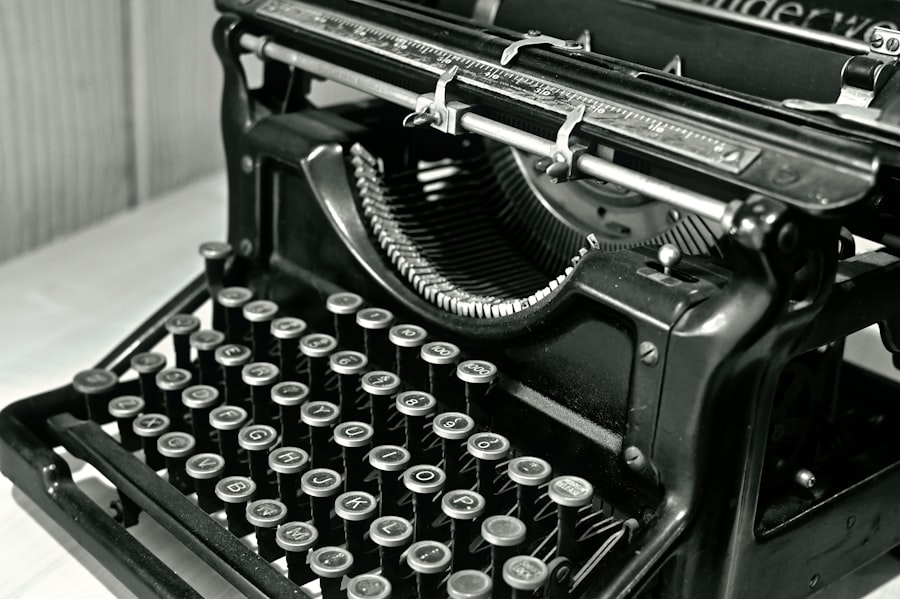
Once the structural framework is in place, the writer can turn their attention to the finer details of language and style. This is where the writer transforms raw material into polished prose, ensuring that every word serves a purpose and contributes to the overall impact. It is about selecting the right tools from a vast linguistic toolbox.
Clarity as the Guiding Light: Avoiding Ambiguity
Clarity is paramount. The Efficient Writer Universe prioritizes unambiguous language that leaves no room for misinterpretation. This involves choosing precise words, avoiding jargon where unnecessary, and constructing sentences that are easy to parse.
Concise and Direct Language
Conciseness is a virtue. Eliminating unnecessary words and phrases, often referred to as “fluff,” makes writing more impactful. Direct language, which gets straight to the point, is generally more effective than convoluted or overly elaborate phrasing. Think of it as stripping away the unnecessary ornamentation from a sculpture to reveal its core form.
Active Voice vs. Passive Voice
The judicious use of active and passive voice plays a significant role in clarity and impact. Active voice, where the subject performs the action, generally leads to more direct and dynamic prose. For example, “The researcher conducted the experiment” is more direct than “The experiment was conducted by the researcher.” While passive voice has its place, overreliance can lead to a less engaging and more circuitous style.
Word Choice: The Nuance of Meaning
The selection of individual words is a critical part of crafting effective prose. Each word carries its own connotations and denotations, and choosing the right one can significantly alter the meaning and tone of a sentence.
Denotation and Connotation
Denotation refers to the literal, dictionary definition of a word, while connotation encompasses the emotional associations and cultural implications that the word carries. For example, “home” denotes a dwelling, but its connotation evokes feelings of warmth, security, and belonging. A writer must be mindful of both to convey their intended meaning accurately and effectively.
Avoiding Clichés and Overused Phrases
Clichés are overused phrases that have lost their original impact and often signal a lack of original thought. Similarly, excessively common or generic phrases can make writing sound uninspired. The Efficient Writer Universe encourages writers to seek fresh and precise language that injects vitality into their prose.
The Power of Revision: Refining and Polishing

The writing process is not complete with the final sentence. The act of revision is a crucial, often underestimated, stage that elevates a draft from a functional piece to a compelling and impactful one. It is during revision that the writer acts as a sculptor, chipping away extraneous material to reveal the masterpiece within.
Self-Editing: The First Pass
The first stage of revision often involves self-editing. This is a critical evaluation of one’s own work, focusing on clarity, coherence, and accuracy. It is akin to a preliminary inspection of the building’s structure before inviting expert surveyors.
Checking for Logic and Flow
During self-editing, the writer meticulously examines the logical flow of ideas. Do the arguments progress smoothly? Are there any gaps in reasoning? Are the transitions between paragraphs effective? This stage ensures that the reader can follow the writer’s thought process without encounteringroadblocks.
Eliminating Redundancy and Repetition
Identifying and eliminating redundant phrases, repetitive ideas, and unnecessary words is a key aspect of self-editing. This process streamlines the writing, making it more efficient and impactful.
Peer Review and External Feedback: A Fresh Perspective
While self-editing is essential, seeking external feedback from peers or mentors can provide invaluable insights. A fresh pair of eyes can often spot issues that the original writer, being too close to the material, might have overlooked.
Identifying Blind Spots
Other readers can identify areas where the writing is unclear, where arguments are weak, or where the tone might be misinterpreted. These “blind spots” are common in any creative or analytical process, and external feedback is crucial for addressing them.
Constructive Criticism for Growth
Effective feedback is constructive, offering specific suggestions for improvement rather than mere general critiques. A writer who actively solicits and incorporates such feedback demonstrates a commitment to continuous learning and refinement.
In exploring the concept of an efficient writer universe, one can gain valuable insights from a related article that delves into the intricacies of productivity and creativity in writing. This piece highlights various strategies that can help writers enhance their skills and streamline their processes. For more information on these techniques, you can read the article here: mycosmicventures.com. By understanding these principles, writers can cultivate a more effective and fulfilling writing practice.
The Efficient Writer’s Toolkit: Tools and Techniques
| Metric | Description | Typical Value | Significance |
|---|---|---|---|
| Writing Speed | Average words written per hour | 500 – 1000 words/hour | Indicates productivity and flow |
| Revision Rate | Percentage of text revised after first draft | 20% – 40% | Reflects attention to quality and refinement |
| Readability Score | Flesch-Kincaid Grade Level | 6 – 8 (for general audience) | Measures clarity and accessibility |
| Vocabulary Diversity | Type-Token Ratio (unique words/total words) | 0.3 – 0.5 | Shows lexical richness |
| Idea Density | Number of distinct ideas per 100 words | 3 – 5 ideas/100 words | Indicates depth and complexity |
| Consistency | Percentage of writing sessions meeting goals | 80%+ | Demonstrates discipline and routine |
| Engagement Rate | Average reader interaction (comments, shares) | Varies by platform | Measures audience connection |
The Efficient Writer Universe is not just a set of principles; it is also supported by a range of practical tools and techniques that writers can employ to enhance their efficiency and effectiveness. These are the instruments that a skilled artisan uses to excel in their craft.
Leveraging Technology: Digital Assistants for the Writer
Modern technology offers a plethora of tools that can assist writers in various aspects of their work, from organization to grammar checking.
Word Processors and Collaboration Platforms
Advanced word processors offer features like grammar and spell-checking, thesauruses, and formatting options that streamline the writing process. Collaboration platforms, such as Google Docs or Microsoft Teams, allow for real-time co-editing and feedback, facilitating teamwork on writing projects.
Grammar and Style Checkers: Enhancing Accuracy
Tools like Grammarly or the built-in checkers in word processors can help identify grammatical errors, punctuation mistakes, and stylistic inconsistencies. While not infallible, they serve as valuable aids in catching common pitfalls and improving the overall polish of the writing.
Research and Citation Management Software
For academic and research writing, software that aids in research organization and citation management can be a significant time-saver. These tools help writers keep track of sources, generate bibliographies, and ensure proper attribution, preventing plagiarism and simplifying the academic writing process.
Developing Writing Habits: Consistency and Practice
Beyond specific tools, cultivating effective writing habits is fundamental to becoming an efficient writer. Consistency and deliberate practice are the bedrock of improvement.
Setting Realistic Goals
Establishing achievable writing goals, whether daily word counts or weekly essay completions, can foster a sense of progress and prevent overwhelm. Breaking down larger projects into smaller, manageable tasks makes them less daunting.
The Power of Regular Practice
Just as an athlete trains regularly to improve their performance, a writer benefits immensely from consistent practice. The more one writes, the more comfortable and proficient they become with expressing ideas, structuring arguments, and refining their prose. This iterative process of writing, revising, and learning is the engine of growth.
In conclusion, the Efficient Writer Universe is not a rigid set of rules but a flexible and adaptable framework. By grounding writing in clear purpose and audience awareness, constructing well-organized and coherent texts, employing precise language, dedicating time to thorough revision, and leveraging available tools and consistent practice, writers can navigate the complexities of communication with greater confidence and achieve more impactful results. It is a journey of continuous learning and refinement, where each piece of writing honed within this universe propels the writer, and their message, closer to impactful understanding.
FAQs
What defines an efficient writer in the context of the writer universe?
An efficient writer in the writer universe is characterized by their ability to produce high-quality content consistently, manage time effectively, and adapt their writing style to various audiences and purposes.
How does the signature of an efficient writer manifest in their work?
The signature of an efficient writer typically includes clarity, coherence, originality, and a strong command of language, which together create engaging and impactful writing.
What role does organization play in the efficiency of a writer?
Organization is crucial for an efficient writer as it helps in structuring ideas logically, maintaining focus, and ensuring that the writing process is streamlined from planning to final editing.
Can efficiency in writing be improved, and if so, how?
Yes, efficiency in writing can be improved through regular practice, setting clear goals, minimizing distractions, using writing tools, and seeking feedback to refine skills.
Why is understanding the writer universe important for aspiring writers?
Understanding the writer universe helps aspiring writers recognize the diverse styles, techniques, and expectations within the writing community, enabling them to develop their unique voice and improve their craft effectively.