
The human brain, a densely interconnected network of neurons, remains one of science’s most profound enigmas. While neuroscience has made remarkable strides in understanding its structure and function, the mechanisms underlying complex cognitive processes like determination and focus have, until recently, been largely conceptual. However, a burgeoning field of research, drawing parallels from the elegantly precise laws of physics, is beginning to offer novel perspectives on how to influence and optimize these critical mental states. This article explores “Unlocking the Determined Brain: Hacking with Physics,” examining how principles from classical and quantum mechanics, thermodynamics, and information theory are being applied to understand, manipulate, and enhance human focus and determination.
The historical separation between the subjective experience of thought and the objective study of matter has long been a conceptual hurdle. Physics, with its fundamental rules governing energy, matter, and their interactions, provides a robust framework for dissecting complex systems. The brain, far from being a mystical entity, can be rigorously viewed through a physical lens. Consider the intricate dance of neurotransmitters and electrical signals; these are not abstract concepts but the quantifiable output of chemical and electrochemical reactions governed by physical laws. Understanding these underlying physical processes offers a pathway to not just observe, but to actively influence brain states.
Neuronal Firing: A Quantum Oscillation?
The electrical impulses that constitute neuronal communication, known as action potentials, are the fundamental units of neural information. While traditionally described using classical electrochemical models, emerging theories are exploring whether quantum phenomena play a more significant role than previously acknowledged.
The Role of Ion Channels
The movement of ions across neuronal membranes, facilitated by ion channels, is the bedrock of action potential generation. These channels, intricate protein structures, operate on principles of molecular diffusion and electrostatic forces, lending themselves to physical modeling. Understanding the precise energetic landscape that governs ion flow can reveal vulnerabilities and opportunities for modulation.
Beyond Classical Electromagnetism
While the macroscopic behavior of neural networks can be explained by classical electromagnetism, some researchers are investigating whether quantum mechanical effects at the molecular level, such as superposition or entanglement, might contribute to the brain’s remarkable processing power and its ability to hold complex states like determination. This remains a highly speculative area, but it opens the door to entirely new avenues of inquiry.
Energy Dynamics: The Brain’s Thermodynamic Budget
Like any complex system, the brain operates within a strict energy budget. Its relentless activity, even in rest, demands a significant portion of the body’s caloric intake. Understanding these energy dynamics, guided by the principles of thermodynamics, is crucial for comprehending how sustained mental exertion, characteristic of determination, is powered and maintained.
The First Law of Thermodynamics: Energy Conservation
The brain’s energy consumption adheres to the first law of thermodynamics; energy is neither created nor destroyed, only transformed. Neuronal activity, from firing action potentials to synthesizing neurotransmitters, consumes chemical energy and dissipates it as heat. Mapping this energy flow can reveal how efficiently the brain operates and where inefficiencies might arise, impacting focus.
Entropy and Cognitive Efficiency
The second law of thermodynamics, concerning entropy and the tendency towards disorder, also offers a compelling analogy for cognitive processes. A focused mind can be seen as a state of low entropy, where mental resources are organized and directed towards a specific goal. Conversely, distraction and disorganization represent an increase in entropy, hindering determined progress.
In exploring the fascinating intersection of neuroscience and physics, an intriguing article titled “How to Hack the Determined Brain with Physics” delves into the ways physical principles can influence cognitive processes and decision-making. This article discusses innovative techniques that leverage the laws of physics to enhance mental resilience and adaptability. For those interested in this captivating topic, you can read more about it in the related article found here: How to Hack the Determined Brain with Physics.
Information Processing: A Physics of Cognition
Information theory, a field deeply rooted in physics, provides a powerful mathematical language to describe the storage, transmission, and processing of information. The brain, as an information processing unit, can be analyzed through this lens, offering insights into the efficiency and robustness of cognitive functions like determination.
Signal-to-Noise Ratio in Neural Networks
In any communication system, including the brain, the signal-to-noise ratio is paramount. Determination can be conceptualized as the brain’s ability to amplify the “signal” of a relevant thought or task while suppressing irrelevant “noise” from distractions. Understanding the physical mechanisms that govern this ratio is key to enhancing cognitive control.
Amplifying the Relevant
Effective determination involves prioritizing information. This can be likened to signal amplification in electronics, where a desired input is strengthened while extraneous signals are attenuated. Neurobiological processes that bolster the synaptic strength associated with a task can be viewed as achieving this amplification.
Suppressing the Irrelevant
The brain’s capacity to ignore distractions is as vital as its ability to focus. This “noise suppression” can be understood through the filtering mechanisms within neural networks, akin to resonant filters in signal processing that allow specific frequencies to pass while blocking others.
Computational Complexity and Cognitive Load
The sheer computational demands of complex tasks can overwhelm the brain’s processing capacity, leading to a breakdown in determination. Physics, particularly in the realm of computational complexity theory, offers frameworks for understanding these limits and developing strategies to manage cognitive load.
The Limits of Processing Power
Certain computational problems are inherently intractable due to their exponential scaling with input size. Similarly, highly complex or multi-faceted tasks can impose an overwhelming cognitive load, challenging the brain’s ability to maintain focus and determination.
Algorithmic Efficiency in Thought
Just as algorithms can be optimized for speed and efficiency, the brain employs its own “algorithms” for information processing. Identifying and strengthening more efficient cognitive strategies can reduce the computational burden and enhance sustained determination.
Quantum Mechanics and the Mind: A Controversial Frontier
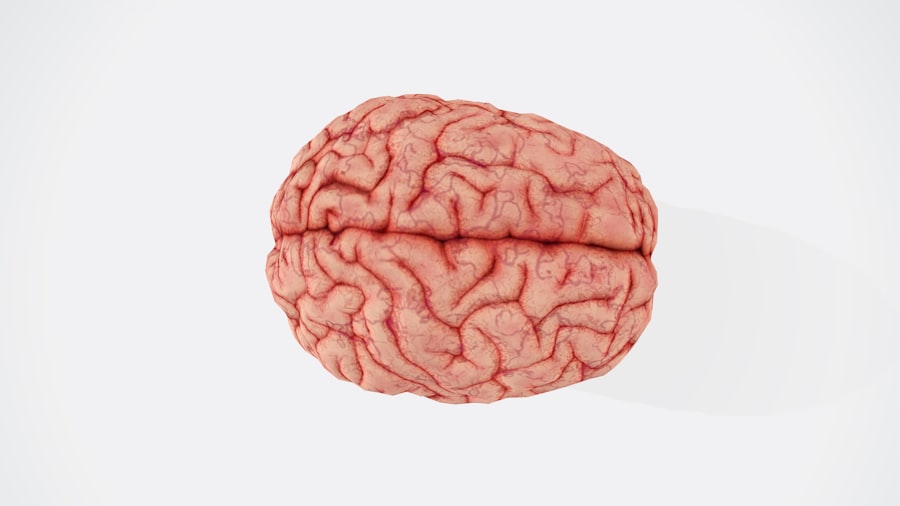
The application of quantum mechanics to consciousness and cognitive processes has been a subject of intense debate, often venturing into speculative territory. However, a more grounded approach is emerging, exploring whether quantum phenomena at the molecular level within neurons could contribute to the brain’s unique capabilities, potentially influencing states like determination.
Decoherence and Maintaining Focus
Quantum systems are notoriously fragile, easily succumbing to “decoherence,” where their quantum properties are lost due to interaction with the environment. In a cognitive context, decoherence could be analogous to losing focus due to external distractions or internal rumination.
The Role of the Environment
The brain is a complex, noisy environment. Understanding how specific molecular structures within neurons might shield quantum information from environmental decoherence could offer insights into how the brain maintains stable cognitive states required for determination.
Manipulating Decoherence Rates
If quantum effects are indeed at play, manipulating the rate of decoherence could become a novel way to enhance cognitive resilience and focus. This could involve, for instance, altering the molecular environment to better preserve quantum states relevant to task engagement.
Quantum Tunneling and Neural Information Transfer
Quantum tunneling, a phenomenon where particles can pass through energy barriers that would be insurmountable according to classical physics, is being explored as a potential mechanism for certain biological processes. Its application to neural information transfer, while speculative, poses intriguing possibilities for understanding rapid and efficient cognitive operations.
Energy Barriers in Molecular Processes
Many biological processes involve overcoming energy barriers. If quantum tunneling plays a role in the precise firing of neurons or the binding of neurotransmitters, it could explain the remarkable speed and efficiency of these events, underpinning swift decision-making and sustained effort.
Enhancing Neural Communication
The theoretical possibility of harnessing quantum tunneling for enhanced neural communication could, in principle, lead to more robust and faster transmission of information, crucial for coordinating complex actions and maintaining persistent determination.
Thermodynamics and Mental Fatigue: The Energy Drain of Thought
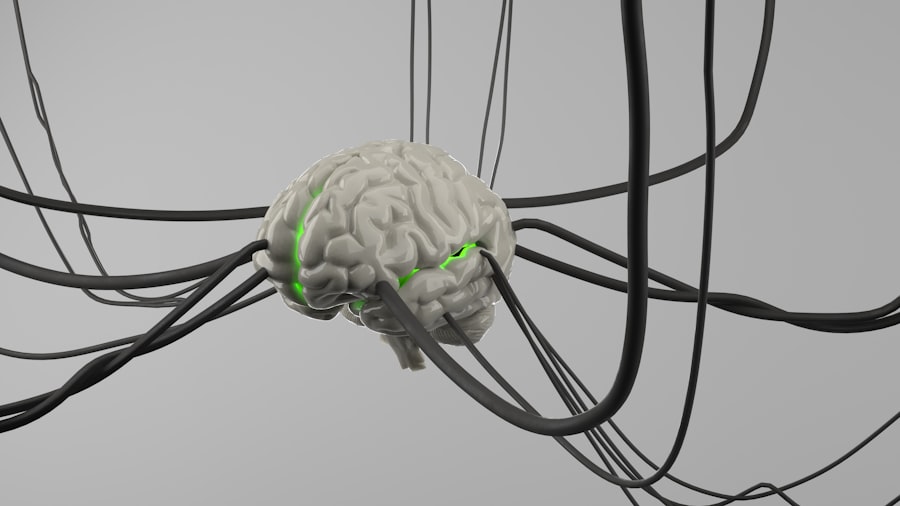
The physical analogy of energy expenditure and depletion, as described by thermodynamics, provides a tangible model for understanding mental fatigue, a significant impediment to determination. Just as physical exertion leads to the depletion of bodily energy stores, prolonged cognitive effort taxes the brain’s resources.
The Role of ATP and Energy Metabolism
Adenosine triphosphate (ATP) is the primary energy currency of the cell. Neuronal activity is heavily reliant on ATP production through metabolic processes. The efficiency of these processes directly impacts the brain’s capacity for sustained cognitive work, impacting determination.
Metabolic Bottlenecks
When metabolic pathways become inefficient or are starved of necessary substrates (like glucose or oxygen), ATP production falters, leading to reduced neuronal function and cognitive fatigue. Identifying these bottlenecks is a key area of research.
Optimizing Energy Production
Strategies aimed at optimizing brain energy metabolism, such as specific nutritional interventions or exercise, can be viewed through a thermodynamic lens as ways to enhance the brain’s energy reserve and extend its capacity for focused effort.
Heat Dissipation and Cognitive Performance
The brain, in its tireless operation, generates heat. Efficient dissipation of this heat is crucial for maintaining optimal neuronal temperature and preventing performance degradation. This relates to the concept of heat transfer in physics.
The Brain as a Heat Generator
The relentless firing of neurons generates a considerable amount of heat. If this heat is not effectively dissipated, it can lead to an increase in local temperature, which can disrupt cellular function and impair cognitive performance, thus hindering determination.
Cooling Mechanisms and Cognitive Resilience
Understanding the brain’s natural cooling mechanisms, and potentially developing external or internal strategies to augment them, could be a way to enhance cognitive resilience and extend periods of sustained focus, thereby supporting determination.
In exploring the fascinating intersection of neuroscience and physics, one intriguing article discusses innovative methods to enhance cognitive function through understanding brain mechanics. This piece delves into how principles of physics can be applied to “hack” the determined brain, offering insights into optimizing mental performance. For those interested in this captivating topic, you can read more about it in the article found at My Cosmic Ventures.
Information Entropy and Cognitive Flexibility: Navigating Complexity
| Physics Principle | Brain Mechanism Targeted | Method of Application | Expected Effect | Example Experiment or Technique |
|---|---|---|---|---|
| Resonance Frequency | Neural Oscillations | Applying external electromagnetic fields at specific frequencies | Enhancement or disruption of brain wave synchronization | Transcranial Magnetic Stimulation (TMS) at alpha frequency |
| Quantum Tunneling | Synaptic Transmission | Hypothetical manipulation of electron tunneling in synapses | Potential alteration of neurotransmitter release timing | Theoretical models in quantum cognition |
| Thermodynamics | Neuronal Metabolism | Modulating temperature to influence metabolic rates | Changes in neuron firing rates and plasticity | Localized brain cooling or heating experiments |
| Electromagnetic Induction | Neuronal Excitability | Inducing electric currents via magnetic fields | Activation or inhibition of specific brain regions | Deep Brain Stimulation (DBS) using electromagnetic coils |
| Nonlinear Dynamics | Neural Network Behavior | Applying chaotic stimuli to disrupt or enhance patterns | Modification of cognitive states and decision making | Chaos theory-based neurofeedback training |
Information entropy, a measure of disorder or uncertainty in a system, offers a valuable perspective on cognitive flexibility and the ability to adapt to new information, which are often intertwined with determination. A determined individual can navigate complex, evolving situations.
High Entropy States: The Realm of Creativity and Exploration
Periods of high mental entropy, characterized by a broader range of activated thoughts and less rigid adherence to a single pathway, can be fertile ground for creativity and exploration. This seemingly disordered state can hold potential for novel solutions.
Randomness as a Catalyst
Introducing a degree of controlled randomness, analogous to random walks in physics, into cognitive processes can help break free from rigid thinking patterns and explore a wider solution space, potentially leading to breakthroughs that fuel determination.
Associative Networks and Information Spreading
The interconnected nature of neuronal networks allows for the spread of information. When these networks are less constrained by a single, dominant pathway (higher entropy), associative thinking can flourish, leading to novel connections and insights.
Low Entropy States: The Power of Focused Decision-Making
Conversely, low entropy states, characterized by a strong emphasis on specific information and a streamlined decision-making process, are essential for decisive action and the execution of determined goals.
Precision and Efficiency
When a clear objective is established, the brain can enter a low entropy state, focusing its resources with precision and efficiency to achieve that objective. This involves the selective activation of relevant neural circuits.
Eliminating Ambiguity
Determination often involves making definitive choices and moving forward. Lowering cognitive entropy helps to reduce ambiguity and hesitation, allowing for swifter and more confident action.
In conclusion, the application of physical principles to the study of the human brain marks a significant evolution in our understanding of cognition. By viewing the brain not as an abstract entity but as a complex physical system governed by quantifiable laws, researchers are beginning to unravel the intricate mechanisms that underpin determination and focus. From the electrochemical dances of neurons to the thermodynamic cost of thought and the information-theoretic principles of cognitive processing, physics provides a powerful toolkit for dissecting and, ultimately, influencing our mental landscapes. While some avenues, particularly those involving quantum mechanics, remain theoretical and require rigorous empirical validation, the overarching trend is clear: the future of unlocking the determined brain may well lie in understanding and harnessing the fundamental forces that shape our universe.
FAQs
What does “hacking the determined brain with physics” mean?
“Hacking the determined brain with physics” refers to using principles and techniques from physics to understand, influence, or optimize brain function and decision-making processes. It involves applying scientific methods to study how the brain operates and how physical laws can be leveraged to enhance cognitive performance.
Is it scientifically possible to influence brain activity using physics?
Yes, it is scientifically possible. Techniques such as transcranial magnetic stimulation (TMS) and transcranial direct current stimulation (tDCS) use electromagnetic fields to modulate neural activity. These methods are grounded in physics and have been shown to affect brain function in controlled ways.
What are some physics-based tools used to study the brain?
Common physics-based tools include magnetic resonance imaging (MRI), functional MRI (fMRI), electroencephalography (EEG), and magnetoencephalography (MEG). These technologies rely on physical principles like magnetic fields and electrical signals to visualize and measure brain activity.
Can understanding physics improve cognitive abilities?
While physics itself does not directly improve cognitive abilities, understanding the physical mechanisms behind brain function can lead to the development of technologies and interventions that enhance cognition, such as neurostimulation devices or brain-computer interfaces.
Are there ethical concerns related to hacking the brain using physics?
Yes, ethical concerns include privacy, consent, potential misuse of neurotechnology, and long-term effects on mental health. It is important that research and applications in this field adhere to strict ethical guidelines to protect individuals’ rights and well-being.