
The concept of a Universe Reset Mechanism is a fascinating topic within the field of cosmology, which seeks to explain the fundamental nature of the universe and its origins. This mechanism suggests that the universe may undergo periodic resets, leading to a fresh start or a new phase of existence. Such a reset could involve the collapse and subsequent rebirth of cosmic structures, potentially altering the laws of physics as they are currently understood.
This idea challenges traditional notions of a linear progression of time and existence, proposing instead a cyclical model where the universe experiences phases of expansion and contraction. In this context, the Universe Reset Mechanism raises profound questions about the nature of reality itself. If the universe can reset, what implications does this have for the concept of time?
Are there remnants of previous universes that influence the current one? These inquiries not only push the boundaries of scientific understanding but also invite philosophical contemplation about existence, consciousness, and the very fabric of reality. As researchers delve deeper into these questions, they uncover layers of complexity that intertwine science with metaphysical considerations.
Key Takeaways
- The Universe Reset Mechanism is a theoretical concept in cosmology exploring how the universe might undergo a fundamental restart or transformation.
- Understanding the origins and scientific basis of this mechanism involves examining cosmological theories and frameworks.
- Practical and ethical implications arise from the potential ability to influence or harness the Universe Reset Mechanism.
- Current challenges include scientific limitations and the complexity of unlocking or validating the mechanism.
- Future cosmology research aims to further unveil and understand the Universe Reset Mechanism and its significance.
The Origins of the Universe Reset Concept
The origins of the Universe Reset concept can be traced back to ancient philosophical ideas and cosmological theories that have evolved over millennia. Early thinkers, such as the Greeks, pondered the cyclical nature of existence, suggesting that the universe undergoes endless cycles of creation and destruction. This notion found its way into various mythologies and religious beliefs, where creation stories often depicted a universe that is reborn after periods of chaos or destruction.
Such narratives laid the groundwork for modern interpretations of cosmic resets. In contemporary science, the Universe Reset Mechanism has gained traction through advancements in theoretical physics and cosmology. The Big Bang theory, which posits that the universe began from an extremely hot and dense state, has led to discussions about what might occur at the end of its expansion.
Some scientists propose that a “Big Crunch” could lead to a collapse, followed by another Big Bang, effectively resetting the universe. This cyclical model aligns with certain interpretations of quantum mechanics and string theory, suggesting that the universe may not be a one-time event but rather part of an ongoing cycle.
The Role of Cosmology in the Universe Reset Mechanism
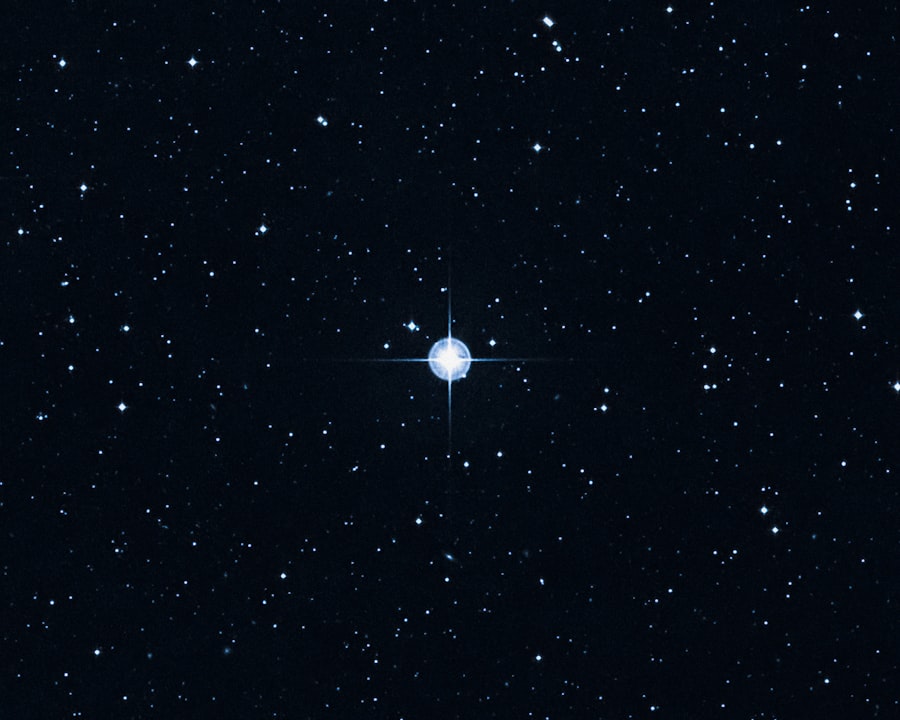
Cosmology plays a pivotal role in understanding the Universe Reset Mechanism by providing a framework for studying the large-scale structure and evolution of the cosmos. Through observations and mathematical models, cosmologists seek to unravel the mysteries surrounding dark matter, dark energy, and cosmic inflation—elements that are crucial to comprehending how a reset might occur. By analyzing cosmic microwave background radiation and galaxy distributions, researchers gather evidence that informs their theories about potential resets.
Moreover, cosmology’s interdisciplinary nature allows for collaboration between physicists, astronomers, and mathematicians, fostering innovative approaches to exploring the Universe Reset Mechanism. The integration of observational data with theoretical models enables scientists to test hypotheses about cosmic evolution and potential resets. As new technologies emerge, such as advanced telescopes and particle accelerators, cosmologists are better equipped to probe deeper into the universe’s past and future, enhancing their understanding of how resets might manifest.
Exploring the Science Behind Universe Reset Mechanism
The scientific exploration of the Universe Reset Mechanism involves delving into complex theories that describe cosmic behavior. One prominent theory is that of cyclic cosmology, which posits that the universe undergoes infinite cycles of expansion and contraction. In this model, each cycle begins with a Big Bang and ends with a Big Crunch, leading to a reset that allows for new cosmic structures to emerge.
This theory challenges conventional views by suggesting that time may not be linear but rather cyclical in nature. Another area of exploration is quantum gravity, which seeks to unify general relativity with quantum mechanics. Some physicists theorize that at extremely high energies—such as those present during a Big Bang—quantum effects could lead to phenomena that facilitate a reset.
By investigating these scientific principles, researchers aim to uncover mechanisms that could trigger a universe reset and understand their implications for our understanding of reality.
The Significance of Universe Reset Mechanism in Cosmology
| Metric | Description | Typical Value / Range | Relevance to Universe Reset Mechanism |
|---|---|---|---|
| Cosmological Constant (Λ) | Energy density of empty space driving accelerated expansion | ~1.1 x 10⁻⁵² m⁻² | Determines fate of universe; influences potential reset scenarios via vacuum energy |
| Entropy of the Universe | Measure of disorder or information content | ~10⁸⁸ (in Boltzmann units) | High entropy states may trigger or prevent universe reset events |
| Hubble Parameter (H₀) | Current expansion rate of the universe | 67–74 km/s/Mpc | Expansion rate affects timing and nature of potential resets |
| Scalar Field Potential Energy | Energy associated with hypothetical fields driving inflation or resets | Varies by model; often ~ (10¹⁶ GeV)⁴ during inflation | Key driver in models proposing universe resets via phase transitions |
| Vacuum Decay Rate | Probability per unit time and volume of false vacuum decay | Extremely low; model-dependent | Potential trigger for universe reset via bubble nucleation |
| Curvature Parameter (Ω_k) | Measures spatial curvature of the universe | Close to 0 (flat) | Curvature influences dynamics relevant to cyclic or reset models |
| Inflation Duration | Time span of rapid exponential expansion in early universe | ~10⁻³⁶ to 10⁻³² seconds | Sets initial conditions for universe; analogous to reset in some theories |
The significance of the Universe Reset Mechanism in cosmology extends beyond theoretical curiosity; it has profound implications for humanity’s understanding of existence itself. If the universe can reset, it challenges long-held beliefs about permanence and stability in the cosmos. This realization prompts deeper philosophical inquiries into humanity’s place within an ever-evolving universe.
It raises questions about whether consciousness persists through resets or if each iteration is entirely distinct. Furthermore, understanding this mechanism could provide insights into fundamental questions about entropy and thermodynamics on a cosmic scale. The second law of thermodynamics states that entropy tends to increase over time; however, if resets occur, it suggests a potential way to counteract this trend on a universal level.
Such revelations could reshape scientific paradigms and influence future research directions in both cosmology and related fields.
Theoretical Frameworks for Universe Reset Mechanism
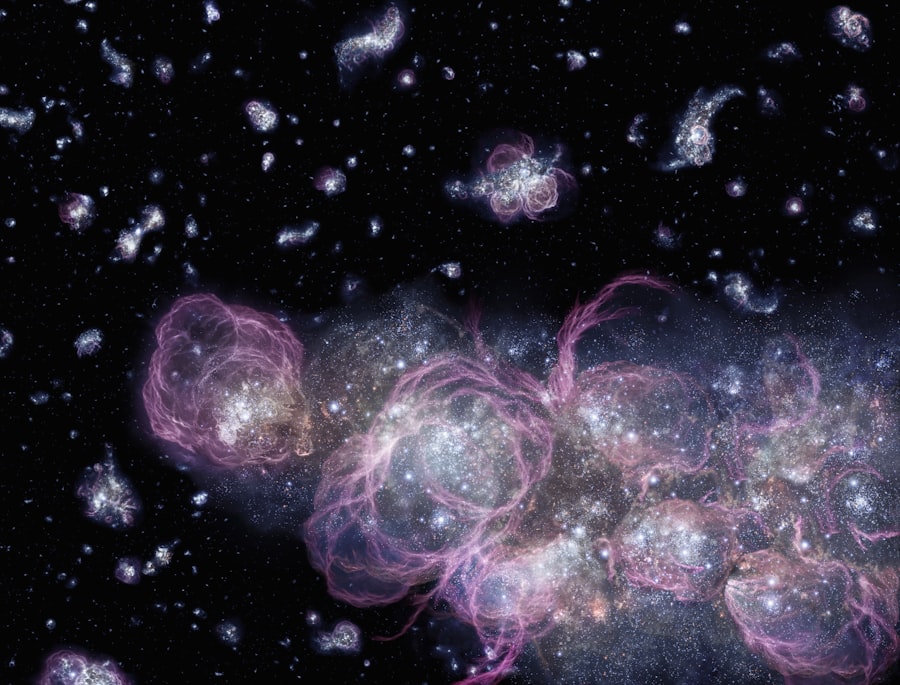
Several theoretical frameworks have emerged to explain the Universe Reset Mechanism, each offering unique perspectives on how cosmic resets might occur. One prominent framework is loop quantum gravity, which posits that space-time is quantized at the smallest scales. This theory suggests that during extreme conditions—such as those found at the beginning or end of a universe—space-time may behave differently than predicted by classical physics.
Such behavior could facilitate transitions between different states of existence. Another framework is string theory, which proposes that fundamental particles are not point-like but rather one-dimensional strings vibrating at different frequencies. In this context, resets could be understood as shifts in vibrational states that lead to new physical laws governing subsequent universes.
These theoretical frameworks provide fertile ground for researchers to explore how resets might occur and what implications they hold for our understanding of reality.
Practical Implications of Universe Reset Mechanism
The practical implications of understanding the Universe Reset Mechanism are vast and multifaceted. For one, it could influence technological advancements in fields such as energy production and materials science. If researchers can unlock the secrets behind cosmic resets, they may discover new forms of energy or materials that operate under different physical laws than those currently known.
This could lead to breakthroughs in sustainable energy solutions or novel technologies that harness previously untapped resources. Additionally, insights gained from studying cosmic resets may inform our approach to existential risks facing humanity. Understanding how universes can reset might provide valuable lessons on resilience and adaptation in the face of catastrophic events on Earth.
By drawing parallels between cosmic cycles and human experiences, researchers can develop strategies for navigating challenges posed by climate change, resource depletion, or other global crises.
Potential Applications of Universe Reset Mechanism
The potential applications stemming from an understanding of the Universe Reset Mechanism are not limited to theoretical exploration; they extend into practical realms as well. For instance, advancements in cosmological research could lead to innovations in space exploration technologies. If scientists can comprehend how resets occur on a cosmic scale, they may develop methods for harnessing energy from cosmic phenomena or even exploring other dimensions or universes.
Moreover, insights gained from studying cosmic resets could influence fields such as artificial intelligence and computational modeling. By applying principles derived from cosmological theories, researchers may create more sophisticated algorithms capable of simulating complex systems—whether they be ecological networks or economic models—allowing for better predictions and decision-making processes.
Ethical Considerations in Harnessing Universe Reset Mechanism
As with any groundbreaking scientific discovery, ethical considerations surrounding the harnessing of the Universe Reset Mechanism must be addressed.
If humanity were to gain insights into resetting universal conditions or harnessing energy from cosmic phenomena, it would be imperative to establish ethical guidelines governing such practices.
Furthermore, there is a need for dialogue surrounding the implications of these discoveries on societal values and beliefs. The idea that humanity could influence cosmic processes may challenge existing worldviews and provoke existential anxieties among individuals and communities. Engaging in thoughtful discussions about these ethical dimensions will be crucial as researchers continue to explore the Universe Reset Mechanism.
Challenges and Limitations in Unlocking Universe Reset Mechanism
Despite its intriguing possibilities, unlocking the secrets behind the Universe Reset Mechanism presents numerous challenges and limitations. One significant hurdle is the lack of empirical evidence supporting cyclical models or reset theories. While mathematical frameworks exist to describe these phenomena, translating them into observable predictions remains a formidable task for researchers.
Additionally, the complexity inherent in understanding cosmic behavior at extreme scales poses significant obstacles. The interplay between quantum mechanics and general relativity remains one of physics’ greatest challenges; reconciling these two frameworks is essential for developing comprehensive theories regarding cosmic resets. As researchers continue to grapple with these issues, progress may be slow but steady.
Future Directions in Cosmology Research: Unveiling the Universe Reset Mechanism
Looking ahead, future directions in cosmology research will undoubtedly focus on unveiling the mysteries surrounding the Universe Reset Mechanism. As technology advances and observational capabilities improve, scientists will have unprecedented opportunities to gather data from distant galaxies and cosmic events. This influx of information will likely fuel new hypotheses regarding cosmic resets and their implications for our understanding of existence.
Moreover, interdisciplinary collaboration will play a crucial role in advancing research efforts. By integrating insights from physics, philosophy, mathematics, and even art, researchers can cultivate innovative approaches to exploring complex questions about reality and existence. As humanity stands on the brink of potentially transformative discoveries within cosmology, embracing curiosity and open-mindedness will be essential in navigating this uncharted territory.
In conclusion, while much remains unknown about the Universe Reset Mechanism, its exploration promises to reshape our understanding of cosmology and existence itself. Through continued research efforts and ethical considerations surrounding these discoveries, humanity may unlock profound insights into the nature of reality—insights that could reverberate across disciplines and generations to come.
In exploring the intriguing concept of a universe reset mechanism in cosmology, one can find valuable insights in the article available on My Cosmic Ventures. This article delves into the theoretical frameworks and implications of such a reset, offering a comprehensive overview of current research in the field. For more information, you can read the full article [here](https://www.mycosmicventures.com/).
FAQs
What is the cosmology universe reset mechanism?
The cosmology universe reset mechanism refers to theoretical processes or models in cosmology that suggest the universe can undergo a “reset,” often implying a cyclical or rebirth scenario where the universe restarts its expansion or evolution after a collapse or phase transition.
Is the universe reset mechanism a proven scientific theory?
No, the universe reset mechanism is currently a theoretical concept. While it is explored in various cosmological models, such as cyclic or bouncing universe theories, it remains speculative and is not confirmed by direct observational evidence.
What are some models that include a universe reset mechanism?
Models that include a universe reset mechanism include the cyclic universe model, the ekpyrotic model, and bouncing cosmologies. These propose that the universe undergoes repeated cycles of expansion and contraction or transitions that effectively “reset” its state.
How does the universe reset mechanism relate to the Big Bang?
In some reset mechanism models, the Big Bang is not the absolute beginning but rather a transition point or “reset” after a previous cosmic phase. This contrasts with the traditional view of the Big Bang as the singular origin of space and time.
What role does entropy play in universe reset theories?
Entropy, or the measure of disorder, is a key consideration in universe reset theories. Some models propose mechanisms to reduce or reset entropy during cosmic cycles to allow for a new low-entropy state, enabling the universe to start anew.
Are there observational evidences supporting the universe reset mechanism?
Currently, there is no direct observational evidence confirming the universe reset mechanism. Cosmologists study cosmic microwave background radiation, large-scale structure, and other data to test predictions of these models, but conclusive support is lacking.
Why is the universe reset mechanism important in cosmology?
The universe reset mechanism is important because it offers alternative explanations for the origin, evolution, and ultimate fate of the universe. It challenges the notion of a singular beginning and explores possibilities of an eternal or cyclic cosmos.
Can the universe reset mechanism explain dark energy or dark matter?
While some cosmological models involving universe resets attempt to incorporate or explain dark energy and dark matter phenomena, these remain open questions. The reset mechanism itself primarily addresses the universe’s large-scale evolution rather than the specific nature of dark components.
Who are some key researchers studying universe reset mechanisms?
Researchers such as Paul Steinhardt, Neil Turok, and others have contributed to cyclic and ekpyrotic universe models that involve reset mechanisms. Many cosmologists worldwide continue to explore these ideas within theoretical and observational frameworks.
Where can I learn more about the cosmology universe reset mechanism?
To learn more, consult scientific literature on cyclic and bouncing cosmologies, review articles in cosmology journals, and educational resources from institutions specializing in astrophysics and cosmology. Popular science books and lectures by experts also provide accessible explanations.