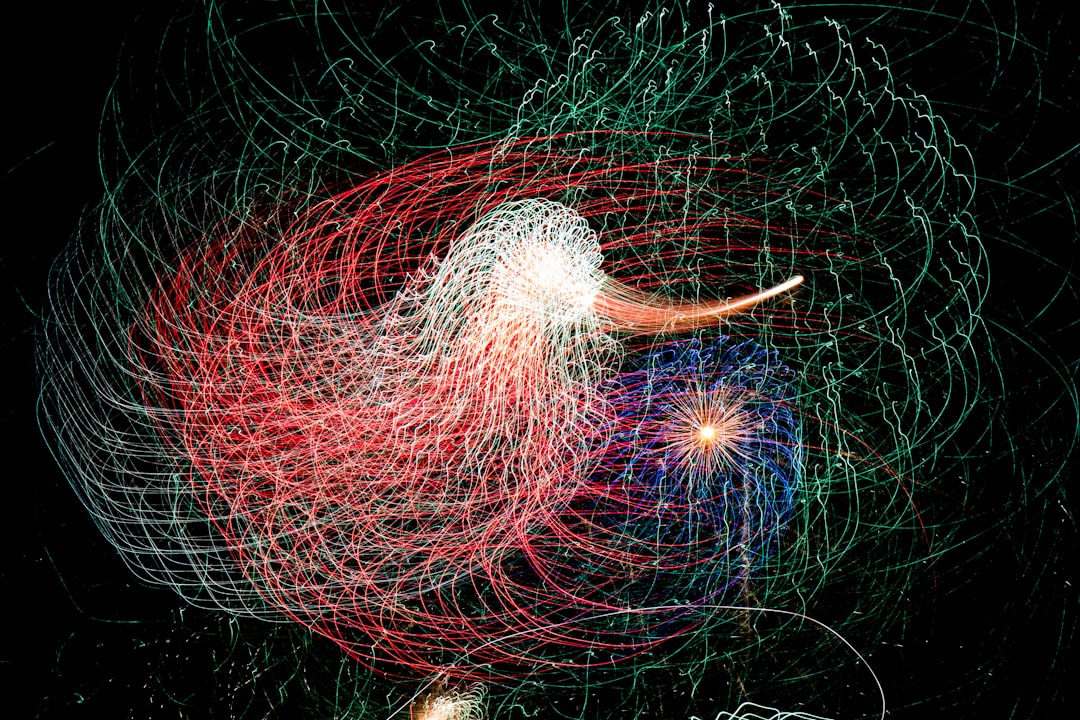
The Cosmic Web represents one of the most profound and intricate structures in the universe, serving as a vast network that connects galaxies, clusters, and filaments of dark matter. This grand tapestry is not merely a collection of celestial bodies; it is a dynamic framework that shapes the very fabric of the cosmos. The Cosmic Web is composed of a complex arrangement of matter, both visible and invisible, which influences the formation and evolution of galaxies over billions of years.
Understanding this structure is crucial for unraveling the mysteries of the universe and our place within it. As astronomers and cosmologists delve deeper into the nature of the Cosmic Web, they uncover layers of complexity that challenge existing paradigms. The interplay between gravity, dark matter, and baryonic matter creates a rich environment for studying cosmic evolution.
The Cosmic Web is not static; it is a living entity that evolves over time, influenced by various forces and phenomena. This article aims to explore the structure and formation of the Cosmic Web, its information processing capabilities, and its implications for our understanding of the universe.
Key Takeaways
- The cosmic web is a vast network of matter that forms the large-scale structure of the universe.
- Dark matter plays a crucial role in shaping the cosmic web and facilitating its information processing.
- Galaxies are interconnected within the cosmic web, influencing and being influenced by its structure.
- Advanced observation and mapping techniques are essential for studying the cosmic web’s information dynamics.
- Understanding the cosmic web’s information processing could revolutionize our knowledge of the universe and inspire new technologies.
The Structure and Formation of the Cosmic Web
The Cosmic Web is characterized by its filamentary structure, where galaxies are not randomly distributed but rather organized into vast filaments and sheets. These filaments are composed primarily of dark matter, which forms the backbone of the Cosmic Web, while galaxies and gas are found along these structures. The formation of this web-like structure can be traced back to the early universe, shortly after the Big Bang.
As the universe expanded and cooled, slight fluctuations in density led to gravitational instabilities that caused matter to clump together. Over billions of years, these clumps grew larger, forming the first stars and galaxies. The gravitational attraction between these structures led to the formation of larger cosmic structures, creating a network that resembles a web.
This process is known as hierarchical clustering, where smaller structures merge to form larger ones. The Cosmic Web’s formation is a testament to the fundamental forces at play in the universe, showcasing how gravity shapes the distribution of matter on a grand scale.
Information Processing in the Cosmic Web

The concept of information processing within the Cosmic Web is an emerging field that seeks to understand how cosmic structures communicate and interact with one another. Just as neurons in a brain transmit information through synapses, galaxies and dark matter within the Cosmic Web can be thought of as nodes that exchange gravitational and electromagnetic signals. This information processing is crucial for understanding how galaxies evolve and how cosmic structures respond to various forces.
Researchers have begun to explore how these interactions can be modeled mathematically, using simulations to replicate the behavior of galaxies within the Cosmic Web. By analyzing these simulations, scientists can gain insights into how information flows through this vast network. This understanding could lead to breakthroughs in cosmology, as it may reveal patterns and relationships that were previously obscured by the sheer scale of the universe.
The Role of Dark Matter in the Cosmic Web’s Information Processing
| Metric | Description | Value/Range | Significance in Cosmic Web Information Processing |
|---|---|---|---|
| Dark Matter Density | Average density of dark matter in cosmic filaments | ~10^-27 kg/m³ | Determines gravitational potential wells that guide baryonic matter flow and information pathways |
| Filament Length | Typical length of dark matter filaments in the cosmic web | 10 – 100 Megaparsecs | Defines the scale over which information and matter are transmitted across the universe |
| Dark Matter Halo Mass | Mass of dark matter halos at nodes of the cosmic web | 10^12 – 10^15 Solar Masses | Acts as information hubs, influencing galaxy formation and clustering patterns |
| Gravitational Potential Fluctuations | Variations in gravitational potential due to dark matter distribution | 10^-5 (dimensionless, relative scale) | Modulates the flow of matter and energy, affecting signal propagation in the cosmic web |
| Information Transfer Rate | Effective rate of information flow via gravitational interactions | ~Speed of light (3 x 10^8 m/s) | Sets the fundamental limit for information propagation across cosmic structures |
| Connectivity Degree | Average number of filaments connected to a dark matter halo | 3 – 5 | Determines network complexity and efficiency of information processing in the cosmic web |
Dark matter plays a pivotal role in shaping the Cosmic Web and facilitating its information processing capabilities. Although it cannot be observed directly, dark matter exerts a significant gravitational influence on visible matter, guiding the formation and movement of galaxies. It acts as a scaffolding for the Cosmic Web, providing the necessary structure for galaxies to form and evolve.
The interactions between dark matter and baryonic matter create a complex web of gravitational forces that govern how galaxies move and interact with one another. This dynamic relationship allows for the transfer of information across vast distances in space. For instance, when a galaxy experiences a merger with another galaxy or cluster, it can trigger a cascade of events that affect neighboring structures within the Cosmic Web.
Understanding these interactions is essential for deciphering the underlying mechanisms that drive cosmic evolution.
The Connection Between Galaxies and the Cosmic Web
Galaxies are not isolated entities; they are deeply interconnected with the Cosmic Web. Their formation and evolution are influenced by their position within this vast network. Galaxies located along filaments tend to have different properties compared to those situated in voids or clusters.
For example, galaxies in denser regions often experience more frequent interactions and mergers, leading to increased star formation rates. The connection between galaxies and the Cosmic Web also extends to their chemical composition and morphology. Galaxies that reside in regions with abundant gas tend to exhibit different star formation histories than those in more isolated environments.
This relationship highlights how the Cosmic Web serves as a conduit for material exchange, influencing not only the physical characteristics of galaxies but also their evolutionary trajectories.
Observing and Mapping the Cosmic Web

Observing and mapping the Cosmic Web presents significant challenges due to its vast scale and the presence of dark matter. However, advancements in observational techniques have allowed astronomers to gain valuable insights into this intricate structure. Surveys utilizing powerful telescopes have begun to reveal the distribution of galaxies and their clustering patterns within the Cosmic Web.
One notable approach involves using redshift surveys to measure the distances to galaxies based on their light spectra. By mapping these distances across large areas of the sky, researchers can create three-dimensional models of the Cosmic Web. Additionally, gravitational lensing—where light from distant objects is bent by massive foreground structures—provides indirect evidence of dark matter’s presence and distribution within the Cosmic Web.
The Potential Applications of Cosmic Web Information Processing
The study of information processing within the Cosmic Web holds promise for various applications beyond cosmology. Insights gained from understanding how cosmic structures interact could inform fields such as data science, artificial intelligence, and network theory. The principles governing information flow in cosmic systems may offer analogies for optimizing communication networks or improving algorithms for data analysis.
Moreover, understanding how galaxies respond to their environment could have implications for predicting cosmic events such as galaxy mergers or supernovae explosions. By harnessing this knowledge, scientists could develop models that enhance our ability to forecast cosmic phenomena, ultimately enriching our understanding of the universe’s evolution.
Challenges in Understanding and Unlocking Cosmic Web Information Processing
Despite significant progress in studying the Cosmic Web, numerous challenges remain in fully understanding its information processing capabilities. One major hurdle is the complexity of interactions between dark matter and baryonic matter. The precise nature of dark matter remains elusive, complicating efforts to model its influence on cosmic structures accurately.
Additionally, observational limitations pose challenges in mapping the Cosmic Web comprehensively. While advancements in technology have improved our ability to observe distant galaxies, there are still vast regions of space that remain poorly understood due to limitations in current observational techniques. Overcoming these challenges will require innovative approaches and interdisciplinary collaboration among astronomers, physicists, and computer scientists.
The Future of Research in Cosmic Web Information Processing
The future of research into cosmic web information processing appears promising as new technologies emerge and theoretical frameworks evolve. Ongoing advancements in observational techniques will likely yield more detailed maps of the Cosmic Web, allowing researchers to refine their models further. Additionally, developments in computational power will enable more sophisticated simulations that can replicate complex interactions within this vast network.
As researchers continue to explore the intricacies of cosmic structures, interdisciplinary collaboration will be essential for unlocking new insights. By combining expertise from various fields—such as astrophysics, computer science, and mathematics—scientists can develop innovative approaches to studying information processing within the Cosmic Web.
Implications for Our Understanding of the Universe
The implications of understanding information processing within the Cosmic Web extend far beyond academic curiosity; they challenge fundamental notions about how galaxies evolve and interact on cosmic scales. By unraveling these complexities, scientists may gain insights into dark matter’s role in shaping not only individual galaxies but also large-scale structures throughout the universe. Furthermore, this knowledge could reshape our understanding of cosmic history itself.
As researchers uncover patterns in how information flows through cosmic structures, they may identify key events that have influenced galaxy formation over billions of years. Such revelations could lead to a more comprehensive narrative about our universe’s evolution.
Harnessing the Power of the Cosmic Web’s Information Processing
In conclusion, exploring information processing within the Cosmic Web offers a unique lens through which to view our universe’s intricate tapestry. As researchers continue to investigate this vast network’s structure and dynamics, they unlock new avenues for understanding cosmic evolution and interconnectivity among galaxies. The potential applications arising from this knowledge extend beyond cosmology into various fields, highlighting how insights gained from studying celestial phenomena can inform diverse areas of human inquiry.
As we stand on the brink of new discoveries regarding the Cosmic Web’s information processing capabilities, it becomes increasingly clear that harnessing this knowledge could revolutionize our understanding of both cosmic structures and fundamental principles governing our universe. The journey ahead promises to be filled with challenges and revelations that will deepen humanity’s connection to the cosmos while expanding our comprehension of its mysteries.
The concept of cosmic web information processing is a fascinating area of study that explores how the large-scale structure of the universe can influence the flow of information. For a deeper understanding of this topic, you can read more in the article available at My Cosmic Ventures, which delves into the intricate connections between cosmic structures and information theory.
WATCH THIS! The 27-Order-of-Magnitude Secret That Connects Your Brain to the Cosmos
FAQs
What is the cosmic web?
The cosmic web is the large-scale structure of the universe, consisting of a vast network of interconnected filaments made up of dark matter, galaxies, and intergalactic gas. It forms a web-like pattern that spans billions of light-years.
How does information processing relate to the cosmic web?
Information processing in the cosmic web refers to how matter and energy interact and evolve within this large-scale structure. It involves the transfer and transformation of information through gravitational forces, galaxy formation, and cosmic evolution.
What components make up the cosmic web?
The cosmic web is primarily composed of dark matter, galaxies, galaxy clusters, and intergalactic gas. Dark matter forms the backbone of the web, while visible matter traces the filaments and nodes.
Why is the cosmic web important for understanding the universe?
The cosmic web provides insight into the distribution of matter and the evolution of the universe. Studying it helps scientists understand galaxy formation, dark matter properties, and the overall dynamics of cosmic structures.
How do scientists study the cosmic web?
Scientists use a combination of observational data from telescopes, computer simulations, and theoretical models to study the cosmic web. Techniques include mapping galaxy distributions, analyzing cosmic microwave background radiation, and simulating dark matter behavior.
What role does dark matter play in the cosmic web?
Dark matter acts as the gravitational scaffold for the cosmic web. It influences the formation and clustering of galaxies by creating potential wells where visible matter accumulates.
Can the cosmic web be considered a form of natural information processing system?
Yes, in a broad sense, the cosmic web can be viewed as a natural system that processes information through physical interactions, such as gravitational forces and matter flows, leading to the emergence of complex cosmic structures.
What are the challenges in understanding information processing in the cosmic web?
Challenges include the complexity of interactions at different scales, the elusive nature of dark matter, limitations in observational data, and the need for advanced computational models to simulate cosmic evolution accurately.
How does the cosmic web influence galaxy formation?
Galaxies form along the filaments of the cosmic web where matter density is higher. The gravitational pull within these filaments guides gas and dark matter to accumulate, triggering star formation and galaxy growth.
Is the cosmic web static or dynamic?
The cosmic web is dynamic. It evolves over billions of years as gravity causes matter to move, merge, and form new structures, continuously reshaping the large-scale architecture of the universe.