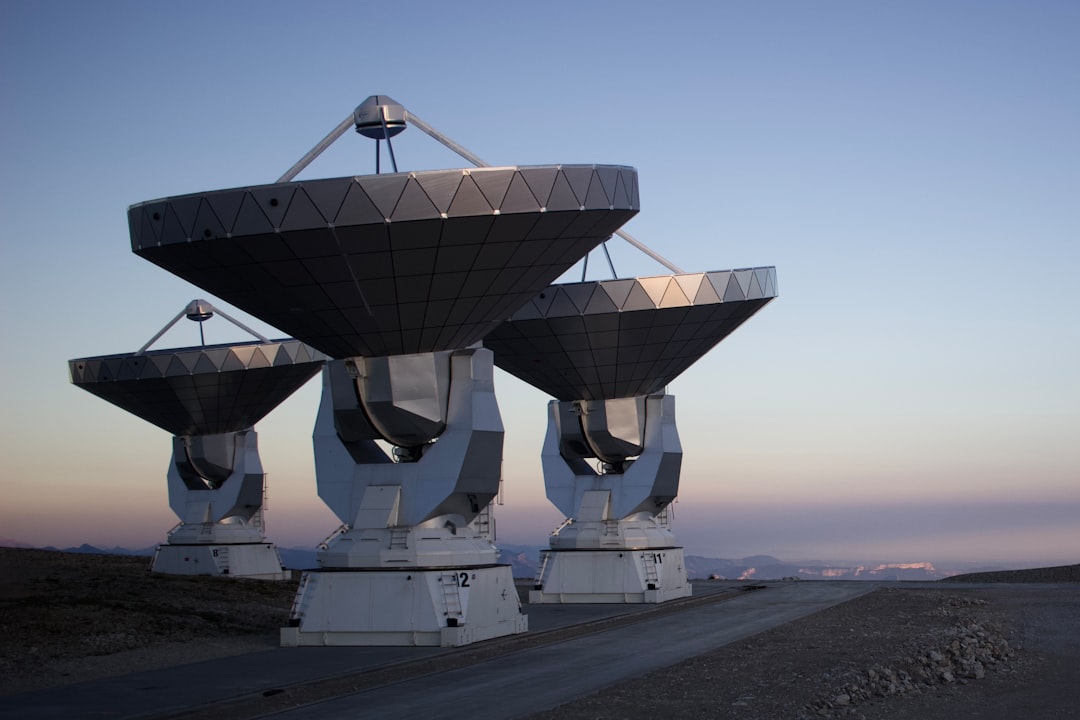
The quest to uncover the existence of extraterrestrial intelligence has captivated humanity for centuries. From ancient philosophers pondering the stars to modern scientists employing advanced technology, the search for life beyond Earth has evolved into a rigorous scientific endeavor. Researchers have formulated various hypotheses about the potential for intelligent life elsewhere in the universe, driven by the sheer vastness of space and the discovery of numerous exoplanets in habitable zones.
The realization that Earth is just one of countless celestial bodies has fueled a growing interest in understanding whether other civilizations might exist and, if so, how they might communicate. This search is not merely a scientific curiosity; it embodies humanity’s innate desire to connect with others and understand its place in the cosmos. Organizations like the Search for Extraterrestrial Intelligence (SETI) have dedicated themselves to scanning the skies for signals that could indicate the presence of intelligent life.
By utilizing radio telescopes and other sophisticated instruments, scientists hope to detect patterns or anomalies in cosmic signals that could suggest artificial origins. The implications of such a discovery would be profound, potentially reshaping humanity’s worldview and prompting a reevaluation of philosophical, religious, and scientific paradigms.
Key Takeaways
- Interstellar communication faces significant challenges due to vast distances and signal delays.
- Advanced technology is crucial for detecting and sending messages across space.
- Various methods, including radio waves and laser signals, are explored for effective communication.
- Interstellar communication holds profound cultural, ethical, and scientific importance for humanity.
- Collaborative global efforts are essential to advance research and impact future space exploration.
The Challenges of Interstellar Communication
Interstellar communication presents a myriad of challenges that complicate the prospect of connecting with extraterrestrial civilizations. One of the most significant hurdles is the vast distances involved. The nearest star system, Alpha Centauri, is over four light-years away, meaning that any signal sent from Earth would take four years to reach it, and an additional four years would be required for a response to return.
This time delay poses a fundamental challenge to real-time communication, making it difficult to establish a meaningful dialogue with distant civilizations. Moreover, the nature of space itself complicates communication efforts. Cosmic phenomena such as radiation, interference from celestial bodies, and the expansion of the universe can distort or disrupt signals.
Additionally, the potential differences in technology and communication methods between civilizations could create further barriers. For instance, an advanced civilization might utilize forms of communication that are entirely foreign to humanity, rendering attempts at contact futile. These challenges necessitate innovative approaches and a deep understanding of both physics and technology to devise effective means of interstellar communication.
The Role of Technology in Interstellar Communication

Technology plays a pivotal role in the pursuit of interstellar communication, serving as both a tool for sending messages and a means of interpreting potential signals from extraterrestrial sources. The development of powerful radio telescopes has revolutionized the search for extraterrestrial intelligence, allowing scientists to scan vast swathes of the sky for signals that deviate from natural cosmic noise. These instruments are capable of detecting faint signals from distant stars, providing hope that one day they might capture a message from an alien civilization.
In addition to radio telescopes, advancements in computer technology have enabled researchers to analyze data at unprecedented speeds. Machine learning algorithms can sift through enormous datasets to identify patterns that may indicate intelligent origins. Furthermore, the rise of optical communication technologies, such as lasers, offers new avenues for sending messages across interstellar distances.
These technological innovations not only enhance humanity’s ability to communicate but also expand the possibilities for understanding and interpreting any responses received from potential extraterrestrial civilizations.
The Potential Methods of Interstellar Communication
Various methods have been proposed for interstellar communication, each with its own advantages and limitations.
This approach has been employed by SETI and other organizations for decades, utilizing frequencies that are less likely to be absorbed by interstellar matter.
However, as previously mentioned, the vast distances involved mean that even radio signals take years to traverse space. Another promising method is laser communication, which utilizes focused beams of light to transmit information over long distances. Laser signals can carry more data than traditional radio waves and are less susceptible to interference from cosmic phenomena.
Additionally, some researchers have proposed using pulsars—highly magnetized rotating neutron stars—as cosmic beacons for communication. By encoding messages in the timing of pulsar signals, it may be possible to create a universal language that transcends cultural and technological barriers.
The Importance of Interstellar Communication for Humanity
| Aspect | Description | Challenges | Potential Methods | Estimated Time Delay |
|---|---|---|---|---|
| Distance | Interstellar distances span light years, e.g., nearest star Proxima Centauri is 4.24 light years away. | Signal travel time is very long, causing delays in communication. | Radio waves, laser pulses, neutrino beams. | 4.24 years one-way to Proxima Centauri. |
| Signal Attenuation | Signals weaken over vast distances due to spreading and cosmic noise. | Requires high power transmitters and sensitive receivers. | Directional antennas, signal amplification, error correction codes. | N/A |
| Encoding | Information must be encoded in a universally understandable format. | Unknown alien languages and symbols. | Mathematical sequences, prime numbers, universal constants. | N/A |
| Medium | Electromagnetic waves travel through vacuum of space. | Interstellar medium can cause scattering and absorption. | Radio frequencies (e.g., hydrogen line at 1420 MHz), optical lasers. | N/A |
| Energy Requirements | High energy needed to send detectable signals over light years. | Power constraints for spacecraft or Earth-based transmitters. | Focused beams, pulsed transmissions to conserve energy. | N/A |
| Time Delay | Communication is limited by speed of light. | Real-time conversation impossible over interstellar distances. | Patience and asynchronous messaging. | Years to centuries depending on distance. |
The significance of interstellar communication extends far beyond the mere desire to make contact with extraterrestrial life; it holds profound implications for humanity’s future. Establishing communication with another intelligent civilization could provide insights into advanced technologies, philosophies, and cultures that could benefit humanity as a whole. Such knowledge could inspire new scientific breakthroughs or offer solutions to pressing global challenges like climate change or resource scarcity.
Moreover, the act of reaching out to other civilizations may foster a sense of unity among humans on Earth. The realization that they are part of a larger cosmic community could encourage collaboration across nations and cultures, promoting peace and understanding. In this context, interstellar communication becomes not just an exploration of the unknown but also a catalyst for positive change on Earth.
The Cultural and Ethical Implications of Interstellar Communication

The prospect of interstellar communication raises numerous cultural and ethical questions that society must grapple with. For instance, how would humanity respond if it were to receive a message from an extraterrestrial civilization? The implications could be profound, challenging existing belief systems and prompting debates about humanity’s role in the universe.
Different cultures may interpret such contact in various ways, leading to potential conflicts or misunderstandings. Ethically, there are concerns about how humanity should approach communication with other civilizations. Should they send messages indiscriminately into space, or should they exercise caution?
The potential risks associated with revealing their existence to unknown entities must be carefully considered. Additionally, there is the question of how to represent humanity as a whole—what message should be sent that accurately reflects their values and aspirations? These cultural and ethical dilemmas underscore the complexity of interstellar communication and highlight the need for thoughtful discourse as humanity navigates this uncharted territory.
The History of Interstellar Communication Efforts
The history of interstellar communication efforts is rich with ambition and innovation. Early attempts at reaching out to potential extraterrestrial civilizations can be traced back to the 19th century when scientists began speculating about life on other planets. However, it was not until the mid-20th century that organized efforts began in earnest with the establishment of SETI in 1960.
This marked a significant turning point in humanity’s quest for extraterrestrial intelligence. Throughout the decades, various initiatives have sought to send messages into space. One notable example is the Arecibo Message sent in 1974 from Puerto Rico’s Arecibo Observatory, which encoded information about humanity’s DNA, solar system, and population in binary format.
Similarly, the Voyager Golden Record launched in 1977 contains sounds and images intended to represent Earth’s diversity and culture. These historical milestones reflect humanity’s enduring curiosity about life beyond Earth and its desire to make contact with other intelligent beings.
The Scientific Basis for Interstellar Communication
The scientific foundation for interstellar communication is rooted in principles from physics, astronomy, and information theory. Understanding electromagnetic radiation is crucial since it forms the basis for most proposed communication methods. Scientists study how different frequencies behave as they travel through space and how they can be utilized effectively for transmitting information over vast distances.
Additionally, researchers explore concepts such as signal-to-noise ratio and modulation techniques to enhance communication efficiency. Information theory provides insights into how data can be encoded and transmitted effectively while minimizing errors during transmission. By applying these scientific principles, researchers aim to develop robust methods for interstellar communication that can withstand the challenges posed by distance and cosmic interference.
The Future of Interstellar Communication
As technology continues to advance at an unprecedented pace, the future of interstellar communication holds exciting possibilities. Innovations in quantum communication may revolutionize how information is transmitted across vast distances by leveraging quantum entanglement—a phenomenon that allows particles to remain interconnected regardless of distance. This could potentially enable instantaneous communication across light-years, fundamentally altering humanity’s approach to interstellar dialogue.
Moreover, ongoing research into artificial intelligence may enhance data analysis capabilities when searching for extraterrestrial signals. AI algorithms could identify patterns within cosmic noise more efficiently than human analysts alone, increasing the likelihood of detecting genuine signals from intelligent civilizations. As humanity stands on the brink of new technological frontiers, the future of interstellar communication promises to be both challenging and transformative.
The Collaborative Efforts in Interstellar Communication Research
Collaboration plays a vital role in advancing interstellar communication research as scientists from diverse fields come together to share knowledge and resources. International partnerships have emerged among universities, research institutions, and space agencies dedicated to exploring this frontier. By pooling expertise in areas such as astrophysics, engineering, linguistics, and philosophy, these collaborative efforts enhance the depth and breadth of research initiatives.
Citizen science projects allow individuals from around the world to contribute data analysis or participate in outreach initiatives aimed at raising awareness about the search for extraterrestrial intelligence. This collaborative spirit not only accelerates research progress but also cultivates a sense of shared purpose among those invested in understanding humanity’s place within the cosmos.
The Impact of Interstellar Communication on Space Exploration
The pursuit of interstellar communication has far-reaching implications for space exploration as well. As humanity seeks to establish contact with potential extraterrestrial civilizations, it drives advancements in spacecraft technology and mission design aimed at exploring distant star systems. Initiatives like NASA’s Breakthrough Starshot aim to develop spacecraft capable of traveling at a fraction of light speed toward nearby stars within decades rather than centuries.
Moreover, understanding how to communicate across vast distances informs mission planning for future explorations beyond our solar system. Knowledge gained from studying potential methods of interstellar communication can enhance navigation systems and data transmission capabilities for deep-space missions. As humanity embarks on this journey into the cosmos, interstellar communication serves as both a guiding principle and an inspiration for exploration endeavors that seek to uncover the mysteries of the universe.
In conclusion, interstellar communication represents one of humanity’s most ambitious pursuits—a quest driven by curiosity about life beyond Earth and a desire for connection with other intelligent beings in the cosmos. While challenges abound, advancements in technology and collaborative efforts continue to pave the way toward meaningful dialogue across vast distances. As researchers navigate cultural implications and ethical considerations surrounding this endeavor, they remain steadfast in their commitment to exploring what lies beyond our planet—a journey that promises not only scientific discovery but also profound insights into humanity itself.
For those interested in the intricacies of interstellar communication, a related article can be found on My Cosmic Ventures, which delves into the challenges and possibilities of sending messages across vast distances in space. You can read more about it in their insightful piece on the subject by visiting My Cosmic Ventures.
FAQs
What is interstellar communication?
Interstellar communication refers to the transmission of information between stars or star systems, typically involving signals sent across vast distances in space.
How is interstellar communication different from regular communication?
Unlike regular communication on Earth, interstellar communication must overcome enormous distances, signal delays, and interference from cosmic phenomena, making it much more challenging.
What methods are used for interstellar communication?
Common methods include radio waves, laser signals, and potentially other electromagnetic waves, as these can travel long distances through space.
Why is interstellar communication important?
It is crucial for the search for extraterrestrial intelligence (SETI), enabling potential contact with alien civilizations and expanding our understanding of the universe.
What challenges exist in interstellar communication?
Challenges include signal attenuation over vast distances, time delays due to the speed of light, background cosmic noise, and the need for precise targeting and decoding of signals.
How long does it take for signals to travel between stars?
Signals travel at the speed of light, so it can take years or even thousands of years for a message to reach another star system, depending on the distance.
Have we successfully communicated with extraterrestrial civilizations?
As of now, there is no confirmed successful communication with extraterrestrial civilizations.
What is the role of the SETI program in interstellar communication?
SETI (Search for Extraterrestrial Intelligence) focuses on detecting and analyzing signals from space that may indicate the presence of intelligent life.
Can interstellar communication be two-way?
In theory, yes, but due to the vast distances and time delays, two-way communication would be extremely slow and challenging.
What technologies are being developed to improve interstellar communication?
Advancements include more powerful radio telescopes, laser communication systems, and improved signal processing algorithms to detect faint or complex signals.