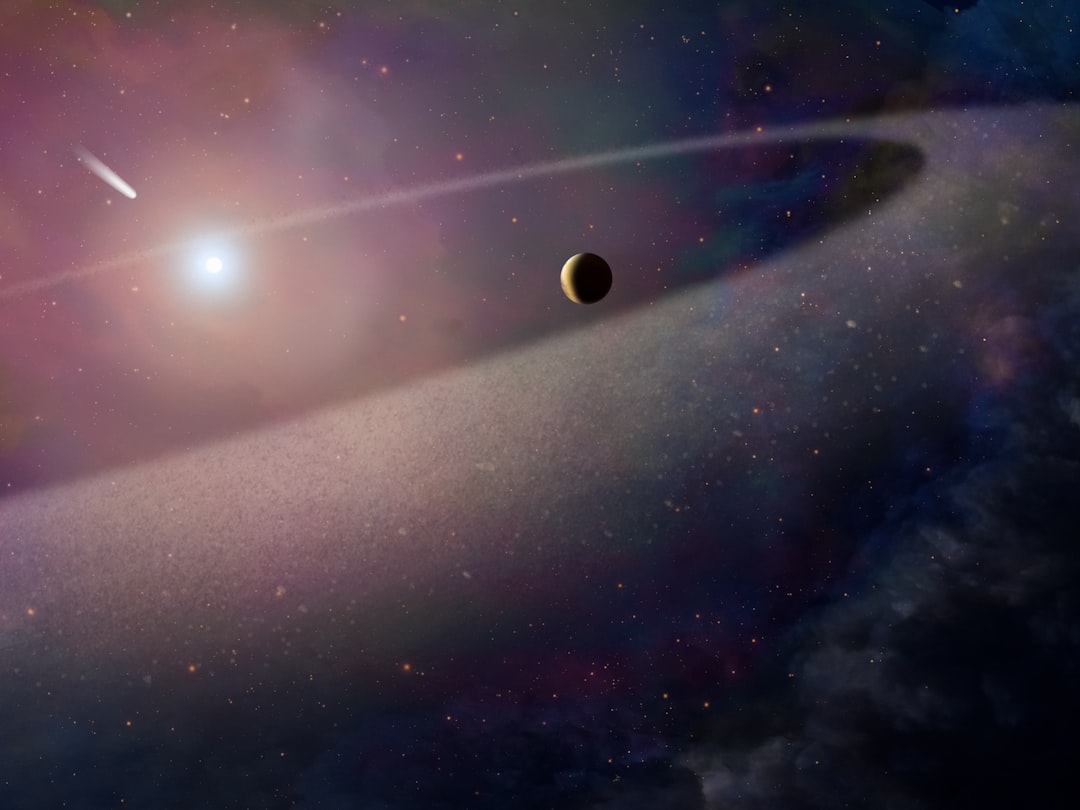
The Big Bang Theory stands as one of the most significant scientific explanations for the origin of the universe. It posits that approximately 13.8 billion years ago, the universe began as an infinitely small, hot, and dense point known as a singularity. This singularity underwent a rapid expansion, leading to the formation of space, time, and all matter as we know it.
As the universe expanded, it cooled, allowing particles to form and eventually coalesce into atoms. This monumental event marked the beginning of everything, from galaxies to stars, and ultimately, life itself. In the years following the initial explosion, the universe continued to evolve.
Hydrogen and helium emerged as the primary elements, setting the stage for the formation of stars and galaxies. The cosmic microwave background radiation, a remnant of this explosive event, provides a snapshot of the universe when it was just 380,000 years old. This faint glow permeates the cosmos and serves as a critical piece of evidence supporting the Big Bang Theory.
Scientists have meticulously studied this radiation, revealing insights into the early conditions of the universe and confirming that it has been expanding ever since.
Key Takeaways
- The Big Bang Theory explains the origin of the universe from a singular explosive event.
- Dark matter and dark energy are unseen forces that significantly influence cosmic structure and expansion.
- Black holes are dense cosmic objects with gravitational pulls so strong that not even light can escape.
- The universe is expanding at an accelerating rate, a phenomenon still not fully understood.
- The multiverse theory suggests the existence of multiple parallel universes beyond our own.
Dark Matter and Dark Energy: The Invisible Forces Shaping the Universe
Dark matter and dark energy are two of the most enigmatic components of the universe, making up approximately 95% of its total mass-energy content. Dark matter, which does not emit or interact with electromagnetic radiation, is believed to exert gravitational forces that influence the motion of galaxies and galaxy clusters. Its presence is inferred from observations of galactic rotation curves and gravitational lensing effects.
Despite extensive research, dark matter remains elusive; scientists have yet to directly detect it, leading to various hypotheses about its nature. On the other hand, dark energy is thought to be responsible for the accelerated expansion of the universe. Discovered in the late 1990s through observations of distant supernovae, dark energy acts as a repulsive force counteracting gravity on cosmic scales.
This mysterious energy permeates all of space and is believed to constitute about 68% of the universe’s total energy density. The interplay between dark matter and dark energy is crucial for understanding the universe’s structure and evolution. As researchers delve deeper into these invisible forces, they hope to unlock fundamental truths about the cosmos and its ultimate fate.
Black Holes: Understanding the Cosmic Phenomenon
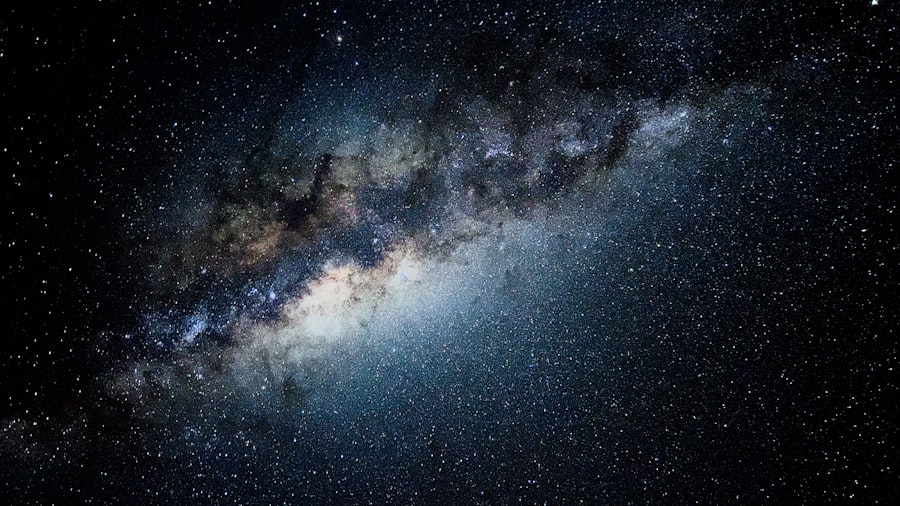
Black holes are among the most fascinating and perplexing phenomena in astrophysics. Formed from the remnants of massive stars that have undergone gravitational collapse, black holes possess gravitational fields so strong that nothing, not even light, can escape their grasp. The boundary surrounding a black hole is known as the event horizon; once crossed, all information about matter that falls in is lost to the outside universe.
This characteristic has led to intense debates about the nature of information and its preservation in quantum mechanics. The study of black holes has revealed much about fundamental physics. For instance, they provide a natural laboratory for testing theories of gravity, particularly Einstein’s General Relativity.
Observations of black holes have also led to groundbreaking discoveries such as Hawking radiation, a theoretical prediction that suggests black holes can emit radiation due to quantum effects near their event horizons. As scientists continue to explore these cosmic giants, they uncover new insights into their formation, growth, and role in galaxy evolution.
The Expansion of the Universe: Unraveling the Mystery of Cosmic Acceleration
The expansion of the universe is a cornerstone of modern cosmology, fundamentally altering humanity’s understanding of its place in the cosmos. Initially discovered by Edwin Hubble in the 1920s through observations of distant galaxies, this expansion suggests that galaxies are moving away from each other at speeds proportional to their distances—a phenomenon known as Hubble’s Law. This observation led to the realization that the universe is not static but dynamic and ever-changing.
In recent decades, astronomers have uncovered evidence that this expansion is accelerating due to dark energy. This revelation has profound implications for cosmology and our understanding of the universe’s fate. The discovery was unexpected; scientists had anticipated that gravity would slow down the expansion over time.
Instead, observations of distant supernovae revealed that galaxies are receding from one another at an increasing rate. This acceleration raises questions about the ultimate destiny of the universe: will it continue to expand indefinitely, or will gravitational forces eventually lead to a cosmic collapse?
The Multiverse Theory: Exploring the Possibility of Parallel Universes
| Mystery | Explanation | Key Data / Metrics |
|---|---|---|
| Dark Matter | Invisible matter that does not emit light but exerts gravitational effects on visible matter. | ~27% of universe’s total mass-energy; detected via gravitational lensing and galaxy rotation curves. |
| Dark Energy | A mysterious force causing the accelerated expansion of the universe. | ~68% of universe’s total mass-energy; measured through supernovae redshift and cosmic microwave background. |
| Cosmic Microwave Background (CMB) | Radiation leftover from the Big Bang, providing a snapshot of the early universe. | Temperature ~2.725 K; anisotropies measured at microkelvin level; age of universe ~13.8 billion years. |
| Black Holes | Regions of spacetime with gravitational pull so strong that nothing can escape. | Mass ranges from a few solar masses to billions; event horizon radius proportional to mass (Schwarzschild radius). |
| Expansion of the Universe | Space itself is expanding, causing galaxies to move away from each other. | Hubble constant ~70 km/s/Mpc; universe expanding since Big Bang ~13.8 billion years ago. |
The multiverse theory posits that our universe is just one of many universes existing simultaneously in a vast cosmic landscape. This idea challenges traditional notions of reality and has gained traction among physicists and cosmologists seeking to explain certain phenomena that cannot be accounted for within a single universe framework. Various models propose different types of multiverses—some suggest that universes may differ in fundamental physical constants or laws, while others posit that they may exist in separate dimensions altogether.
One compelling aspect of multiverse theory is its potential to address fine-tuning problems in cosmology. The observed values of physical constants appear remarkably suited for life; if they were even slightly different, life as we know it would not exist. The multiverse concept offers a possible explanation: if countless universes exist with varying constants, it is not surprising that at least one would support life.
While still speculative and lacking direct evidence, multiverse theory continues to inspire debate and exploration within theoretical physics.
The Cosmic Microwave Background: Clues to the Early Universe
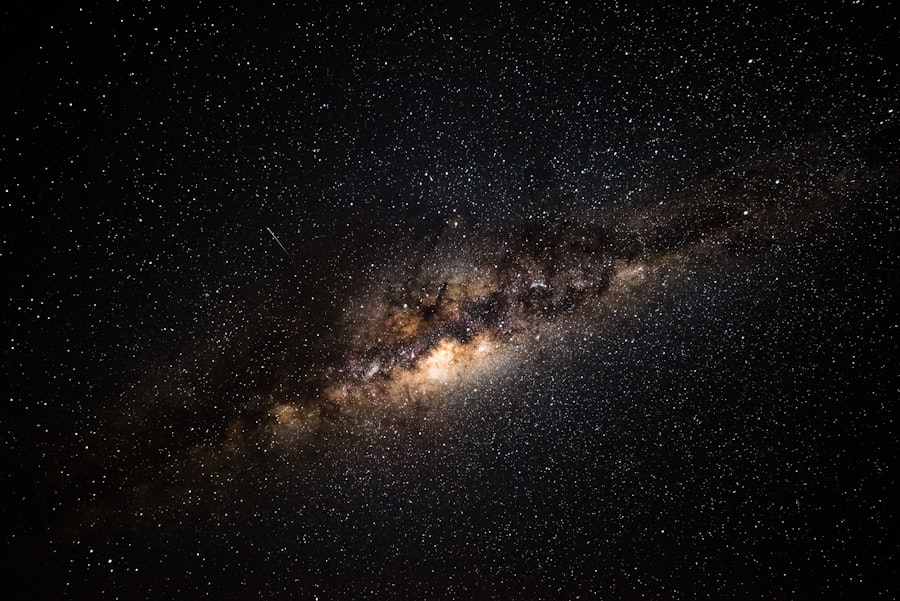
The cosmic microwave background (CMB) radiation serves as a crucial relic from the early universe, providing invaluable insights into its infancy. This faint glow fills the cosmos and is a remnant of the hot plasma that existed shortly after the Big Bang when protons and electrons combined to form neutral hydrogen atoms. As this transition occurred around 380,000 years post-Big Bang, photons were freed from their previous confinement, allowing light to travel freely through space for the first time.
These observations have revealed minute temperature fluctuations across the CMB, which correspond to density variations in the early universe. Analyzing these fluctuations has allowed researchers to glean information about cosmic inflation—a rapid expansion phase believed to have occurred just after the Big Bang—and has provided evidence supporting various cosmological models.
The Fate of the Universe: Will it Expand Forever or End in a Big Crunch?
The ultimate fate of the universe remains one of cosmology’s most profound questions. Current observations suggest two primary scenarios: perpetual expansion or eventual collapse into a “Big Crunch.” If dark energy continues to dominate over gravitational forces, it is likely that galaxies will drift apart indefinitely, leading to a cold and desolate universe where stars burn out and matter becomes increasingly sparse. Conversely, if gravitational forces eventually overcome dark energy’s repulsive effects, a Big Crunch could occur—wherein all matter collapses back into a singularity similar to that from which it originated.
This scenario raises intriguing questions about cyclic models of cosmology and whether our universe could experience multiple expansions and contractions over cosmic time scales. As scientists gather more data on dark energy and cosmic expansion rates, they inch closer to understanding which fate awaits our universe.
The Missing Baryon Problem: Searching for the “Lost” Matter in the Universe
Despite extensive research into cosmic matter composition, a significant portion remains unaccounted for—a phenomenon known as the missing baryon problem. Baryons are particles such as protons and neutrons that make up ordinary matter; however, observations indicate that only about half of these baryons are detectable in stars and galaxies. The remaining baryons are thought to exist in diffuse gas clouds or other forms that elude current detection methods.
Researchers are actively investigating potential locations for these missing baryons within intergalactic space or in warm-hot intergalactic medium (WHIM) filaments connecting galaxies within the cosmic web. Understanding where these baryons reside is crucial for refining models of galaxy formation and evolution. As technology advances and observational techniques improve, scientists hope to uncover these elusive particles and gain deeper insights into the universe’s composition.
The Nature of Neutrinos: Unlocking the Secrets of Elusive Subatomic Particles
Neutrinos are among nature’s most enigmatic particles—nearly massless and incredibly abundant yet notoriously difficult to detect. Produced during nuclear reactions such as those occurring in stars or during supernova explosions, neutrinos interact very weakly with matter, allowing them to pass through entire planets without any obstruction. This elusive nature has made studying neutrinos a formidable challenge for physicists seeking to understand their properties and role in fundamental processes.
Recent advancements in neutrino detection technology have opened new avenues for research. Experiments like those conducted at Fermilab and Japan’s Super-Kamiokande facility aim to capture these elusive particles and measure their properties more accurately than ever before. Understanding neutrinos could shed light on various phenomena—from stellar processes to potential connections with dark matter—ultimately enhancing our comprehension of particle physics and cosmology.
The Cosmic Web: Mapping the Large-Scale Structure of the Universe
The large-scale structure of the universe resembles a vast cosmic web composed of filaments connecting clusters and superclusters of galaxies. This intricate arrangement results from gravitational interactions over billions of years, shaping how matter is distributed throughout space. Mapping this cosmic web has become a central focus for astronomers seeking to understand galaxy formation and evolution.
Surveys such as the Sloan Digital Sky Survey (SDSS) have provided detailed maps revealing how galaxies cluster along these filaments while vast voids exist between them—regions nearly devoid of matter. By studying these structures’ distribution patterns, scientists can gain insights into dark matter’s role in shaping cosmic architecture and refine models predicting how galaxies will evolve over time.
The Origins of Life in the Universe: From Stardust to Living Organisms
The origins of life remain one of humanity’s most profound mysteries—how did simple molecules evolve into complex living organisms? Astrobiologists explore this question by examining conditions on early Earth while also considering extraterrestrial environments where life might arise elsewhere in our solar system or beyond. One prevailing hypothesis suggests that life originated from organic compounds formed through chemical processes on primordial Earth or delivered via comets or meteorites.
Research into extremophiles—organisms thriving in extreme environments—has expanded our understanding of life’s potential adaptability across diverse conditions found throughout space. By studying these resilient organisms on Earth, scientists gain insights into what forms life might take elsewhere in harsh environments like Mars or icy moons such as Europa or Enceladus. As exploration continues beyond our planet’s boundaries, humanity inches closer toward unraveling not only how life began but also whether we are alone in this vast cosmos filled with possibilities waiting to be discovered.
For those intrigued by the enigmatic aspects of the universe, a fascinating article can be found on My Cosmic Ventures, which delves into various cosmic mysteries and their explanations. You can explore this captivating content by visiting My Cosmic Ventures. This resource offers insights that may deepen your understanding of the universe’s most perplexing phenomena.
FAQs
What are some of the biggest mysteries of the universe?
Some of the biggest mysteries include dark matter, dark energy, the nature of black holes, the origin of the universe, and the possibility of extraterrestrial life.
What is dark matter and why is it important?
Dark matter is a type of matter that does not emit, absorb, or reflect light, making it invisible. It is important because it makes up about 27% of the universe’s mass-energy content and influences the structure and evolution of galaxies.
How do scientists study black holes if they cannot be seen directly?
Scientists study black holes by observing their effects on nearby matter and light, such as the gravitational pull on stars and gas, and by detecting gravitational waves produced by black hole mergers.
What is dark energy and how does it affect the universe?
Dark energy is a mysterious force that is causing the accelerated expansion of the universe. It constitutes about 68% of the universe and affects its ultimate fate.
How did the universe begin according to current scientific understanding?
The prevailing theory is the Big Bang, which suggests the universe began approximately 13.8 billion years ago from an extremely hot and dense state and has been expanding ever since.
Is there evidence of life beyond Earth?
As of now, there is no direct evidence of extraterrestrial life, but scientists continue to search through methods like studying extremophiles on Earth, exploring Mars, and listening for signals from intelligent civilizations.
Can the mysteries of the universe ever be fully explained?
While science continually advances our understanding, some mysteries may remain due to the limits of observation and technology. However, ongoing research aims to uncover more about the universe’s fundamental nature.