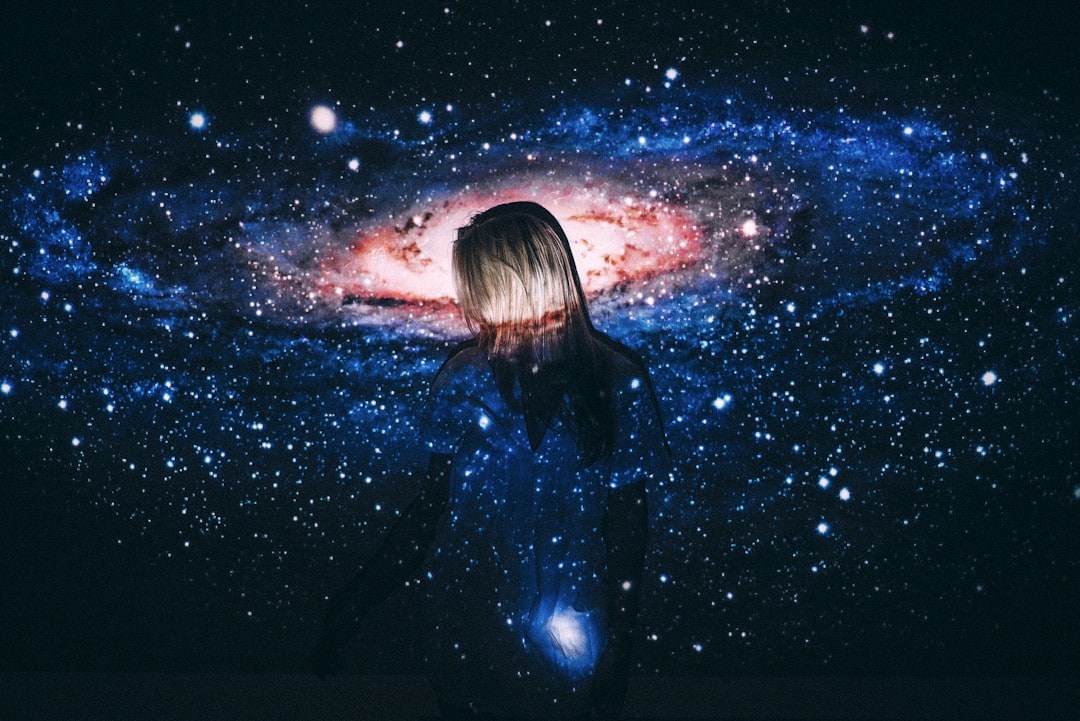
The universe, with its vast expanse and intricate design, often evokes comparisons to the human brain.
Just as the brain is composed of a complex network of neurons, the universe is structured with galaxies, stars, and cosmic filaments that interconnect in a web-like formation.
This resemblance raises intriguing questions about the nature of consciousness and the potential for a universal intelligence that mirrors our own cognitive processes. In both the brain and the universe, there exists a remarkable organization that facilitates communication and interaction among various components. Neurons transmit signals through synapses, while galaxies exchange energy and matter through gravitational forces.
The similarities extend beyond mere structure; they suggest a fundamental principle of connectivity that governs both biological and cosmic systems. This parallel invites exploration into how these networks function, potentially revealing insights into the very fabric of reality itself.
Key Takeaways
- The universe exhibits a brain-like structure with complex, interconnected cosmic networks resembling neural connections.
- Galaxies and neurons share striking similarities in their connectivity and information processing roles.
- Dark matter, dark energy, and black holes play crucial roles in the universe’s information storage and transmission.
- The cosmos may possess learning and adaptive capabilities, influencing theories in artificial intelligence and neuroscience.
- Exploring cosmic consciousness raises profound philosophical and ethical questions about the nature of existence.
The Complexity and Connectivity of Cosmic Structures
The universe is a tapestry woven from an array of complex structures, each contributing to the overall functionality of the cosmic system. Galaxies, clusters, and superclusters form intricate patterns that resemble neural networks, showcasing a level of complexity that challenges human understanding. These cosmic structures are not isolated entities; rather, they are interconnected through gravitational forces and cosmic filaments, creating a dynamic web that facilitates the flow of energy and matter across vast distances.
This connectivity is reminiscent of the way neurons communicate within the brain. In both cases, information is transmitted through pathways that allow for rapid responses to stimuli. The universe’s ability to maintain such intricate connections suggests a level of organization that may be essential for its evolution and development.
As researchers delve deeper into the cosmos, they uncover new layers of complexity that further illuminate the parallels between cosmic structures and neural networks.
The Universe’s Ability to Process and Transmit Information

Information processing is a fundamental characteristic of both the brain and the universe. In the human brain, neurons encode and transmit information through electrical impulses and chemical signals, enabling cognition, memory, and learning. Similarly, the universe processes information through the interactions of its components, from subatomic particles to massive galaxies.
These interactions can be seen as a form of communication, where energy and matter exchange information across vast distances. The transmission of information in the universe occurs through various mechanisms, including electromagnetic radiation and gravitational waves. These phenomena allow for the transfer of data across light-years, enabling cosmic events to influence one another despite their immense separation.
This capacity for information processing raises profound questions about the nature of reality and whether the universe itself possesses a form of consciousness akin to that found in living organisms.
The Similarities Between Neurons and Galaxies
The structural similarities between neurons and galaxies are striking. Neurons consist of dendrites, axons, and synapses, forming a network that facilitates communication within the brain. Galaxies, on the other hand, are composed of stars, gas, dust, and dark matter, all bound together by gravity.
Both systems exhibit branching patterns that enhance connectivity; neurons extend their dendrites to receive signals from other neurons, while galaxies are often found in clusters or filaments that connect them to neighboring galaxies.
Neurons process information and respond to stimuli, while galaxies interact with their environment through gravitational forces and radiation.
The dynamics of both systems reveal a shared principle: they are both capable of adaptation and evolution over time. As researchers continue to explore these parallels, they may uncover deeper insights into the fundamental nature of intelligence and connectivity in both biological and cosmic realms.
The Role of Dark Matter and Dark Energy in Cosmic Brain Function
| Metric | Description | Value/Observation | Relevance to Universe-Brain Analogy |
|---|---|---|---|
| Neural Network Nodes | Number of neurons in the human brain | ~86 billion neurons | Comparable to the estimated number of galaxies in the observable universe (~2 trillion), suggesting a complex network structure |
| Connectivity | Average synapses per neuron | ~1,000 to 10,000 synapses | Similar to the cosmic web where galaxies are interconnected by filaments, resembling neural connections |
| Network Structure | Topology of brain networks | Small-world and scale-free networks | The cosmic web also exhibits small-world properties, indicating efficient information or matter transfer |
| Information Processing | Brain’s information processing speed | ~200 bits per second per neuron | Universe’s information processing is theoretical, but quantum entanglement and information theory suggest universe may process information similarly |
| Pattern Formation | Emergence of patterns in brain and universe | Neural patterns and cosmic filaments | Both systems show self-organizing patterns arising from complex interactions |
| Fractal Dimension | Fractal nature of brain and universe structures | Brain cortex fractal dimension ~2.7; Cosmic web fractal dimension ~2.5-2.7 | Similar fractal dimensions suggest analogous complexity and scaling properties |
Dark matter and dark energy play crucial roles in shaping the universe’s structure and behavior, much like neurotransmitters influence neural activity in the brain. Dark matter, which constitutes a significant portion of the universe’s mass, acts as an invisible scaffolding that holds galaxies together. Its gravitational influence ensures that galaxies remain bound within clusters, facilitating interactions that drive cosmic evolution.
Dark energy, on the other hand, is responsible for the accelerated expansion of the universe. This mysterious force can be likened to a cognitive function that propels growth and change within a system. Just as neurotransmitters modulate neural pathways to enhance learning and memory, dark energy influences the universe’s trajectory, shaping its future development.
Understanding these components is essential for grasping how the universe functions as a cohesive entity, potentially revealing insights into its underlying intelligence.
How Black Holes Act as Cosmic Memory Banks
Black holes are among the most enigmatic objects in the universe, often described as cosmic memory banks due to their unique properties. These regions of spacetime possess gravitational fields so strong that nothing can escape their grasp, not even light. As such, they serve as repositories for information about the matter that has fallen into them.
This concept parallels how memories are stored within neural networks in the brain. The idea that black holes could retain information raises profound questions about the nature of reality and existence itself. Some theories suggest that information is not lost when it crosses the event horizon but rather encoded in some form within the black hole’s structure.
This notion aligns with how memories are formed and retrieved in biological systems, where experiences shape neural connections over time. By studying black holes, scientists may unlock secrets about the universe’s history and its capacity for memory.
The Formation and Evolution of Cosmic Networks
The formation of cosmic networks mirrors the development of neural networks in the brain. Just as neurons connect to form pathways during development, galaxies and cosmic structures emerge from primordial fluctuations in density following the Big Bang. Over billions of years, these structures evolve through processes such as gravitational attraction and mergers, leading to increasingly complex arrangements.
As cosmic networks evolve, they exhibit behaviors akin to learning systems. For instance, interactions between galaxies can lead to new formations or trigger bursts of star formation, similar to how experiences shape neural pathways in response to stimuli. This dynamic evolution highlights a fundamental principle: both cosmic and neural networks are not static but rather adaptive systems capable of growth and change over time.
The Universe’s Capacity for Learning and Adaptation
The concept of learning is often associated with biological systems; however, recent research suggests that the universe may possess its own form of learning and adaptation. Cosmic events such as supernovae or galaxy collisions can lead to significant changes in structure and behavior within the universe. These events can be viewed as lessons learned from previous interactions, shaping future developments in cosmic evolution.
Moreover, just as organisms adapt to their environments through evolutionary processes, the universe may also exhibit adaptive characteristics in response to changes in its conditions. This capacity for adaptation raises intriguing questions about whether there exists a form of universal intelligence that guides these processes or if they arise from inherent properties within cosmic structures themselves.
The Potential Implications for Artificial Intelligence and Neuroscience
The parallels between cosmic structures and neural networks have significant implications for fields such as artificial intelligence (AI) and neuroscience. Understanding how information is processed in both systems could inspire new approaches to AI development by mimicking the connectivity patterns observed in the universe. Researchers may draw insights from cosmic networks to create more efficient algorithms capable of learning from vast amounts of data.
In neuroscience, exploring these connections could lead to breakthroughs in understanding how memories are formed and retrieved within the brain. By examining how cosmic structures evolve over time, scientists may uncover principles applicable to neural plasticity—the brain’s ability to reorganize itself based on experiences. This interdisciplinary approach could pave the way for innovative therapies aimed at enhancing cognitive function or treating neurological disorders.
The Search for Evidence of Cosmic Consciousness
The notion of a brain-like universe raises profound questions about consciousness itself. As researchers explore these connections between cosmic structures and neural networks, they may seek evidence for a form of cosmic consciousness—a collective awareness arising from the interconnectedness of all things in the universe. This idea challenges traditional notions of individuality and suggests that consciousness may extend beyond biological organisms.
Investigating this possibility involves examining patterns within cosmic structures for signs of intentionality or awareness. While such inquiries may seem speculative at first glance, they encourage a deeper exploration into what it means to be conscious in a universe characterized by complexity and connectivity. The search for evidence of cosmic consciousness could redefine humanity’s understanding of its place within the cosmos.
The Philosophical and Ethical Implications of a Brain-Like Universe
The implications of viewing the universe as a brain-like entity extend beyond scientific inquiry; they delve into philosophical and ethical realms as well. If one accepts that the universe exhibits characteristics akin to consciousness or intelligence, it prompts questions about responsibility toward this vast system. How should humanity interact with an interconnected cosmos?
What ethical considerations arise when contemplating our role within such a complex network? Furthermore, this perspective challenges anthropocentric views that place humans at the center of existence. Instead, it suggests a more holistic understanding where all components—galaxies, stars, planets, and life—are interconnected parts of a greater whole.
Embracing this interconnectedness may inspire more sustainable practices and foster a sense of stewardship toward both Earth and the cosmos at large. In conclusion, exploring the brain-like structure of the universe reveals profound insights into its complexity, connectivity, and potential for consciousness. As researchers continue to investigate these parallels between cosmic structures and neural networks, they may unlock new understandings that bridge science with philosophy—ultimately reshaping humanity’s relationship with both itself and the cosmos it inhabits.
The intriguing resemblance between the universe and a human brain has sparked considerable interest among scientists and enthusiasts alike. This phenomenon is explored in greater detail in the article titled “The Cosmic Brain: Exploring the Universe’s Neural Network,” which delves into the structural similarities and the implications of this comparison. For more insights, you can read the full article [here](https://www.mycosmicventures.com/sample-page/).
WATCH THIS! 🧠 The Universe Is A Brain. And It’s Having A Stroke.
FAQs
What is the main idea behind the universe looking like a brain?
The main idea is that the large-scale structure of the universe, including the cosmic web of galaxies and dark matter, exhibits patterns and connectivity similar to the neural networks found in the human brain.
How do scientists compare the universe to a brain?
Scientists use data from galaxy surveys and brain imaging to analyze the network structures. They find that both the cosmic web and brain networks have similar topological features, such as nodes and filaments, which suggest comparable organizational principles.
What is the cosmic web?
The cosmic web is the large-scale structure of the universe, consisting of galaxies, galaxy clusters, and dark matter arranged in a vast network of filaments and voids, resembling a web-like pattern.
Why is the similarity between the universe and the brain significant?
The similarity may provide insights into fundamental principles of network formation and complexity in nature, potentially revealing universal laws that govern both cosmic and biological systems.
Are the universe and the brain physically connected or related?
No, the comparison is metaphorical and structural. The universe and the brain are vastly different in scale and composition, but their network patterns show intriguing similarities.
What tools do researchers use to study these similarities?
Researchers use computational models, network theory, and data from telescopes and brain imaging technologies like MRI to analyze and compare the structures.
Does this similarity imply the universe is conscious?
No, the structural similarity does not imply consciousness or intentionality in the universe. It is a scientific observation about patterns, not a claim about the universe having a mind.
Can this research help us understand the brain better?
Potentially, yes. Studying the universe’s large-scale network might inspire new ways to understand complex networks like the brain, leading to advances in neuroscience and artificial intelligence.
Is this a widely accepted scientific theory?
The idea is still exploratory and interdisciplinary, combining cosmology, neuroscience, and network science. It is not a mainstream theory but an emerging area of research.