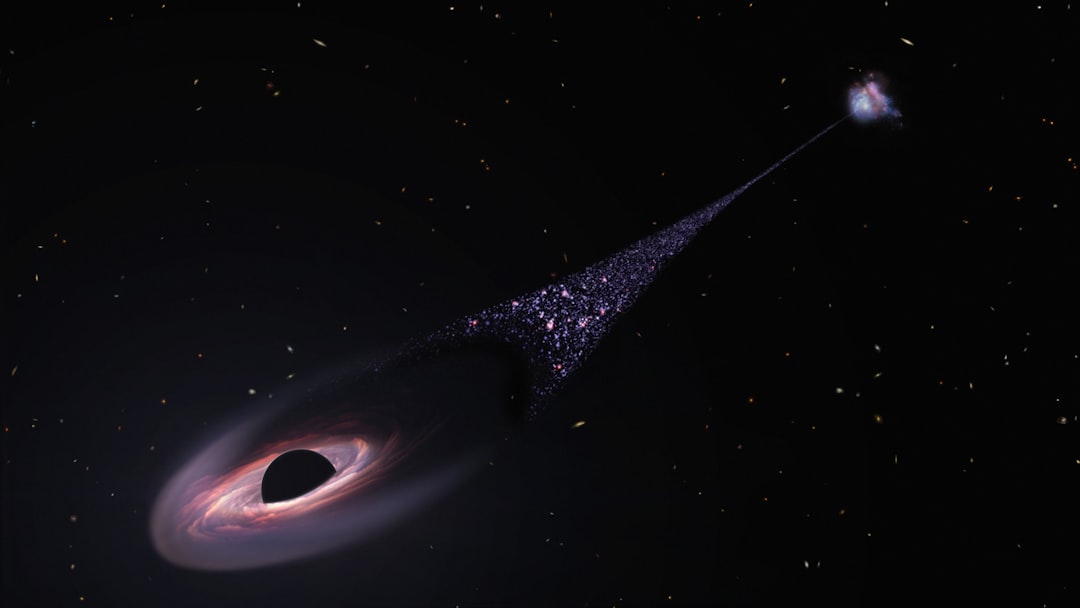
Black holes have long captivated the imagination of scientists and the general public alike. These enigmatic cosmic entities, formed from the remnants of massive stars that have undergone gravitational collapse, possess gravitational fields so intense that nothing, not even light, can escape their grasp. The concept of a black hole challenges the very fabric of our understanding of physics, pushing the boundaries of what is known about space and time.
As researchers delve deeper into the mysteries surrounding these celestial phenomena, they uncover not only the nature of black holes but also their profound implications for the universe at large. The study of black holes has evolved significantly since their theoretical inception in the early 20th century. Initially dismissed as mere mathematical curiosities, black holes are now recognized as fundamental components of the cosmos.
As scientists continue to explore these cosmic giants, they are not only piecing together the puzzle of black holes but also revealing the intricate tapestry of the universe in which they reside.
Key Takeaways
- Black holes are regions in space where the gravitational pull is so strong that nothing, not even light, can escape.
- The biggest black hole in the universe is TON 618, estimated to be 66 billion times the mass of the Sun.
- Scientists discover black holes through observing the behavior of nearby stars and gas, as well as using advanced telescopes and technology.
- The search for the biggest black hole involves studying the movement of stars and gas around the center of galaxies.
- The biggest black holes have characteristics such as immense mass, powerful gravitational pull, and the ability to influence the movement of stars and gas around them.
What is the Biggest Black Hole in the Universe?
The quest to identify the largest black hole in the universe has led astronomers to a remarkable discovery: TON 618, a supermassive black hole located in a distant quasar. This colossal entity is estimated to have a mass equivalent to approximately 66 billion times that of our Sun, making it one of the most massive black holes known to date. Its immense size challenges existing theories about black hole formation and growth, prompting scientists to reconsider their understanding of how such behemoths can exist in the cosmos.
TON 618 resides in a galaxy that is billions of light-years away from Earth, making it a fascinating subject for study. The quasar itself emits an extraordinary amount of energy, outshining entire galaxies and providing a glimpse into the early universe. The discovery of such a massive black hole raises intriguing questions about its formation and the processes that allowed it to grow to such an extraordinary size.
As researchers continue to investigate TON 618, they hope to unravel the mysteries surrounding its existence and gain a deeper understanding of supermassive black holes as a whole.
How Do Scientists Discover Black Holes?
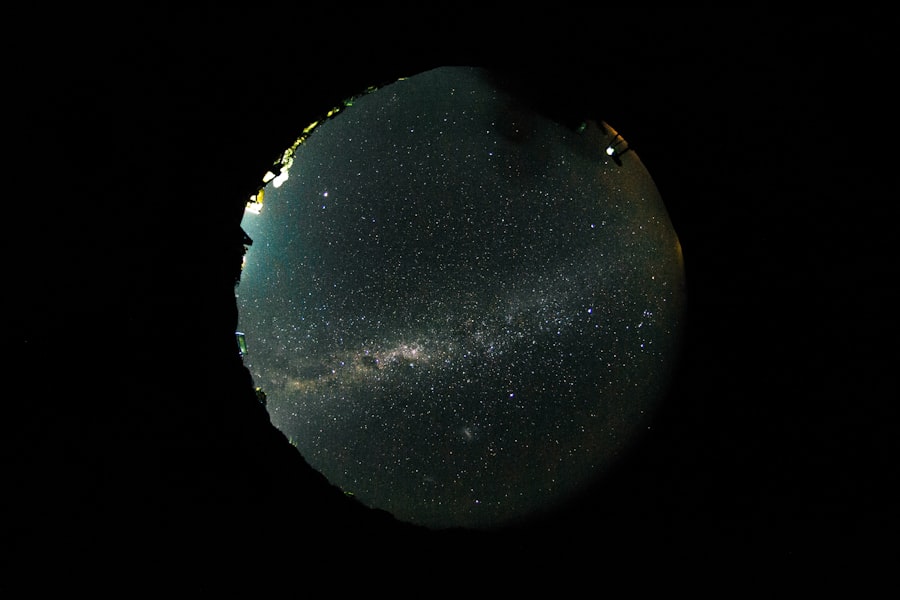
The detection of black holes is a complex endeavor that relies on indirect methods, as these entities do not emit light or radiation that can be observed directly. Instead, scientists utilize various techniques to infer their presence and measure their properties. One common method involves observing the effects of a black hole’s gravitational pull on nearby stars and gas clouds.
By studying the orbits of these objects, astronomers can estimate the mass and location of the black hole exerting influence over them. Another approach involves examining X-ray emissions from accretion disks surrounding black holes. When matter falls into a black hole, it forms a swirling disk that heats up and emits X-rays as it spirals inward.
By detecting these high-energy emissions with space-based telescopes, scientists can identify potential black holes and gather valuable data about their characteristics. Additionally, gravitational wave observatories have opened a new frontier in black hole research by detecting ripples in spacetime caused by the collision and merger of black holes, providing further evidence of their existence and properties.
The Search for the Biggest Black Hole
| Black Hole Name | Size (Solar Masses) | Distance from Earth (light-years) |
|---|---|---|
| SDSS J0100+2802 | 12 billion | 12.8 billion |
| Ton 618 | 66 billion | 10.37 billion |
| NGC 4889 | 21 billion | 336 million |
The search for the largest black hole is an ongoing endeavor that has captivated astronomers for decades. Researchers employ advanced telescopes and observational techniques to scour the universe for signs of supermassive black holes lurking in distant galaxies. The quest often involves studying quasars—extremely luminous objects powered by accreting supermassive black holes—since their brightness can indicate the presence of massive gravitational forces at play.
In recent years, advancements in technology have significantly enhanced scientists’ ability to detect and study these cosmic giants. High-resolution imaging and spectroscopy allow astronomers to analyze the light emitted by surrounding stars and gas, providing crucial information about the mass and spin of potential black holes. As new discoveries are made and existing theories are tested, researchers continue to refine their understanding of how supermassive black holes form and evolve over cosmic time.
Characteristics of the Biggest Black Hole
The characteristics of TON 618, as one of the largest known black holes, are both fascinating and perplexing. Its mass, estimated at around 66 billion solar masses, places it in a category far beyond typical supermassive black holes found at the centers of most galaxies. This immense mass suggests that TON 618 has undergone significant growth over its lifetime, likely through processes such as accreting vast amounts of gas and merging with other black holes.
In addition to its mass, TON 618 exhibits unique properties that set it apart from other black holes. For instance, its high luminosity indicates that it is actively consuming material at an extraordinary rate, resulting in powerful jets of energy being expelled into space. These jets can influence star formation in surrounding regions and contribute to the overall dynamics of its host galaxy.
Understanding these characteristics not only sheds light on TON 618 itself but also provides valuable insights into the behavior and evolution of supermassive black holes across the universe.
The Impact of the Biggest Black Hole on its Surroundings
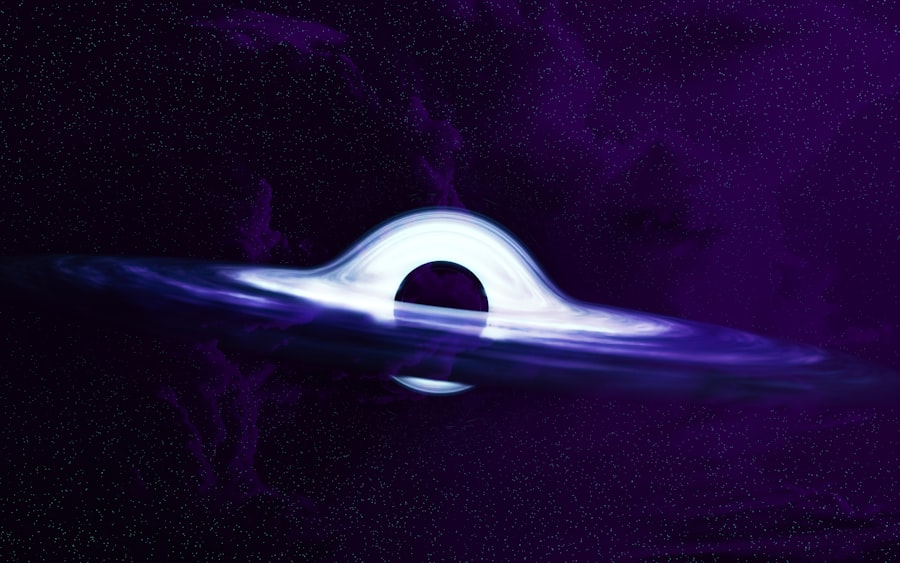
The influence of TON 618 extends far beyond its immediate vicinity; it plays a crucial role in shaping its host galaxy and influencing cosmic structures on a grand scale. The immense gravitational pull exerted by such a massive black hole can affect star formation rates within its galaxy, regulating how stars are born and evolve over time. This interaction between black holes and their host galaxies is a key area of research in astrophysics.
Moreover, the energetic jets produced by TON 618 can have far-reaching consequences for its surroundings. These jets can heat up interstellar gas, preventing it from cooling and collapsing into new stars. This feedback mechanism can lead to a complex interplay between star formation and black hole activity, ultimately influencing the overall evolution of galaxies.
As scientists continue to study these interactions, they gain valuable insights into how supermassive black holes like TON 618 shape their environments and contribute to the larger cosmic narrative.
Theories about the Formation of the Biggest Black Hole
The formation of supermassive black holes like TON 618 remains one of the most intriguing questions in astrophysics. Several theories have been proposed to explain how such colossal entities can come into existence. One prominent hypothesis suggests that they form from the direct collapse of massive gas clouds in the early universe, bypassing the typical stellar evolution process.
This scenario could allow for rapid growth during a time when gas was abundant and conditions were conducive to forming massive structures. Another theory posits that supermassive black holes grow through a series of mergers with smaller black holes over cosmic time. As galaxies collide and interact, their central black holes may merge, leading to an increase in mass.
This process could explain why some supermassive black holes appear to be much larger than expected based on their host galaxies’ stellar content alone. Ongoing research aims to test these theories and uncover more about the mechanisms driving black hole formation and growth.
The Role of Black Holes in the Universe
Black holes play a pivotal role in shaping the universe as we know it. They are not merely destructive forces; rather, they are integral components of cosmic evolution. Supermassive black holes are believed to reside at the centers of most galaxies, influencing their dynamics and structure.
Their gravitational pull helps anchor stars in orbit around them, contributing to the stability and organization of galactic systems. Furthermore, black holes are thought to be key players in regulating star formation within galaxies. The energy released during accretion processes can heat surrounding gas, preventing it from collapsing into new stars.
This feedback mechanism creates a delicate balance between star formation and black hole activity, ultimately shaping the lifecycle of galaxies over billions of years. As researchers continue to explore these relationships, they gain deeper insights into how black holes contribute to the grand tapestry of cosmic evolution.
The Future of Studying Black Holes
The future of studying black holes holds great promise as technological advancements continue to revolutionize observational capabilities. Next-generation telescopes and observatories are being developed with enhanced sensitivity and resolution, allowing scientists to probe deeper into space than ever before. These tools will enable researchers to detect fainter signals from distant black holes and gather more detailed information about their properties.
Additionally, ongoing collaborations between astronomers across disciplines will foster interdisciplinary approaches to understanding black holes. By combining insights from gravitational wave astronomy, electromagnetic observations, and theoretical modeling, scientists can develop a more comprehensive picture of these enigmatic entities. As new discoveries unfold, they will undoubtedly reshape our understanding of black holes and their significance within the broader context of astrophysics.
Potential Applications of Understanding Black Holes
The study of black holes extends beyond theoretical curiosity; it has potential applications that could impact various fields beyond astrophysics. For instance, insights gained from understanding black hole physics may inform advancements in quantum mechanics and general relativity. The extreme conditions present near black holes provide unique environments for testing fundamental theories about gravity and spacetime.
Moreover, research on black holes could inspire technological innovations in fields such as data processing and information theory. The complexities associated with information loss in black hole physics may lead to new approaches for managing data in computing systems or enhancing encryption methods. As scientists continue to unravel the mysteries surrounding black holes, they may uncover unexpected connections that extend far beyond our current understanding.
Uncovering the Mysteries of the Universe through Black Holes
In conclusion, black holes represent one of the most profound mysteries within our universe. From their formation and growth to their impact on surrounding galaxies, these enigmatic entities challenge our understanding of fundamental physics while offering insights into cosmic evolution. The discovery of colossal supermassive black holes like TON 618 has opened new avenues for exploration and inquiry, prompting scientists to rethink existing theories about how such giants can exist.
As researchers continue their quest to uncover the secrets held by black holes, they not only deepen our understanding of these cosmic phenomena but also illuminate broader questions about the nature of reality itself. The future holds great promise for further discoveries that will enhance our comprehension of both black holes and their role within the grand tapestry of the universe. Through continued exploration and collaboration across disciplines, humanity stands poised to unlock even more mysteries hidden within these captivating celestial giants.
In a groundbreaking discovery, astronomers have uncovered the largest black hole ever observed, shedding new light on the mysterious and powerful forces at the heart of our universe. This monumental finding not only challenges existing theories about black hole formation but also opens up new avenues for research into the enigmatic nature of these cosmic giants. For more insights into this fascinating topic, you can read a related article on the subject by visiting My Cosmic Ventures. This article delves deeper into the implications of this discovery and explores the cutting-edge technology used to detect such massive celestial phenomena.
WATCH THIS! 🌌The Biggest Black Hole Is A LIE
FAQs
What is a black hole?
A black hole is a region in space where the gravitational pull is so strong that nothing, not even light, can escape from it. This makes them invisible to the naked eye and difficult to detect.
What is the biggest black hole discovered so far?
The biggest black hole discovered so far is located in the galaxy NGC 1277 and has a mass equivalent to 17 billion suns. It is one of the most massive black holes ever observed.
How do scientists uncover black holes?
Scientists use various methods to uncover black holes, including observing the behavior of stars and gas around them, detecting gravitational waves, and studying the effects of their gravitational pull on nearby objects.
Why is uncovering black holes important?
Uncovering black holes is important for understanding the fundamental laws of physics, the evolution of galaxies, and the formation of the universe. It also helps scientists to test and refine theories about the nature of space and time.
Can black holes be dangerous to Earth?
While black holes are fascinating and mysterious, they are typically located far away from Earth and pose no direct danger to our planet. The nearest known black hole, for example, is located about 1,000 light-years away.