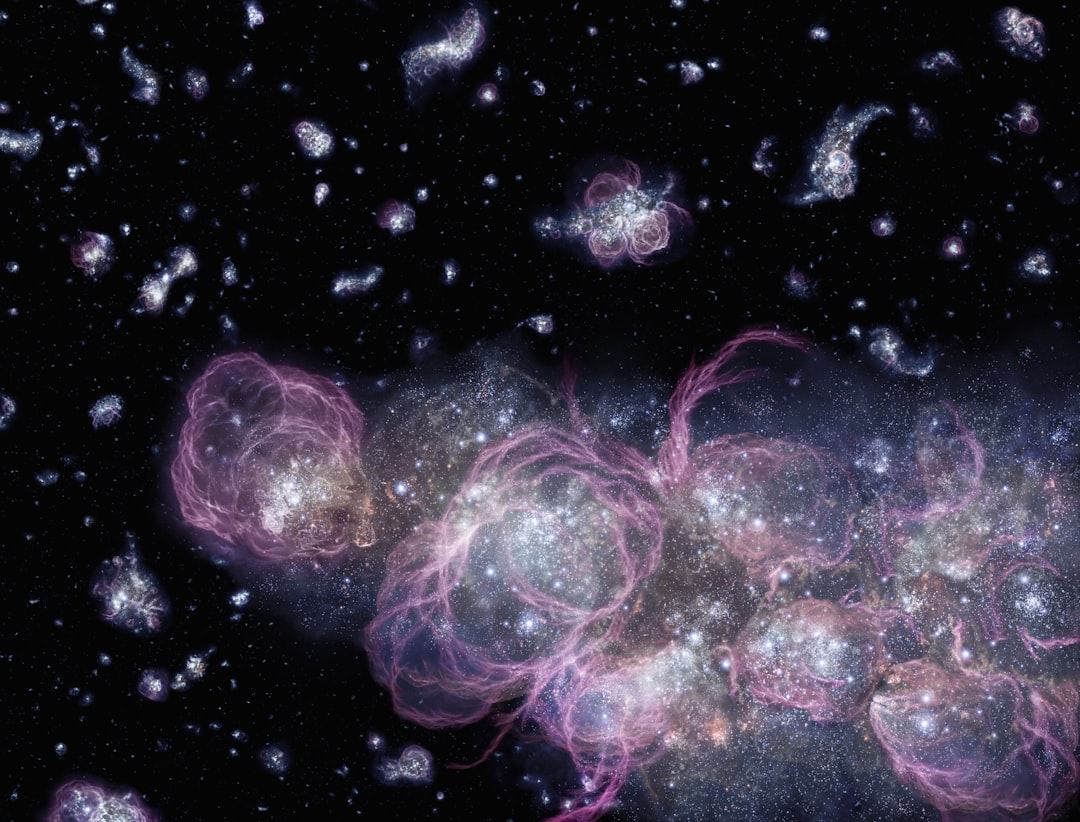
Cosmology is the scientific discipline that studies the universe’s origin, evolution, and ultimate fate. This field examines phenomena ranging from the Big Bang to the formation of galaxies, stars, and planetary systems. Cosmologists investigate the large-scale structure and dynamics of the universe, seeking to understand the fundamental processes that govern cosmic evolution.
Beyond directly observable phenomena, researchers focus on identifying underlying patterns that may reveal deeper insights into the physical laws governing the universe. The identification of hidden patterns in cosmology serves as a critical component of scientific research in this field. These patterns help scientists understand the relationships between celestial objects and the fundamental forces that influence their behavior.
The universe operates as a complex system where apparent randomness often masks underlying organizational principles. Through systematic analysis of cosmic data and phenomena, researchers can uncover these governing principles and develop more comprehensive models of universal structure and behavior.
Key Takeaways
- Hidden patterns in cosmology are crucial for deepening our understanding of the universe’s structure and origins.
- Advanced tools and data analysis techniques are essential for detecting subtle and complex cosmological patterns.
- Discovering hidden patterns can challenge and refine existing cosmological theories, leading to new scientific insights.
- There are significant challenges and limitations, including data quality and interpretation biases, in uncovering these patterns.
- Ethical considerations must be addressed as the implications of these discoveries can influence our perception of the universe and humanity’s place within it.
The Importance of Uncovering Hidden Patterns in Cosmology
Uncovering hidden patterns in cosmology is crucial for several reasons. First and foremost, these patterns can lead to groundbreaking discoveries that enhance your understanding of the universe. For instance, recognizing the distribution of galaxies can provide insights into dark matter and dark energy, two enigmatic components that make up a significant portion of the cosmos.
By identifying these patterns, you can contribute to a more comprehensive understanding of how the universe operates on both large and small scales. Moreover, hidden patterns can serve as a bridge between different areas of scientific inquiry. As you explore these connections, you may find that insights from cosmology can inform other fields such as physics, mathematics, and even philosophy.
This interdisciplinary approach fosters collaboration among scientists and encourages innovative thinking. By uncovering hidden patterns, you not only expand your knowledge but also contribute to a collective understanding that transcends individual disciplines.
Tools and Techniques for Identifying Hidden Patterns
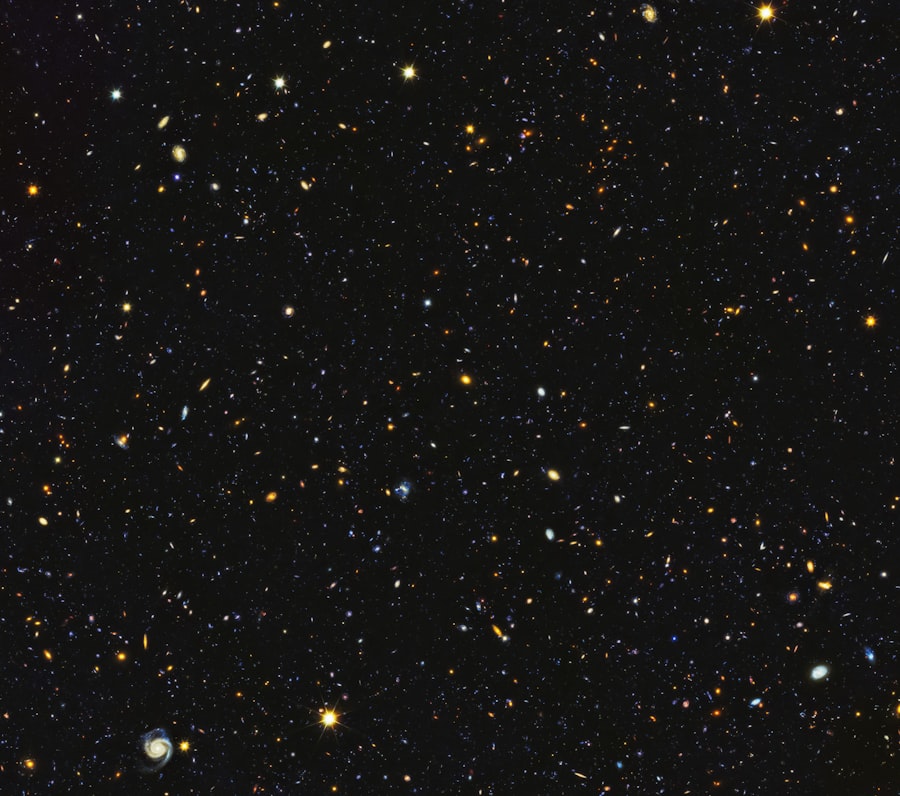
To identify hidden patterns in cosmology, researchers employ a variety of tools and techniques that leverage advanced technology and analytical methods. One of the most significant advancements in recent years has been the development of powerful telescopes equipped with sophisticated imaging capabilities. These telescopes allow you to observe distant galaxies and cosmic phenomena with unprecedented clarity, revealing details that were once obscured by distance or cosmic dust.
In addition to observational tools, computational techniques play a vital role in uncovering hidden patterns.
These methods enable you to sift through enormous amounts of information quickly, identifying correlations and anomalies that might otherwise go unnoticed.
By combining observational data with computational power, you can unlock new insights into the structure and behavior of the universe.
The Role of Data Analysis in Revealing Hidden Patterns
Data analysis is at the heart of uncovering hidden patterns in cosmology. As you engage with large datasets, you will encounter challenges related to noise, uncertainty, and complexity. However, through rigorous analysis, you can extract meaningful information that sheds light on cosmic phenomena.
Statistical methods are essential in this process, allowing you to quantify relationships between variables and assess the significance of your findings. Moreover, data visualization techniques can enhance your understanding of hidden patterns by presenting complex information in an accessible format. By creating visual representations of data, you can identify trends and anomalies more easily.
This visual approach not only aids your comprehension but also facilitates communication with others in the scientific community. As you share your findings through graphs, charts, and interactive models, you contribute to a broader dialogue about the nature of the universe.
Examples of Hidden Patterns in Cosmology
| Metric | Description | Value/Range | Significance in Hidden Patterns |
|---|---|---|---|
| Cosmic Microwave Background (CMB) Anisotropy | Temperature fluctuations in the CMB radiation | ~18 µK RMS variations | Reveals early universe density fluctuations and potential hidden symmetries |
| Baryon Acoustic Oscillations (BAO) Scale | Characteristic scale imprinted in the distribution of galaxies | ~150 Mpc (megaparsecs) | Helps detect large-scale structure patterns and cosmic expansion history |
| Dark Matter Density Fluctuations | Variations in dark matter distribution on different scales | 10^-5 to 10^-3 relative density contrast | Indicates clustering patterns and hidden gravitational effects |
| Large Scale Structure Filamentarity | Degree of filament-like structures in galaxy distribution | Filament length scales: 10-100 Mpc | Uncovers cosmic web patterns and matter flow directions |
| Non-Gaussianity Parameter (f_NL) | Measures deviation from Gaussian distribution in primordial fluctuations | f_NL ≈ 0 ± few | Tests inflation models and hidden correlations in early universe |
| Redshift Space Distortions (RSD) | Apparent anisotropy in galaxy clustering due to peculiar velocities | β parameter ~0.3-0.5 | Reveals velocity fields and hidden dynamics in cosmic structure formation |
Throughout the history of cosmology, numerous examples illustrate the significance of hidden patterns. One notable case is the discovery of the cosmic microwave background radiation (CMB), which serves as a remnant from the early universe. When scientists analyzed this radiation, they uncovered subtle fluctuations that revealed information about the distribution of matter in the cosmos.
These fluctuations provided crucial evidence for the Big Bang theory and deepened your understanding of cosmic evolution. Another compelling example is the large-scale structure of the universe. As you study galaxy clusters and superclusters, you may notice a web-like pattern known as the cosmic web.
This structure reflects gravitational interactions among galaxies and dark matter, revealing how these forces shape the universe’s architecture. By recognizing these hidden patterns, you can gain insights into the dynamics of cosmic evolution and the role of dark matter in shaping large-scale structures.
The Implications of Uncovering Hidden Patterns for Our Understanding of the Universe

The implications of uncovering hidden patterns in cosmology extend far beyond academic curiosity; they have profound consequences for your understanding of existence itself. As you unravel these patterns, you may find that they challenge long-held beliefs about the nature of reality. For instance, discovering unexpected correlations between cosmic phenomena could lead to new theories about the fundamental forces at play in the universe.
Furthermore, recognizing hidden patterns can inspire philosophical inquiries about humanity’s place in the cosmos. As you contemplate these revelations, you may grapple with questions about determinism versus randomness or the nature of time itself. The insights gained from uncovering hidden patterns can prompt a reevaluation of your worldview and encourage deeper reflection on what it means to exist within such a vast and intricate universe.
Challenges and Limitations in Uncovering Hidden Patterns in Cosmology
Despite the excitement surrounding hidden patterns in cosmology, significant challenges and limitations persist in this field. One primary obstacle is the sheer scale of data generated by modern telescopes and simulations. As you navigate through terabytes or even petabytes of information, it can be daunting to identify meaningful patterns amidst noise and uncertainty.
This complexity necessitates advanced analytical skills and robust computational resources. Additionally, there are inherent limitations in our observational capabilities. While telescopes have made remarkable advancements, they still cannot capture every aspect of the universe.
Certain phenomena may remain elusive due to distance or interference from other cosmic events. As a result, your understanding may be constrained by what is observable at any given time. Acknowledging these limitations is essential as you strive to uncover hidden patterns while remaining open to new discoveries that may reshape your understanding.
The Connection Between Hidden Patterns and Cosmological Theories
The connection between hidden patterns and cosmological theories is a dynamic interplay that shapes our understanding of the universe. As you uncover new patterns, they often prompt revisions or refinements to existing theories. For example, observations related to dark energy have led to modifications in models describing cosmic expansion.
By integrating new findings into established frameworks, you contribute to a more nuanced understanding of how various forces interact within the cosmos. Moreover, hidden patterns can serve as a testing ground for theoretical predictions. As you analyze data and identify correlations, you may find that certain theories hold up under scrutiny while others falter.
This iterative process between observation and theory is fundamental to scientific progress. By engaging with both aspects, you play an active role in advancing cosmological knowledge.
The Future of Uncovering Hidden Patterns in Cosmology
Looking ahead, the future of uncovering hidden patterns in cosmology holds immense promise. With advancements in technology and data analysis techniques on the horizon, you can expect even greater insights into the cosmos. Next-generation telescopes equipped with cutting-edge imaging capabilities will allow for deeper exploration of distant galaxies and cosmic phenomena.
Additionally, developments in artificial intelligence and machine learning will revolutionize data analysis in cosmology.
As researchers collaborate across disciplines and share their findings globally, you will be part of an exciting era where uncovering hidden patterns becomes increasingly accessible and impactful.
Ethical Considerations in Uncovering Hidden Patterns in Cosmology
As with any scientific endeavor, ethical considerations play a crucial role in uncovering hidden patterns in cosmology. You must navigate questions related to data privacy, especially when dealing with sensitive information or proprietary datasets. Ensuring transparency in your research practices fosters trust within the scientific community and among the public.
Moreover, as discoveries unfold that challenge existing paradigms or raise philosophical questions about humanity’s place in the universe, ethical considerations become paramount. Engaging with diverse perspectives can enrich your understanding while promoting responsible discourse around these profound revelations.
The Impact of Uncovering Hidden Patterns on Our Perception of the Universe
In conclusion, uncovering hidden patterns in cosmology profoundly impacts your perception of the universe and your place within it. As you explore these intricate connections between celestial phenomena, you gain insights that challenge conventional wisdom and inspire new ways of thinking about existence itself. The journey toward understanding these hidden patterns is not just an academic pursuit; it is a quest that invites you to reflect on humanity’s relationship with the cosmos.
As technology advances and collaborative efforts flourish within the scientific community, your role in this exploration becomes increasingly vital. By engaging with data analysis techniques and embracing interdisciplinary approaches, you contribute to a collective effort that seeks to unravel the mysteries of existence itself. Ultimately, uncovering hidden patterns not only enhances our understanding of the universe but also enriches our shared human experience as we navigate this vast cosmic tapestry together.
In the quest to uncover hidden patterns in cosmology, researchers are increasingly turning to innovative methodologies that reveal the underlying structures of the universe. A fascinating article that delves into these emerging techniques can be found on My Cosmic Ventures, where it explores the intricate relationships between cosmic phenomena and the mathematical frameworks that describe them. For more insights, you can read the article [here](https://www.mycosmicventures.com/).
FAQs
What are hidden patterns in cosmology?
Hidden patterns in cosmology refer to subtle, often non-obvious structures or regularities in the distribution of matter, radiation, or cosmic phenomena that provide insights into the underlying physics and evolution of the universe.
Why are hidden patterns important in cosmology?
These patterns help scientists understand the large-scale structure of the universe, the nature of dark matter and dark energy, and the initial conditions of the Big Bang, thereby improving cosmological models and theories.
How are hidden patterns detected in cosmology?
Hidden patterns are detected using advanced data analysis techniques, including statistical methods, machine learning, and computer simulations, applied to observational data from telescopes, satellites, and cosmic surveys.
What role do cosmic microwave background (CMB) patterns play in cosmology?
Patterns in the CMB provide a snapshot of the early universe, revealing temperature fluctuations that correspond to density variations, which later evolved into galaxies and large-scale structures.
Can hidden patterns help in understanding dark matter and dark energy?
Yes, analyzing patterns in galaxy distributions and cosmic expansion can offer clues about the properties and effects of dark matter and dark energy, which constitute most of the universe’s mass-energy content.
Are hidden patterns in cosmology related to fractals or self-similarity?
Some studies suggest that the large-scale structure of the universe exhibits fractal-like or self-similar patterns up to certain scales, which can inform theories about cosmic evolution and matter distribution.
What tools and technologies are used to study hidden patterns in cosmology?
Researchers use telescopes (optical, radio, X-ray), space observatories, supercomputers for simulations, and sophisticated algorithms for data processing and pattern recognition.
How do hidden patterns influence our understanding of the universe’s origin?
They provide evidence supporting or challenging cosmological models like inflation theory, helping to refine our knowledge of how the universe began and evolved over time.
Is the study of hidden patterns in cosmology purely theoretical?
No, it combines both theoretical frameworks and empirical data analysis, bridging observations with models to uncover the universe’s fundamental properties.
Where can I learn more about hidden patterns in cosmology?
You can explore scientific journals, cosmology textbooks, online courses, and reputable science websites that cover astrophysics and cosmology research developments.