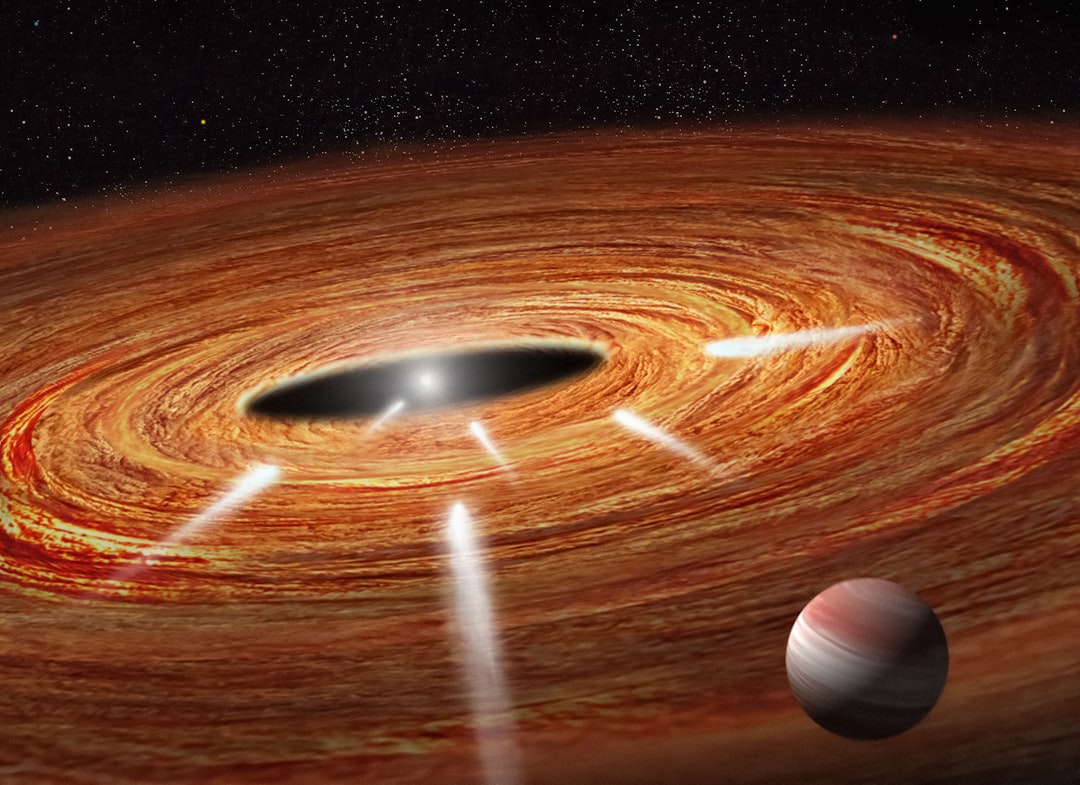
Black holes have long captivated the imagination of scientists and the public alike, serving as enigmatic objects that challenge the very foundations of physics. These regions of spacetime exhibit gravitational forces so intense that nothing, not even light, can escape their grasp. The concept of a black hole arises from the equations of general relativity, formulated by Albert Einstein in the early 20th century.
As researchers delved deeper into the cosmos, they discovered that black holes are not merely theoretical constructs; they exist in various forms throughout the universe, from stellar black holes formed by the collapse of massive stars to supermassive black holes residing at the centers of galaxies. The study of black holes has profound implications for our understanding of the universe. They serve as laboratories for testing the laws of physics under extreme conditions and provide insights into the nature of gravity, spacetime, and even quantum mechanics.
As astronomers continue to observe and analyze these cosmic phenomena, they uncover new layers of complexity, revealing that black holes are not just isolated entities but are intricately connected to their surroundings, influencing the formation and evolution of galaxies. This article will explore the multifaceted nature of black holes, focusing particularly on the concept of black hole mass and the uncertainties surrounding its measurement.
Key Takeaways
- Black holes are mysterious cosmic objects with gravitational pull so strong that nothing, not even light, can escape from them.
- The mass of a black hole is a crucial parameter that determines its properties and influences its interaction with its surroundings.
- Measuring the mass of a black hole is a challenging task due to the uncertainty associated with various observational techniques.
- Uncertain black hole mass measurements can significantly impact astrophysical research, leading to inaccuracies in theoretical models and predictions.
- Improving the accuracy of black hole mass measurements is essential for advancing our understanding of galaxy evolution, gravitational wave detection, and other areas of astrophysics.
The Concept of Black Hole Mass
At the heart of understanding black holes lies the concept of mass. Black hole mass is a critical parameter that influences many aspects of their behavior and interactions with surrounding matter. It is typically categorized into three main types: stellar black holes, which range from a few to several tens of solar masses; supermassive black holes, which can contain millions to billions of solar masses; and intermediate black holes, whose existence remains somewhat elusive but are thought to exist in the range between stellar and supermassive black holes.
The mass of a black hole determines its gravitational pull, affecting how it interacts with nearby stars and gas. The measurement of black hole mass is not merely an academic exercise; it has significant implications for astrophysics as a whole. For instance, the mass of a black hole can influence the dynamics of its host galaxy, including star formation rates and the distribution of dark matter.
Furthermore, understanding black hole mass is essential for exploring fundamental questions about the evolution of the universe itself. As researchers strive to quantify this elusive property, they encounter various challenges that complicate their efforts.
The Uncertainty in Measuring Black Hole Mass
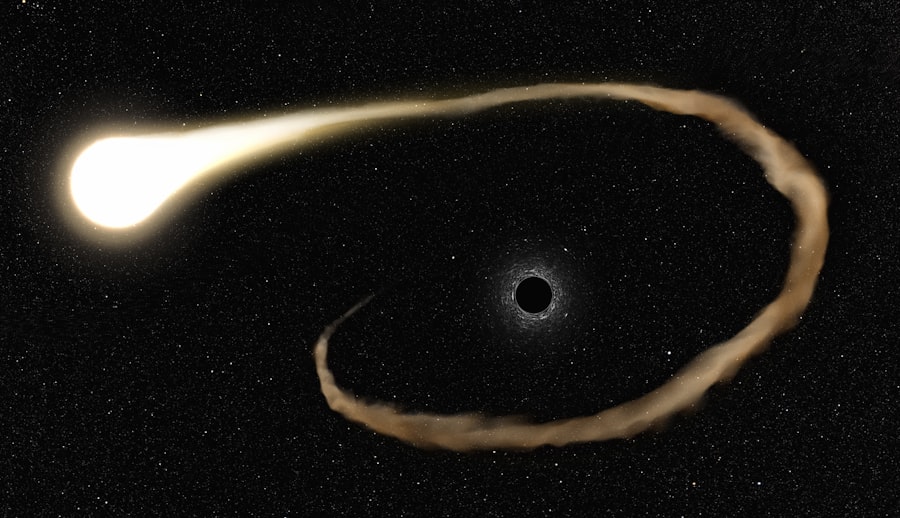
Despite advancements in observational techniques and theoretical models, measuring black hole mass remains fraught with uncertainty. One primary reason for this difficulty is that black holes do not emit light or any detectable radiation directly; instead, they are identified by their effects on nearby matter. For instance, astronomers often infer the presence of a black hole by observing the motion of stars orbiting an unseen mass or by detecting X-rays emitted from accreting material.
These indirect methods introduce a level of uncertainty that can complicate mass estimates. Moreover, different methods yield varying results, leading to discrepancies in mass measurements. For example, while one technique may suggest a certain mass based on stellar dynamics, another method relying on gas dynamics might produce a different estimate.
This inconsistency raises questions about the reliability of current measurement techniques and highlights the need for more robust methodologies. As researchers grapple with these uncertainties, they recognize that resolving them is crucial for advancing our understanding of black holes and their role in the cosmos.
The Impact of Uncertain Black Hole Mass on Astrophysical Research
| Black Hole Mass | Impact on Research |
|---|---|
| Uncertain | Difficulty in accurately predicting gravitational effects |
| Uncertain | Challenges in understanding black hole formation and evolution |
| Uncertain | Limitations in studying black hole mergers and interactions |
| Uncertain | Obstacles in determining the influence of black holes on surrounding matter and energy |
The uncertainties surrounding black hole mass have far-reaching implications for astrophysical research. When scientists attempt to model galaxy formation and evolution, inaccurate mass estimates can lead to flawed conclusions about the relationship between black holes and their host galaxies. For instance, if a supermassive black hole’s mass is underestimated, it could skew models predicting how galaxies interact with their environments or how they evolve over cosmic time.
Additionally, uncertain mass measurements can affect our understanding of fundamental physical processes such as gravitational wave emissions. As gravitational waves are produced during events like black hole mergers, precise knowledge of the involved masses is essential for interpreting these signals accurately. Inaccurate mass estimates could lead to misinterpretations of gravitational wave data, hindering progress in this burgeoning field of astrophysics.
Thus, addressing the uncertainties in black hole mass is not just an academic concern; it has real-world implications for our understanding of the universe.
Theoretical Models for Estimating Black Hole Mass
To tackle the challenges associated with measuring black hole mass, researchers have developed various theoretical models aimed at providing more accurate estimates. One common approach involves using the relationship between a black hole’s mass and its surrounding environment, particularly in active galactic nuclei (AGN). In these cases, scientists can analyze the motion of gas clouds orbiting a supermassive black hole to infer its mass based on Keplerian dynamics.
Another promising avenue involves utilizing scaling relations that link black hole mass to properties of their host galaxies. For example, studies have shown correlations between supermassive black hole mass and the bulge mass or stellar velocity dispersion of galaxies. By applying these scaling relations to observed data, researchers can estimate black hole masses with greater confidence.
Observational Techniques for Measuring Black Hole Mass

In recent years, advancements in observational techniques have provided new avenues for measuring black hole mass more accurately. One such technique involves reverberation mapping, which uses variations in light emitted by gas clouds near a supermassive black hole to estimate its mass. By measuring the time delay between changes in light from the accretion disk and those from surrounding gas clouds, astronomers can derive a mass estimate based on the dynamics involved.
Another powerful method is gravitational lensing, where light from distant objects is bent around a massive foreground object—such as a black hole—allowing researchers to infer its mass based on how much light is distorted. This technique has proven particularly useful for studying distant supermassive black holes that would otherwise be challenging to observe directly. As technology continues to advance, new observational techniques are likely to emerge, further refining our ability to measure black hole mass with greater precision.
Challenges in Determining Black Hole Mass
Despite these advancements in observational techniques and theoretical models, challenges persist in determining black hole mass accurately. One significant hurdle is the inherent complexity of astrophysical systems; factors such as gas dynamics, star formation rates, and interactions with dark matter can all influence measurements. Additionally, many black holes exist in environments that are not conducive to straightforward observations, such as those obscured by dust or located at great distances.
Moreover, there is often a lack of consensus among researchers regarding which methods yield the most reliable results. Different teams may employ varying techniques or assumptions when estimating black hole mass, leading to discrepancies in published values. This lack of standardization complicates efforts to build a cohesive understanding of black holes across different studies and datasets.
As researchers continue to confront these challenges, collaboration and data sharing will be essential for advancing knowledge in this field.
The Connection Between Black Hole Mass and Galaxy Evolution
The relationship between black hole mass and galaxy evolution is a topic of significant interest within astrophysics. Observations suggest that supermassive black holes are closely linked to their host galaxies; as galaxies evolve over cosmic time, so too do their central black holes. This connection raises important questions about how these two entities influence one another during their respective evolutionary processes.
For instance, studies have shown that galaxies with more massive central black holes tend to have larger bulges and higher stellar velocity dispersions. This correlation suggests that feedback mechanisms may be at play—whereby energy released from accreting material around a black hole affects star formation rates within its host galaxy. Understanding this interplay is crucial for developing comprehensive models of galaxy formation and evolution across different cosmic epochs.
The Role of Black Hole Mass in Gravitational Wave Detection
The detection of gravitational waves has opened up new frontiers in astrophysics, allowing scientists to observe cosmic events previously hidden from view. The masses of merging black holes play a pivotal role in these detections; accurate measurements are essential for interpreting gravitational wave signals and understanding the underlying physics involved in such cataclysmic events. As gravitational wave observatories like LIGO and Virgo continue to detect mergers between stellar-mass black holes and neutron stars, researchers are increasingly focused on refining their estimates of these objects’ masses.
The ability to measure black hole masses with precision not only enhances our understanding of individual events but also contributes to broader insights into population statistics and the formation mechanisms of compact objects in the universe.
Future Prospects for Improving the Accuracy of Black Hole Mass Measurements
Looking ahead, there is considerable optimism regarding future advancements in measuring black hole mass more accurately. Ongoing developments in observational technology—such as next-generation telescopes and improved data analysis techniques—promise to enhance our ability to study these enigmatic objects. For instance, upcoming space-based observatories like the James Webb Space Telescope (JWST) are expected to provide unprecedented insights into distant galaxies and their central black holes.
Additionally, interdisciplinary collaboration among astronomers, physicists, and computer scientists will be crucial for developing innovative approaches to measuring black hole mass. By combining theoretical models with cutting-edge observational data, researchers can refine existing methods and explore new avenues for understanding these complex phenomena. As knowledge continues to evolve, so too will our ability to unravel the mysteries surrounding black holes and their masses.
The Importance of Resolving the Uncertainty in Black Hole Mass
In conclusion, resolving the uncertainties surrounding black hole mass is paramount for advancing our understanding of these fascinating cosmic entities and their role within the universe. Accurate measurements are essential not only for studying individual black holes but also for comprehending their connections to galaxy evolution and fundamental physical processes such as gravitational wave emissions. As researchers continue to develop innovative observational techniques and theoretical models, they inch closer to unraveling the complexities associated with measuring black hole mass.
The journey toward greater accuracy in measuring black hole mass reflects broader themes within astrophysics: the pursuit of knowledge amid uncertainty and complexity. By addressing these challenges head-on, scientists can unlock new insights into the nature of reality itself—transforming our understanding of the cosmos one discovery at a time. Ultimately, resolving these uncertainties will pave the way for future breakthroughs that deepen humanity’s connection to the universe and its myriad wonders.
In the realm of astrophysics, understanding the mass of black holes is crucial for unraveling the mysteries of the universe. However, measuring these masses comes with significant uncertainties due to various factors such as the black hole’s distance, its environment, and the limitations of our observational tools. An insightful article on this topic can be found on My Cosmic Ventures, which delves into the complexities and challenges faced by scientists in accurately determining black hole masses. For a deeper exploration of this subject, you can read the related article on black hole mass uncertainty by visiting this page.
WATCH THIS! 🌌The Biggest Black Hole Is A LIE
FAQs
What is black hole mass uncertainty?
Black hole mass uncertainty refers to the difficulty in accurately measuring the mass of a black hole. This uncertainty arises from the limitations of current observational techniques and the complex nature of black holes.
Why is it difficult to measure the mass of a black hole?
Measuring the mass of a black hole is difficult because black holes do not emit any light or radiation that can be directly observed. Instead, scientists must rely on indirect methods such as observing the effects of a black hole’s gravitational pull on nearby objects or studying the behavior of matter as it falls into the black hole.
What are some methods used to estimate the mass of a black hole?
Scientists use a variety of methods to estimate the mass of a black hole, including studying the orbits of stars or gas clouds around the black hole, analyzing the gravitational lensing effects caused by the black hole, and measuring the X-ray emissions from matter falling into the black hole.
What are the implications of black hole mass uncertainty?
The uncertainty in measuring the mass of black holes can impact our understanding of the formation and evolution of galaxies, as well as our ability to test the predictions of general relativity in extreme gravitational environments. It also affects our ability to accurately model the behavior of black holes in astrophysical simulations.
What are some ongoing efforts to improve the measurement of black hole mass?
Scientists are continuously developing new observational techniques and instruments, such as the Event Horizon Telescope, to improve the measurement of black hole mass. They are also refining theoretical models and simulations to better understand the behavior of black holes and the effects of their mass on their surroundings.