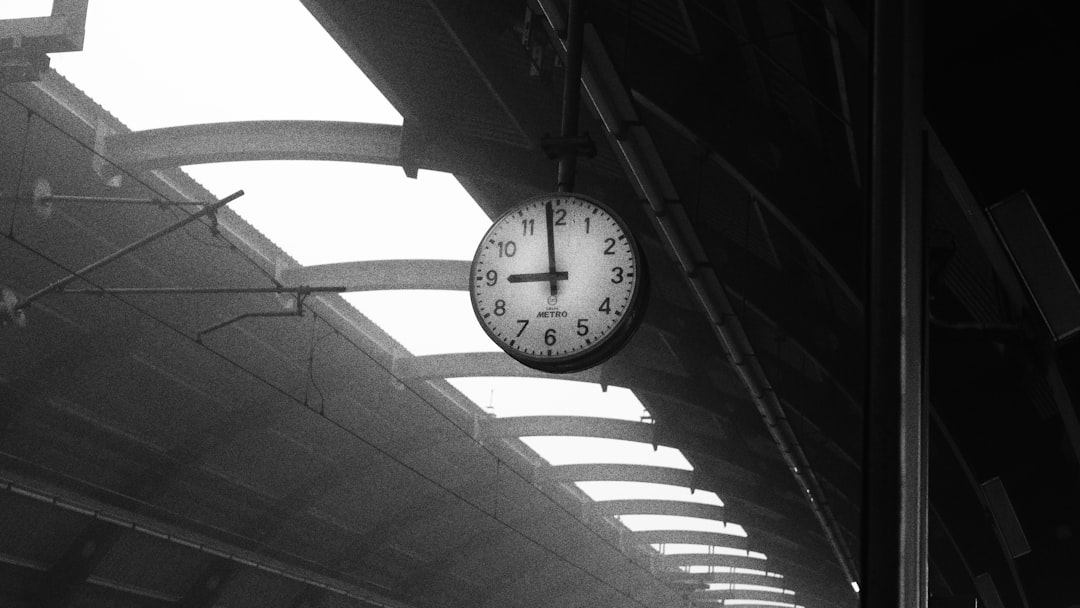
The concept of time travel has long captivated the human imagination, inspiring countless stories, theories, and debates. As science fiction has explored the possibilities of traversing time, it has also unearthed a myriad of paradoxes that challenge our understanding of causality and existence. Time travel paradoxes are intriguing conundrums that arise when one considers the implications of altering past events or interacting with previous versions of oneself.
These paradoxes not only provoke thought but also raise profound questions about the nature of time, reality, and free will. As individuals ponder the mechanics of time travel, they often find themselves grappling with scenarios that defy logic and reason. The exploration of these paradoxes invites a deeper examination of the fabric of time itself, leading to discussions that blend philosophy, physics, and speculative fiction.
In this article, various time travel paradoxes will be examined, each revealing unique challenges and implications for our understanding of time and existence.
Key Takeaways
- Time travel paradoxes challenge our understanding of cause and effect, and raise questions about the possibility of altering the past or creating infinite loops.
- The Grandfather Paradox explores the idea of going back in time to kill your own grandfather, and the implications it has on your existence.
- The Bootstrap Paradox questions whether an object can exist without being created, and how it can loop through time without a clear origin.
- The Novikov Self-Consistency Principle suggests that any actions taken in the past were already part of the timeline, making it impossible to change the past.
- The Predestination Paradox examines the idea of being unable to escape your fate, no matter what actions you take in the past or future.
The Grandfather Paradox: Can You Kill Your Own Grandfather?
One of the most famous time travel paradoxes is the Grandfather Paradox, which poses a seemingly simple yet profoundly complex question: What would happen if a time traveler were to go back in time and kill their own grandfather before their parent was conceived? This scenario creates a logical inconsistency; if the grandfather were killed, the time traveler would never have been born to commit the act in the first place. Thus, the very act of traveling back in time to alter history creates a contradiction that challenges the linear perception of cause and effect.
The implications of the Grandfather Paradox extend beyond mere hypothetical musings. It raises questions about the nature of identity and existence. If one could change their own past, what does that mean for their present self?
Would they cease to exist entirely, or would they create an alternate timeline where they were never born?
The Bootstrap Paradox: Can an Object Exist Without Being Created?

Another intriguing paradox is the Bootstrap Paradox, which delves into the concept of self-creation. This paradox occurs when an object or piece of information exists without ever being created in a conventional sense. For instance, imagine a time traveler who goes back in time and hands Shakespeare a copy of his own works.
Shakespeare then publishes these works, which later become the basis for the time traveler’s knowledge. In this scenario, the question arises: where did the original works come from? If they were never created but merely passed through time, it creates a loop that defies traditional notions of authorship and origin.
The Bootstrap Paradox challenges our understanding of causality and raises questions about the nature of existence itself. If an object can exist without a clear point of origin, what does that imply about the nature of reality? This paradox invites contemplation on the interconnectedness of events and objects across time, suggesting that perhaps everything is part of a larger tapestry where cause and effect are not as straightforward as they seem.
The Novikov Self-Consistency Principle: Can You Change the Past?
| Metrics | Details |
|---|---|
| Title | The Novikov Self-Consistency Principle: Can You Change the Past? |
| Author | Andrei Novikov |
| Published | 1990 |
| Topic | Time travel and causality |
| Main Idea | Proposes that the principle of self-consistency prevents changes to the past |
In response to the complexities posed by time travel paradoxes, physicist Igor Novikov proposed the Novikov Self-Consistency Principle. This principle posits that any actions taken by a time traveler in the past must be self-consistent with the timeline they originated from. In other words, if a time traveler were to attempt to change a significant event in history, their actions would ultimately lead to outcomes that prevent any alteration from occurring in the first place.
This principle suggests that while time travel may be theoretically possible, any attempts to change past events would be thwarted by the very fabric of reality. The Novikov Self-Consistency Principle offers a potential resolution to some of the paradoxes associated with time travel. It implies that while individuals may have the ability to traverse time, their actions are bound by a set of constraints that maintain the integrity of the timeline.
This raises further questions about free will and determinism: if one’s actions are predetermined by past events, do individuals truly have agency over their choices? The interplay between choice and consequence becomes a central theme in discussions surrounding this principle.
The Predestination Paradox: Can You Escape Your Fate?
Closely related to the Novikov Self-Consistency Principle is the Predestination Paradox, which explores the idea that events in the future may influence actions in the past. In this scenario, a time traveler might go back in time to fulfill a destiny that has already been established. For example, if someone travels back to ensure that a specific event occurs—such as preventing a disaster—they may inadvertently set in motion a series of events that lead to that very disaster occurring.
This paradox raises questions about fate and whether individuals can truly escape their predetermined paths. The Predestination Paradox challenges conventional notions of free will by suggesting that individuals may be bound by a timeline that is already set in motion. It invites contemplation on whether actions taken in an attempt to change one’s fate are ultimately futile.
This paradox serves as a reminder that while individuals may strive for agency over their lives, they may also be subject to forces beyond their control.
Resolving Time Travel Paradoxes with Multiverse Theory

To address the complexities and contradictions inherent in time travel paradoxes, some theorists have turned to multiverse theory as a potential solution. This theory posits that every decision or action creates a branching timeline, resulting in multiple parallel universes coexisting simultaneously. In this framework, when a time traveler alters an event in the past, they do not change their original timeline; instead, they create an alternate universe where different outcomes unfold.
Multiverse theory offers a compelling resolution to many time travel paradoxes by allowing for infinite possibilities and outcomes. It suggests that every choice made creates new realities, thereby circumventing contradictions associated with altering past events. This perspective not only enriches discussions about time travel but also opens up new avenues for exploring concepts such as identity and existence across multiple dimensions.
Time Loop Paradox: Can You Escape a Never-Ending Cycle?
The Time Loop Paradox presents another fascinating conundrum within the realm of time travel. This paradox occurs when an individual finds themselves trapped in a cyclical loop where they repeatedly experience the same events without any apparent means of escape. For instance, imagine a character who travels back in time only to inadvertently cause their own journey back to that moment again and again.
This creates an endless cycle where they are unable to break free from their predetermined fate. The implications of the Time Loop Paradox extend beyond mere frustration; it raises profound questions about agency and choice. If one is trapped in a loop, do they possess free will?
Are their actions predetermined by the cycle itself? This paradox invites contemplation on themes such as destiny and self-determination, challenging individuals to consider how they navigate their own lives within perceived constraints.
The Ontological Paradox: Can You Create Yourself?
The Ontological Paradox delves into existential questions surrounding identity and creation. This paradox arises when an individual travels back in time and interacts with their younger self or influences their own existence in some way. For example, if someone were to provide their younger self with knowledge or resources that ultimately shape their future identity, it raises questions about authorship and self-creation.
Did they create themselves through this interaction, or did they merely fulfill a predetermined path? This paradox challenges traditional notions of identity by suggesting that individuals may not be singular entities but rather products of their interactions across time. It invites contemplation on how experiences shape who we are and whether our identities are fixed or fluid over time.
The Ontological Paradox serves as a reminder that existence is often more complex than it appears at first glance.
The Butterfly Effect: Small Changes, Big Consequences
The Butterfly Effect is a concept closely associated with chaos theory and highlights how seemingly minor actions can lead to significant consequences over time. In the context of time travel, this effect suggests that even small alterations made in the past can have far-reaching implications for the future. For instance, if a time traveler were to step on a butterfly during their journey to the past, it could set off a chain reaction resulting in monumental changes to history.
This paradox underscores the interconnectedness of events across time and emphasizes how fragile timelines can be. It serves as a cautionary tale about the potential ramifications of tampering with history and invites reflection on how individual choices shape broader realities. The Butterfly Effect illustrates that even seemingly insignificant actions can reverberate through time, leading to outcomes far beyond what one might anticipate.
Philosophical Implications of Time Travel Paradox
The exploration of time travel paradoxes extends beyond scientific inquiry; it delves into profound philosophical implications regarding existence, free will, and determinism. As individuals grapple with these paradoxes, they are compelled to confront fundamental questions about reality itself: What does it mean to exist? Are our lives predetermined by past events?
Do we possess true agency over our choices? These philosophical inquiries challenge conventional understandings of causality and invite deeper contemplation on how individuals navigate their lives within perceived constraints. The interplay between choice and consequence becomes central to discussions surrounding time travel paradoxes, prompting individuals to consider how their actions shape not only their own destinies but also the fabric of reality itself.
Embracing the Mysteries of Time Travel
In conclusion, time travel paradoxes present captivating challenges that invite exploration into the nature of reality, existence, and free will. From the Grandfather Paradox to multiverse theory, each conundrum offers unique insights into how individuals perceive time and navigate their lives within its constraints. While these paradoxes may seem perplexing at first glance, they ultimately serve as reminders of the mysteries inherent in our understanding of time.
As humanity continues to explore the possibilities of time travel—both through scientific inquiry and imaginative storytelling—these paradoxes will remain central to discussions about our place within the universe. Embracing these mysteries allows individuals to engage with profound questions about existence while fostering curiosity about what lies beyond our current understanding of reality. Ultimately, it is through grappling with these complexities that individuals can deepen their appreciation for the intricate tapestry of time itself.
In recent discussions about the resolution of time travel paradoxes, a fascinating article has emerged that delves into the complexities and potential solutions to these mind-bending conundrums. The article explores various theoretical frameworks and scientific perspectives that aim to address the paradoxes associated with time travel, such as the grandfather paradox and the bootstrap paradox. For those interested in a deeper understanding of these intriguing topics, you can read more about it in this insightful piece on My Cosmic Ventures. This article not only sheds light on the current scientific discourse but also invites readers to ponder the possibilities of time travel in a universe governed by the laws of physics.
FAQs
What is a time travel paradox?
A time travel paradox is a theoretical situation in which the existence of an event or information in the past contradicts the laws of physics or logic.
What are some examples of time travel paradoxes?
Examples of time travel paradoxes include the grandfather paradox, in which a time traveler prevents their own existence by killing their grandfather before the traveler’s parent is conceived, and the bootstrap paradox, in which an object or information is created without an origin.
How do scientists propose to resolve time travel paradoxes?
One proposed resolution to time travel paradoxes is the idea of parallel universes, in which time travel creates a new timeline that is separate from the original timeline. Another proposed resolution is the concept of self-consistency, in which the time traveler’s actions are already accounted for in the timeline.
What are some theories about time travel paradox resolution?
Some theories about time travel paradox resolution include the Novikov self-consistency principle, which suggests that the laws of physics prevent any action that would create a paradox, and the many-worlds interpretation, which posits that every possible outcome of a quantum event occurs in a separate universe.
Is time travel possible according to current scientific understanding?
According to current scientific understanding, time travel is theoretically possible within the framework of general relativity, but the practical implementation of time travel technology remains speculative and has not been achieved.